Counting Grids 5, 10, 20, 100: Summer Sun
Recommended Grade Level:
Type of Resource: PDF
Number of Pages: 42
You must be a Monthly, Annual or Forever Member to Access this Resource.
Join the Life Over C’s Club to Access

Already a member? Login below:
Coordinating Activities
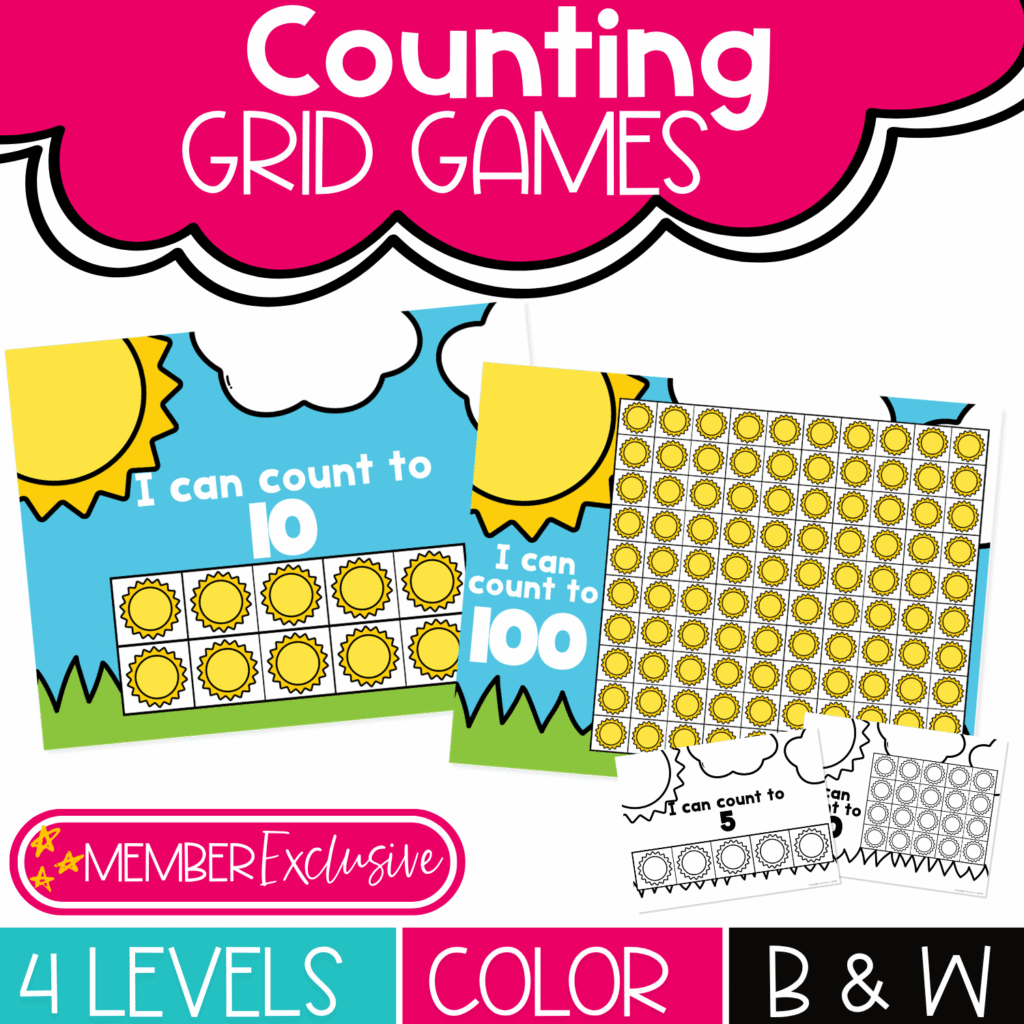
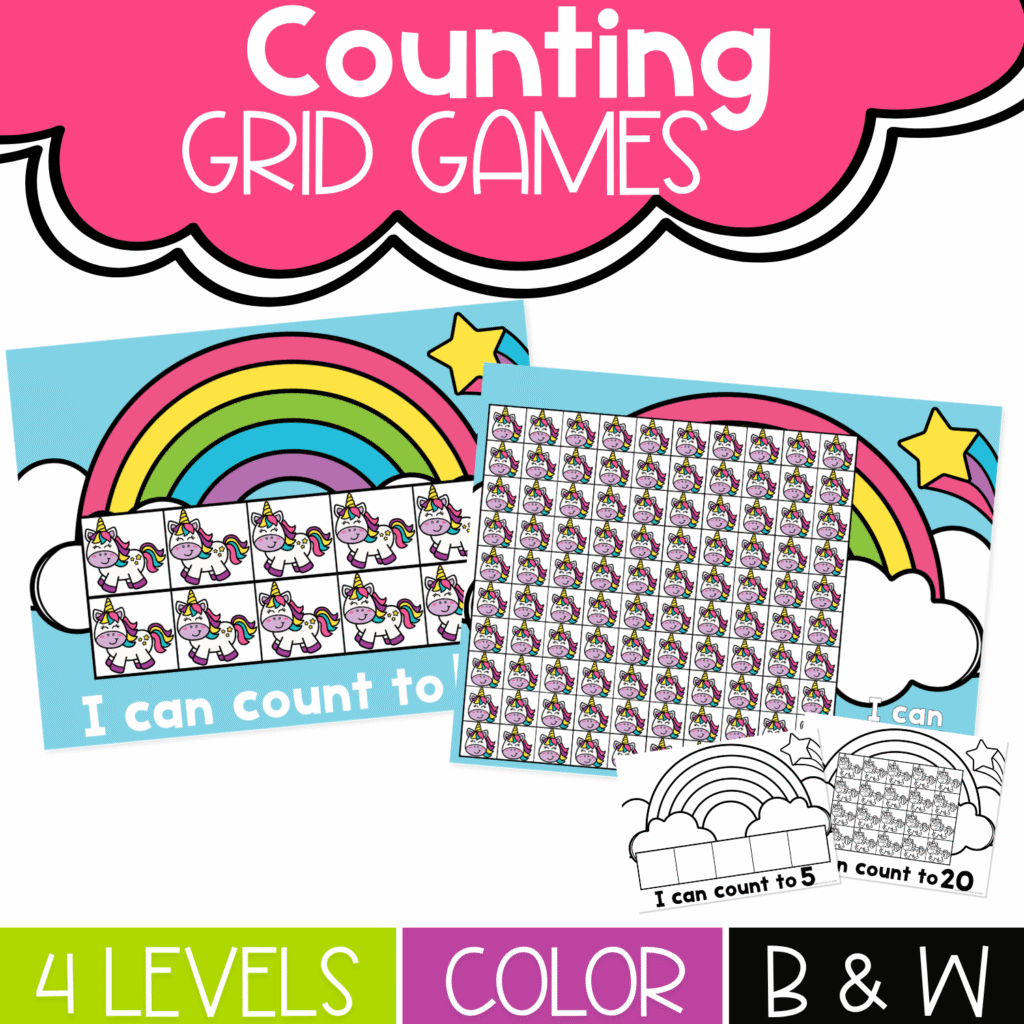
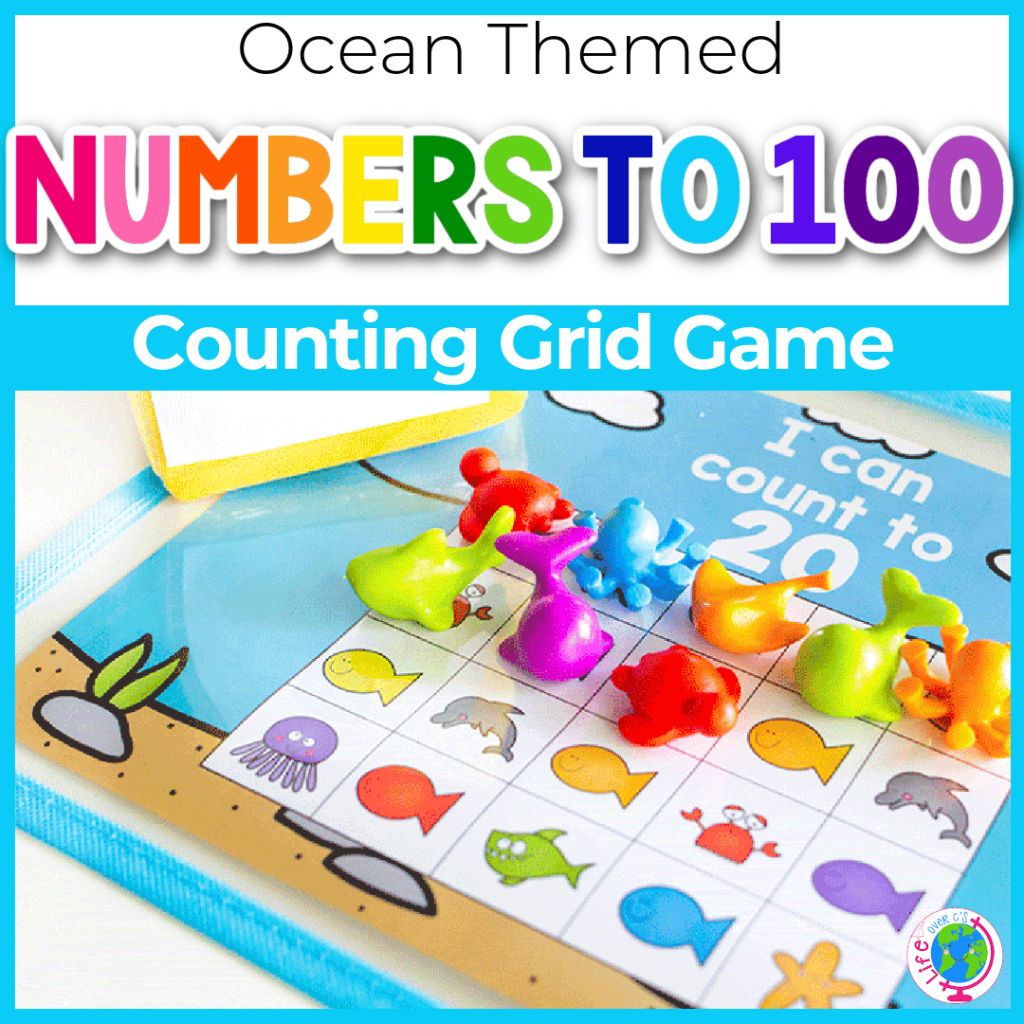
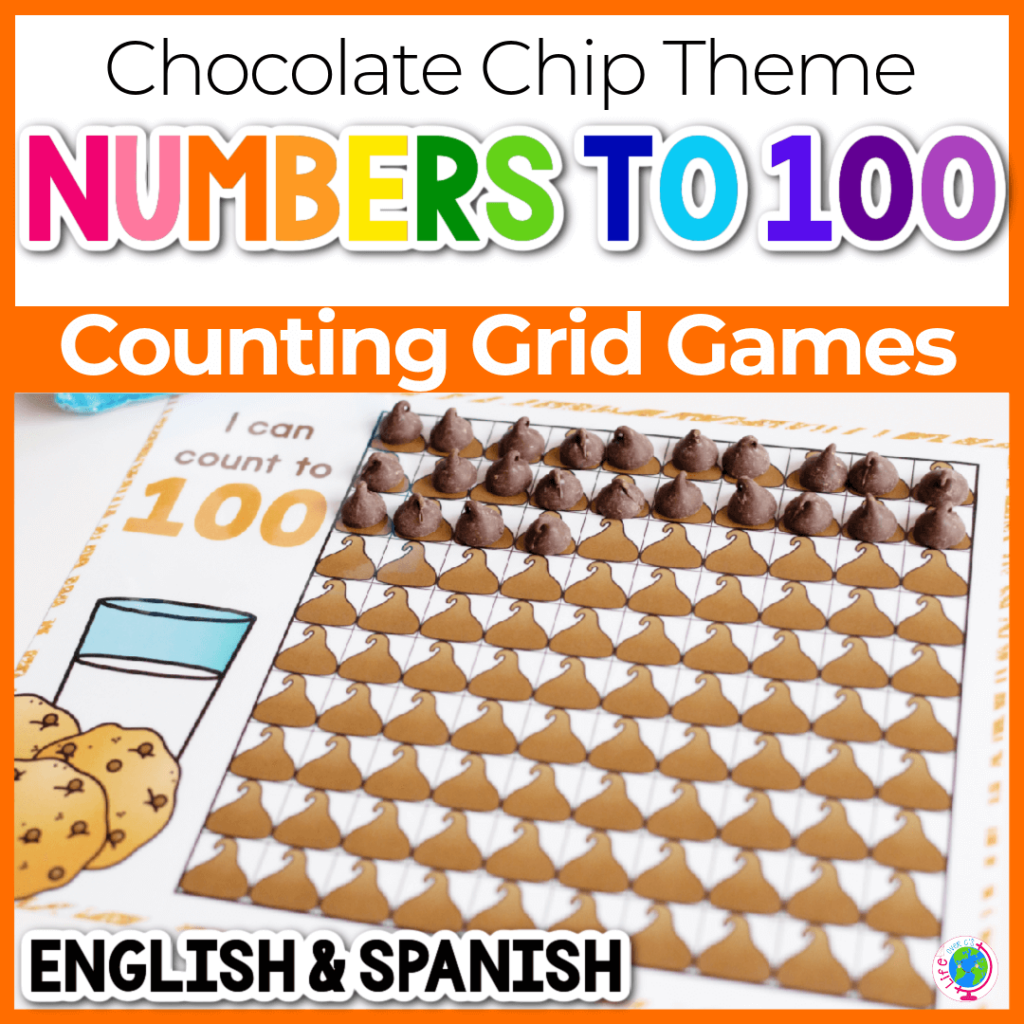

What’s Included in the Summer Sun Counting Grids Set
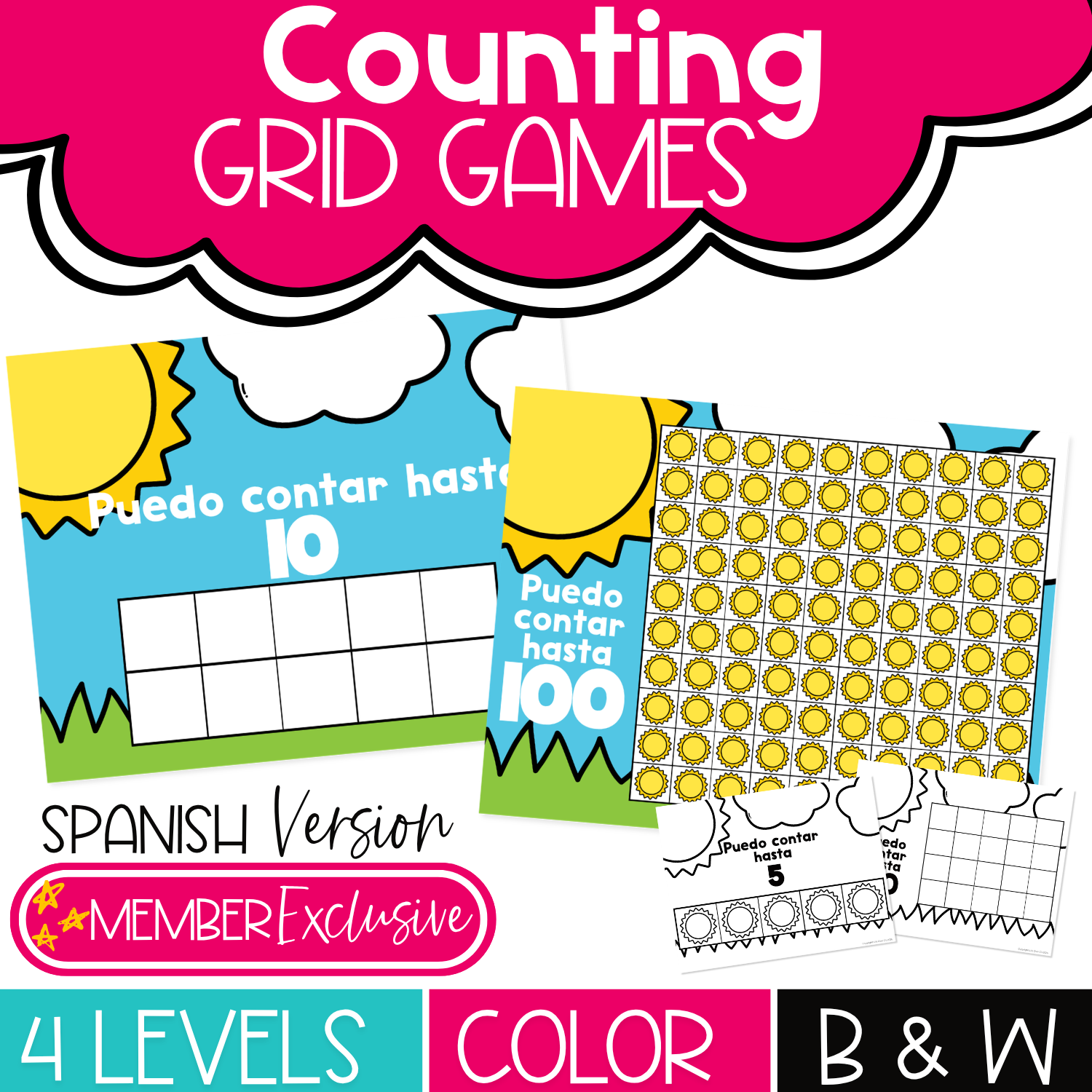
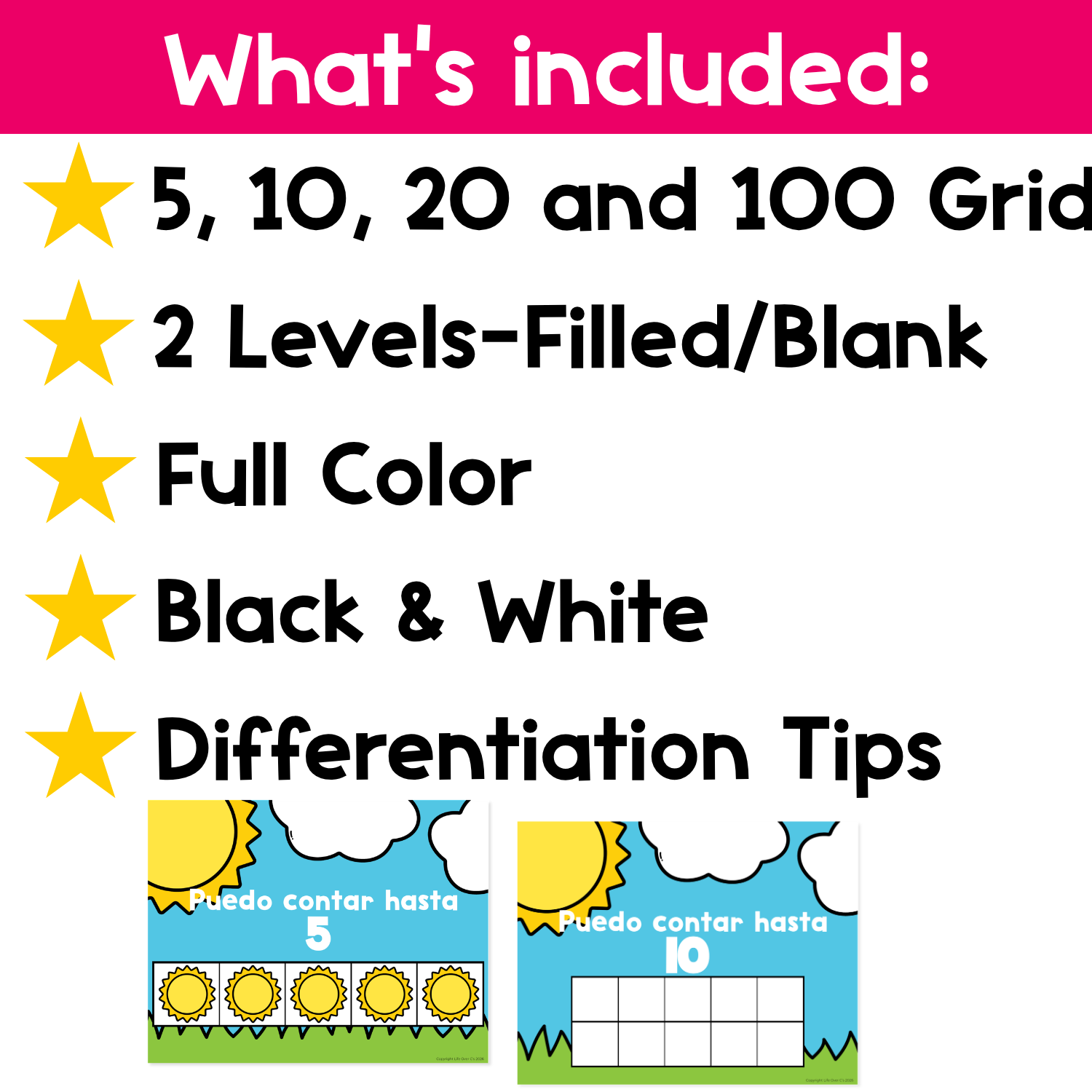
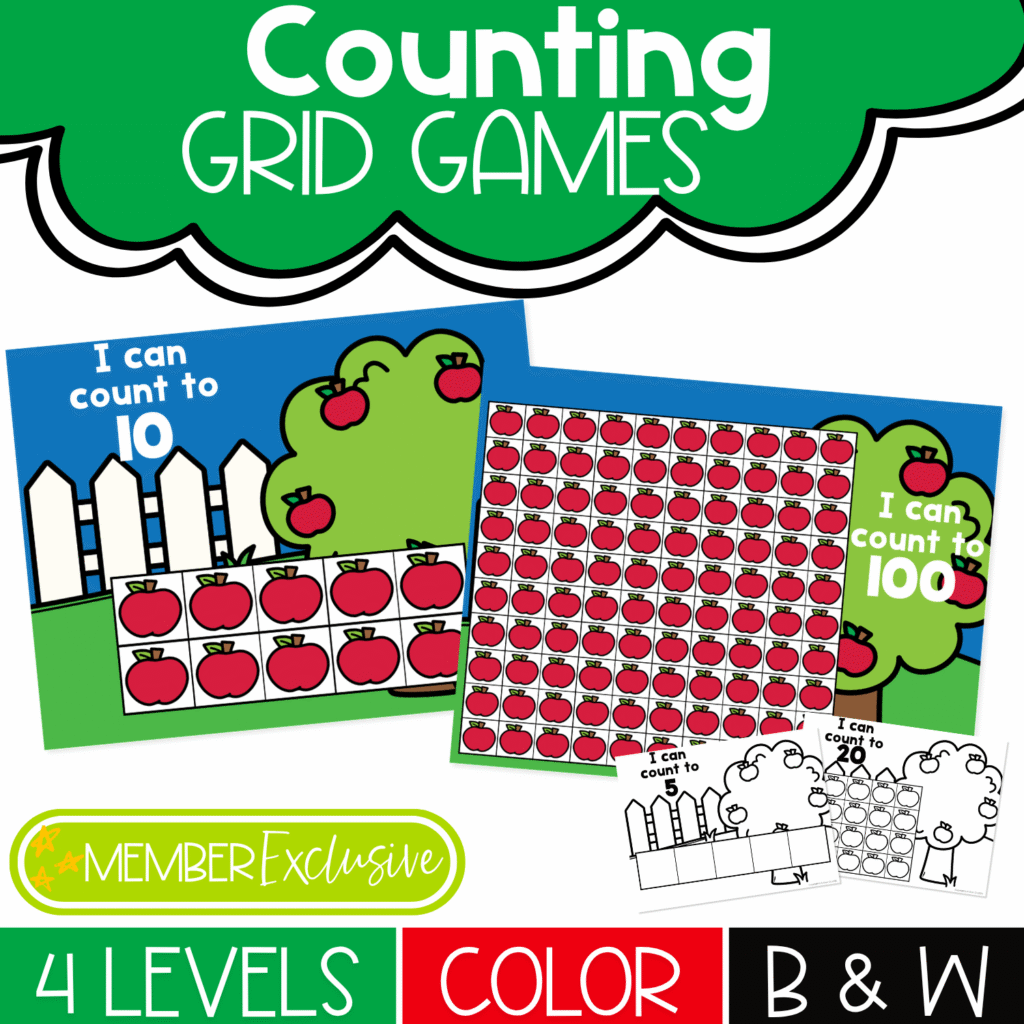
This Summer Sun Counting Grid Game includes differentiated counting mats so you can meet students right where they are and move them forward when they are ready.
- Counting grid mats for 5, 10, 20, and 100
- Filled grid game mats for extra visual counting support
- Blank grid game mats for hands-on number building
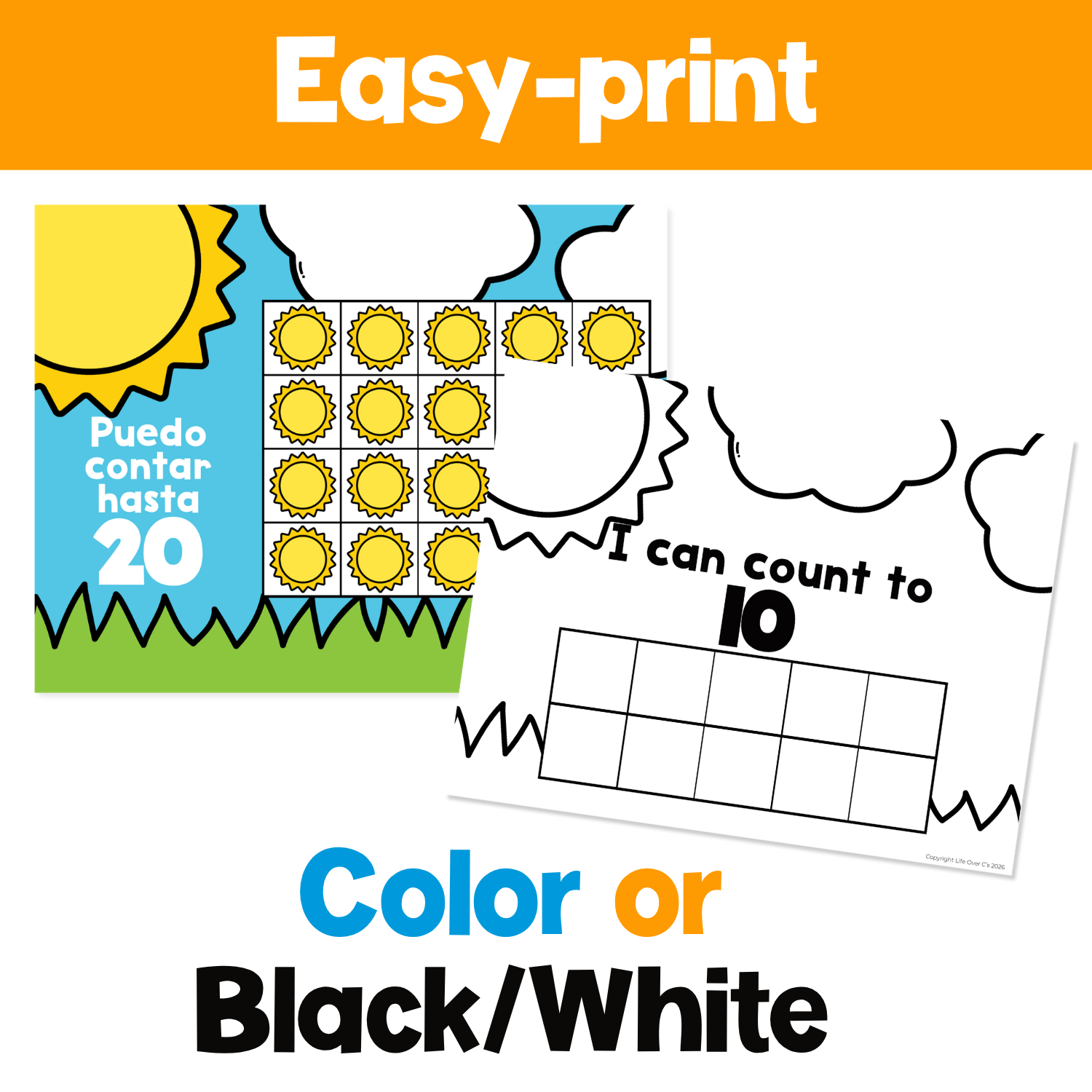
- Full color summer sun mats
- Black and white counting grid mats
- Differentiated instruction cube inserts
- Cube template
- Teacher instructions
- Differentiation tips
The 4 counting levels make this activity easy to use with a mixed group of learners. Start with counting to 5 for beginners, move to counting to 10 for ten-frame practice, build up to counting to 20, or use the 100 grid for students who are ready to work with larger numbers and beginning addition.
Required Materials:
- Laminator
- Paper Cutter
- Paper, Printer, Ink
- Scissors
- Differentiated Instruction Cube (Optional)
Standards Alignment
Common Core Math Standards
- CCSS.MATH.CONTENT.K.CC.A.1: Count to 100 by ones and by tens.
- CCSS.MATH.CONTENT.K.CC.A.2: Count forward beginning from a given number.
- CCSS.MATH.CONTENT.K.CC.B.4: Understand the relationship between numbers and quantities.
- CCSS.MATH.CONTENT.K.CC.B.5: Count to answer “how many?” questions.
- CCSS.MATH.CONTENT.K.OA.A.1: Represent addition and subtraction with objects, drawings, sounds, actions, and objects.
- CCSS.MATH.CONTENT.1.OA.C.5: Relate counting to addition and subtraction.
Texas Prekindergarten Guidelines
- Texas Prekindergarten IV.A.2: Child recognizes and names small numbers of objects.
- Texas Prekindergarten IV.A.3: Child counts up to 10 items and demonstrates that the last count indicates how many items were counted.
- Texas Prekindergarten IV.A.5: Child counts objects using one to one correspondence.
- Texas Prekindergarten IV.B.1: Child uses concrete objects to solve simple addition and subtraction problems.
TEKS Kindergarten Math
- K.2A: Count forward and backward to at least 20 with and without objects.
- K.2B: Read, write, and represent whole numbers from 0 to at least 20 with and without objects or pictures.
- K.2C: Count a set of objects up to at least 20 and demonstrate that the last number said tells the number of objects.
- K.3A: Model the action of joining to represent addition and separating to represent subtraction.
Virginia Foundation Blocks and SOL Math
- Virginia SOL K.CE.1: Model and solve addition and subtraction situations using concrete objects.
- Virginia Foundation Blocks, Mathematics, Number and Number Sense: Children count, recognize quantities, and use one to one correspondence with concrete objects.
- Virginia SOL K.NS.1: Count forward orally by ones from 0 to 100.
- Virginia SOL K.NS.4: Count a set of objects and identify the quantity.
Skills Students Practice
Academic Skills Kids Practice While Playing
- Counting Objects – Building one-to-one correspondence as each space is filled
- Number-Quantity Matching – Connecting numerals to the correct amount of objects
- Number Recognition – Building confidence with numbers from 1–100
- Subitizing – Recognizing small groups without counting every object
- Counting On – Adding more objects and continuing the count during each turn
- Early Addition and Subtraction – Exploring basic operations in a hands-on way
- Number Sense – Developing a deeper understanding of numbers through repeated play
- Math Vocabulary – Using mathematical language while discussing their work
Fine Motor and Life Skills
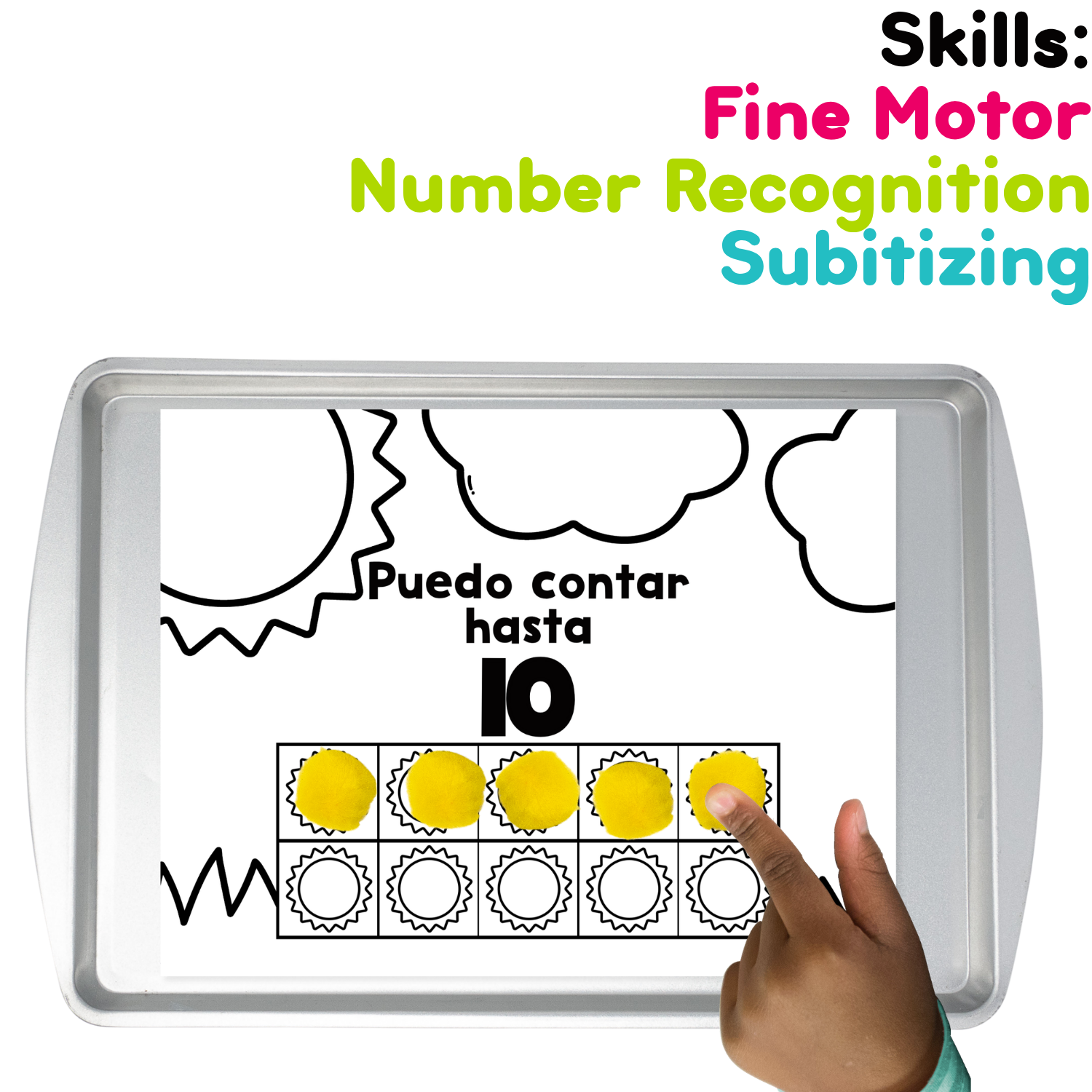
- Fine Motor Development – Strengthening little hands and fingers through hands-on play
- Hand-Eye Coordination – Practicing precise placement of manipulatives on the grid
- Focus and Attention – Building concentration during independent or group activities
- Following Directions – Learning to follow simple game rules and routines
- Cooperative Play – Taking turns and interacting positively with peers
- Independence – Completing activities successfully during centers or independent work
- Problem Solving – Thinking through decisions and strategies while playing
- Visual Tracking – Strengthening observation and visual scanning skills
- Confidence Building – Experiencing success through engaging, hands-on learning
- Play-Based Learning – Practicing important skills through activities that feel like a game
- Persistence – Staying engaged while working toward filling the grid
Counting Grids: Summer Sun
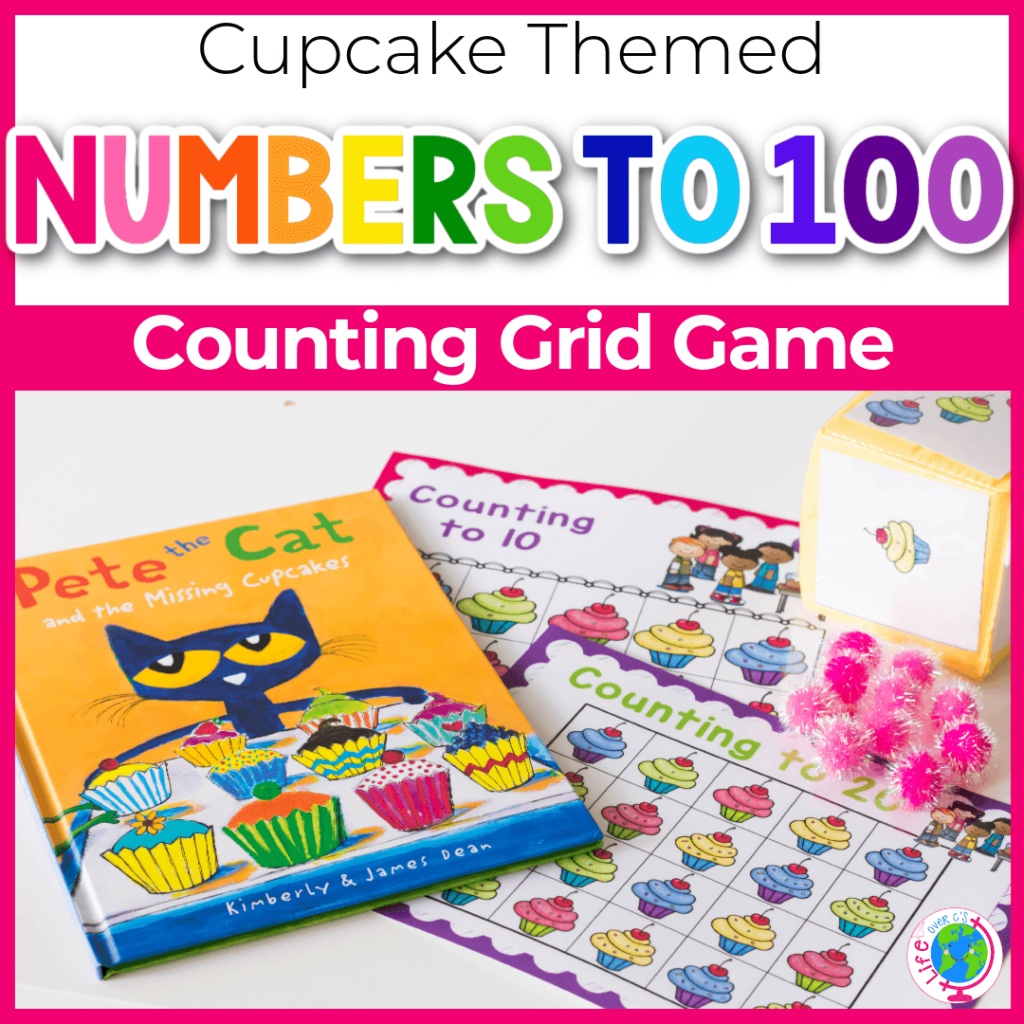
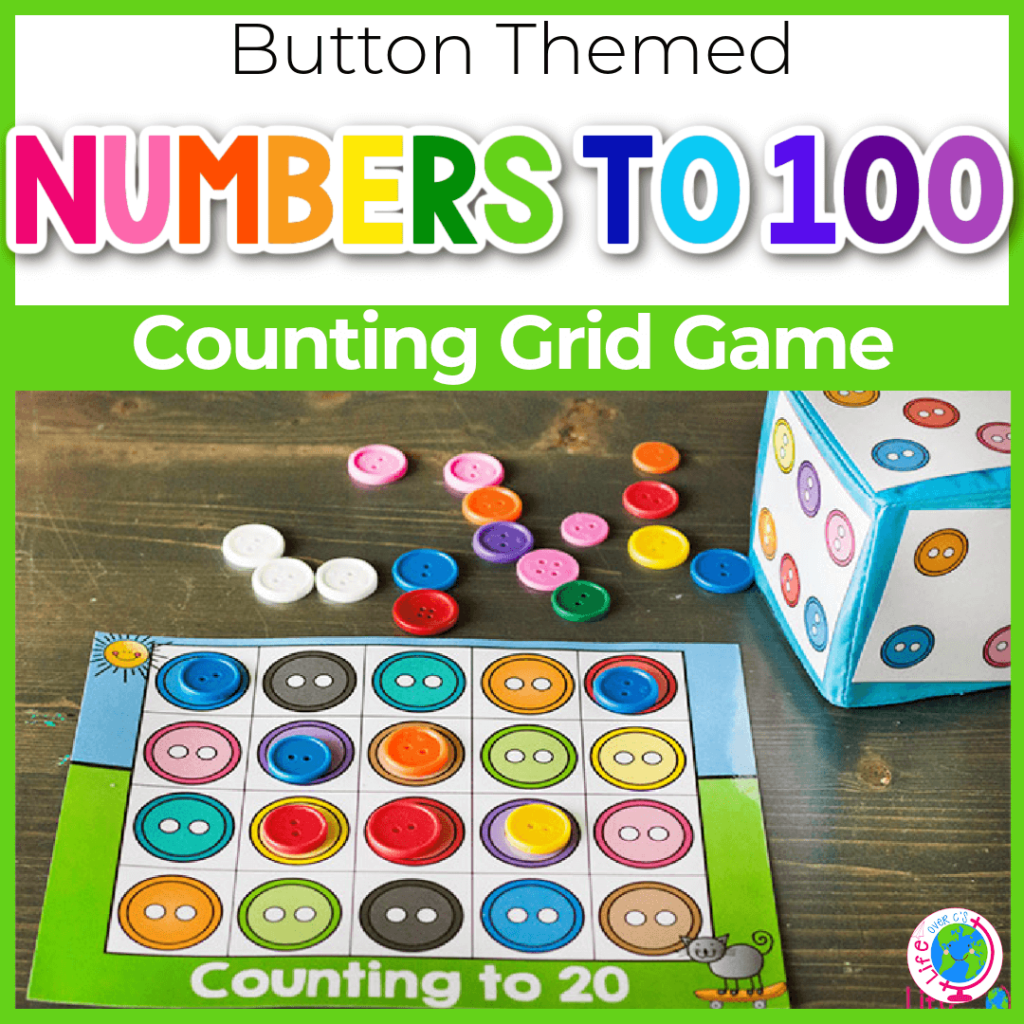
Sunny counting practice without a pile of prep? Yes, please. These Summer Sun Counting Grid Games give preschool, pre-k, and kindergarten students a hands-on way to build counting confidence as they fill 5, 10, 20, and 100 grids with manipulatives, play dough, mini erasers, or counters.
This counting activity is one of those simple math center wins that feels easy for you and exciting for kids. Students roll, count, add objects to the grid, and keep going until their sunny mat is filled. Meanwhile, they are practicing counting, number recognition, one to one correspondence, subitizing, and beginning addition without the “please just finish this worksheet” energy that nobody needs before lunch.
How to Use It
- Choose the counting grid mat that matches your students’ current skill level: 5, 10, 20, or 100.
- Students roll a die, count the number shown, and add that many manipulatives to the grid. Mini erasers, counters, buttons, pom poms, snap cubes, or play dough balls all work beautifully for this activity.
- Keep rolling, counting, and filling the grid until all spaces are covered. For extra math practice, students can count how many spaces are filled, how many are empty, or how many more they need to finish the mat.
Suggested Ways to Use the Counting Grids
- Roll and Count: Roll a die, count the dots, and add that many manipulatives to the grid.
- Fill the Grid: Keep rolling and adding objects until every space on the grid is filled.
- Count and Cover: Place one manipulative on each space while counting aloud to practice one to one correspondence.
- Match the Filled Grid: Use the filled grid mats for students who need extra visual support. Students place manipulatives directly on top of the sun pictures.
- Build the Number: Use the blank grid mats and have students build the target number with counters, mini erasers, pom poms, buttons, snap cubes, or play dough balls.
- Play Dough Counting: Roll small play dough balls and place one on each space. This adds extra fine motor practice while students count.
- Mini Eraser Math: Use summer mini erasers or small counters to make the counting grid more engaging for math centers.
- Count How Many Are Filled: Pause during the game and ask students to count how many spaces are covered.
- Count How Many Are Empty: Have students count the empty spaces and tell how many more they need to fill the grid.
- Compare Numbers: Use two grids side by side and ask which grid has more, less, or the same number of spaces filled.
- Partner Counting Game: Students take turns rolling the die, counting, and adding pieces to the same grid.
- Race to Fill: Give each student their own grid. Students roll, count, and fill their mats to see who fills the grid first.
- Beginning Addition: Roll two dice, add the numbers together, and place that many manipulatives on the grid.
- Counting On: After some spaces are filled, students roll again and count on from the number already on the grid.
- Subtraction Practice: Start with a filled grid, roll a die, and remove that many objects. Count how many are left.
- Number Talk Warm-Up: Show a partially filled grid and ask, “How many do you see?” “How do you know?” or “How many more to fill the grid?”
- Small Group Practice: Use the grids during teacher-led math groups to observe counting accuracy, one to one correspondence, and number recognition.
- Morning Tub Activity: Add a grid mat, dice, and manipulatives to a morning tub for quick, independent math practice.
- Fine Motor Center: Pair the grid with tweezers, tongs, or small manipulatives to strengthen fine motor skills while practicing counting.
- Take-Home Practice: Send the black and white grids home for simple counting practice with cereal, buttons, coins, or small toys.