I Spy “Flip” Junior Board Game: Real Life Emotions
Recommended Grade Level:
Type of Resource: PDF
Number of Pages: 28

You must be a Paid Member to Access this Resource.
Join the Life Over C’s Club to Access

Already a member? Login below:
Coordinating Activities

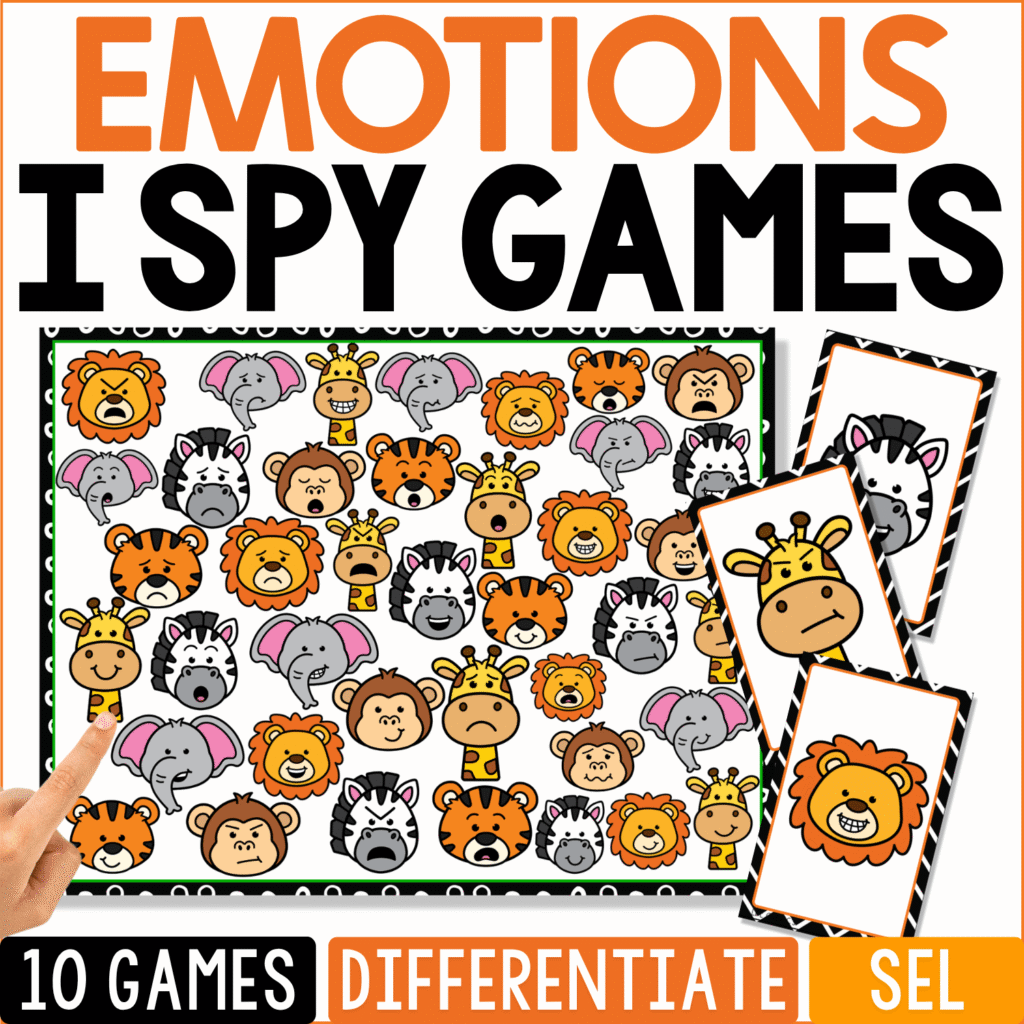



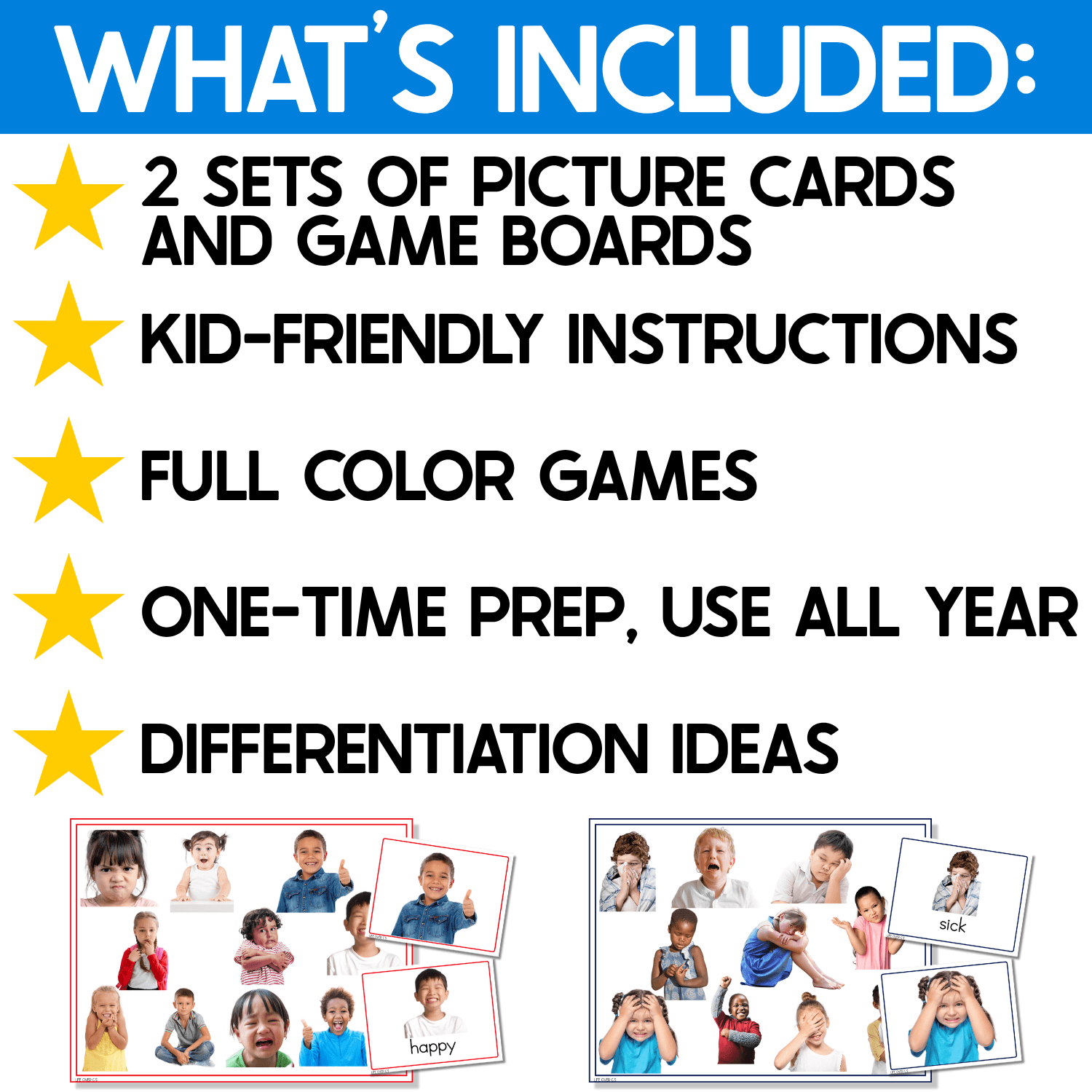
2 I Spy “Flip” Junior Game Sets
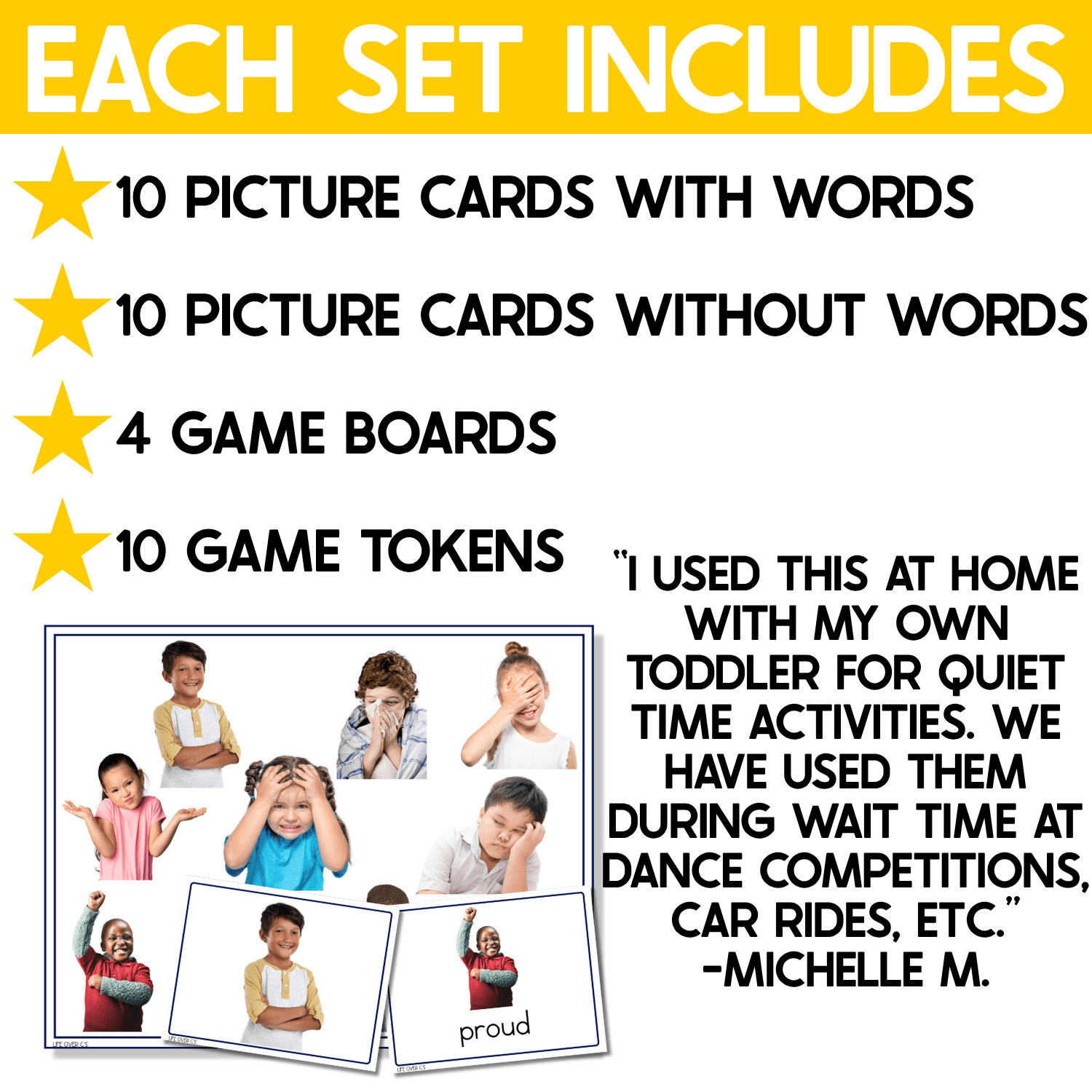
- Each game set includes:
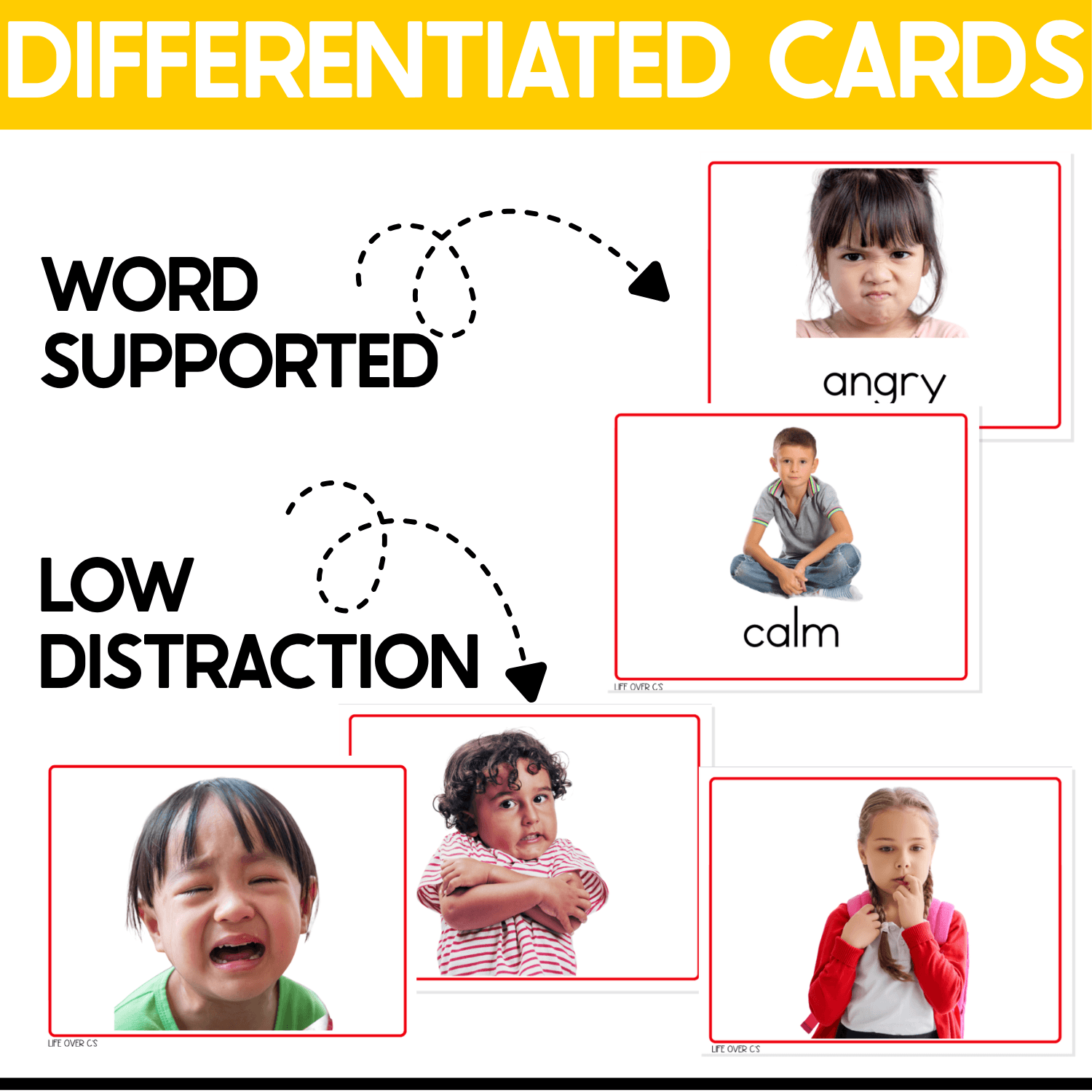
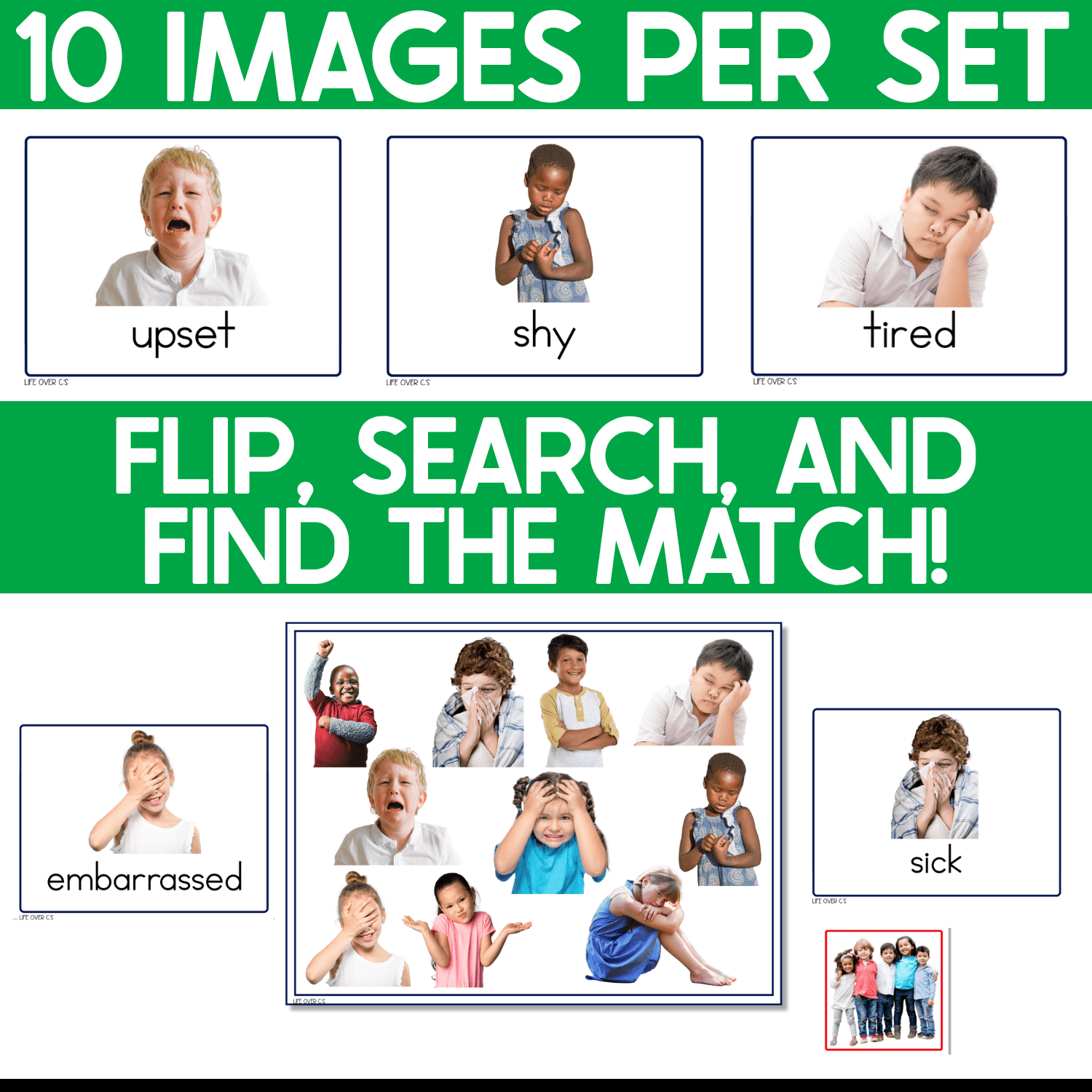
- 10 picture cards without words
- 10 picture cards with words
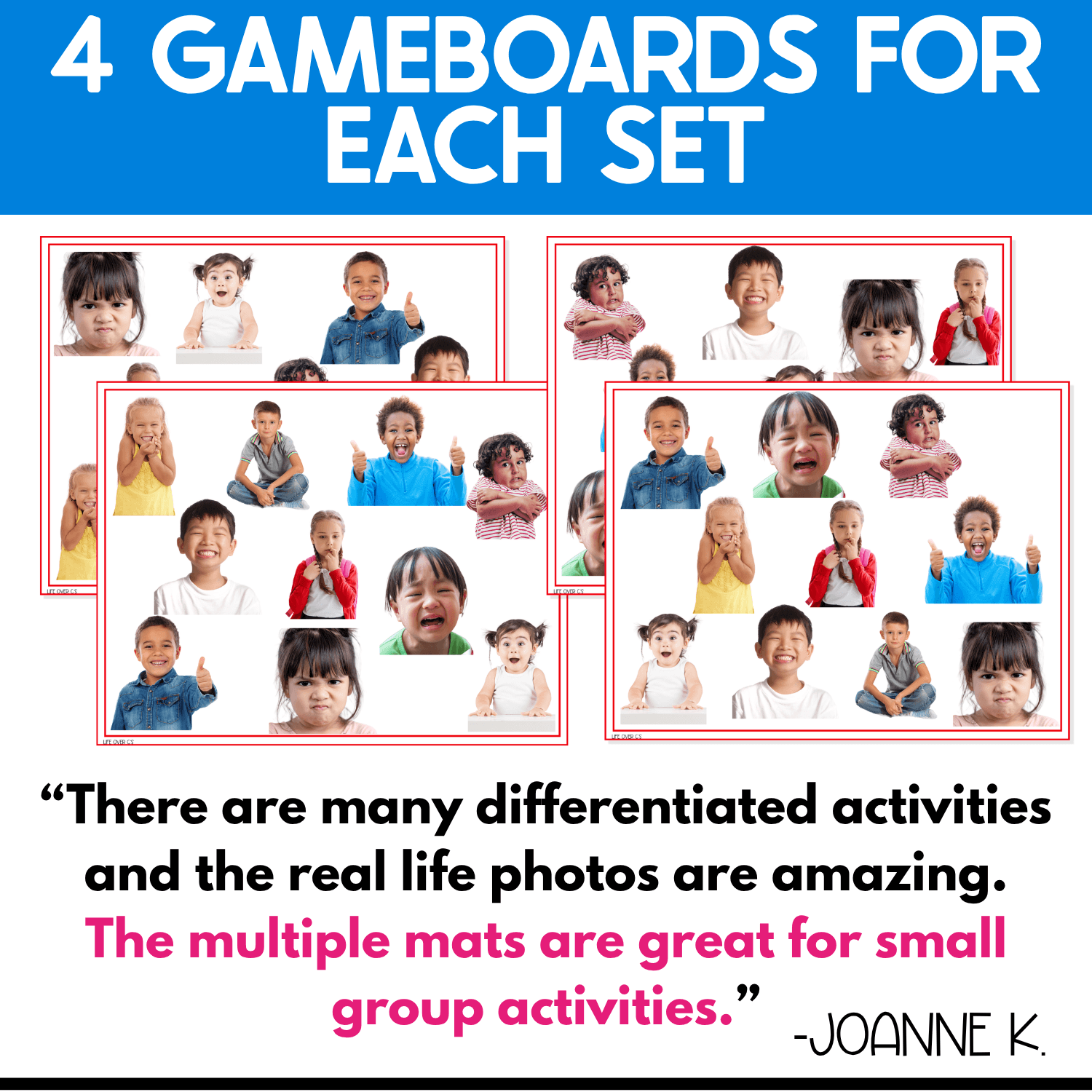
- 4 full-color I Spy game boards
- 10 game token cards
- I Spy “Flip” game instructions
- Cooperative and independent play directions
- Differentiation suggestions
- Preparation directions
Each game set features 10 real emotion photos, printed two ways: with a word prompt for the adult and without words for a picture-only game. Two sets means 20 feelings to explore, while each I Spy board stays focused on just 10 photos.
Choose the game set, card format and way to play that fits your preschoolers, small group or therapy goals.
Required Materials:
- Laminator
- Paper Cutter
- Paper, Printer, Ink
Standards for Emotion Recognition, Vocabulary and Speaking and Listening
This real-photo emotions I Spy game supports early learning standards connected to recognizing and naming feelings, emotion vocabulary, speaking and listening and cooperative play.
Common Core State Standards: English Language Arts
- CCSS.ELA-LITERACY.SL.K.1: Participate in collaborative conversations with peers and adults.
- CCSS.ELA-LITERACY.SL.K.2: Confirm understanding of information presented visually or orally.
- CCSS.ELA-LITERACY.SL.K.4: Describe familiar people and events with details, like what a child in a photo might be feeling.
- CCSS.ELA-LITERACY.SL.K.6: Speak audibly and express ideas clearly.
- CCSS.ELA-LITERACY.L.K.5.C: Identify real-life connections between words and their use.
Texas Prekindergarten Guidelines for Emotional and Language Development
- PK3.I.B.2.a: Children recognize and express a range of emotions. Each real photo gives kids a new feeling to spot and name.
- PK3.I.B.2.b: Children learn basic feeling words. Kids hear, find and say emotion words every time they flip a card.
- PK3.II.D.1: Children understand and use vocabulary to label and describe people and actions. Matching the emotion photos puts both receptive and expressive vocabulary to work.
- PK3.II.D.3: Children grow their language through conversation and play. Every round of the I Spy game brings more chances to hear and use feeling words.
Virginia Early Learning and Development Standards for Social-Emotional and Language Development
- SED2.1h (34-48 months): Children identify complex emotions in pictures and on faces, such as frustrated, confused and excited. Kids practice exactly that every time they search the Emotions I Spy board.
- Communication, Language and Literacy Development: Supports emotion vocabulary, expressive language and comprehension with real-photo visual supports.
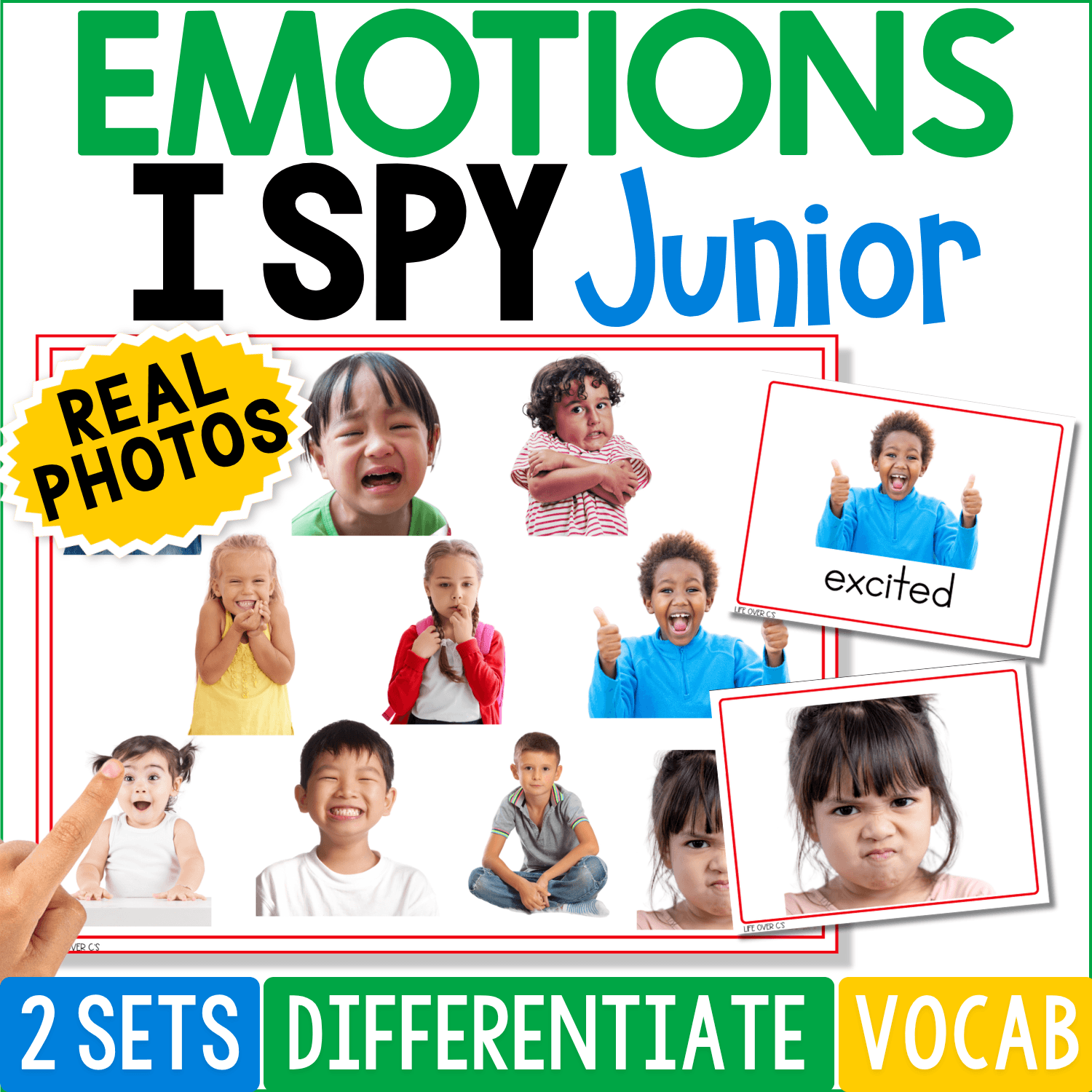
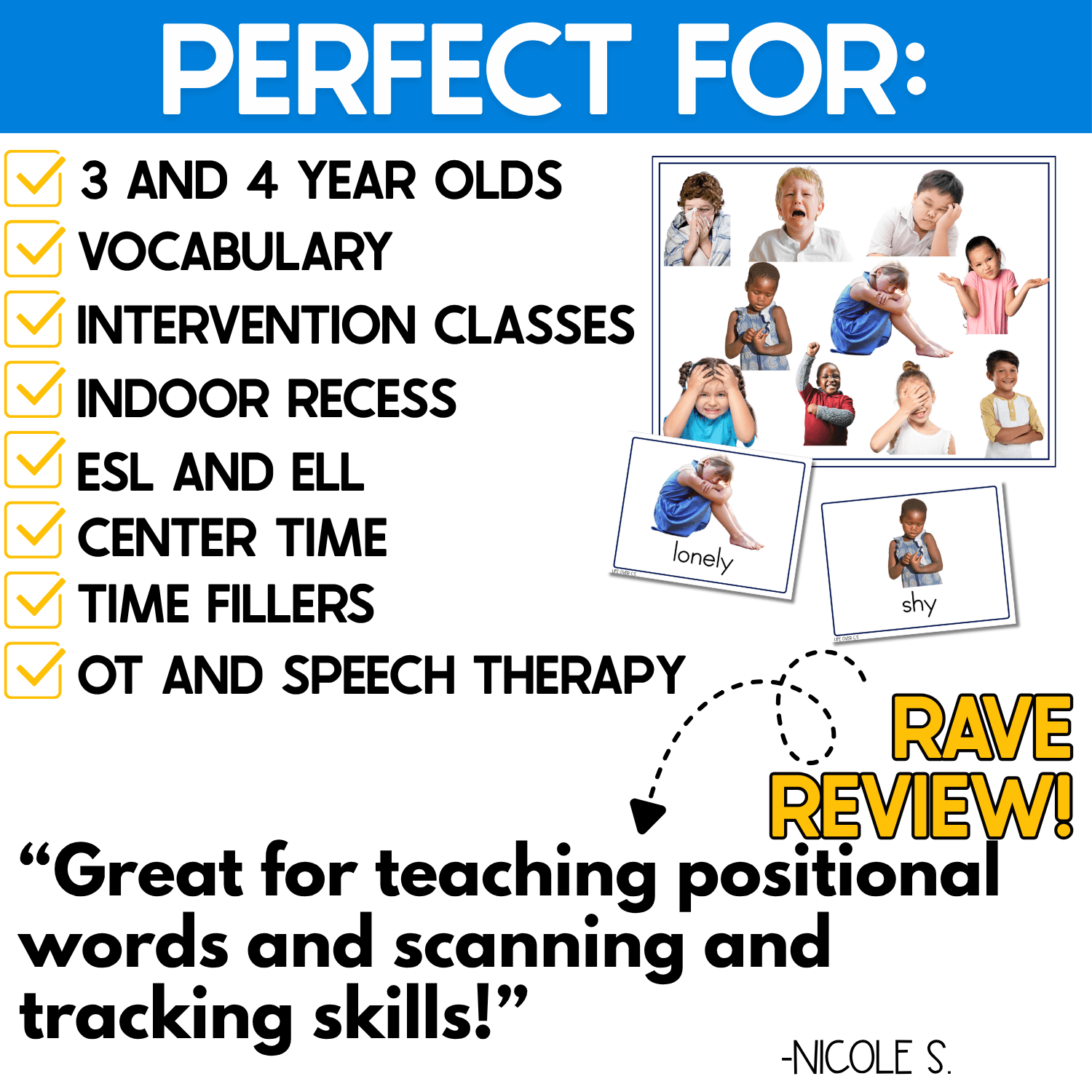
Emotions I Spy Junior is a real-photo I Spy board game for 3-4 year olds that builds emotion recognition, expressive and receptive vocabulary, visual discrimination and early SEL skills through simple picture matching.
Flip an emotion card. Find the face. Name the feeling. That’s the whole game, and preschoolers catch on fast!
Each Emotions I Spy board has just 10 real photos, so little ones can search without getting overwhelmed. Every match is a chance to talk about what happy, worried or frustrated actually looks like on a real face.
The two Emotions I Spy Junior game sets start with feelings your kids already know, like happy, sad, angry and scared. Then they stretch into trickier emotion words such as excited, surprised, embarrassed, confused, frustrated, confident and more.
Children don’t need to read to play. The words on the emotion cards are there for the adult, so the feelings vocabulary is always right in front of you.
Kids can point, touch, match or name the emotion, which makes this I Spy game easy to adjust for different expressive and receptive language skills.
Use the picture-only cards when you want all eyes on the face, or grab the cards with words when you’d like a quick vocabulary prompt.
How to Play Emotions I Spy Junior
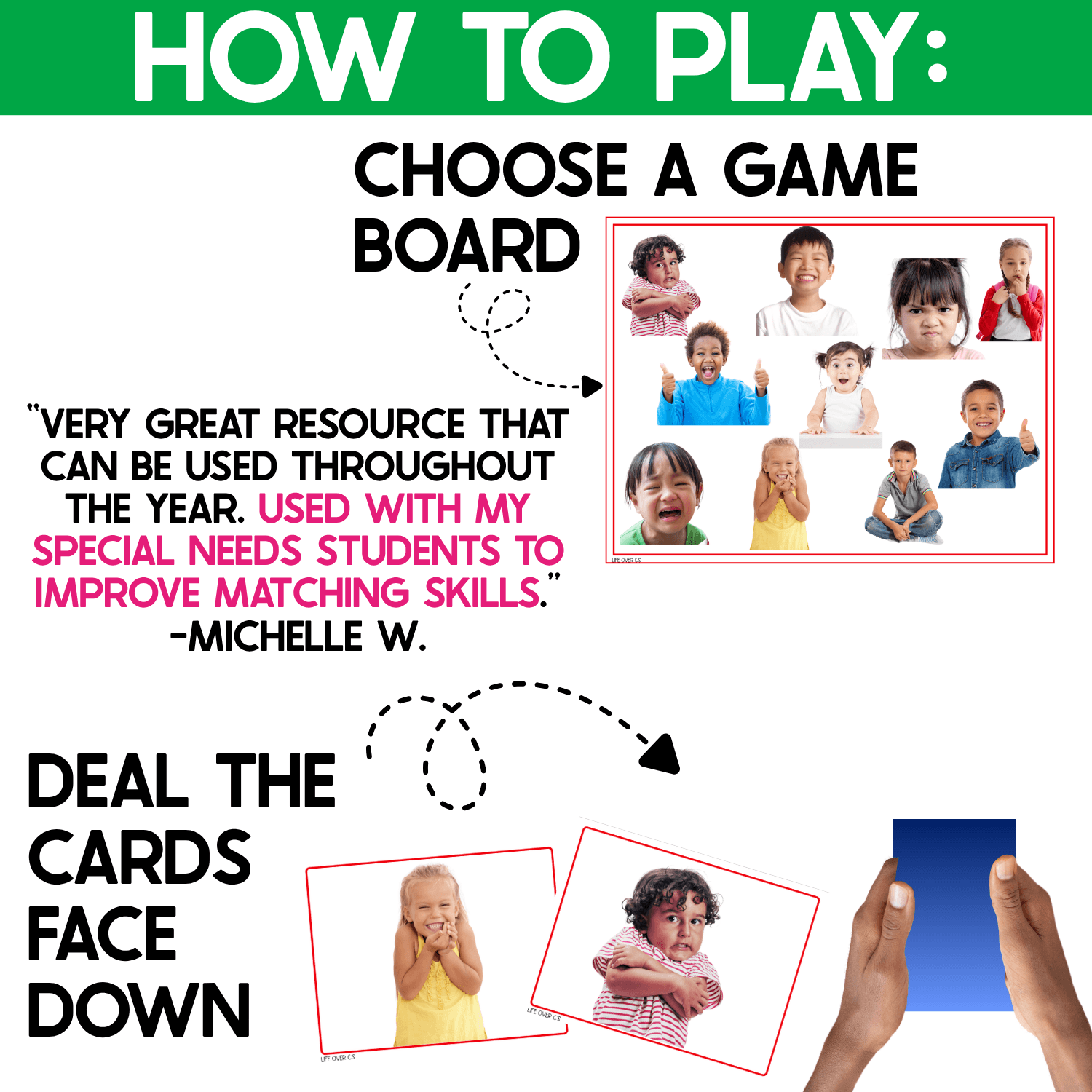
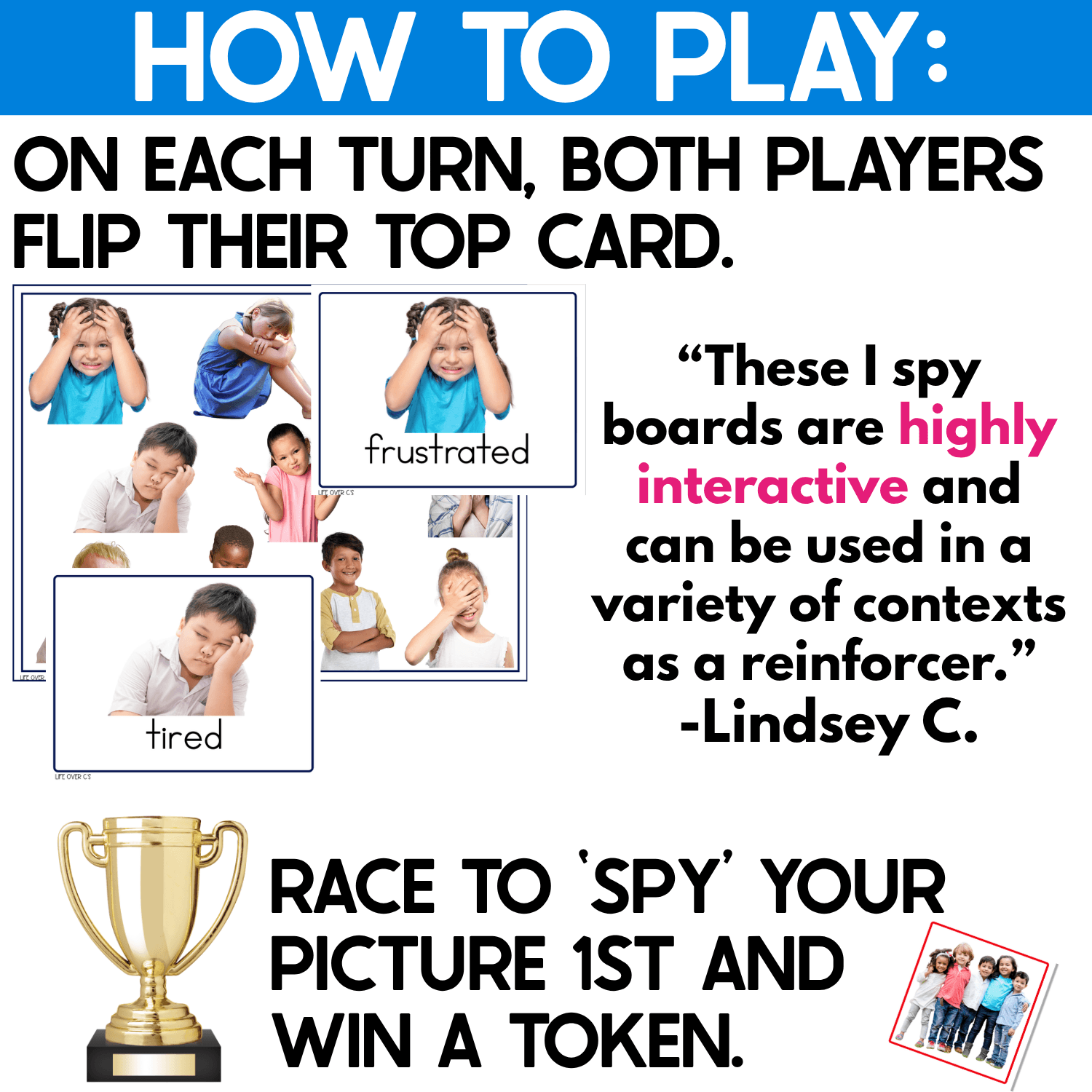
- Choose one Emotions I Spy Junior game set and place a board where everyone can see it. Deal the matching picture cards face down to each player.
- Players flip their top card and search the I Spy board for the matching real photo.
- The first player to point to or touch the right photo earns a token. Keep flipping, searching and matching until all the cards are played.
Cooperative Play: Place the emotion cards face down in one shared pile. Kids take turns flipping and work together to find each face on the I Spy board. Cover each match with a token to keep track of what you’ve found.
Independent Play: Set one board and its picture cards in a preschool center. Children flip one card at a time and find the matching real photo. Kids who love covering spaces can add a token to each photo they find.
Easy Ways to Differentiate This Emotions I Spy Game
Every group of preschoolers has a mix of language, attention and visual discrimination skills. These simple changes keep the I Spy routine familiar while meeting each child where they are.
For Children Who Need More Support:
- Start with 3-5 emotion cards and add more as the faces become familiar.
- Name each feeling together before you start the game.
- Model the first flip, search and match.
- Use the picture-only cards to keep the focus on the face.
- Accept pointing or touching as an answer.
For On-Level Practice:
- Play with all 10 emotion cards from one set.
- Ask children to name the feeling before or after they find the match.
- Follow the full I Spy Flip directions for small groups.
- Switch boards so kids hunt for the same faces in new spots.
For an Extra Challenge:
- Have children name the emotion before they start searching.
- Say a feeling word without showing the card and let kids find the face.
- Ask what they notice about the photo once they find it.
- Compare two emotion photos and talk about what makes them look different.
For Speech, OT, ELL or Special Education Support:
- Say the emotion word and give plenty of wait time to find the photo.
- Accept pointing, touching, gestures, AAC or any communication method the child already uses.
- Repeat the same small group of feelings across several sessions.
- Play cooperatively when the goal is emotion vocabulary, not speed.
- Have children place a token on each match for added fine motor practice.
- Use the cards with words when you want the same vocabulary prompt every time.
Emotions I Spy Junior Is Perfect For:
- Preschool and pre-K
- 3-4 year olds
- SEL activities
- Emotions and feelings themes
- Circle time
- Small-group instruction
- Preschool learning centers
- Special education
- Early childhood special education
- Early intervention
- Speech and language therapy
- ELL and multilingual learners
- Life skills activities
- Cooperative play
- Independent matching practice
- Homeschool preschool
- Library activity stations