Color by Emotions: Winter
Recommended Grade Level:
Type of Resource: PDF
Number of Pages: 8



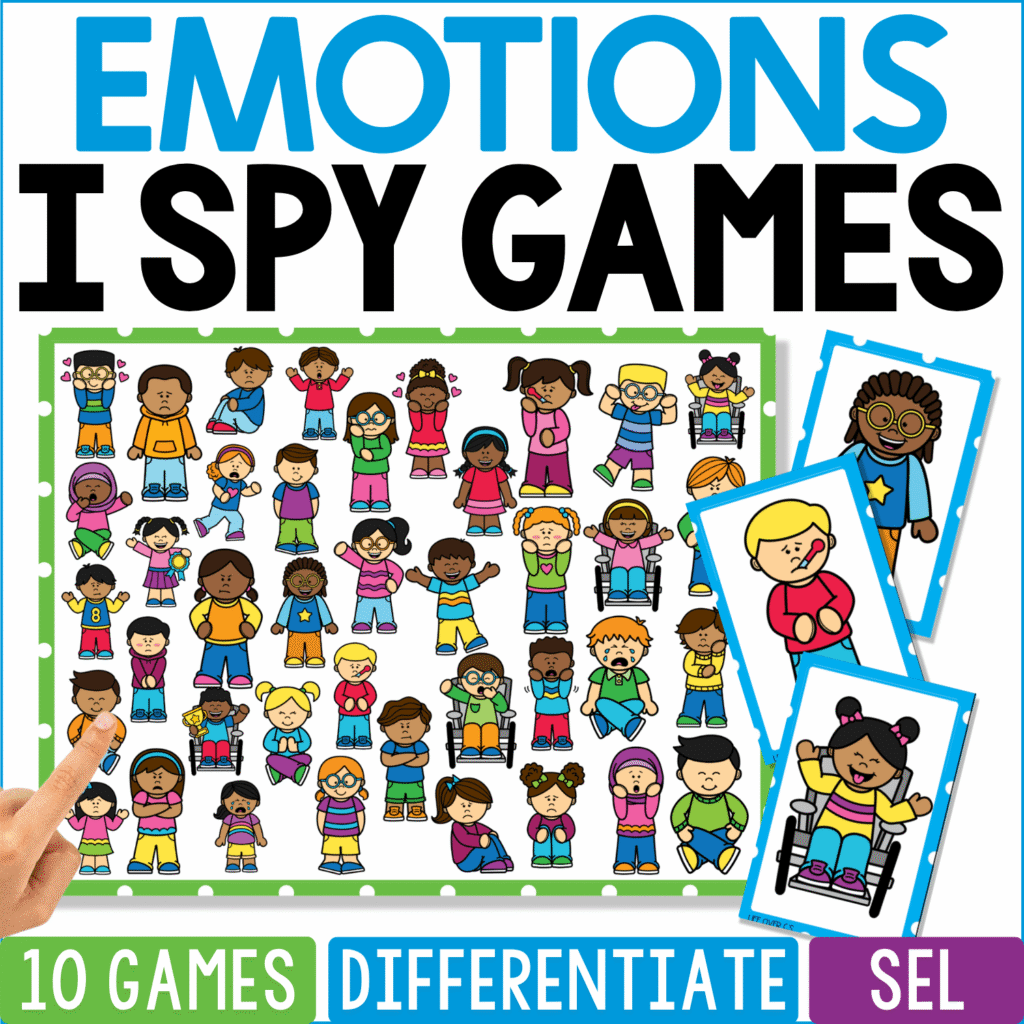


Color by Emotion: Winter
- 7 winter color by emotion pages, like a sweater and a child in a snowsuit
- Each page has a key that matches feeling faces to colors
Required Materials:
- Paper, printer and ink
- Crayons or colored pencils
Standards for Feelings and Emotions
These pages support early learning standards connected to naming feelings.
Texas Prekindergarten Guidelines and TEKS
- PK4.I.B.2.b: Child uses verbal and nonverbal communication to communicate basic emotions and feelings. Kids name each feeling face.
- PK4.I.D.1: Child demonstrates an understanding that others have perspectives and feelings that are similar and/or different from her own. Kids talk about when they feel each way.
Color by Emotion: Winter gives preschool through first grade kids a calm coloring activity that builds the words they need to talk about feelings.
Each space has a small feeling face. Kids look at the face, find that feeling in the key and color the space to match.
Stop and talk about the faces as kids color: “What does this face feel? When do you feel that way?”
How to Use Color by Emotion: Winter
- Print the pages.
- Talk about the feeling faces in the key.
- Kids find a face in the picture.
- Kids color the space with the matching color.
- Talk about the finished picture and the feelings in it.
Calm Down Corner: Keep a few pages in your calm down area.
Morning Meeting: Talk about one feeling, then color.
Easy Ways to Differentiate These Color by Emotion Pages
Some kids in your group are still learning feeling words, some know the words but not how feelings look on a face and some are ready to talk about what causes a feeling. Each page has a key that matches feeling faces to colors, so every space is a chance to name a feeling.
For Children Who Need More Support:
- Talk about each feeling face in the key before kids start. Kids need the words before they can match them.
- Make each face together in a mirror. Copying the face helps kids connect the word to the feeling.
- Have kids color one feeling at a time. Looking for one face across the page is easier than switching colors every space.
- Lay out only the crayons that page needs. Fewer choices on the table means fewer mix-ups.
For On-Level Practice:
- Have kids color the whole page on their own using the key. Following the key builds focus and attention to detail.
- Have kids name the feeling each time they color a space. Saying the feeling word builds emotional vocabulary.
- Talk about the finished picture and the feelings in it. Talking about feelings is the SEL part of the page.
- Ask “When have you felt that way?” for one of the faces. Connecting the face to a real moment builds self-awareness.
For an Extra Challenge:
- Have kids tell what might make someone feel each way in the key. Explaining causes is the next step in understanding emotions.
- Have kids make their own color key with different feelings. Creating a key shows real understanding.
- Have kids write a sentence about how they feel today. Writing about feelings connects SEL to writing.
- Have kids sort the feelings into ones that feel good and ones that feel hard. Sorting helps kids talk about their own feelings.
For Speech, OT, ELL or Special Education Support:
- Calm down: keep a few pages in a calm down corner. Coloring is a soothing way to practice naming feelings.
- ELL: show each feeling on your own face as you say the word. Facial expressions mean the same thing in every language.
- Fine motor: use chunky crayons for a comfortable grip. A thicker crayon is easier to control.
- Visual attention: cover half of the page with a sheet of paper. A smaller area makes it easier to find each face.
Color by Emotion: Winter Are Perfect For:
- Preschool and pre-K
- Kindergarten
- First grade
- Social-emotional learning
- Winter themes
- Special education
- ELL and multilingual learners
- Homeschool