I Spy “Flip” Board Game: Real Life Arts and Craft Supplies
Recommended Grade Level:
Type of Resource: PDF
Number of Pages: 21

You must be a Paid Member to Access this Resource.
Join the Life Over C’s Club to Access

Already a member? Login below:
Coordinating Activities
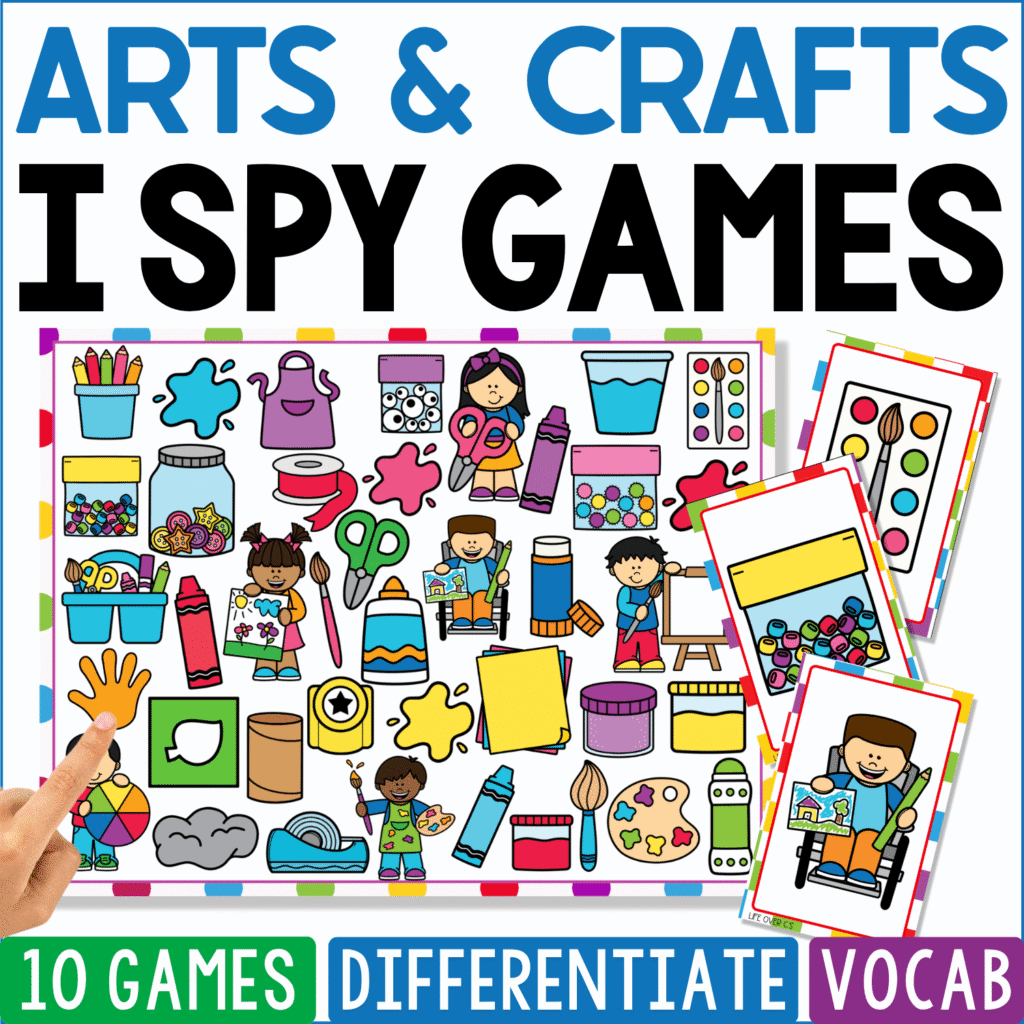


Real Life Arts and Craft Supplies I Spy “Flip” Board Game
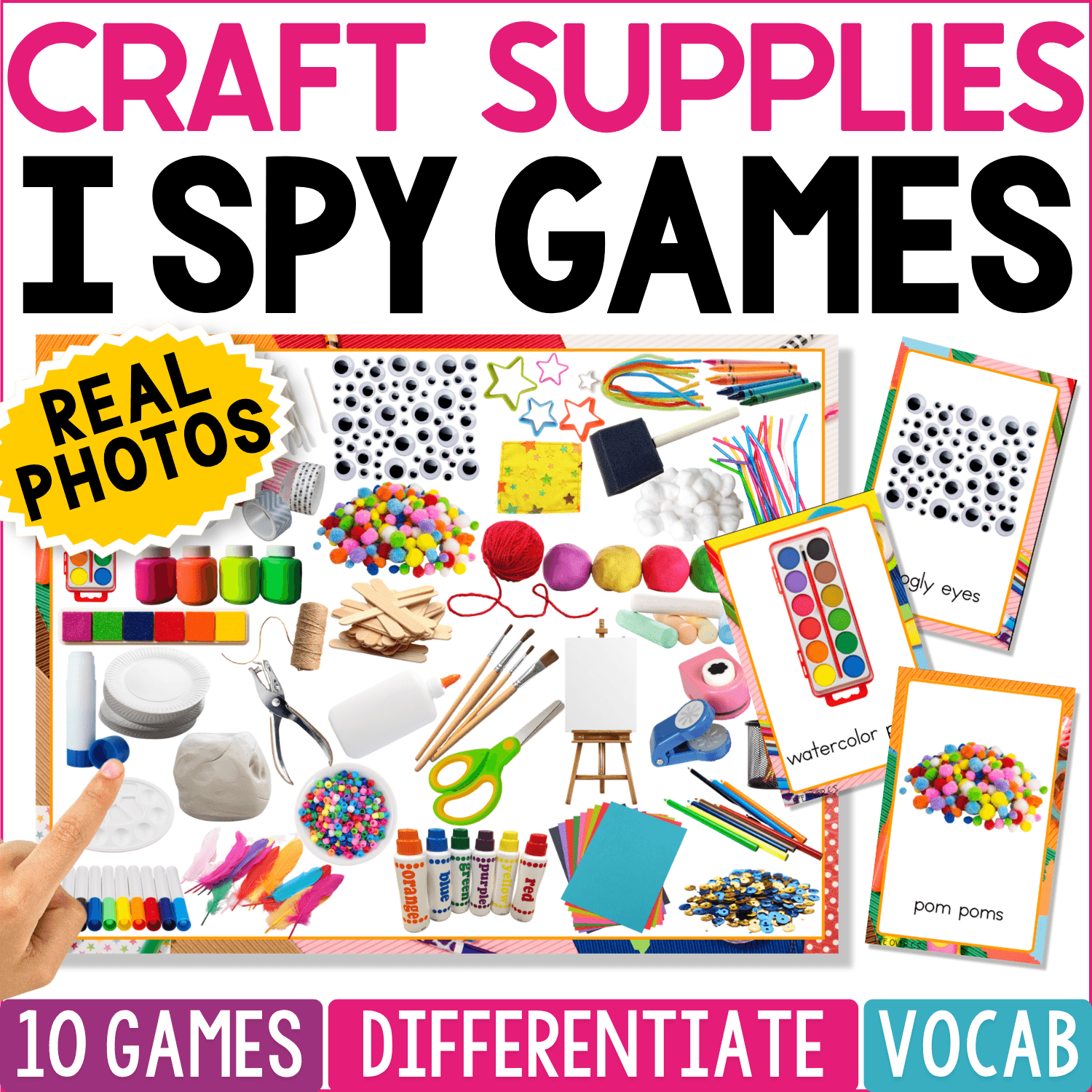
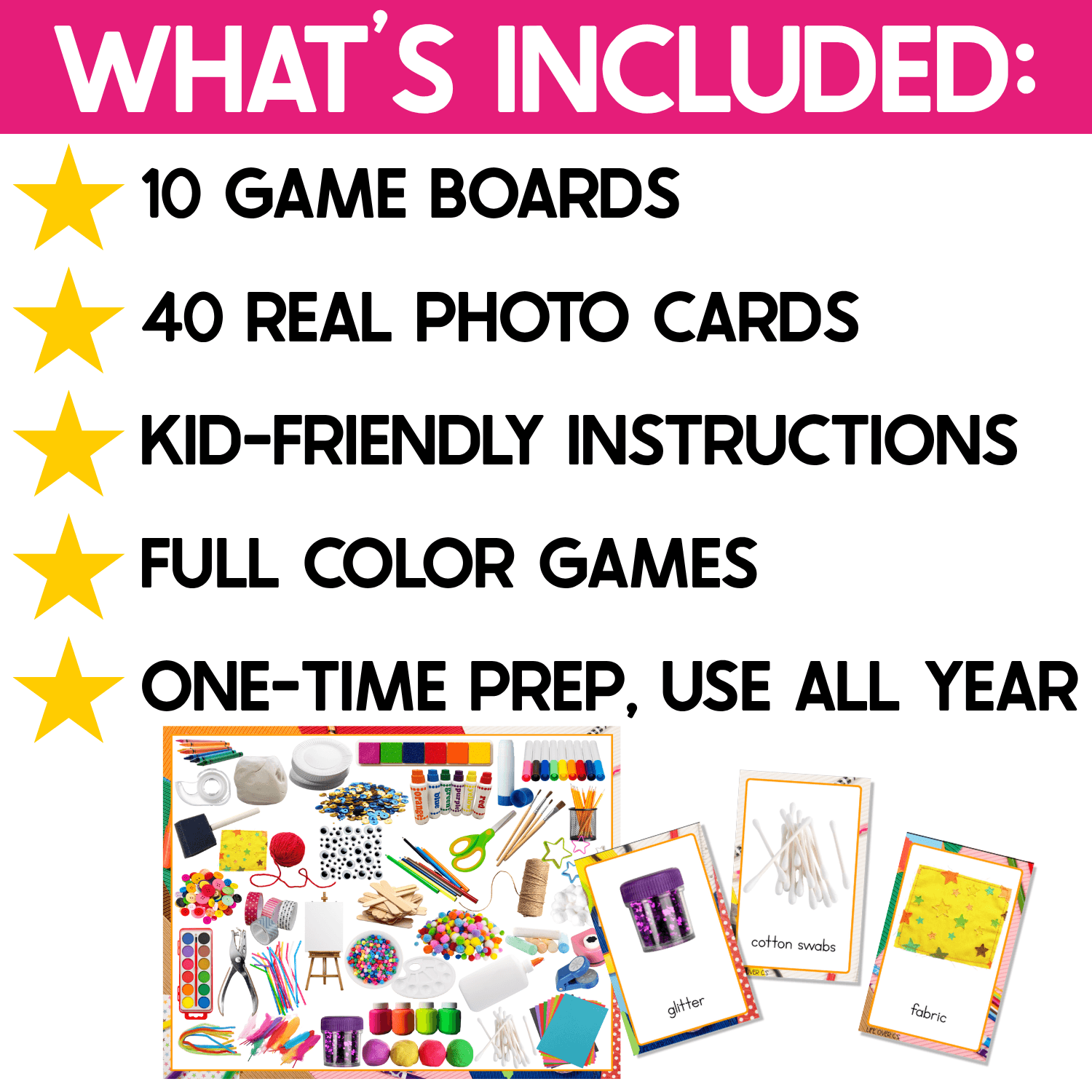
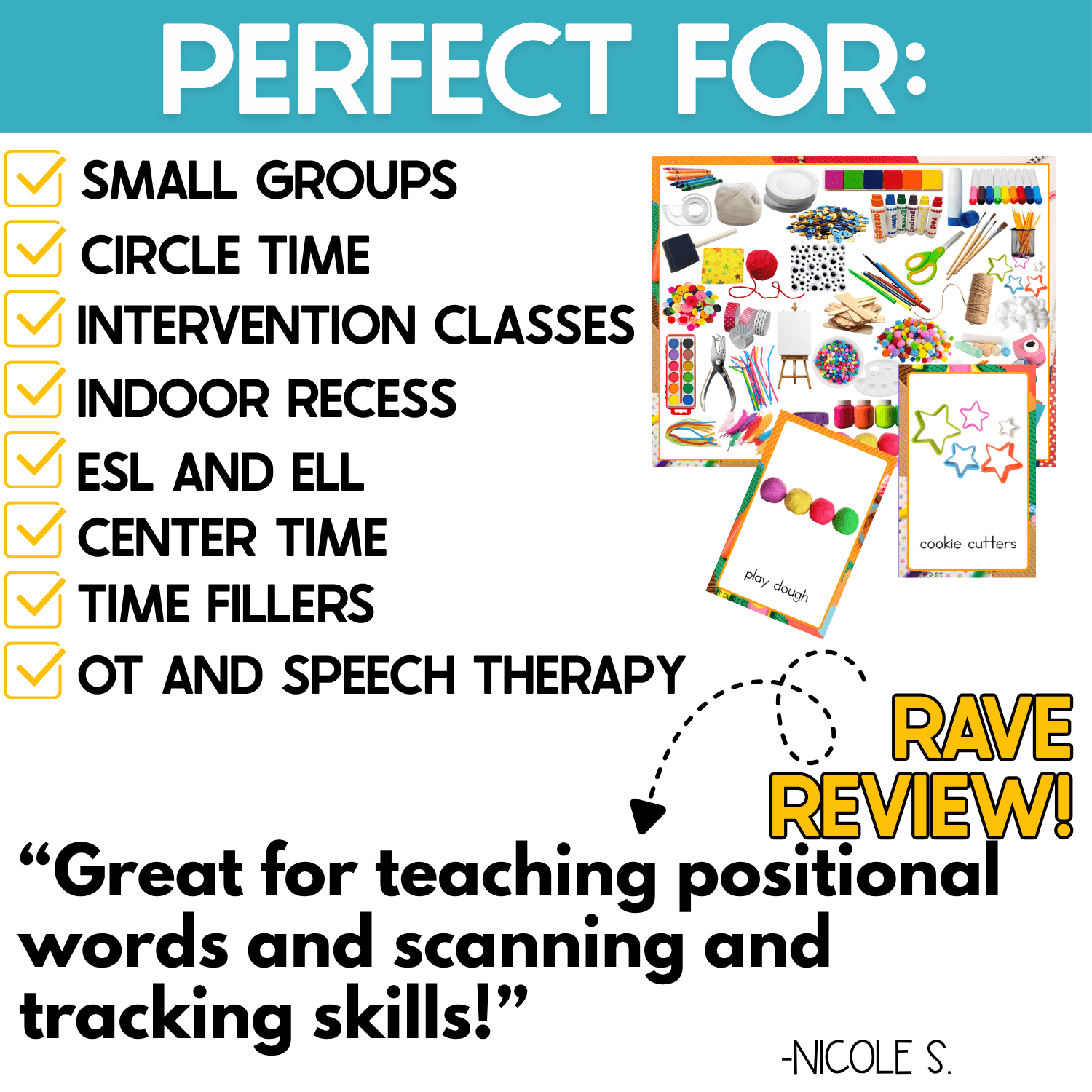
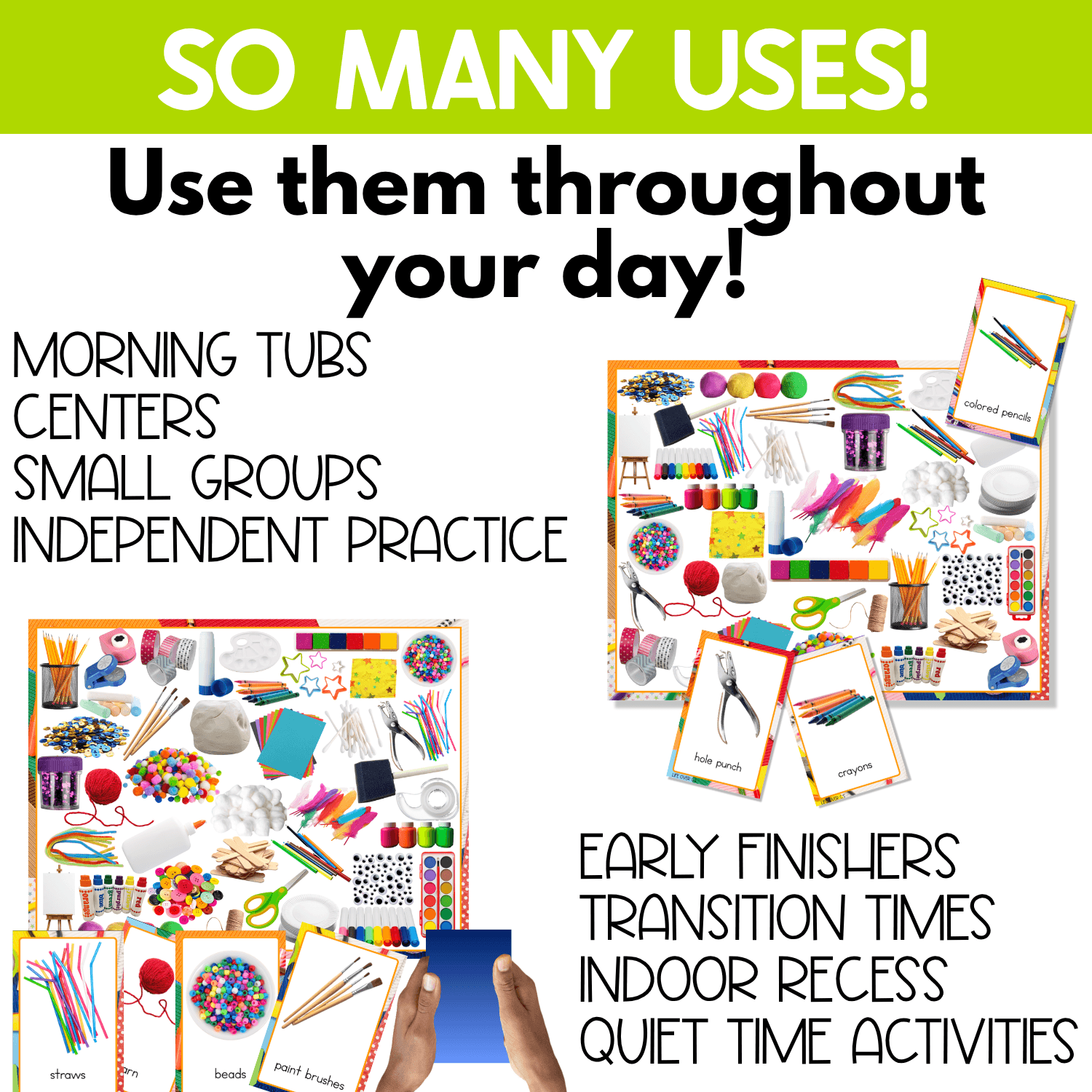
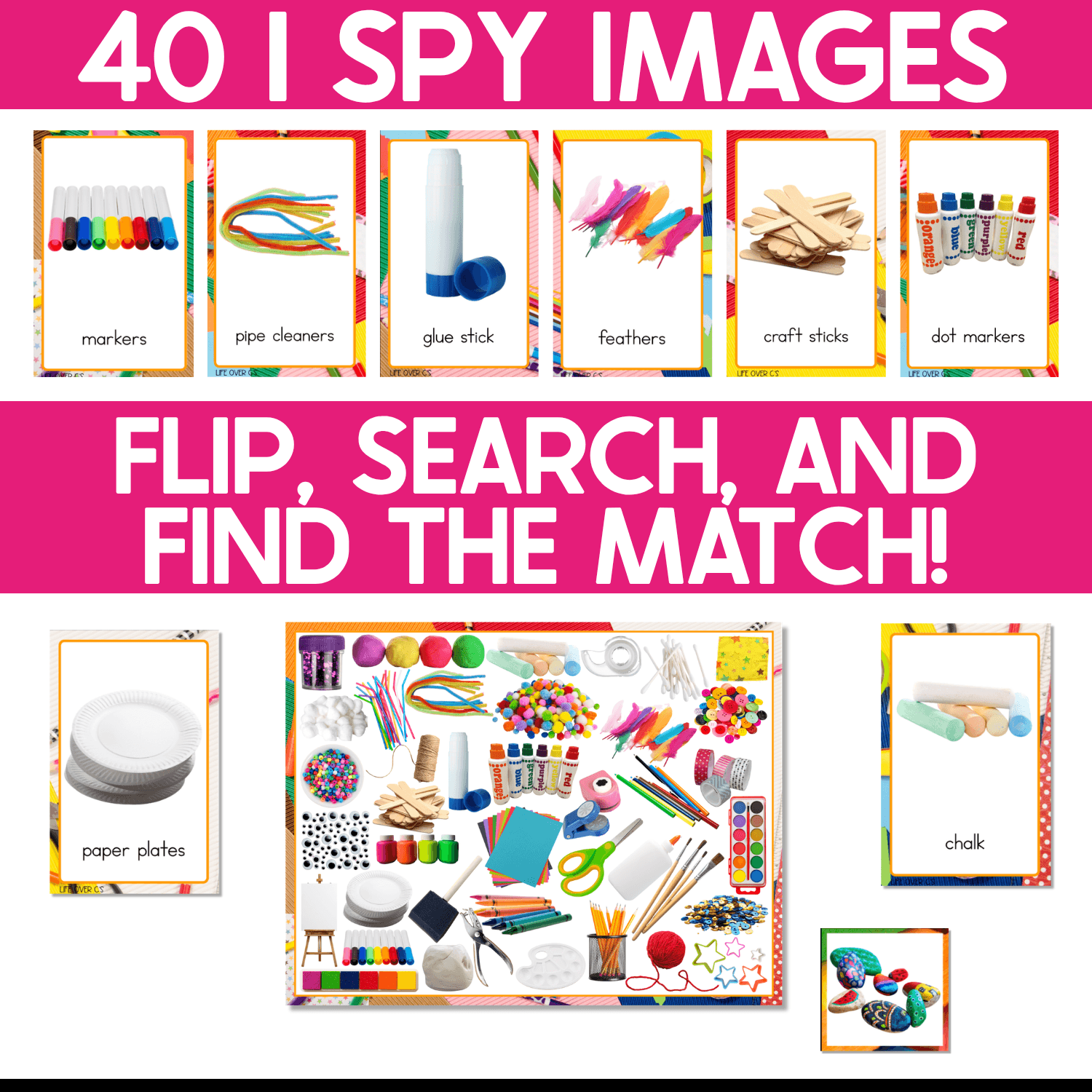
- 40 real photo I Spy picture cards, 8 to a page (pom poms, paint bottles, craft sticks, paper plates, googly eyes and more)
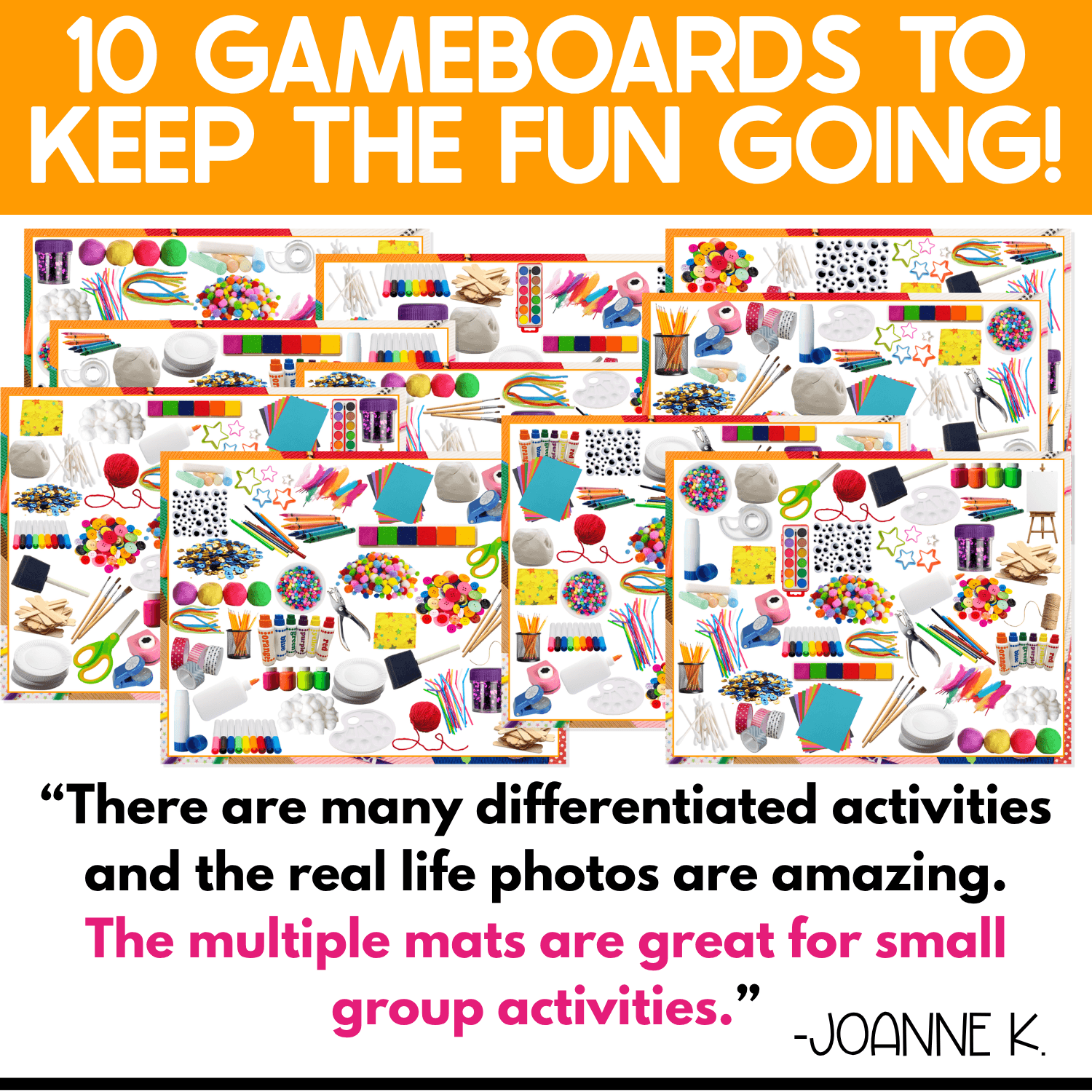
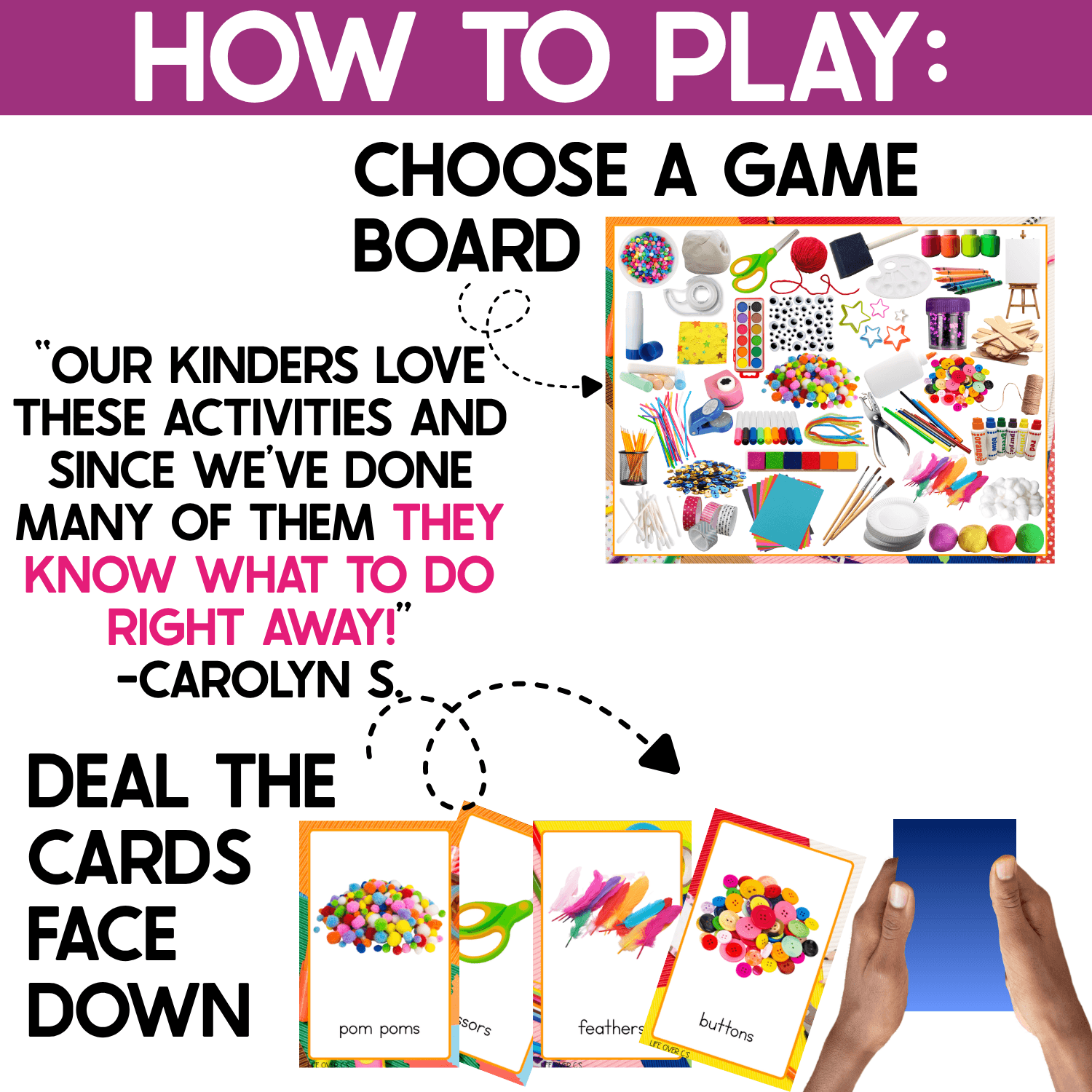
- 10 full-color real photo I Spy game boards
- 1 page of 20 paint palette tokens
- Table of contents and preparation directions
- I Spy “Flip” game instructions
The real photos match what kids see in everyday life, which makes it easy to connect new words to real things. Some photos look a lot alike, like the different paints, sticks and cups, so kids have to check the details to find the exact match.
Required Materials:
- White cardstock, printer and ink
- Laminator
- Paper cutter or scissors
- Optional: mini erasers or counters to use as tokens
Standards for Vocabulary and Speaking and Listening
This real photo arts and craft supplies I Spy game supports early learning standards connected to art supply vocabulary, visual discrimination and taking turns in conversation.
Common Core State Standards: English Language Arts
- CCSS.ELA-LITERACY.L.K.5.A: Sort common objects into categories to gain a sense of the concepts the categories represent. Kids sort the photos into drawing, painting and building supplies.
- CCSS.ELA-LITERACY.L.K.5.C: Identify real-life connections between words and their use. Kids talk about art supply words they know from real life.
- CCSS.ELA-LITERACY.SL.K.1: Participate in collaborative conversations with peers and adults in small and larger groups. Players take turns, name the pictures and talk about each match.
Texas Prekindergarten Guidelines and TEKS for English Language Arts and Reading
- PK4.II.D.1: Child understands and uses a wide variety of words to label and describe people, places, things and actions. Kids name and describe each art supply picture they find.
- PK4.II.D.3: Child consistently understands and uses new vocabulary learned through books, conversations and play. Every round brings more chances to hear and use the theme words.
- TEKS K.1(D): Work collaboratively with others by following agreed-upon rules for discussion, including taking turns. Players take turns flipping cards and searching the board.
Virginia English Standards of Learning
- K.RV.1.C: Use vocabulary from across content areas. Kids build art supply vocabulary as they play.
- K.RV.1.F: Use newly learned words and phrases in discussions and speaking activities. Kids name each picture when they find it.
- K.C.1.A.i: Listen actively and follow agreed-upon rules for participating in discussions. Kids take turns and wait for each player to flip.
The Real Life Arts and Craft Supplies I Spy “Flip” Board Game gives preschool and kindergarten kids hands-on practice with visual discrimination and art supply vocabulary using 40 real photo cards and 10 colorful game boards.
Flip a card and find the googly eyes! Kids race to spot real photos of craft supplies on a busy I Spy board.
The real photo cards show pom poms, paint bottles, craft sticks, paper plates, googly eyes, chalk, cotton balls and pipe cleaners. Some photos look a lot alike, like the different paints, sticks and cups, so kids have to check the details to find the exact match.
Kids who aren’t reading yet can play right along, since every match is made by looking at the photos. Name each picture as you go to build vocabulary while kids search.
With 10 different game boards, the same photos land in new spots each round. That keeps the search fresh while kids build visual scanning, focus and attention to detail.
How to Play the Arts and Craft Supplies I Spy Game
- Choose one I Spy game board and place it where every player can see it. Deal the picture cards face down so each player has a small stack.
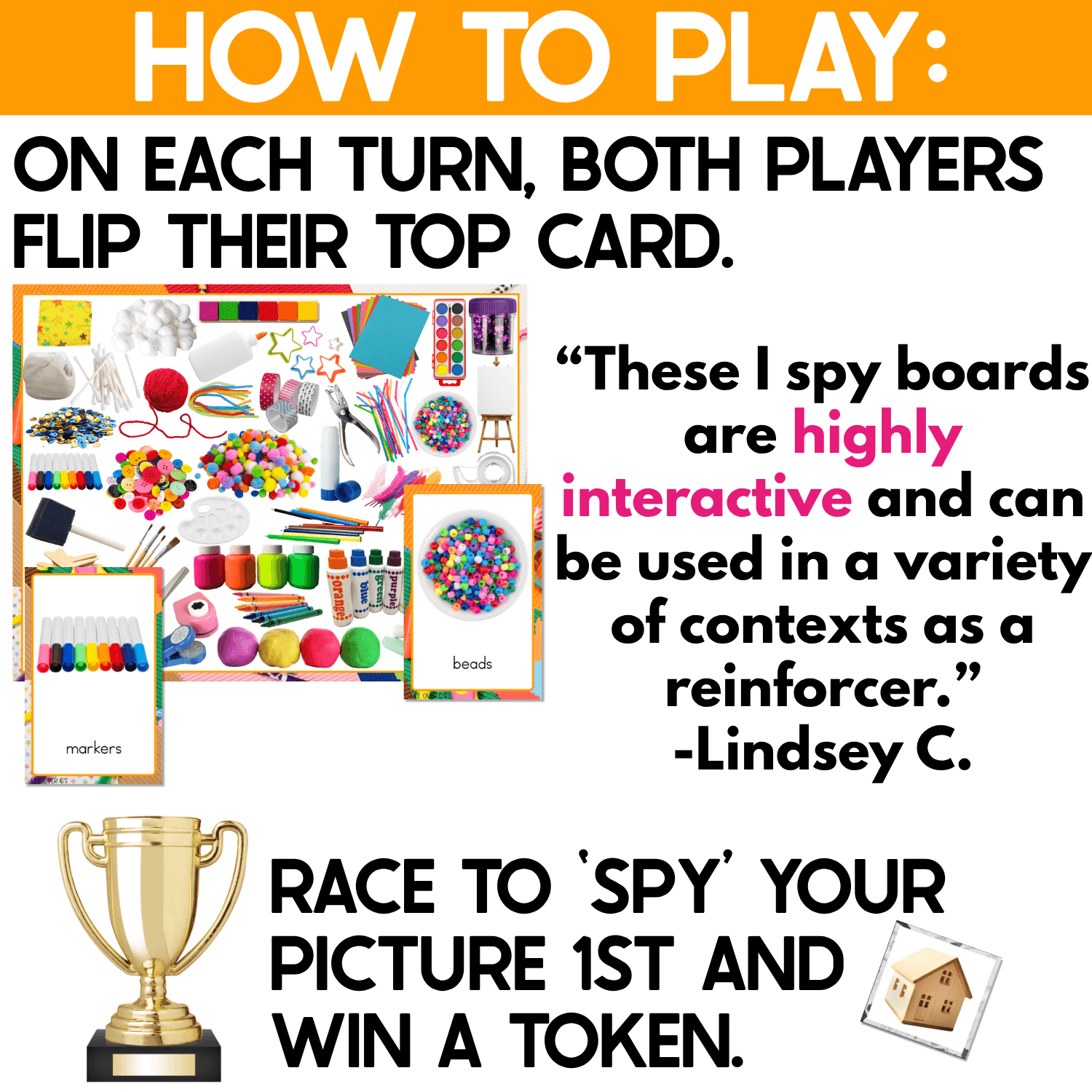
- All players flip their top card at the same time and race to find the matching picture on the board.
- The first player to point to the right picture names it, then wins a paint palette token or keeps the card as a point. Play until every card is flipped. The player with the most points wins!
Cooperative Play: Put the picture cards in one shared pile. Kids take turns flipping a card and work together to find it on the board. Cover each match with a token to see how many pictures the group can find.
Independent Play: Set one board and a stack of cards in a learning center. Kids flip one card at a time, find the picture and name it. Covering each picture with a token or mini eraser adds a little fine motor practice.
Easy Ways to Differentiate This Arts and Craft Supplies I Spy Game
Craft supplies are things kids touch every day in class, but many don’t know their names. A child might ask for “the fuzzy balls” instead of pom-poms or “the bendy things” instead of pipe cleaners. This game teaches those words, and you can change it for kids who are just starting, kids who know them all and kids ready to plan a project.
For Children Who Need More Support:
- Start with supplies from your own art shelf, like crayons, glue and paper plates. Kids already use these, so the names connect right away.
- Hold up the real pom-pom or pipe cleaner when its card is flipped. Kids learn the name by touching the real thing.
- Keep the game to one board and 8 cards so kids hear each supply name several times.
- Point to the row where the match is and let kids finish the search. A smaller area keeps the search successful.
For On-Level Practice:
- Sort the cards into things we draw with, things we stick with and things we decorate with. Sorting by use builds category words.
- Ask “What could we make with this?” after each match. Thinking about uses builds vocabulary depth.
- Compare the different paint bottles and sticks on the cards. Noticing size and color differences is visual discrimination practice.
- Have kids ask for supplies by name during your next craft. Using the words in real life is the goal.
For an Extra Challenge:
- Pick three cards and plan a craft that uses all three, then draw the plan. Planning uses sequencing and creativity.
- Describe a supply by how it feels, like “soft and round,” for a partner to find. Texture words are strong describing words.
- Read the supply names under the photos and sort them by number of syllables. Counting syllables in supply names builds phonological awareness.
- Write a short list of supplies needed for a project using the card words. Making a list is real-world writing.
For Speech, OT, ELL or Special Education Support:
- Speech: practice long words like pipe cleaner, googly eyes and craft stick by clapping the parts. Multisyllable practice helps clear speech.
- Fine motor: after the game, have kids thread pom-poms on a pipe cleaner. It’s the same pincer grasp kids use to place tokens.
- ELL: label your art shelf with the same words used on the cards. Seeing the word every day helps English learners remember it.
- Sensory: let kids touch a bag of cotton balls or pom-poms during the game if they need calming input.
Arts and Craft Supplies I Spy Game Is Perfect For:
- Preschool and pre-K
- Kindergarten
- Art centers
- Back to school
- Small-group instruction
- Speech and language therapy
- Occupational therapy
- Special education
- ELL and multilingual learners
- Homeschool
- Early finishers