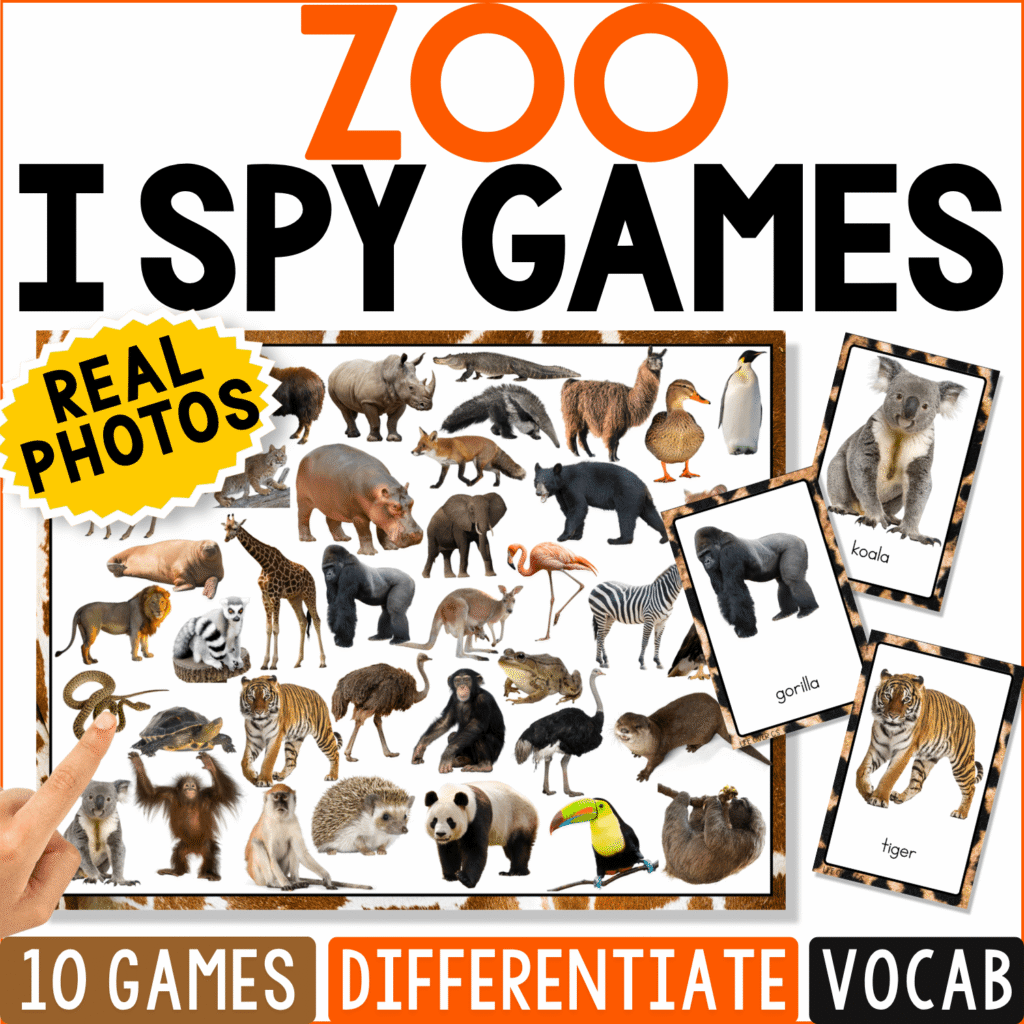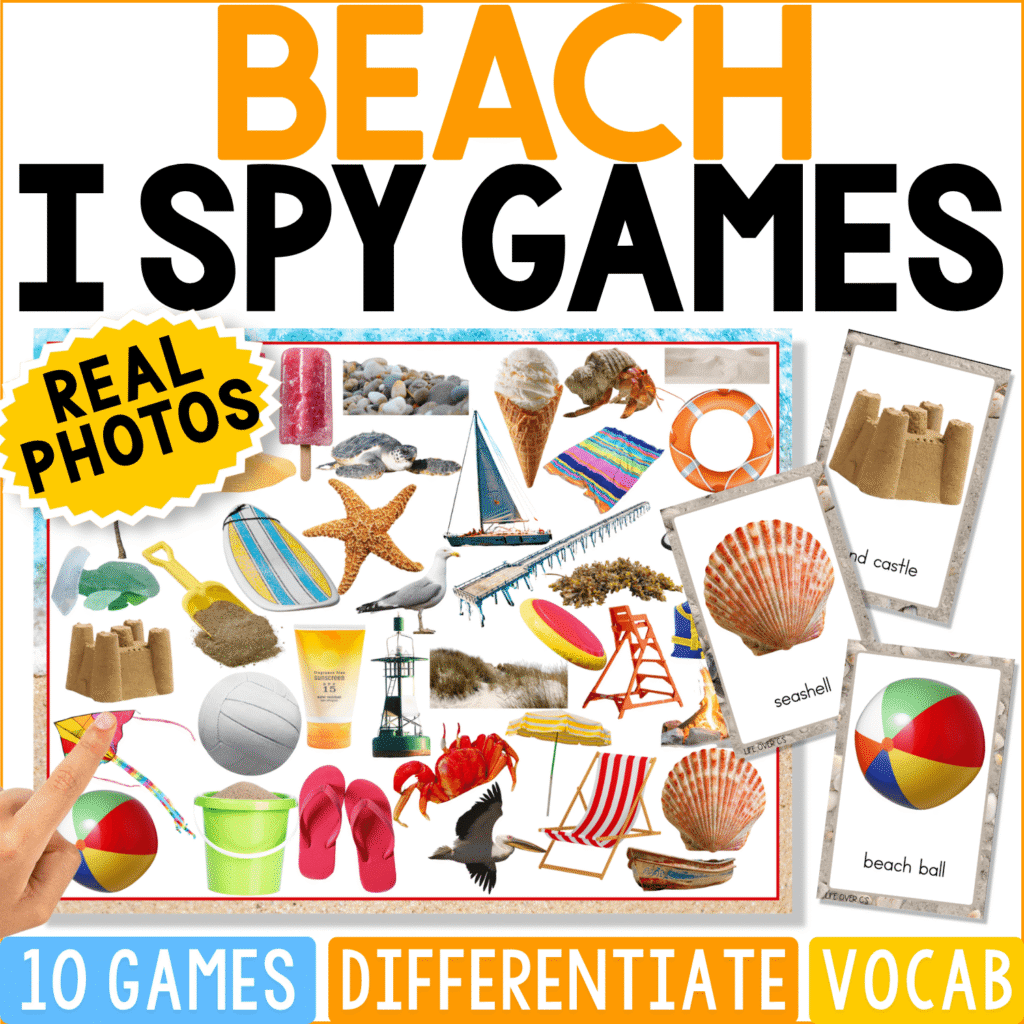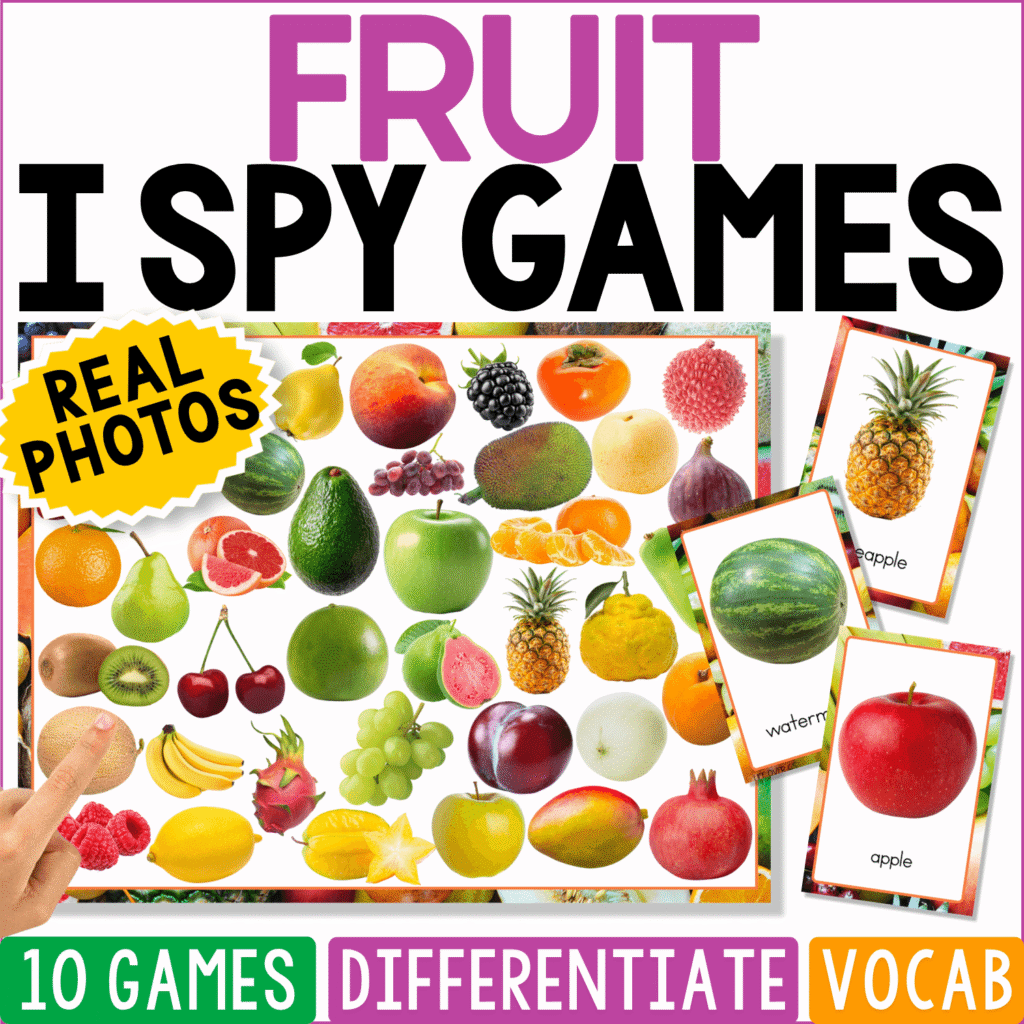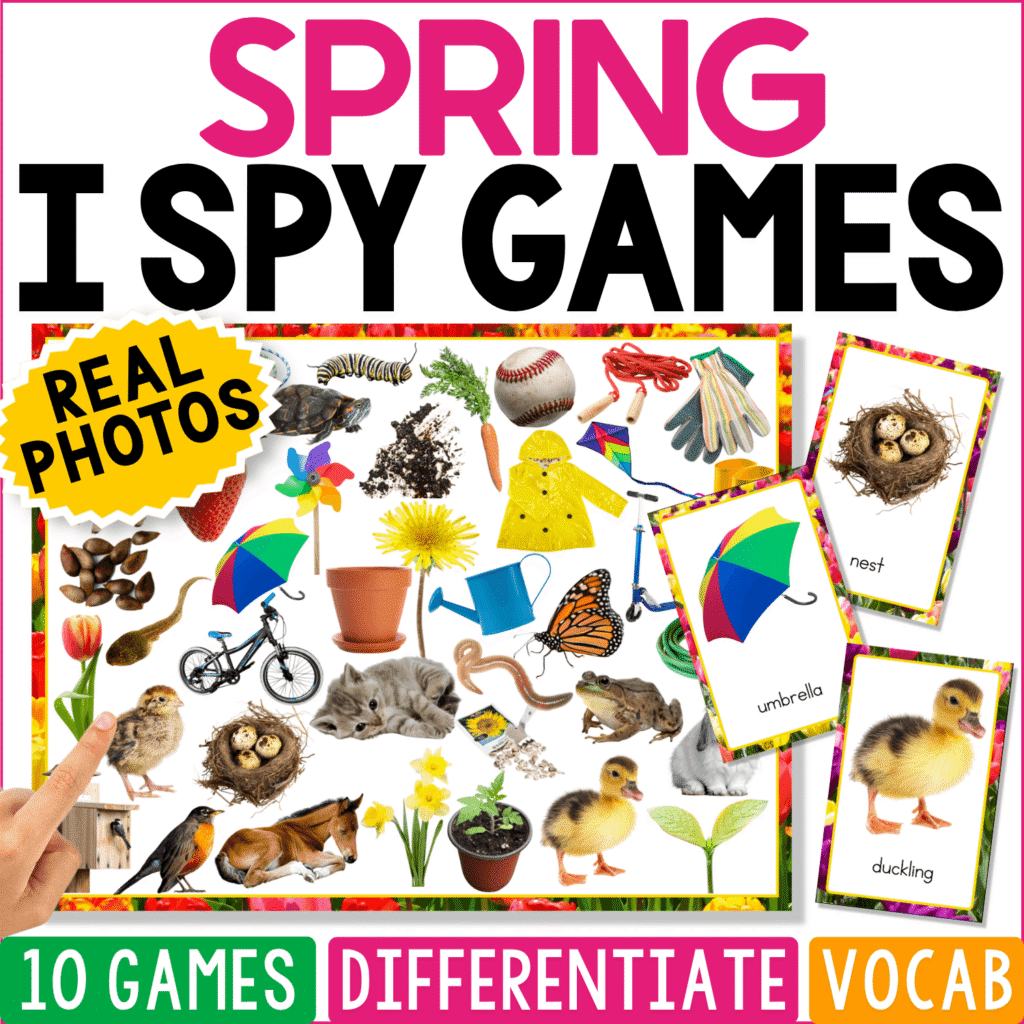
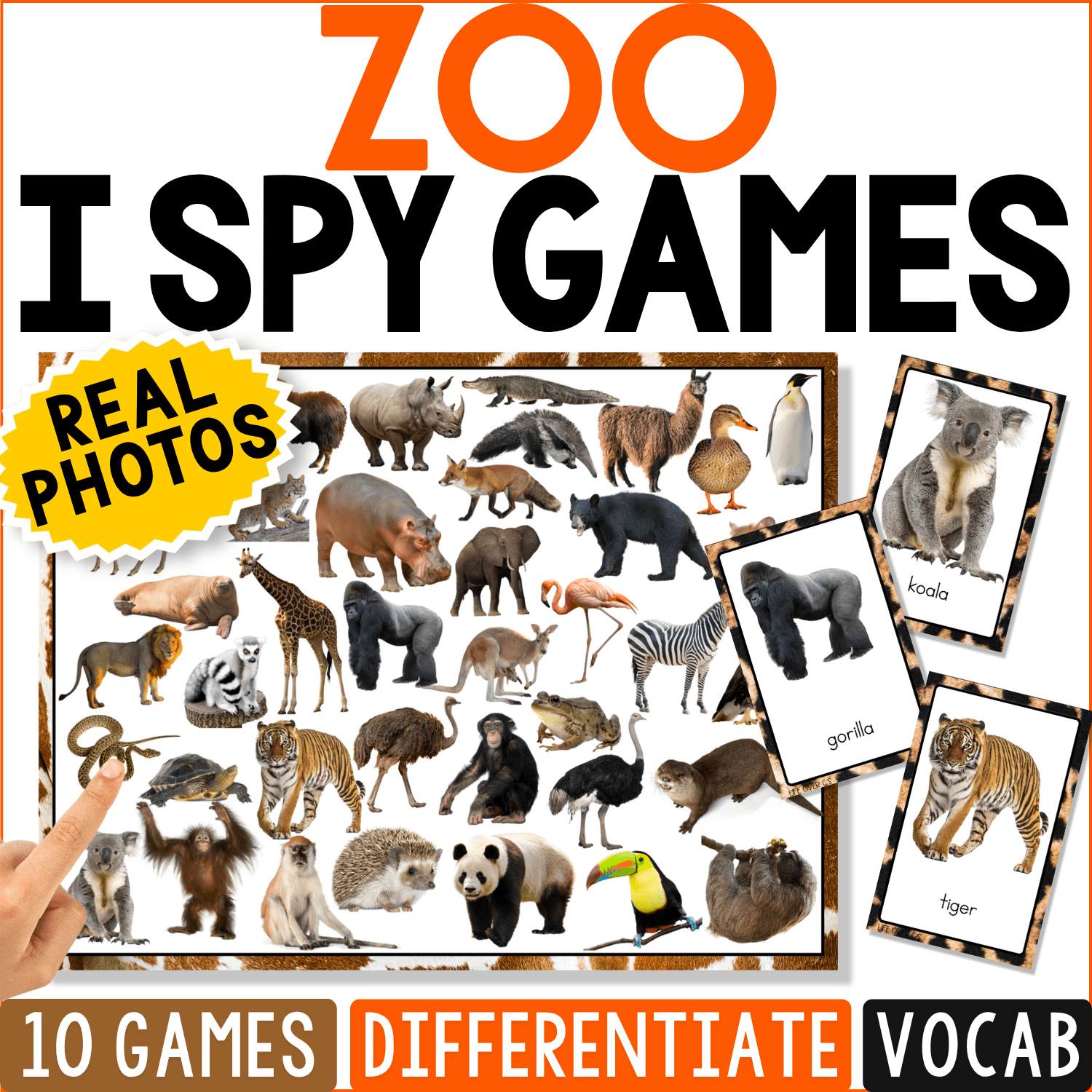
I Spy “Flip” Board Game: Real Life Zoo Animals
Recommended Grade Level:
Type of Resource: PDF
Number of Pages: 22

You must be a Monthly, Annual or Forever Member to Access this Resource.
Join the Life Over C’s Club to Access

Already a member? Login below:
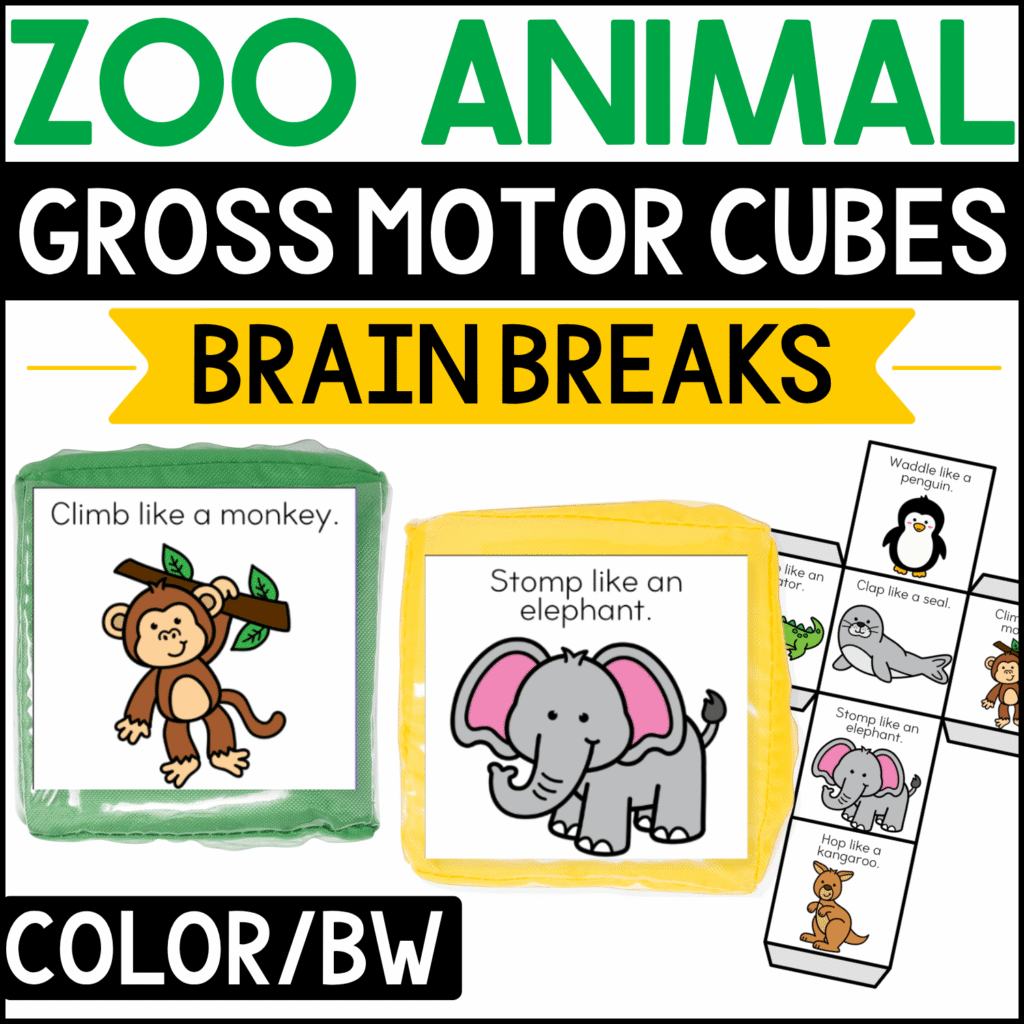
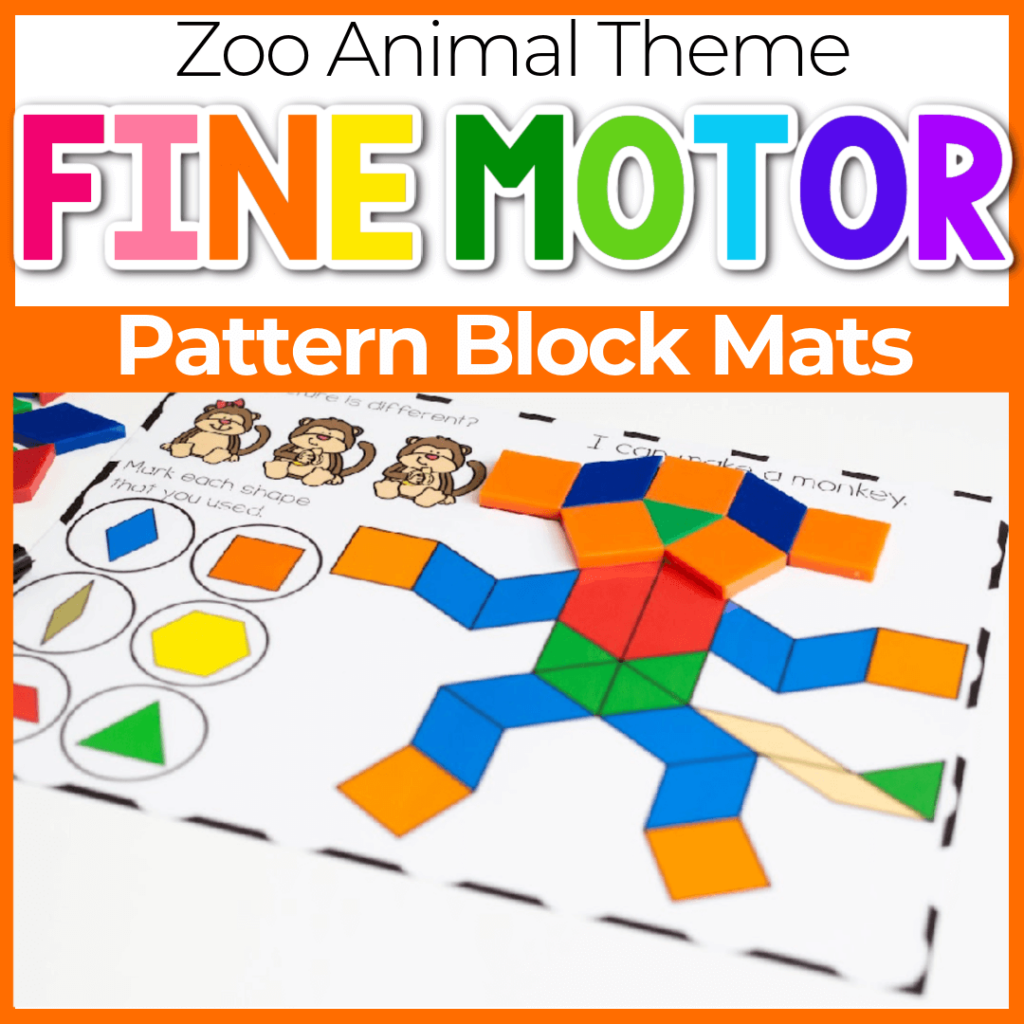
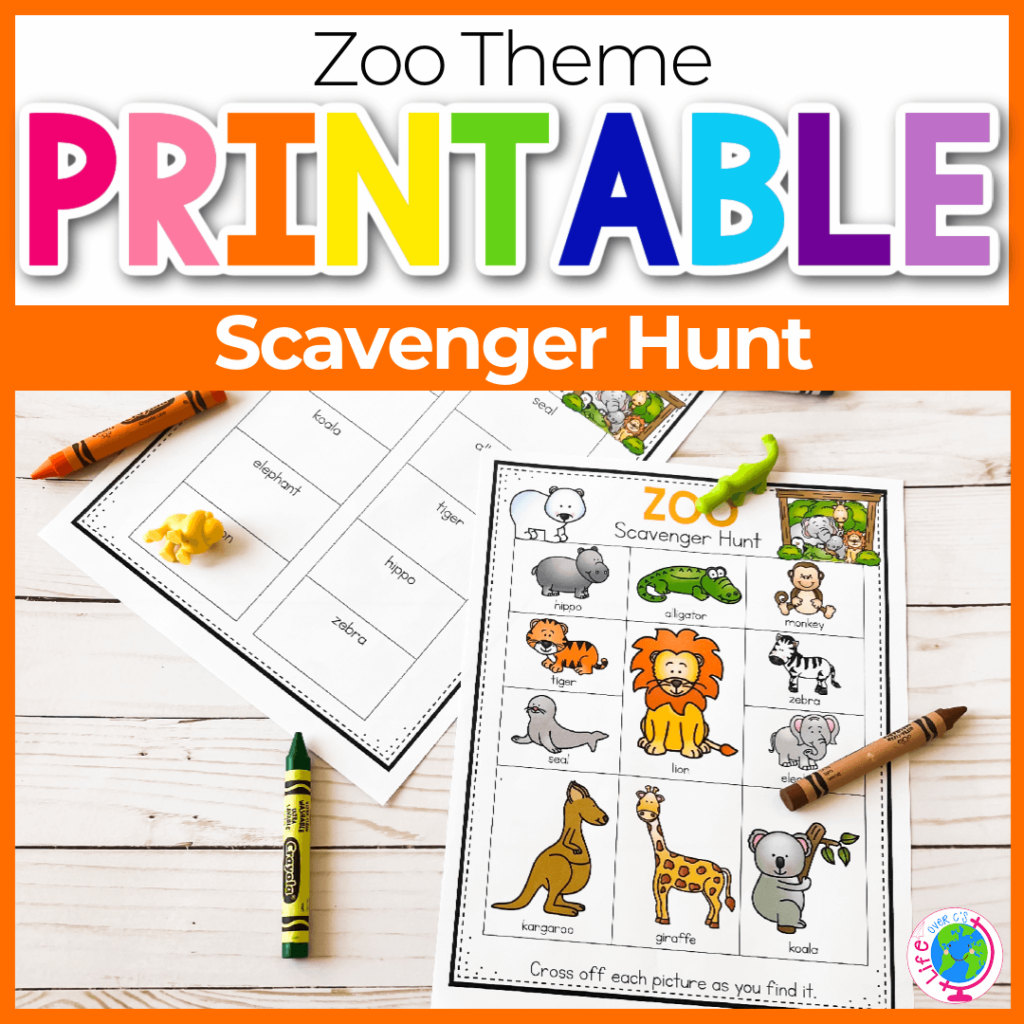


What’s Included in the Real Photo Zoo Animal I Spy Board Game
This printable Zoo Animals I Spy Board Game includes everything you need for an easy, reusable center:
- 10 real photo zoo animal I Spy game boards
- 40 real photo zoo animal image cards
- Labeled cards for vocabulary support
- Printable token cards
- Teacher preparation directions
- Step-by-step game instructions
Prep once, store the pieces together, and you have a ready-to-use zoo animal activity you can pull out for centers, small groups, therapy sessions, or homeschool practice.
Required Materials:
- Laminator
- Paper Cutter
- Paper, Printer, Ink
Standards for Food Group Vocabulary, Speaking and Listening, and Visual Matching
This real photo I Spy Vegetables vocabulary and matching game supports early learning standards connected to vocabulary development, visual information, speaking and listening, categorizing familiar objects, and collaborative learning.
Common Core State Standards: English Language Arts
- CCSS.ELA-LITERACY.SL.K.1: Participate in collaborative conversations with peers and adults.
- CCSS.ELA-LITERACY.SL.K.2: Confirm understanding of information presented visually or orally.
- CCSS.ELA-LITERACY.SL.K.4: Describe familiar people, places, things, and events with details.
- CCSS.ELA-LITERACY.SL.K.6: Speak audibly and express ideas clearly.
- CCSS.ELA-LITERACY.L.K.5.A: Sort common objects into categories.
- CCSS.ELA-LITERACY.L.K.5.C: Identify real-life connections between words and their use.
Texas Prekindergarten Guidelines for Language and Vocabulary Development
- Language and Communication: Supports vocabulary development, listening comprehension, and speaking skills through picture-supported conversations.
- Emergent Literacy: Supports oral language and concept development as children name, describe, and discuss familiar objects.
Virginia Early Learning and Development Standards for Vocabulary and Cognitive Development
- Communication, Language, and Literacy Development: Supports vocabulary growth, expressive language, and comprehension using real photo visual supports.
- Cognitive Development: Supports matching, comparing, sorting, and identifying attributes of familiar objects.
Vegetable Vocabulary, Visual Discrimination, and Matching Skills Students Practice
This real photo I Spy game supports early vocabulary, food group learning, visual discrimination, and matching skills through simple, interactive gameplay.
Vegetable Vocabulary and Food Group Skills
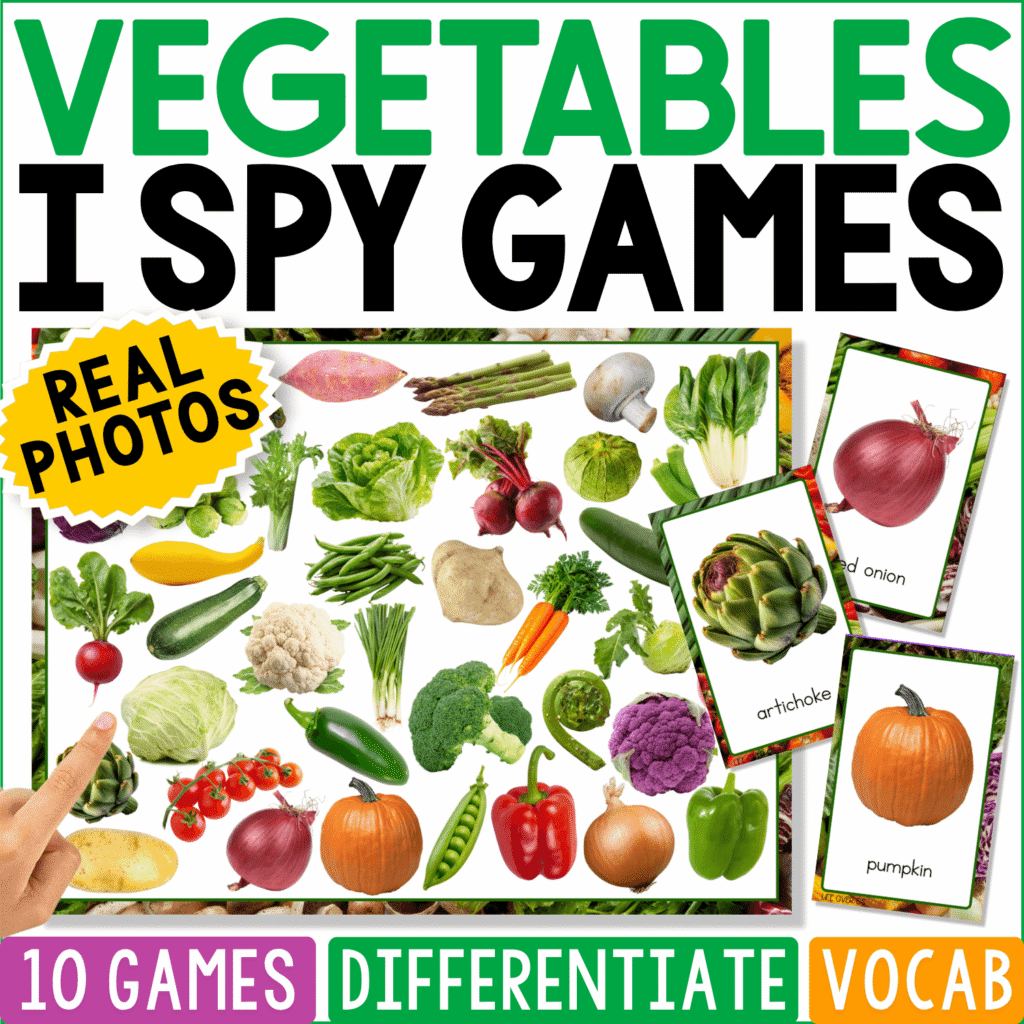
- Name common vegetables like carrots, broccoli, tomato, pumpkin, and zucchini
- Identify real-life vegetable photos
- Build food group vocabulary through repeated picture exposure
- Describe vegetables by color, shape, or size
- Use vegetable words
Visual Discrimination and I Spy Matching Skills
- Match vegetable image cards to the correct pictures on the game board
- Scan a busy board to find one specific vegetable
- Compare similar vegetable photos, such as cabbage and lettuce or onion and red onion
- Notice visual details while searching for each match
Language, Fine Motor, and Classroom Game Skills
- Follow simple board game directions
- Take turns with a partner or small group
- Point to or touch the matching vegetable picture
- Practice oral language
- Stay engaged during a short, structured preschool or kindergarten learning game
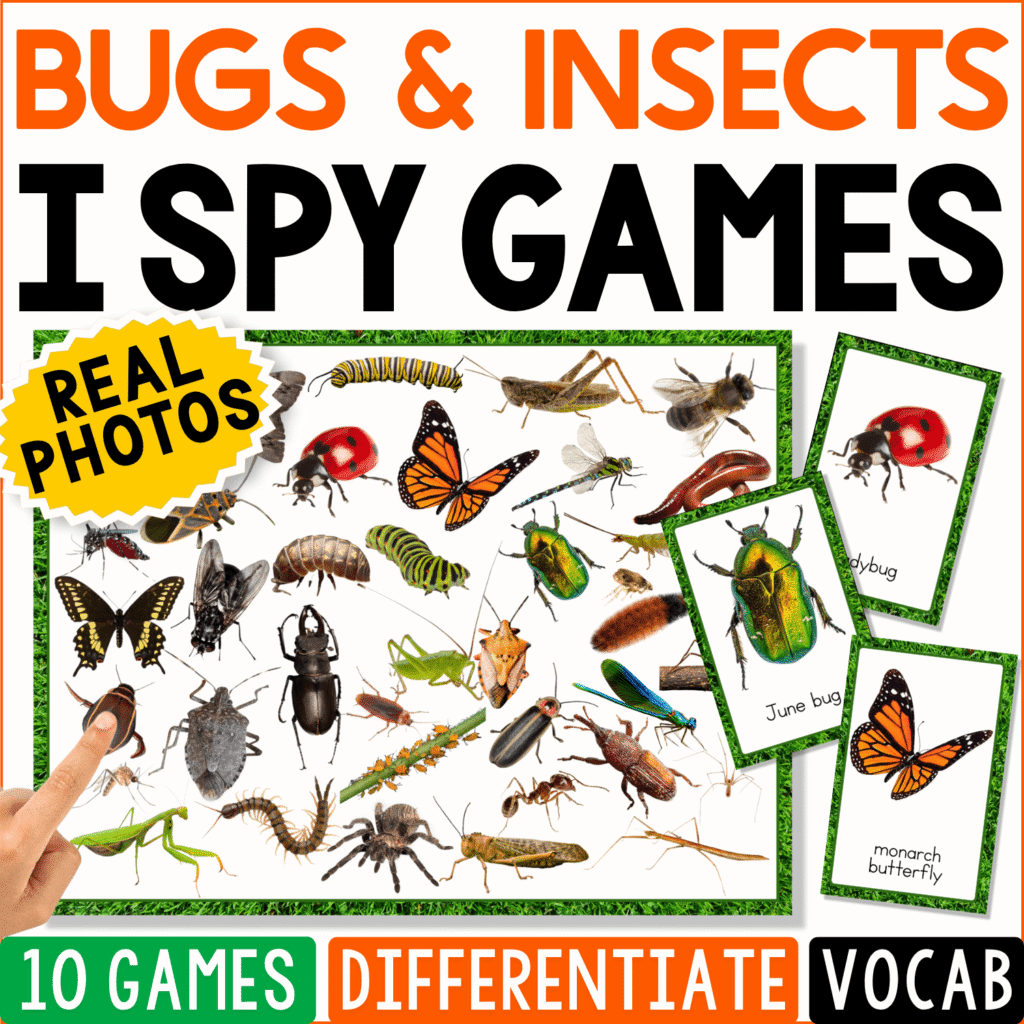
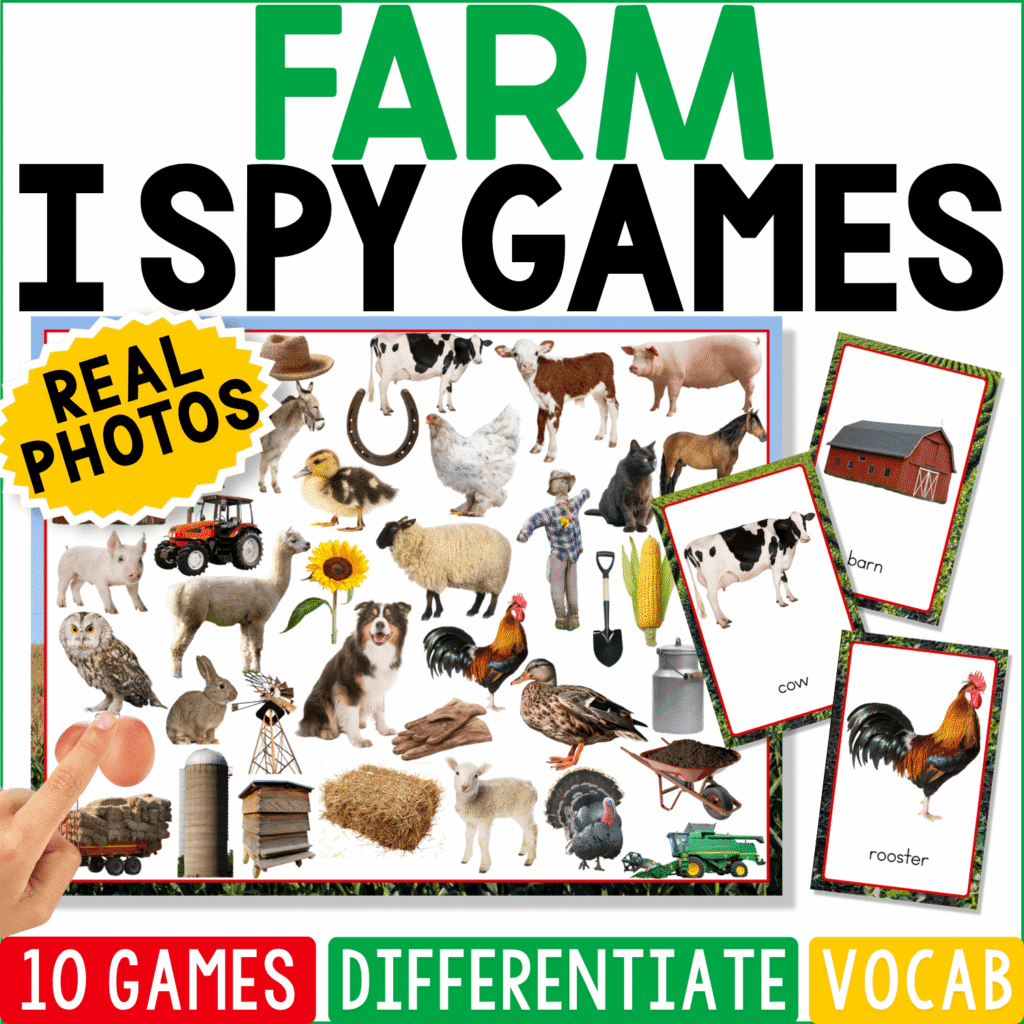
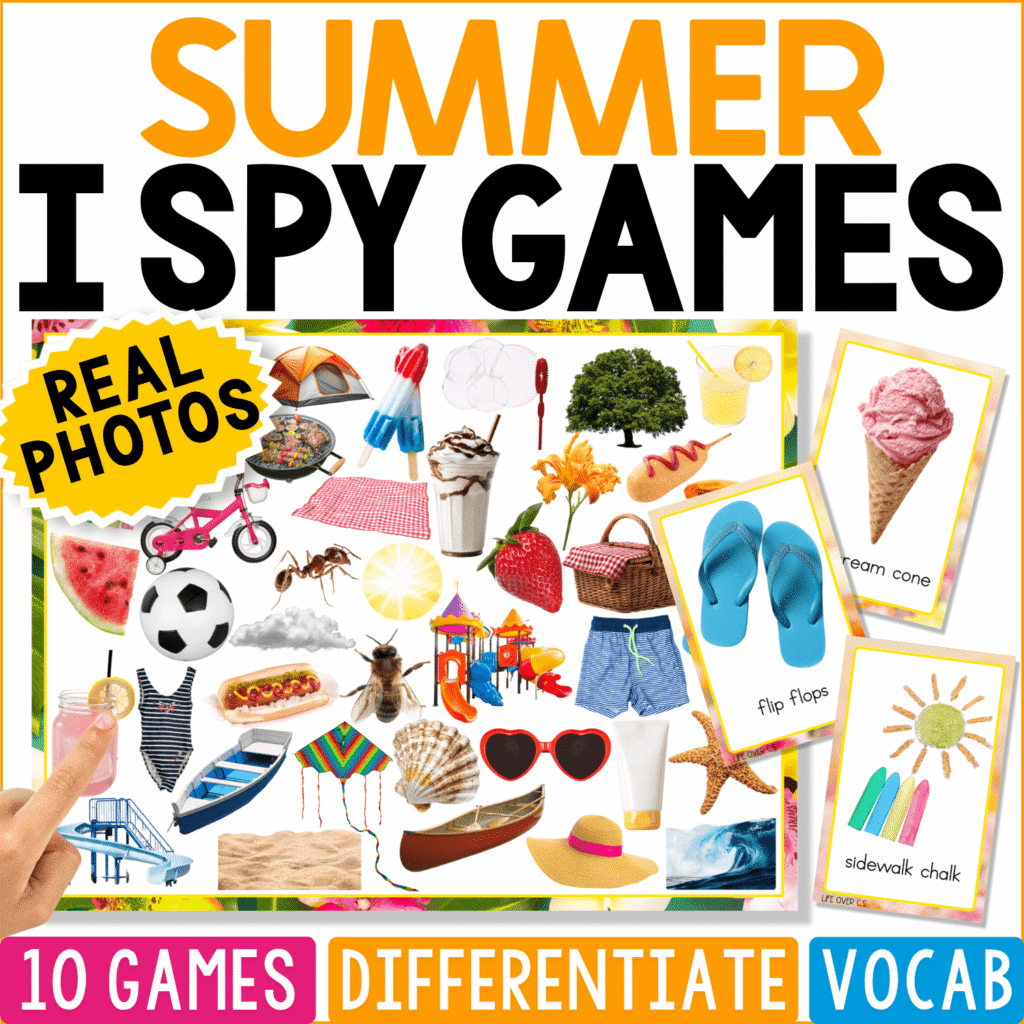
This I Spy Board Game Zoo Animals activity gets preschool, pre-k, and kindergarten students flipping real photo cards, scanning the board, and matching zoo animals while practicing vocabulary and visual discrimination through play.
In each round, kids flip a card, search the board, find the match, and collect a token. Simple directions make it easy for students to jump in quickly, while the real-life animal photos give them meaningful practice connecting zoo animal vocabulary to images they may recognize from books, classroom lessons, videos, field trips, and everyday conversations.
Use this real photo zoo animal game for literacy centers, small groups, speech therapy, occupational therapy, homeschool animal units, early finishers, or partner play. It feels like a game to kids, but it gives you focused practice with language, matching, visual scanning, attention, turn-taking, and fine motor skills.
How to Use This Real Life Zoo Animal I Spy Board Game
Step 1: Choose a Game Board
Place one zoo animal I Spy game board in the center of the table. Choose one board for partner play, small groups, therapy sessions, or independent visual scanning practice.
Step 2: Flip the Picture Cards
Give each player a small stack of zoo animal image cards face down. Players flip over the top card and look carefully at the real-life photo.
Step 3: Find the Matching Image
Students scan the board to find the matching zoo animal picture. The first player to point to or touch the correct image wins a token for that round. Keep playing until the cards have been matched, then count the tokens.
Easy Ways to Differentiate
Make this Zoo Animals I Spy activity work for the learners in front of you with quick, practical adjustments:
- Play cooperatively before adding a race-to-find element.
- Have students say the animal name before searching.
- Add the sentence frame, “I spy a ___,” for language practice.
- Ask students to describe animals by color, size, body covering, or movement.
- Let students cover matching animals with tokens for extra fine motor practice.
- Use the cards for vocabulary review, sorting, or partner matching.
- Give extra wait time for students who need more processing time.