I Spy “Flip” Junior Board Game: Real Life Back to School
Recommended Grade Level:
Type of Resource: PDF
Number of Pages: 27

You must be a Paid Member to Access this Resource.
Join the Life Over C’s Club to Access

Already a member? Login below:
Coordinating Activities
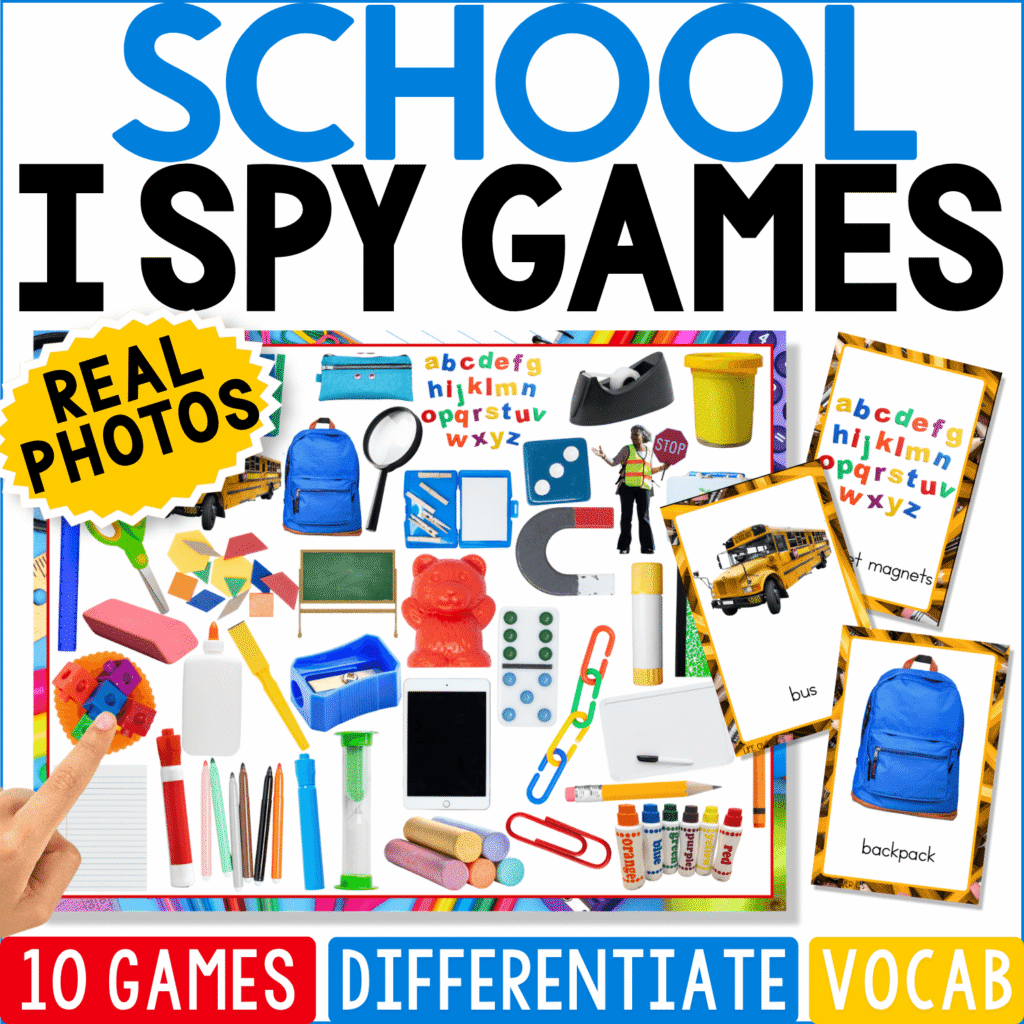
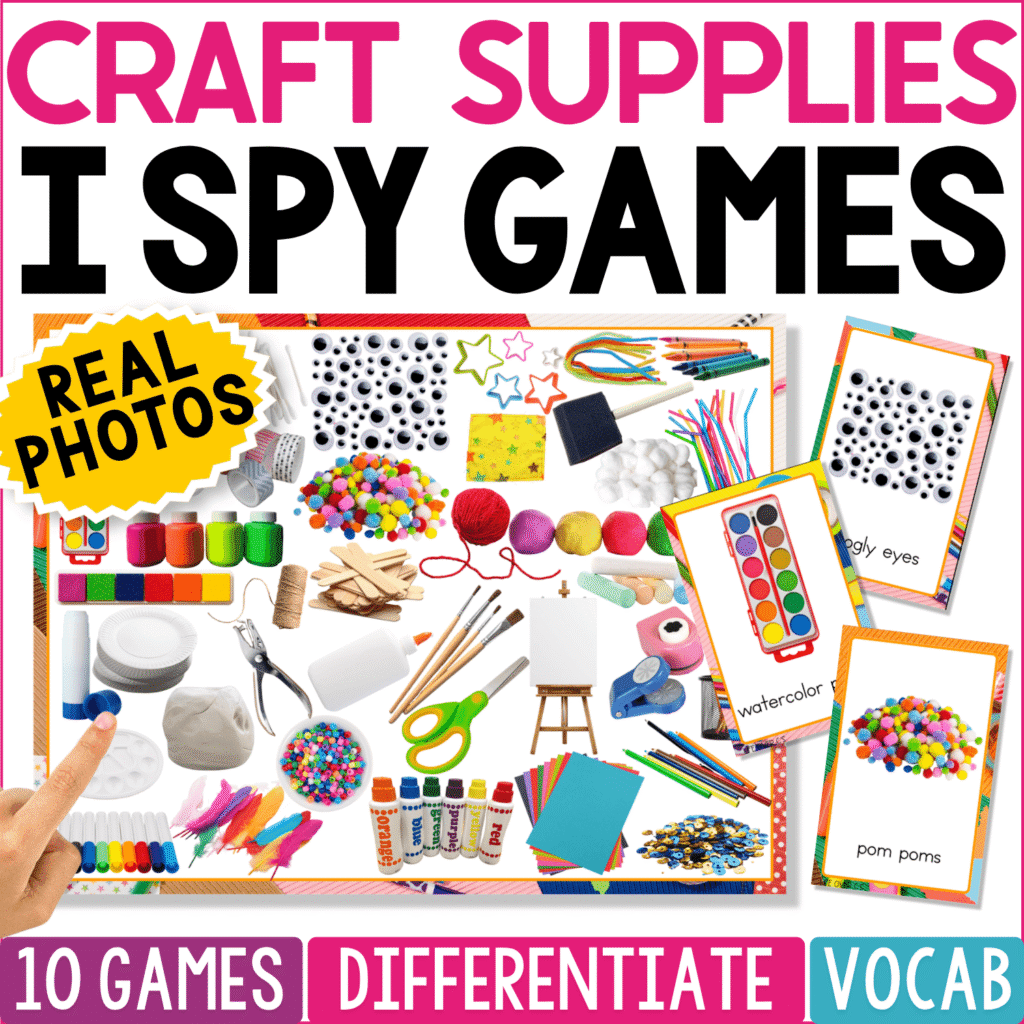


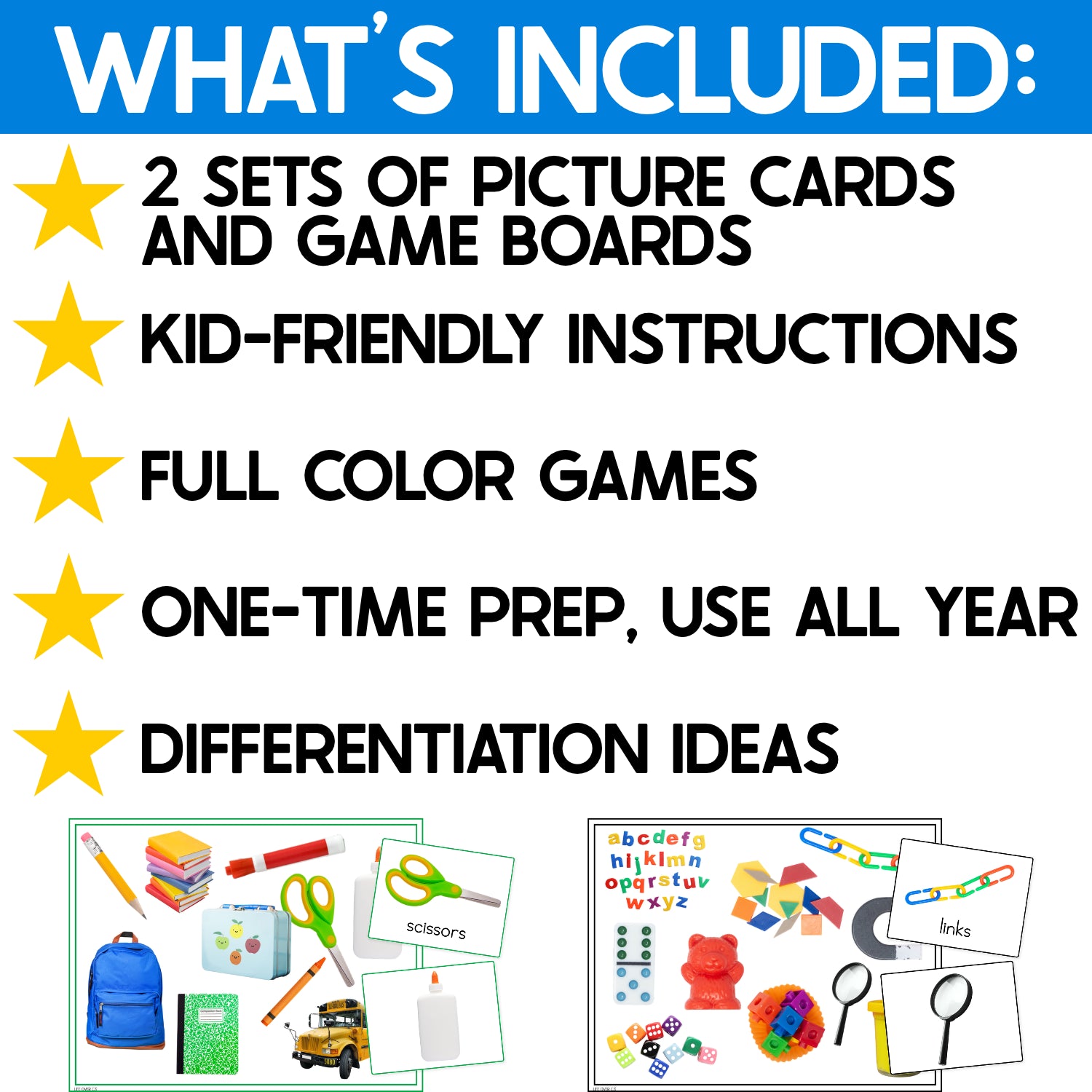
What’s Included in the Back to School I Spy Junior Game
- 27-page full-color PDF
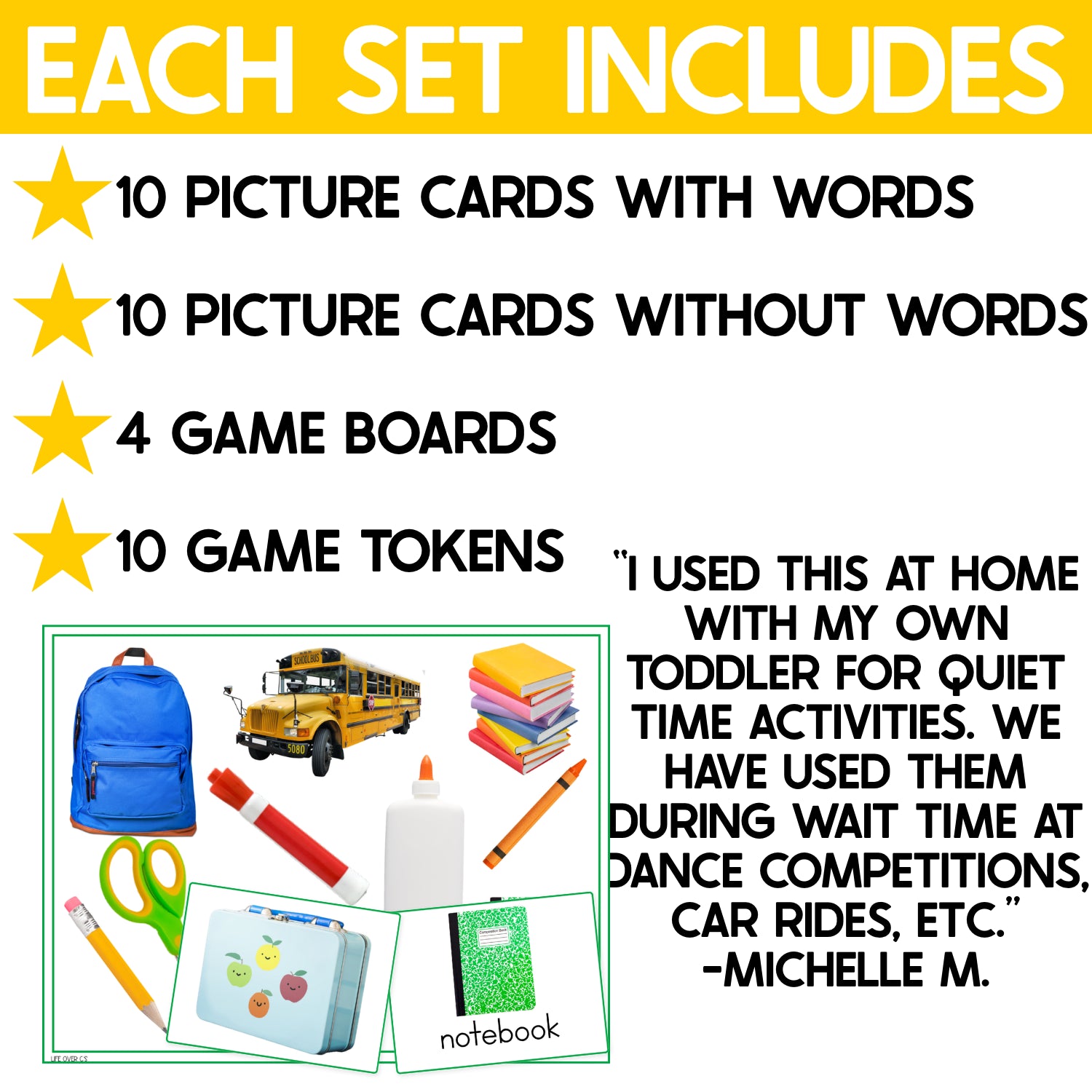
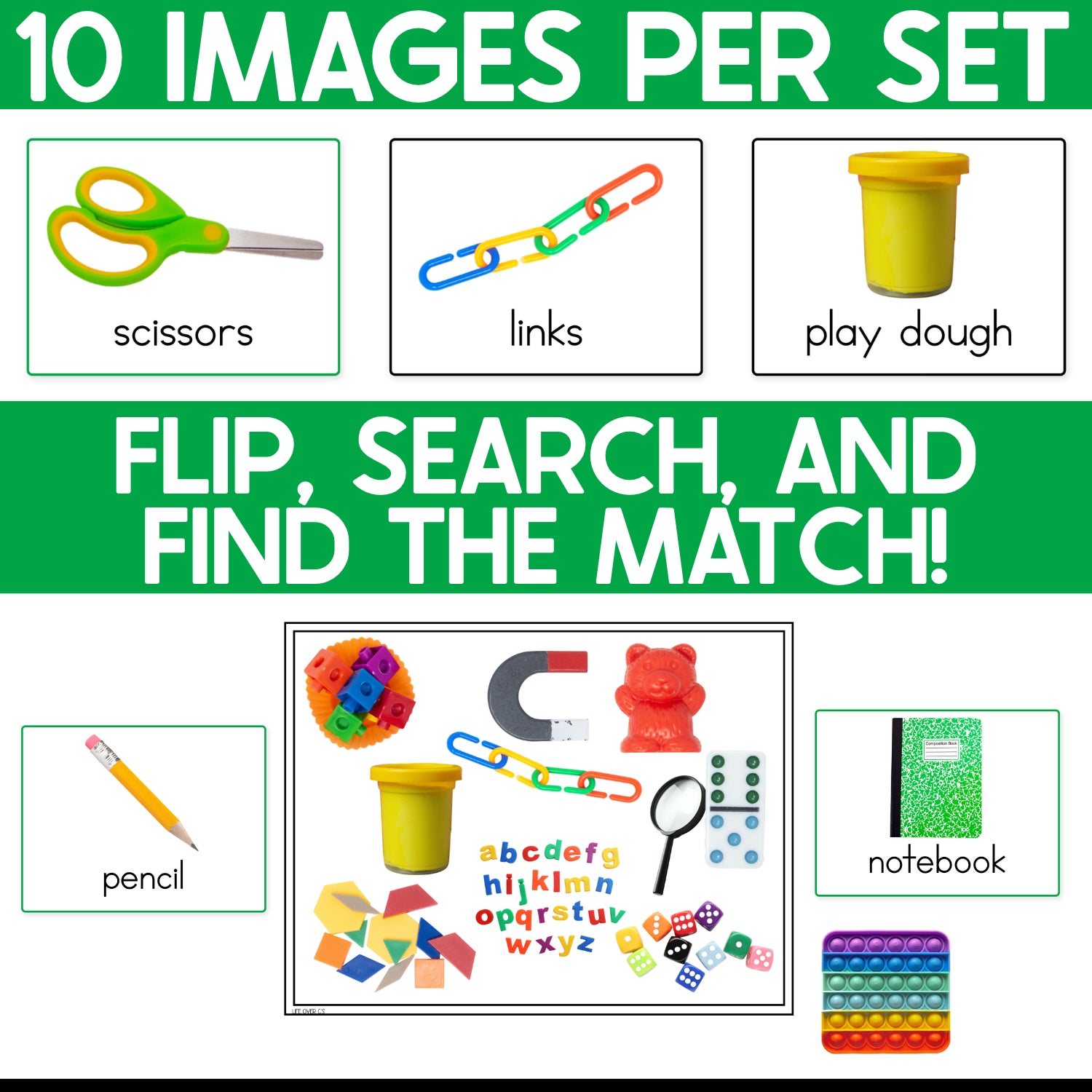
- 2 I Spy “Flip” Junior game sets, each with:
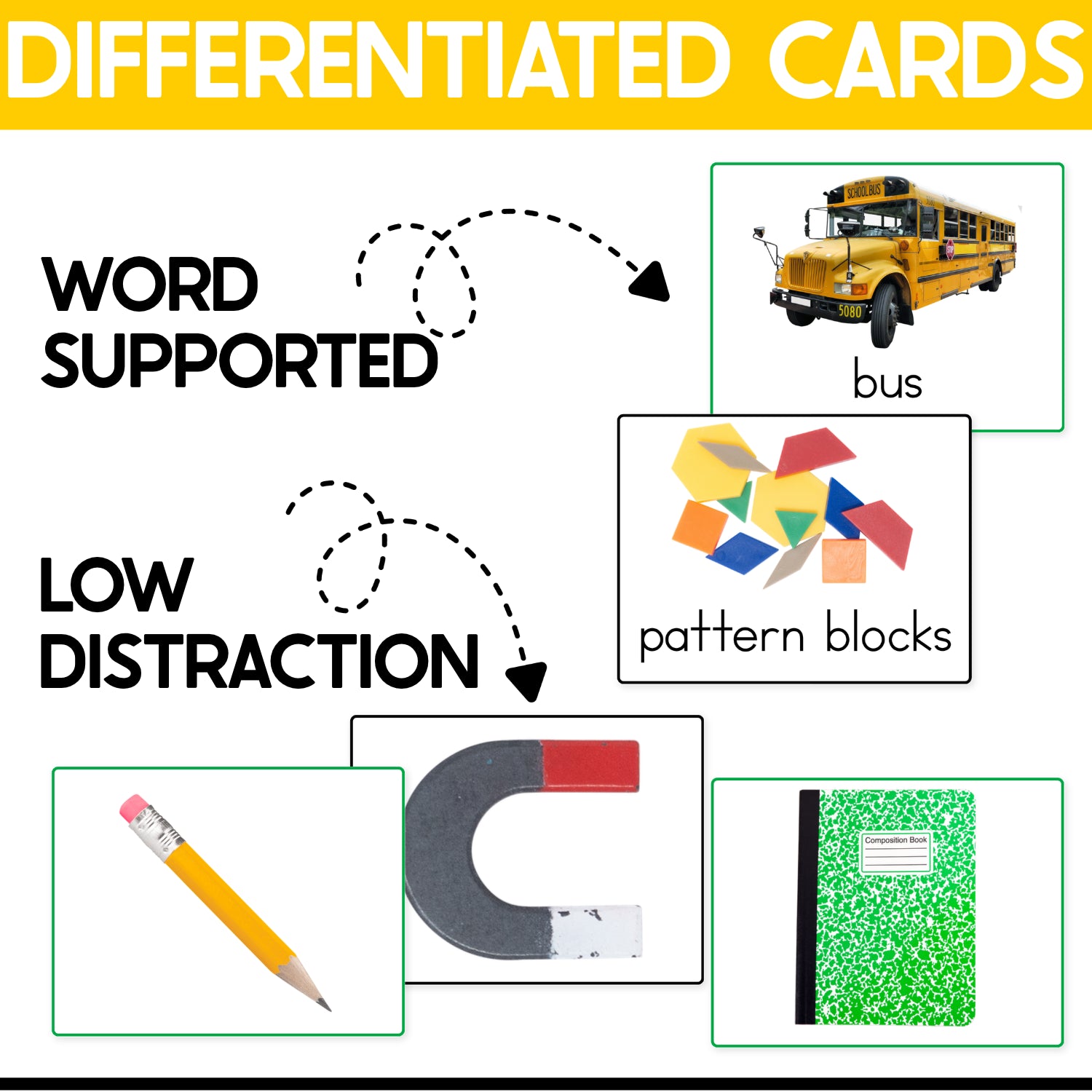
- 10 picture cards without words
- 10 picture cards with words
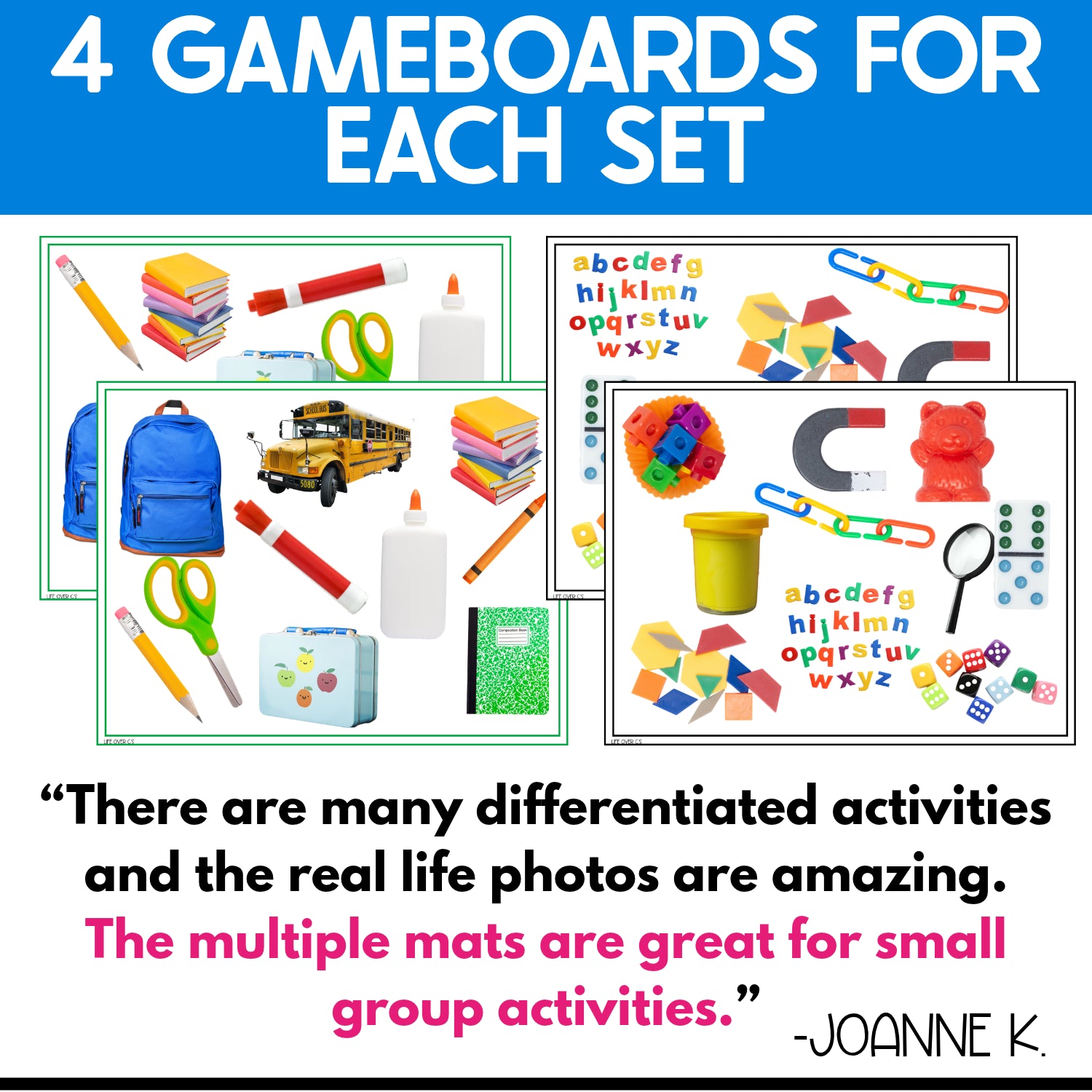
- 4 game boards with the same 10 pictures in different places
- 10 fidget popper game tokens
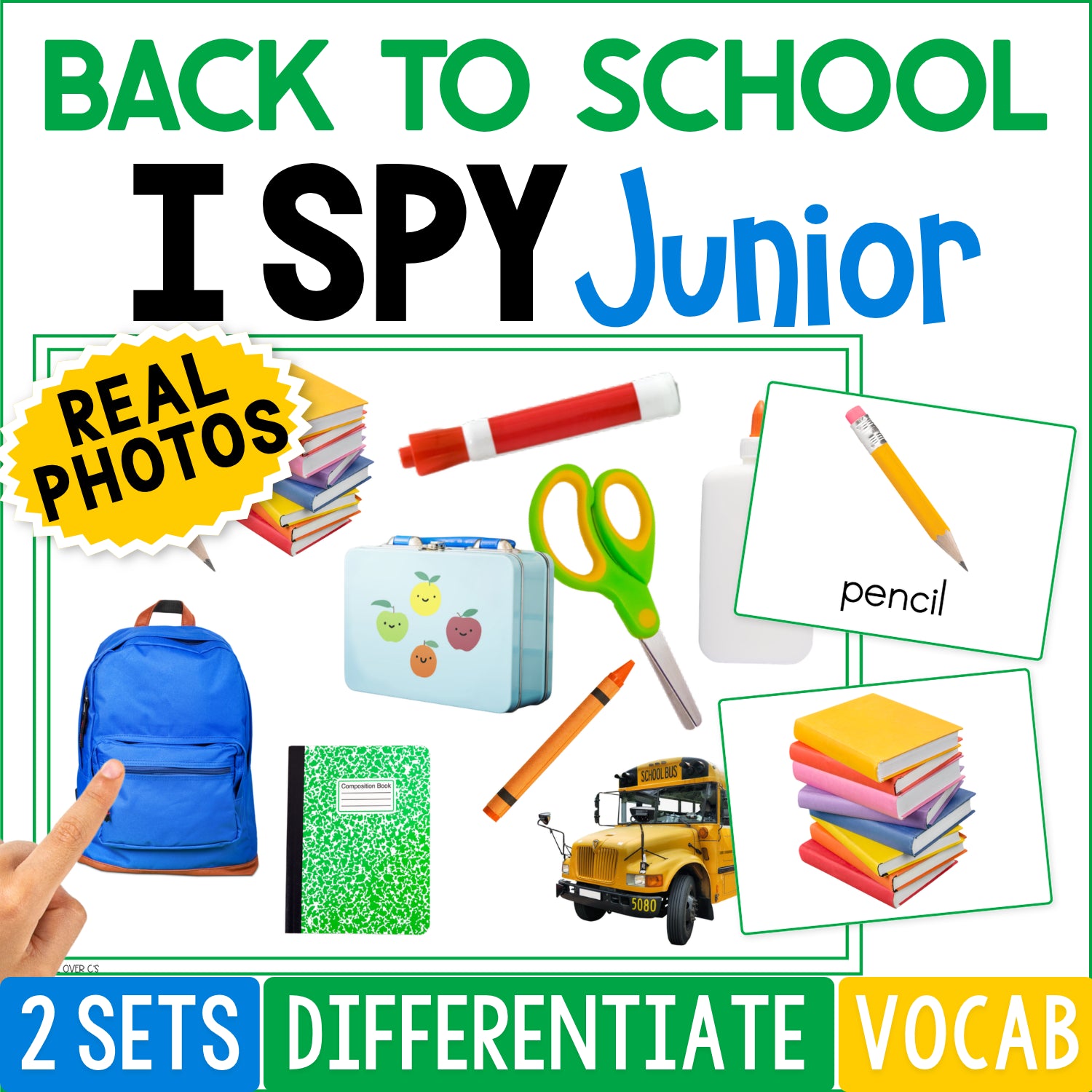
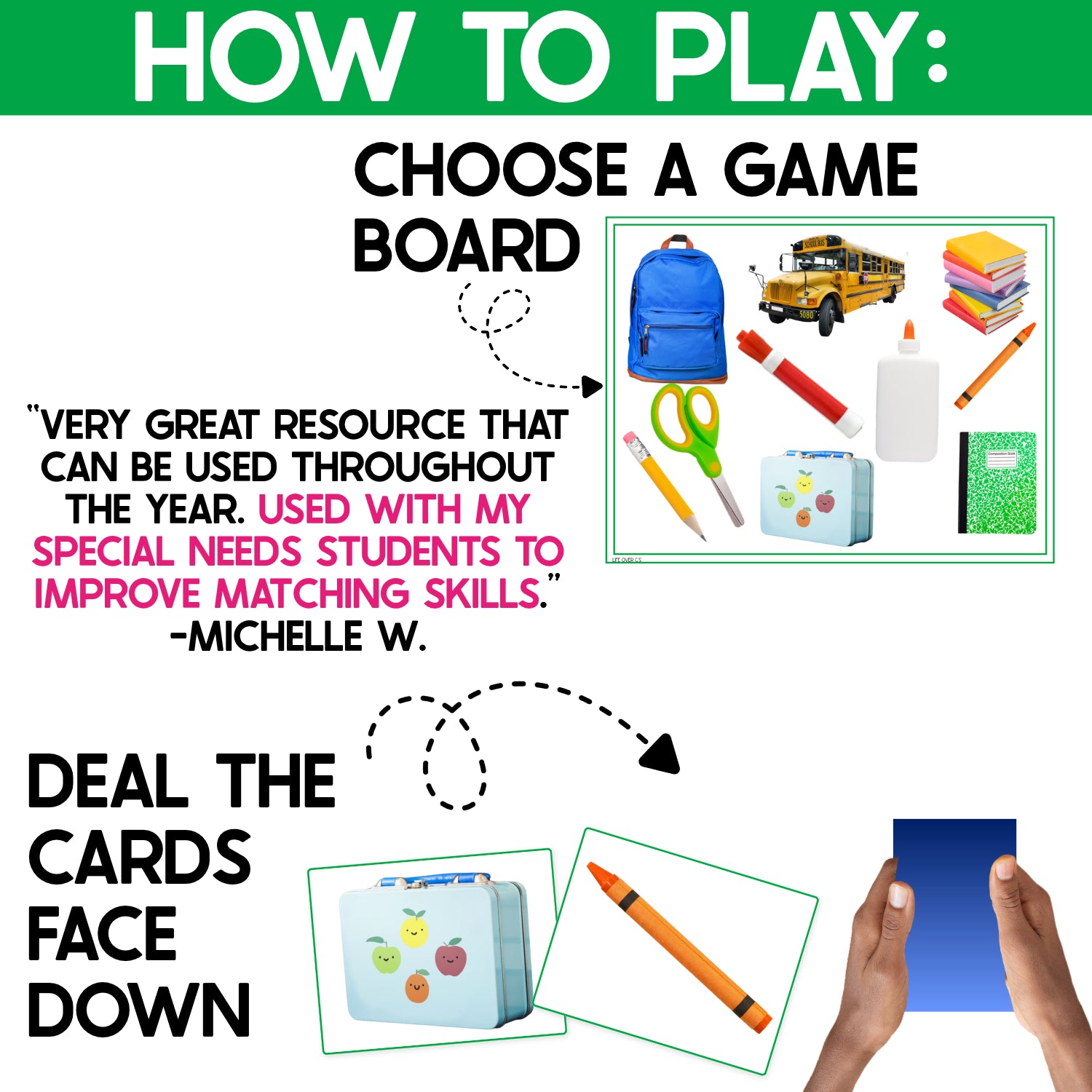
- Set 1: pencil, scissors, glue, books, notebook, lunchbox, bus, backpack, crayon and dry-erase marker
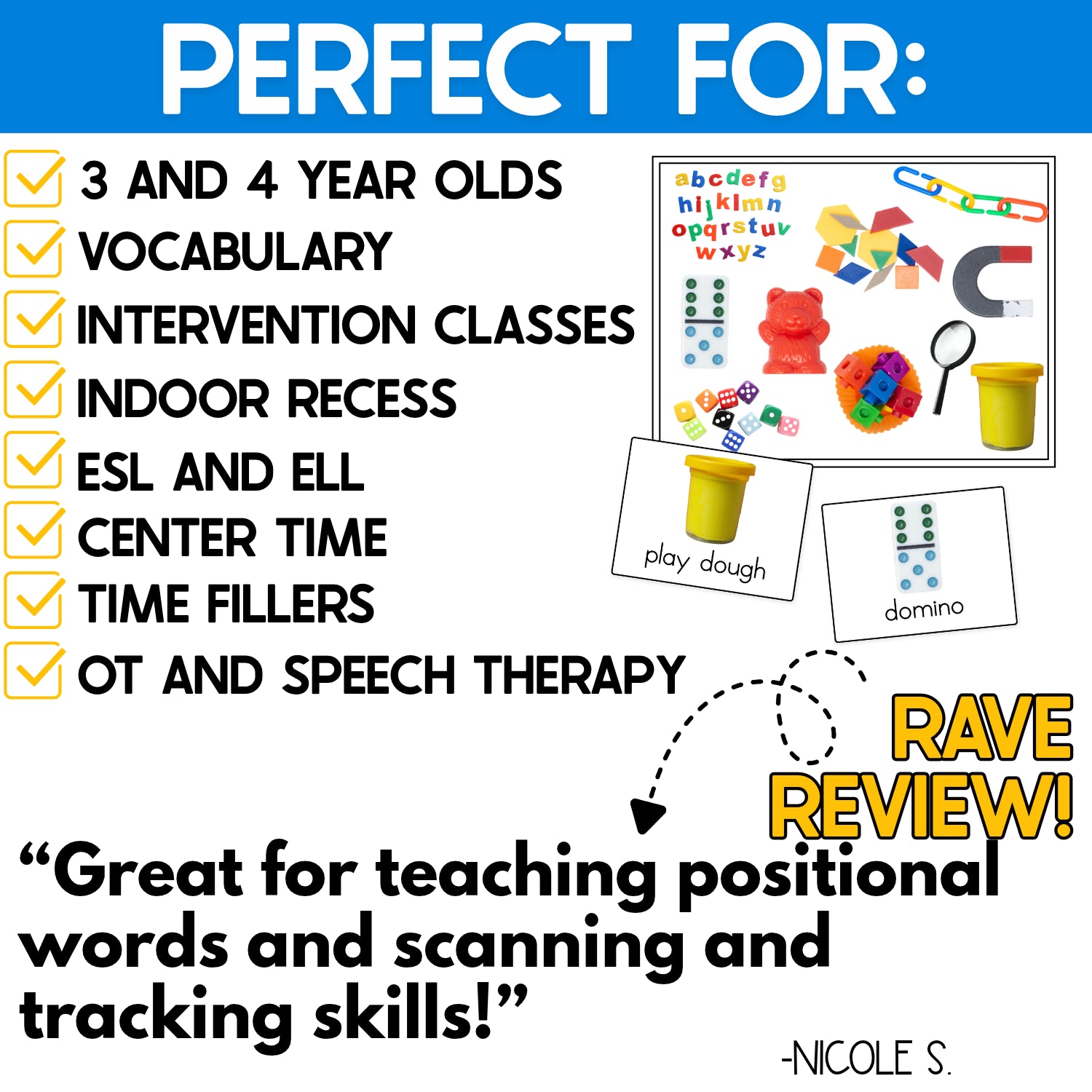
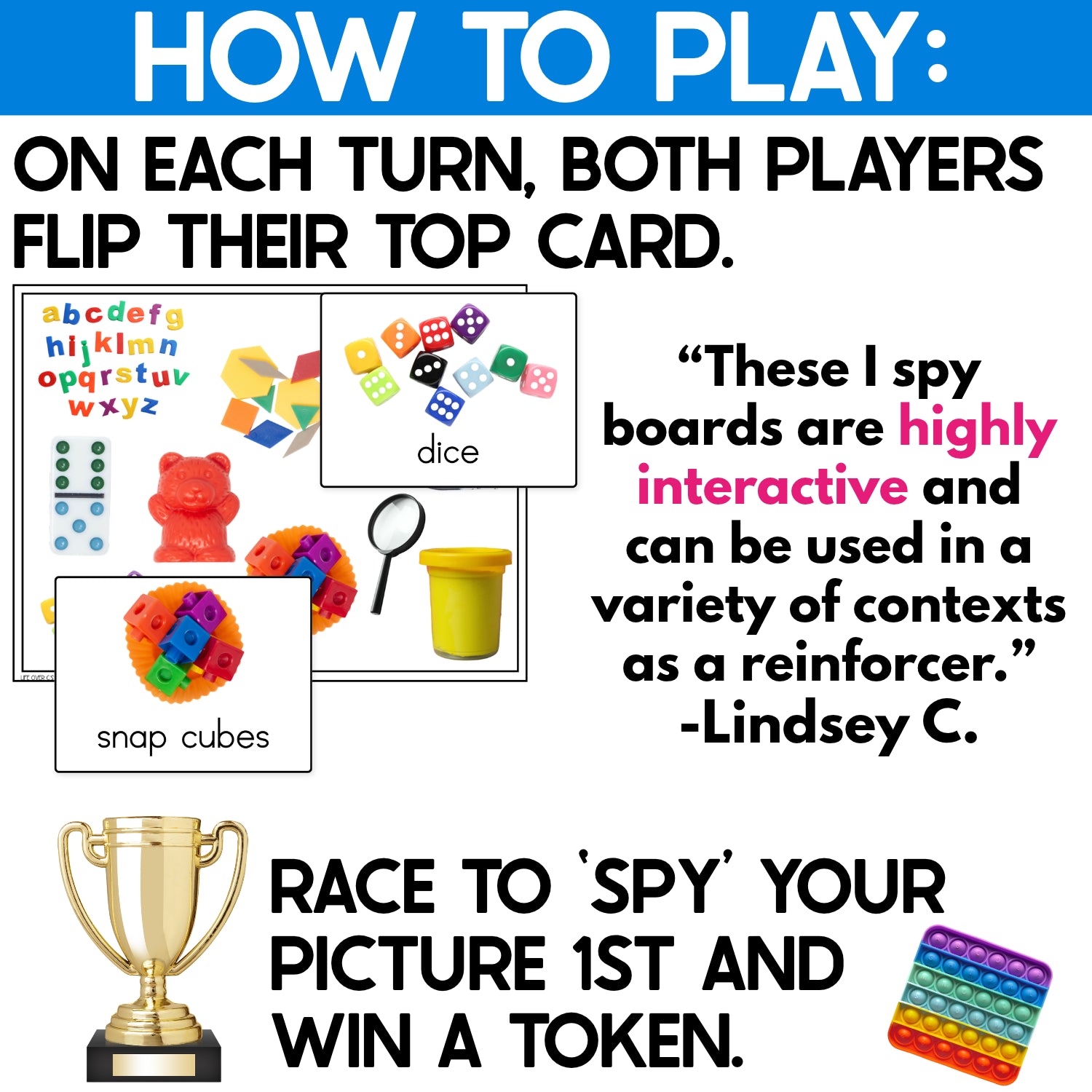
- Set 2: bear counter, links, magnifying glass, play dough, magnet, alphabet magnets, domino, pattern blocks, dice and snap cubes
- Preparation directions, game instructions, cooperative and independent play directions and differentiation suggestions
Required Materials
- White cardstock, printer and ink
- Laminator
- Paper cutter or scissors
- Optional: a small zip-top bag or photo box for storage and game markers for covering matches
Standards
These Back to School I Spy Junior games line up with early language standards in Texas, Virginia and the Common Core.
Texas Prekindergarten Guidelines (2022)
- PK3.II.A.1 / PK4.II.A.1: Children follow a spoken clue to find a school supply on the board.
- PK3.II.D.1 / PK4.II.D.1: Children name classroom tools like the magnifying glass, domino and dice.
- PK3.II.D.3 / PK4.II.D.3: Children try out new classroom words as they play and talk.
Virginia Early Learning and Development Standards
- CLLD1.1x, Early Preschool 34-48 Months: Children point to the photo that matches a word they hear.
- CLLD1.2q, Early Preschool 34-48 Months: Children name the supplies they find and say what they do with them.
Common Core State Standards
- L.K.5a: Children sort the cards into school supplies and center tools.
- L.K.5c: Children link each school word to the real item in their classroom.
- SL.K.4: Children describe a classroom object, adding a detail when an adult asks.
This school supplies vocabulary I Spy game gives 3-4 year olds 20 real photos of the things they meet in a new classroom, from the backpack and lunchbox to the bear counter and pattern blocks, to find, match and name on simple 10-picture boards.
A new school year hands little ones a lot of brand-new words at once. Teachers ask them to grab a notebook, hang up a backpack or put the snap cubes back in the bin, often before they know what any of those things are called. This game slows it down to 10 pictures at a time, so children can see each item, hear its name and find it again.
Junior boards are built for preschoolers: 10 big photos per board, one clear picture per card and no reading. The word on each card is there for the grown-up doing the prompting.
School Pictures in Each Set
Set 1 (green borders), school supplies: pencil, scissors, glue, books, notebook, lunchbox, bus, backpack, crayon and dry-erase marker
Set 2 (black borders), classroom tools: bear counter, links, magnifying glass, play dough, magnet, alphabet magnets, domino, pattern blocks, dice and snap cubes
A few look-alikes to watch for: the crayon and the dry-erase marker are both long and pointy, the dice and the domino both have dots and the snap cubes and pattern blocks are both bright plastic shapes. They make great pairs for practicing describing words.
How to Play Back to School I Spy Junior
- Choose a set and place one of its four game boards where everyone can see it.
- Each player keeps a face-down pile of cards. Everyone flips their top card at the same time.
- Players race to find their picture on the board. The first one to touch it collects a token. The player with the most tokens wins.
Cooperative play: Use one shared pile. Children take turns flipping a card and finding it and can cover each match with a marker until the board is full.
Independent play: One child flips the cards one at a time and finds each picture. It’s an easy first center for the opening weeks of school.
Easy Ways to Differentiate
At the start of the year, the same small group can have a child who names every supply and a child who has never held a glue bottle. These ideas work with the cards and boards in the file.
For Children Who Need More Support
- Begin with 3 cards of items children use every day, like the backpack, crayon and lunchbox.
- Say the name as you flip each card and have the child repeat it after the find.
- Use the picture-only cards to keep the card simple.
For On-Level Practice
- Play with all 10 cards in a set and have children name each picture as they find it.
- Use a new board in the set each day of the week so the pictures land in new spots.
- Ask one follow-up after each find: “What do we use the scissors for?”
For an Extra Challenge
- Give a clue about where the item lives in your room: “It’s in the math center and it looks like a little bear.”
- Put both sets in one pile with one board. Children decide if their picture is on that board before searching.
- Let each round’s winner give the next clue.
For Speech, OT, ELL or Special Education Support
- Ask position questions about the board: “What is under the pencil?” or “Which picture is beside the bus?”
- Build short action phrases with each find, like “roll the dice” or “open the lunchbox.”
- Set out the real glue, crayon and snap cubes and match them to the board after each find.
- For fine motor work, have children pick up the tokens with tongs or a clothespin.
Questions About This I Spy Game
Do children need to read to play? No. The words are for the adult. Children match by the picture.
How many children can play? One child can play alone and up to four can race on one board. The extra boards let you run two games at once.
When should I use it? It fits the first weeks of school, but the supplies and tools are in your room all year, so it works as a vocabulary center any month.
Back to School I Spy Junior Is Perfect For
- Back to school and all-about-school themes
- 3 and 4 year olds
- Speech therapy and language groups
- Special education and early intervention
- ELL and ESL vocabulary practice
- Small-group and partner games
- Morning tubs and independent centers
- Homeschool preschool