Write the Room: Frog Life Cycle
Recommended Grade Level:
Type of Resource: PDF
Number of Pages: 42

You must be a Monthly, Annual or Forever Member to Access this Resource.
Join the Life Over C’s Club to Access

Already a member? Login below:
Coordinating Activities


What’s Included in the Frog Life Cycle Write the Room Set
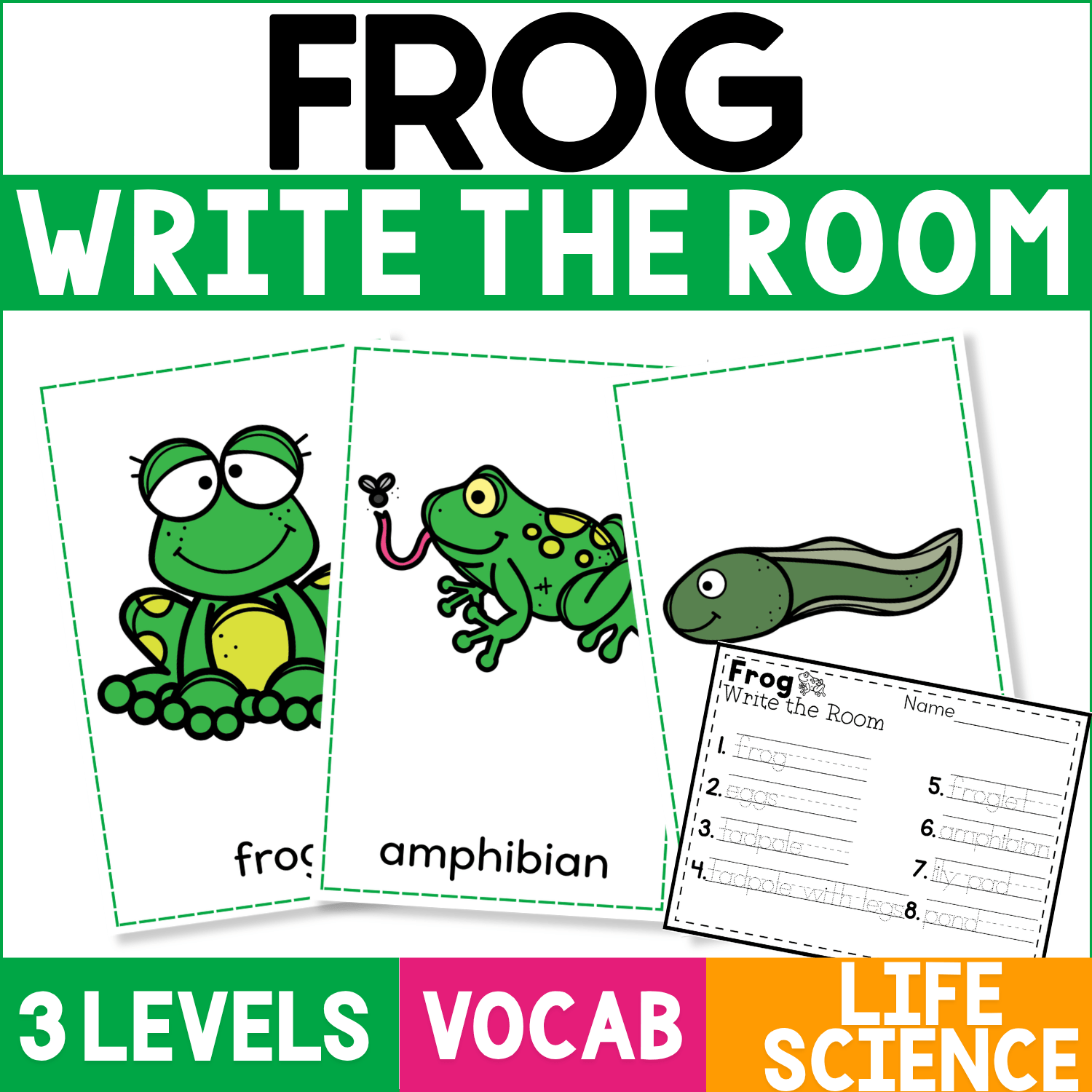
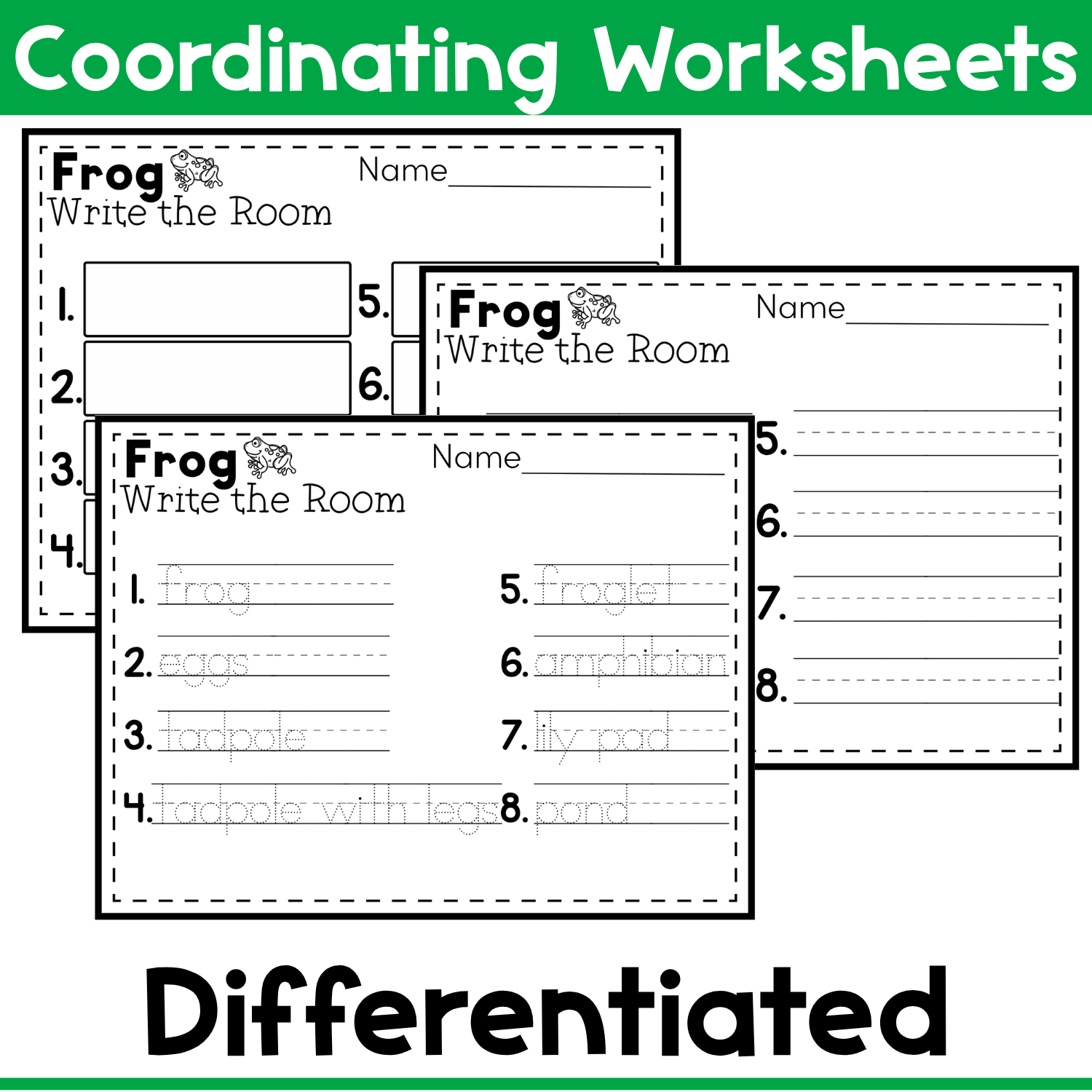
This Life Cycle of a Frog Write the Room resource includes vocabulary cards and differentiated recording pages in both color and black-and-white options.
Included in this resource:
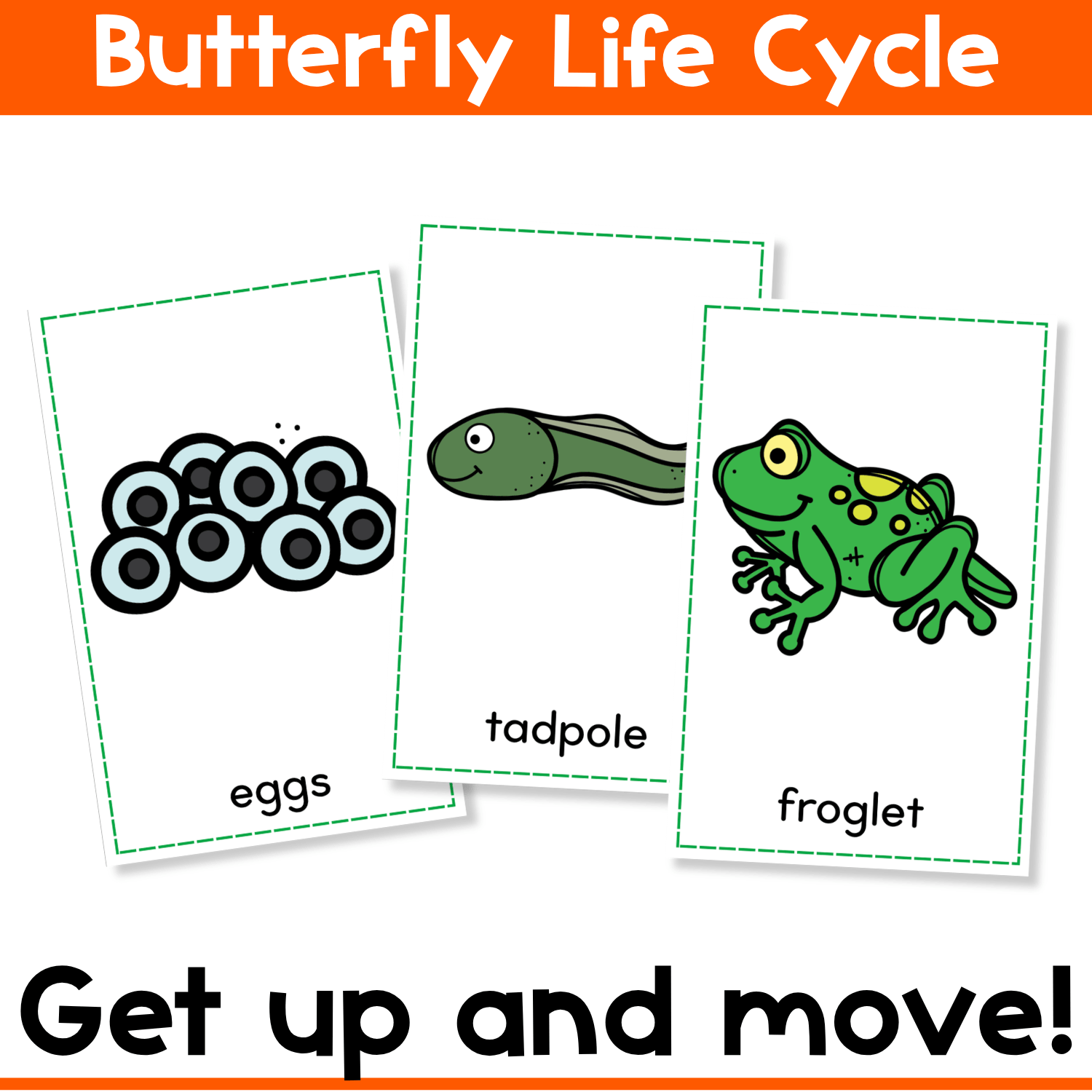
- 8 color frog life cycle vocabulary cards
- 8 black-and-white frog life cycle vocabulary cards
- 3 differentiated recording worksheets
- Trace-the-word recording page
- Blank handwriting line recording page
- Draw-and-write recording page
- Teacher directions for setting up the activity
Vocabulary words included:
- frog
- eggs
- tadpole
- tadpole with legs
- froglet
- amphibian
- lily pad
- pond
The differentiated recording pages allow students to trace, copy, write, or draw depending on their handwriting needs and independence level.
Required Materials:
- Laminator
- Paper Cutter
- Paper, Printer, Ink
Standards Alignment
This Life Cycle of a Frog Write the Room activity supports kindergarten science and literacy standards through vocabulary development, handwriting practice, picture-supported word recognition, and written response.
Standards supported include:
- NGSS K-LS1-1: Use observations to describe patterns of what plants and animals need to survive. Students use frog, pond, lily pad, and amphibian vocabulary as part of science discussions about living things and their environments.
- CCSS ELA L.K.1.a: Print many upper- and lowercase letters. Students practice handwriting skills as they trace, copy, or write frog life cycle vocabulary words.
- CCSS ELA L.K.6: Use words and phrases acquired through conversations, reading, being read to, and responding to texts. Students build and use science vocabulary connected to frogs and pond life.
- CCSS ELA RF.K.1: Demonstrate understanding of the organization and basic features of print. Students read picture-word cards and record words on a response sheet.
- CCSS ELA W.K.2: Use drawing, dictating, and writing to compose informative or explanatory text. The draw-and-write recording option supports early informational writing connected to a science topic.
- TEKS Science K.12B: Observe and identify the dependence of animals on air, water, food, space, and shelter. Frog and pond vocabulary supports discussion of animal needs and habitats.
- TEKS Science K.13B: Identify structures that animals have that allow them to interact with their environment, such as seeing, hearing, moving, and grasping objects. Frog, tadpole, and froglet vocabulary can support discussion of how frogs change and move as they grow.
- Virginia Science SOL K.7b: Plants and animals have life cycles. Students practice vocabulary connected to the life cycle of a frog and discuss how frogs grow and change over time.
This resource works well as a supporting center activity for kindergarten science, vocabulary, handwriting, and early literacy instruction.
Skills Students Practice
This Frog Life Cycle Write the Room center supports both academic skills and other classroom skills that help kindergarten students participate successfully in independent and small group activities.
Academic skills students practice:
- Life Cycle of a Frog vocabulary including frog, eggs, tadpole, tadpole with legs, froglet, amphibian, lily pad, and pond
- Science vocabulary development connected to frogs, ponds, amphibians, and animal life cycles
- Early literacy skills as students read, recognize, and record vocabulary words
- Handwriting skills through tracing, copying, or writing words
- Letter formation during purposeful vocabulary writing practice
- Word copying from classroom vocabulary cards to a recording page
- Picture-to-word connections that support understanding of new science terms
- Informational language related to living things, habitats, and animal growth
Other classroom and developmental skills students practice:
- Visual discrimination as students identify each vocabulary card
- Visual scanning while searching around the room for the cards
- Fine motor control during tracing, writing, coloring, or drawing
- Gross motor movement as students walk from card to card
- Following multi-step directions to find, read, and record each word
- Independent work habits during center rotations
- Task completion as students finish the recording sheet
- Classroom routines such as moving safely, using materials appropriately, and staying focused during a center activity
The combination of vocabulary, handwriting, movement, and center independence makes this activity useful for both science instruction and literacy practice.thout creating three different lesson plans.
Write the Room: Frog Life Cycle
This Frog Life Cycle Write the Room activity helps students build vocabulary connected to a life cycle of a frog unit, pond theme, spring science study, or animal life cycle lesson.
Students find vocabulary cards around the room, look at the picture, read the word, and write or trace the word on their recording sheet. The movement keeps students engaged, while the clear vocabulary cards and differentiated worksheets keep the activity focused and easy to manage.
This resource works well for:
- Introducing frog life cycle vocabulary
- Practicing science vocabulary in a Literacy Center
- Adding movement to a kindergarten Science Center
- Supporting handwriting skills with purposeful word practice
- Reviewing frog, pond, and amphibian vocabulary during a spring unit
- Giving students repeated exposure to picture-supported vocabulary words
The familiar Write the Room format makes this activity easy to add to your weekly centers without needing a complicated setup.
How to Use the Frog Write the Room Activity
Step 1: Prepare the vocabulary cards.
Print the frog life cycle vocabulary cards in color or black and white. Cut the cards apart and place them around the classroom, science area, hallway, or homeschool space.
Step 2: Choose a recording page.
Select the worksheet that best matches your students’ writing needs. Students can trace the words, copy the words onto handwriting lines, or draw and write responses in the larger boxes.
Step 3: Write the room.
Students move around the room, find each frog vocabulary card, read the word, and record it on the worksheet. After the activity, review the vocabulary together and discuss how the words connect to the life cycle of a frog.
Where to Implement:
This Frog Life Cycle Write the Room activity is easy to use in kindergarten classrooms, homeschool lessons, and small group settings.
Perfect for:
- Kindergarten Science Centers
- Literacy Centers
- Frog life cycle units
- Pond theme activities
- Spring science lessons
- Animal life cycle lessons
- Vocabulary centers
- Handwriting practice
- Homeschool science lessons
- Small group instruction
- ESL and ELL vocabulary support
- Occupational therapy handwriting support
The differentiated worksheets make it simple to adjust the writing task while keeping all students focused on the same frog life cycle vocabulary.