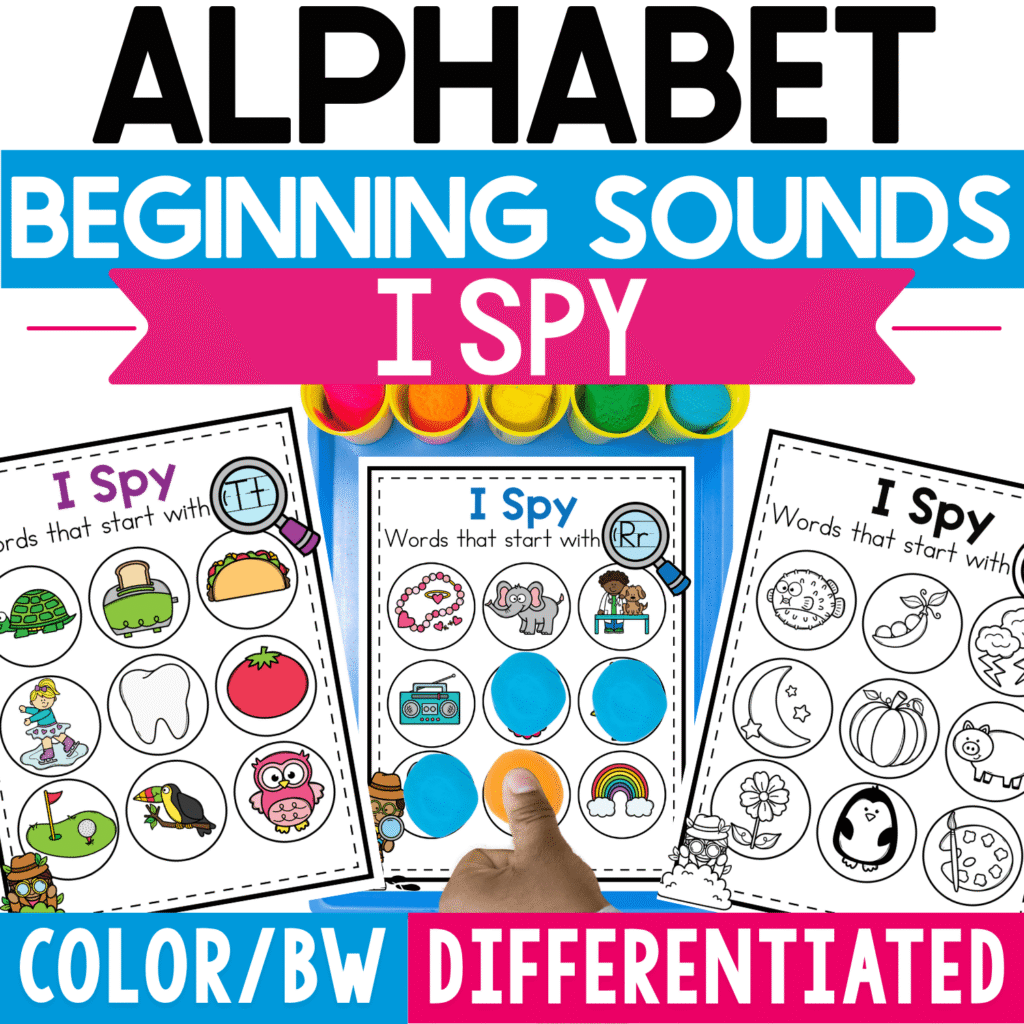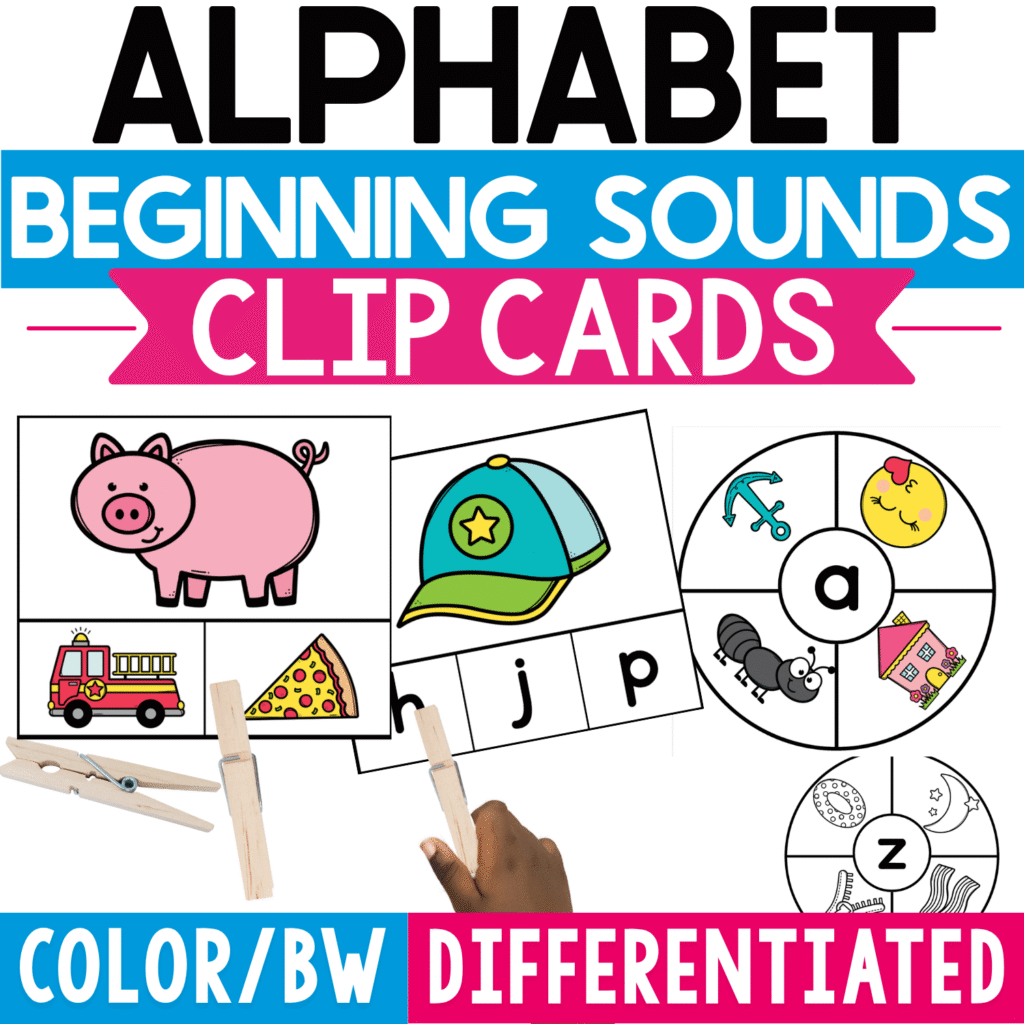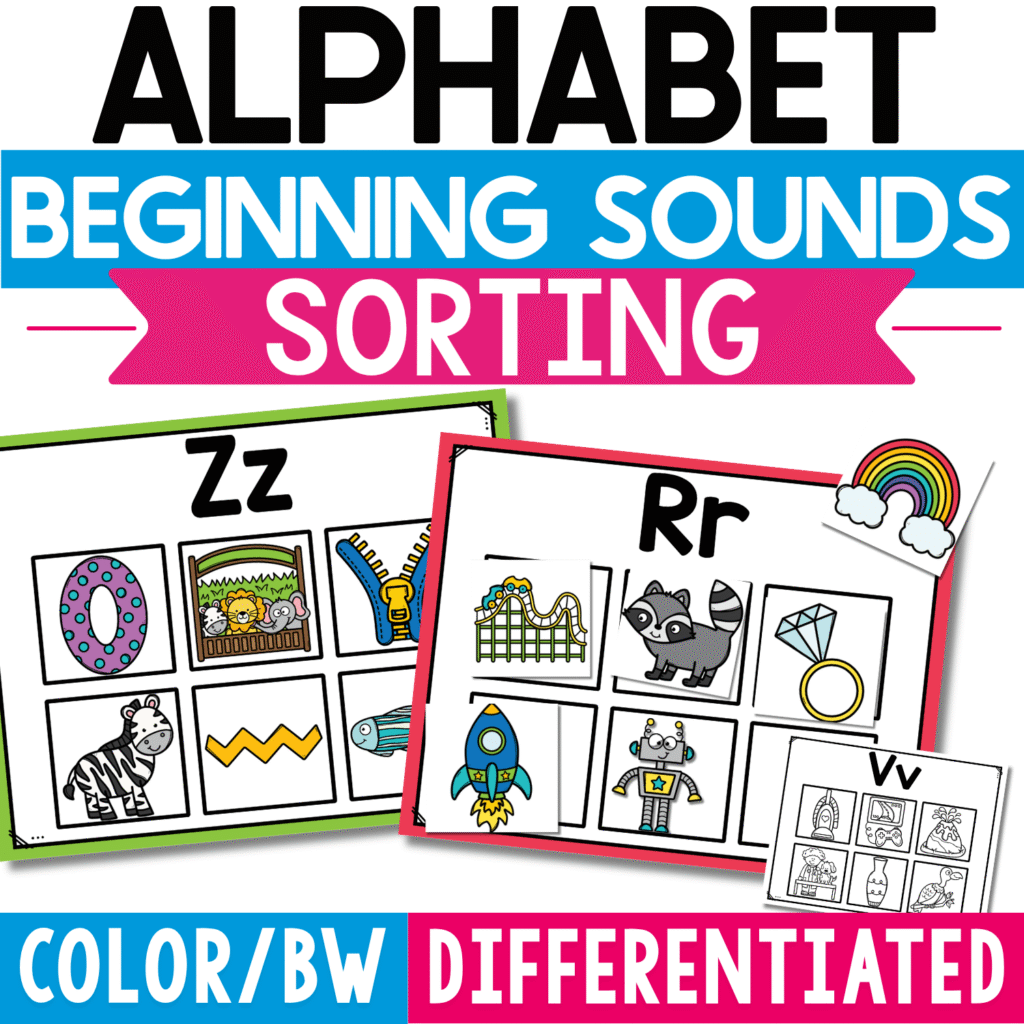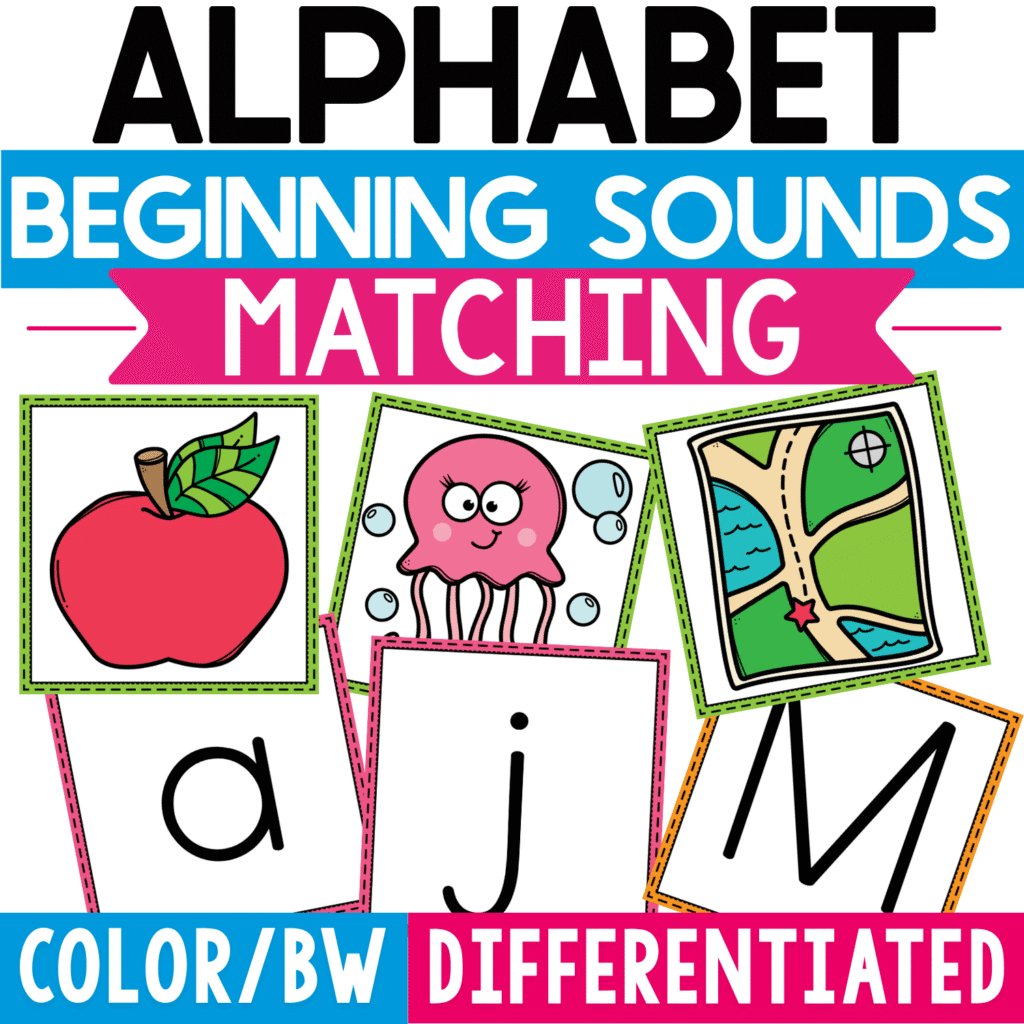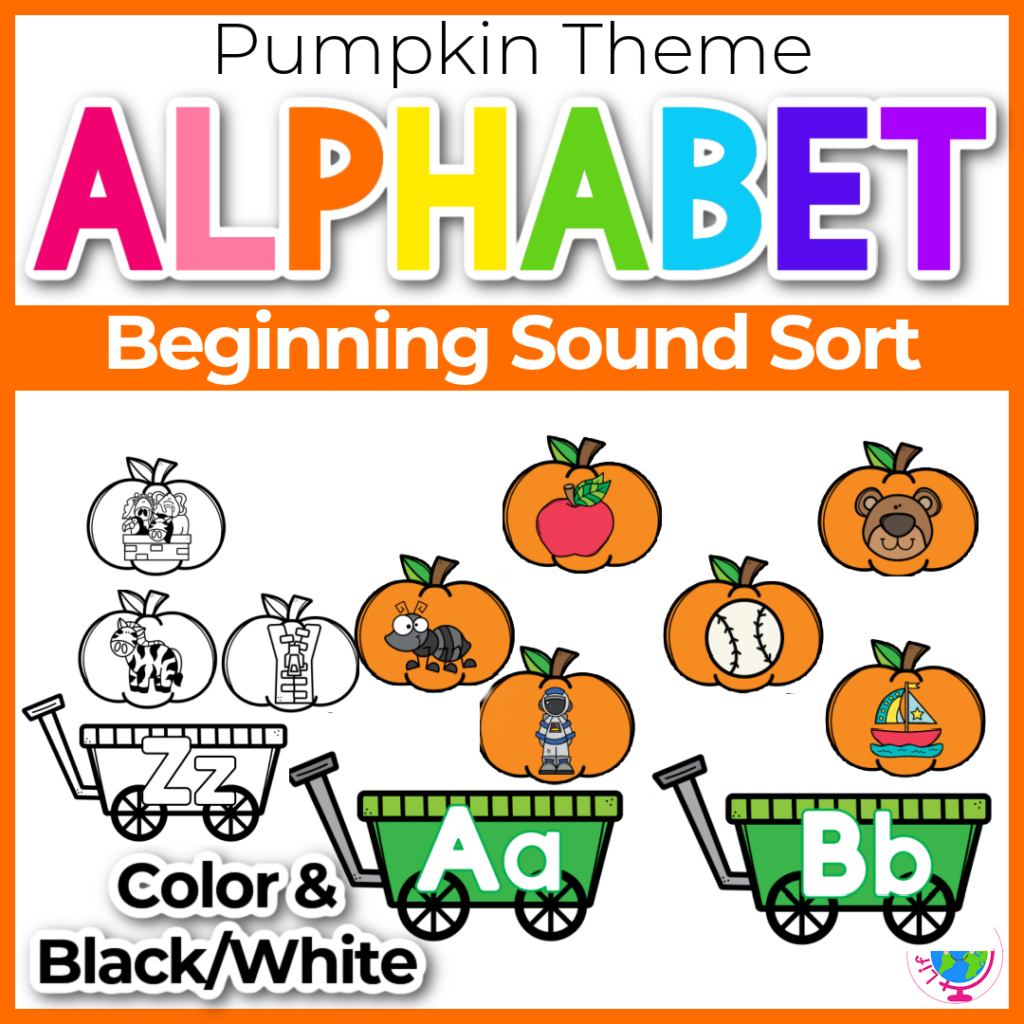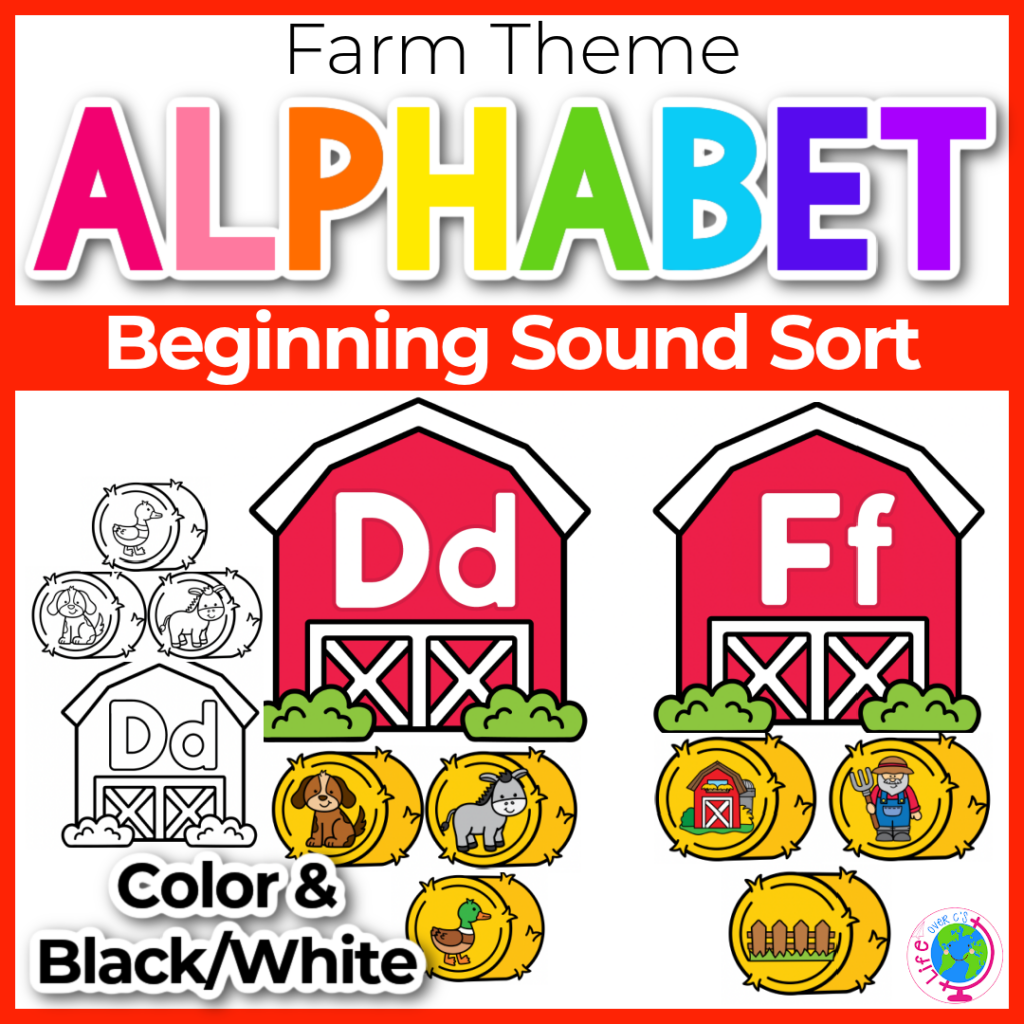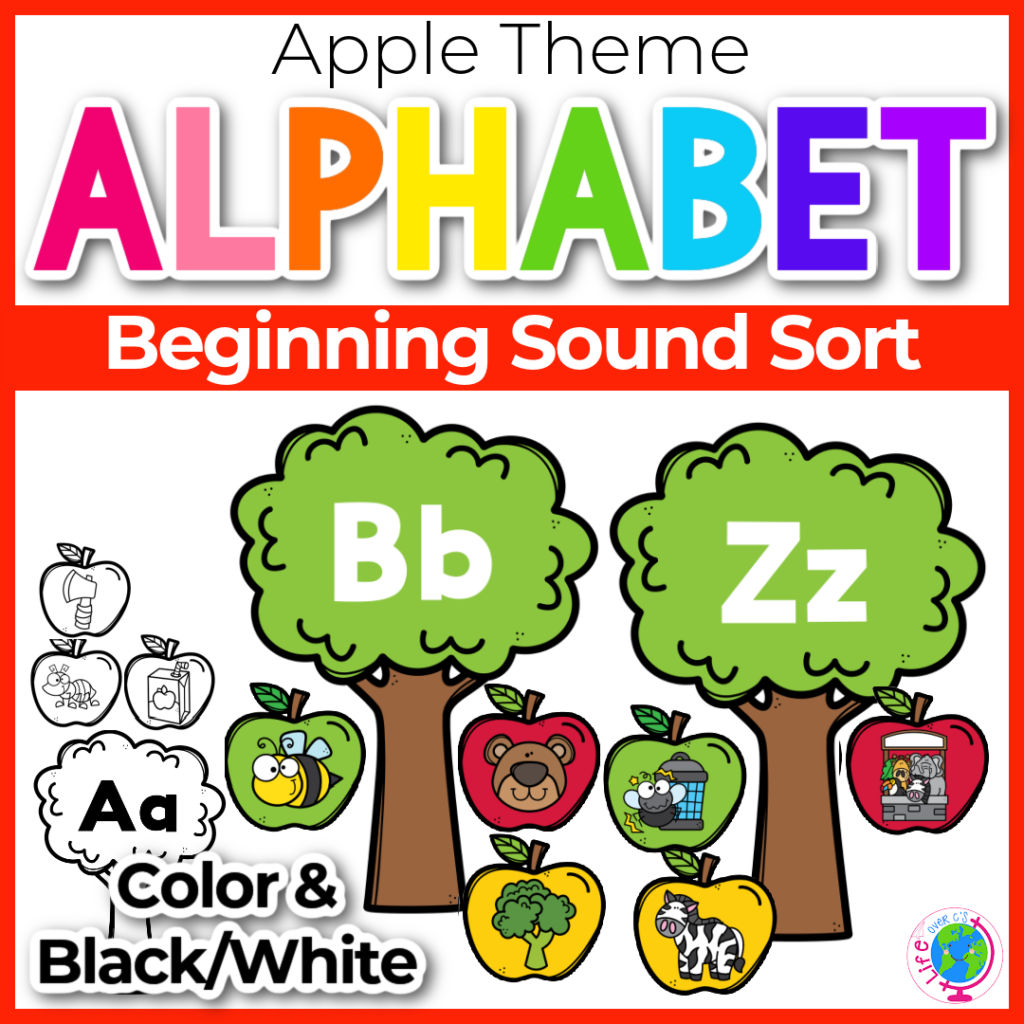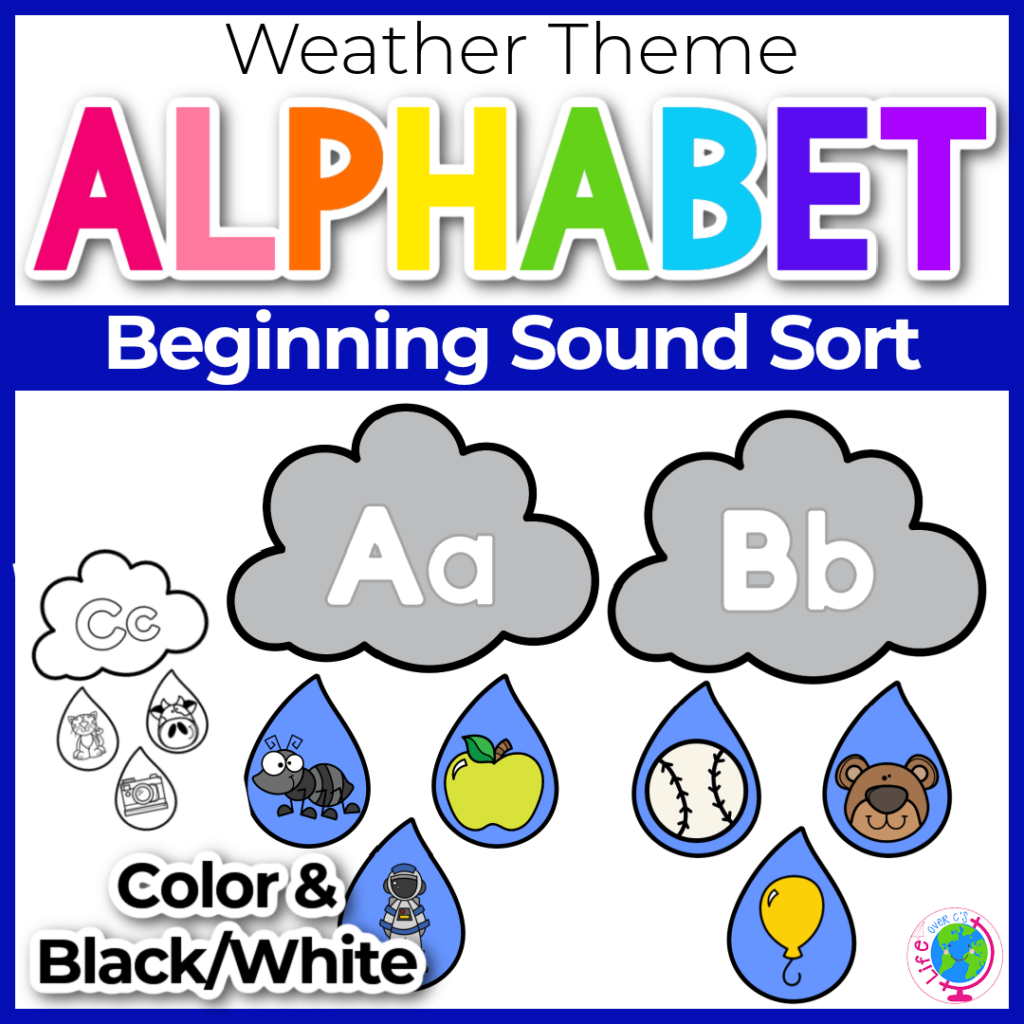
beginning sounds Center Activities: Puzzles
Recommended Grade Level:
Type of Resource: PDF
Number of Pages: 42

You must be a Monthly, Annual or Forever Member to Access this Resource.
Join the Life Over C’s Club to Access
Already a member? Login below:
Coordinating Activities


What’s Included in the Beginning Sounds Center Activities: Puzzles
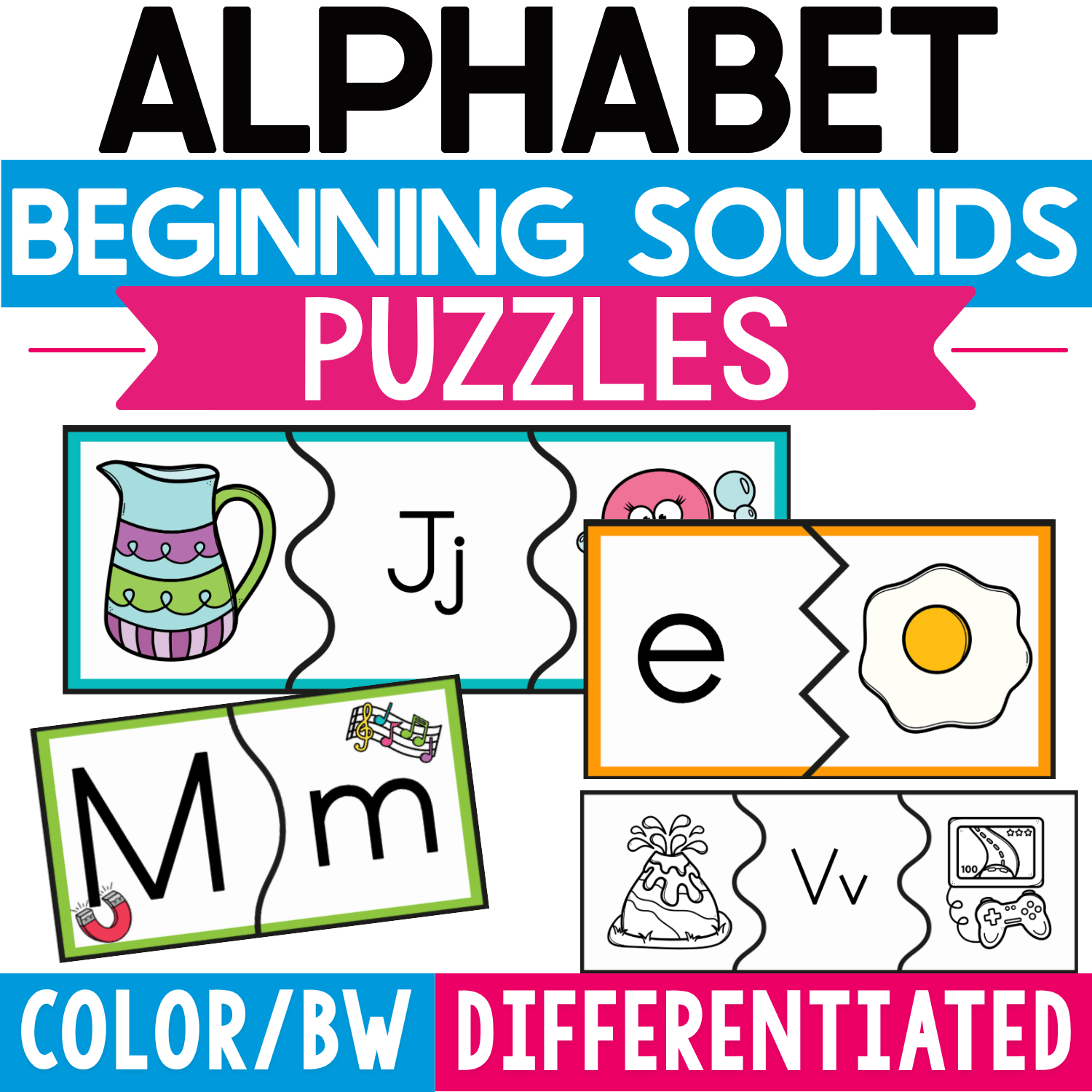
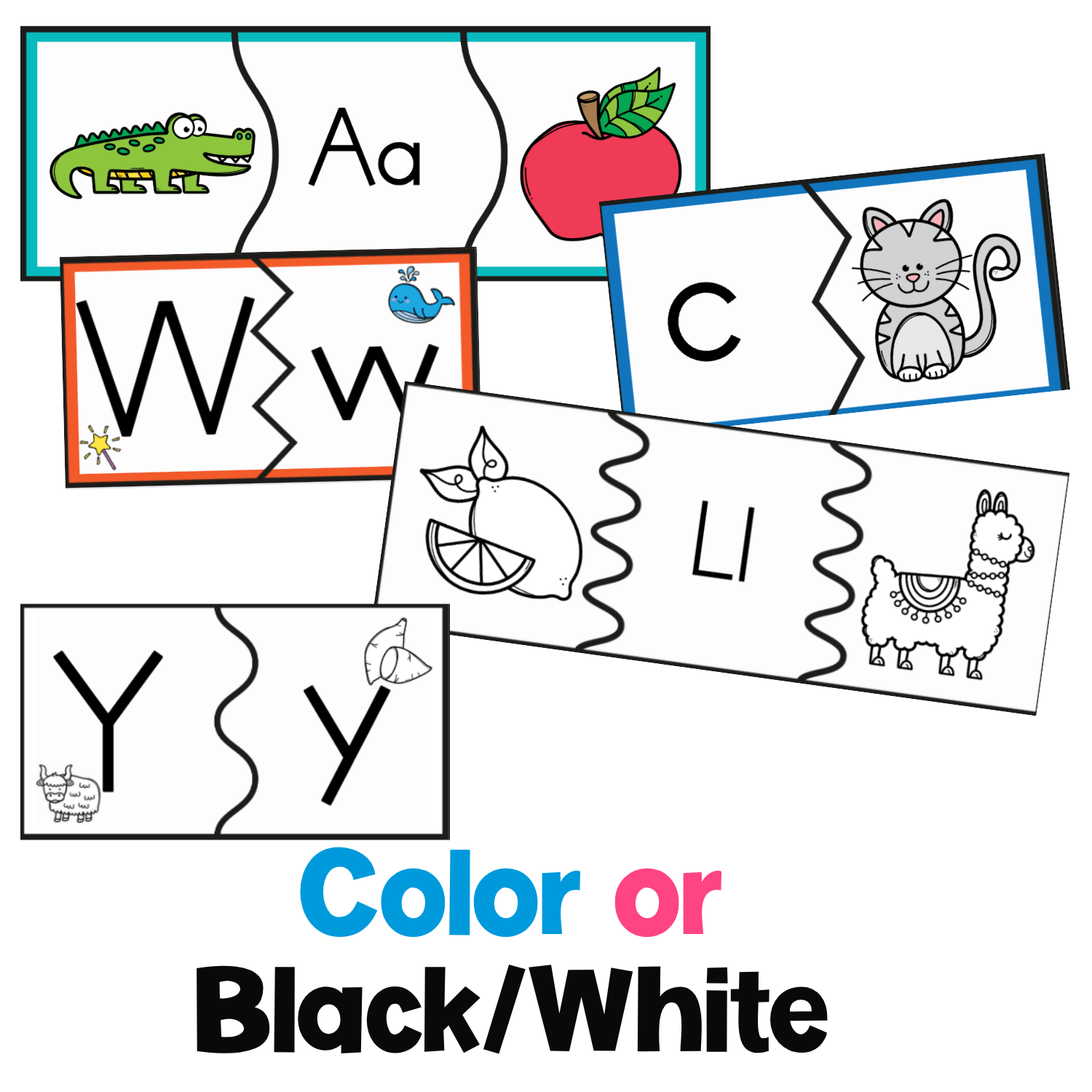
This beginning sounds puzzle set includes color and black-and-white options for flexible classroom use.
You will receive:
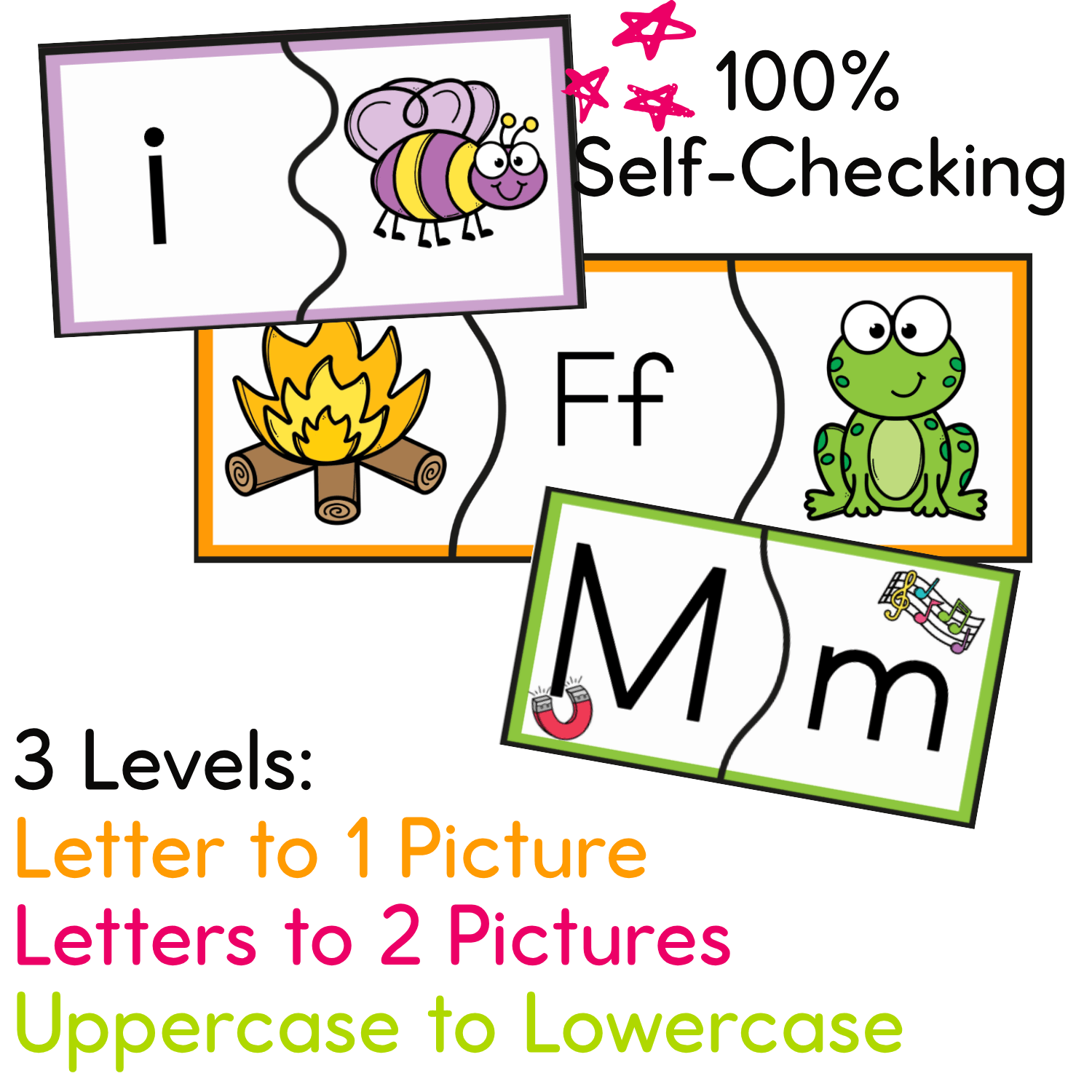
Level 1: Letter to 1 Picture Puzzle
- Lowercase letters matched to one beginning sound picture
Level 2: Letter to 2 Pictures Puzzles
- Uppercase and lowercase letters matched to two beginning sound pictures
Level 3: Uppercase to Lowercase Letter Puzzles
- Uppercase letters matched to lowercase letters
The color puzzle pages work well for repeated literacy center use, while the black-and-white puzzle pages give teachers an easy-print option for students to color or use as take-home beginning sounds practice.
Required Materials:
- Laminator
- Paper Cutter
- Paper, Printer, Ink
Standards Alignment
TThis preschool and kindergarten literacy center supports early standards connected to phonological awareness, alphabet knowledge, and beginning phonics skills.
- CCSS RF.K.1.D: Recognize and name all upper- and lowercase letters of the alphabet.
- CCSS RF.K.2.D: Isolate and pronounce the initial sounds in words.
- CCSS RF.K.3.A: Demonstrate basic knowledge of one-to-one letter-sound correspondences.
- Texas Prekindergarten Guidelines III.B.6: Child can produce a word that begins with the same sound as a given pair of words.
- Texas Prekindergarten Guidelines III.C.1: Child names at least 20 upper- and 20 lowercase letters.
- Texas Prekindergarten Guidelines III.C.2: Child recognizes at least 20 distinct letter sounds.
- Virginia ELDS CLLD2.1: Children develop phonological awareness by identifying and working with sounds in spoken language.
- Virginia ELDS CLLD3.1: Children develop alphabet knowledge by recognizing and naming letters.
Each beginning sound puzzle gives students developmentally appropriate practice with foundational literacy skills while keeping the phonics task hands-on, visual, and easy to differentiate.
Skills Students Practice
This initial sound picture-letter match activity supports early literacy and fine motor development at the same time.
Beginning Sound Recognition and Early Phonics Skills
- Beginning sound recognition
- Initial sound identification
- Letter recognition
- Uppercase and lowercase letter matching
- Phonemic awareness
- Early phonics skills
- Picture-to-letter matching
- Vocabulary development
Fine Motor Skills and Visual Perception Practice
- Hand strength
- Bilateral coordination
- Visual discrimination
- Visual scanning
- Matching skills
- Problem-solving
- Task completion
- Independent work habits
Students can name each picture, say the beginning sound, find the matching letter, and connect the puzzle pieces. The task feels simple enough for literacy centers, but still packs in valuable preschool and kindergarten phonics practice.d a sentence, students get repeated exposure to the same beginning sound in multiple ways.
Beginning Sounds Center Activities: Puzzles
Beginning sound puzzles give preschool and kindergarten students hands-on practice with beginning sounds, letter recognition, and initial sound picture-letter matching in a simple, self-checking literacy center.
Students match letters and pictures as they listen for initial sounds, compare beginning sounds in words, and build stronger alphabet skills through an interactive puzzle format.
This preschool literacy puzzle activity fits easily into kindergarten phonics practice, small group lessons, homeschool literacy work, speech therapy sessions, and task boxes.
Self-checking puzzle pieces help children confirm correct matches while practicing beginning sound recognition with more independence.
How to Use the Beginning Sounds Puzzles
Step 1: Choose the beginning sound puzzle level.
Start with the lowercase letter to 1 picture puzzles for students who are newer to beginning sounds.
Use the letter to 2 picture puzzles when students are ready to compare multiple pictures with the same initial sound.
Add the uppercase to lowercase puzzles for extra letter recognition practice.
Step 2: Prep the picture-letter match puzzles.
Print the color or black-and-white puzzle pages. Cut the puzzles apart along the lines. Laminate the puzzle pieces for repeated use in literacy centers, small groups, or task boxes.
Step 3: Match letters to beginning sound pictures.
Students look at the letter, name the picture, listen for the beginning sound, and match the puzzle pieces that belong together. The self-checking puzzle edges help students confirm correct picture-letter matches as they work.
Where to Implement:
Add this hands-on beginning sound activity to:
- Preschool literacy centers
- Pre-k phonics activities
- Kindergarten beginning sounds practice
- Small group literacy lessons
- Morning tubs
- Early finisher bins
- Task boxes
- Homeschool phonics practice
- Speech therapy activities
- Occupational therapy sessions
- Intervention groups
- Letter of the week review
- Back-to-school alphabet practice
- Year-round literacy centers
Because the activity includes multiple puzzle levels, teachers can use the same beginning sounds resource across the year as students move from basic letter recognition into beginning sound recognition and early phonics practice.