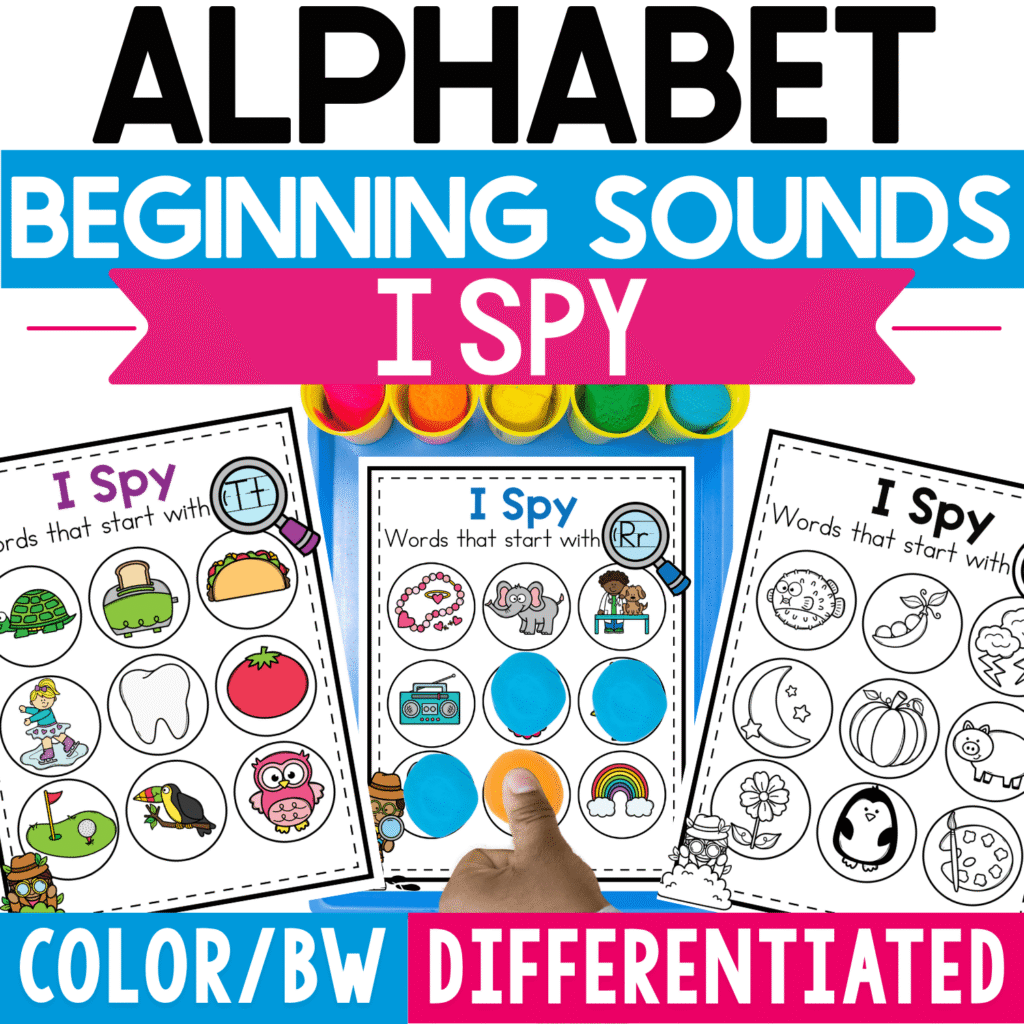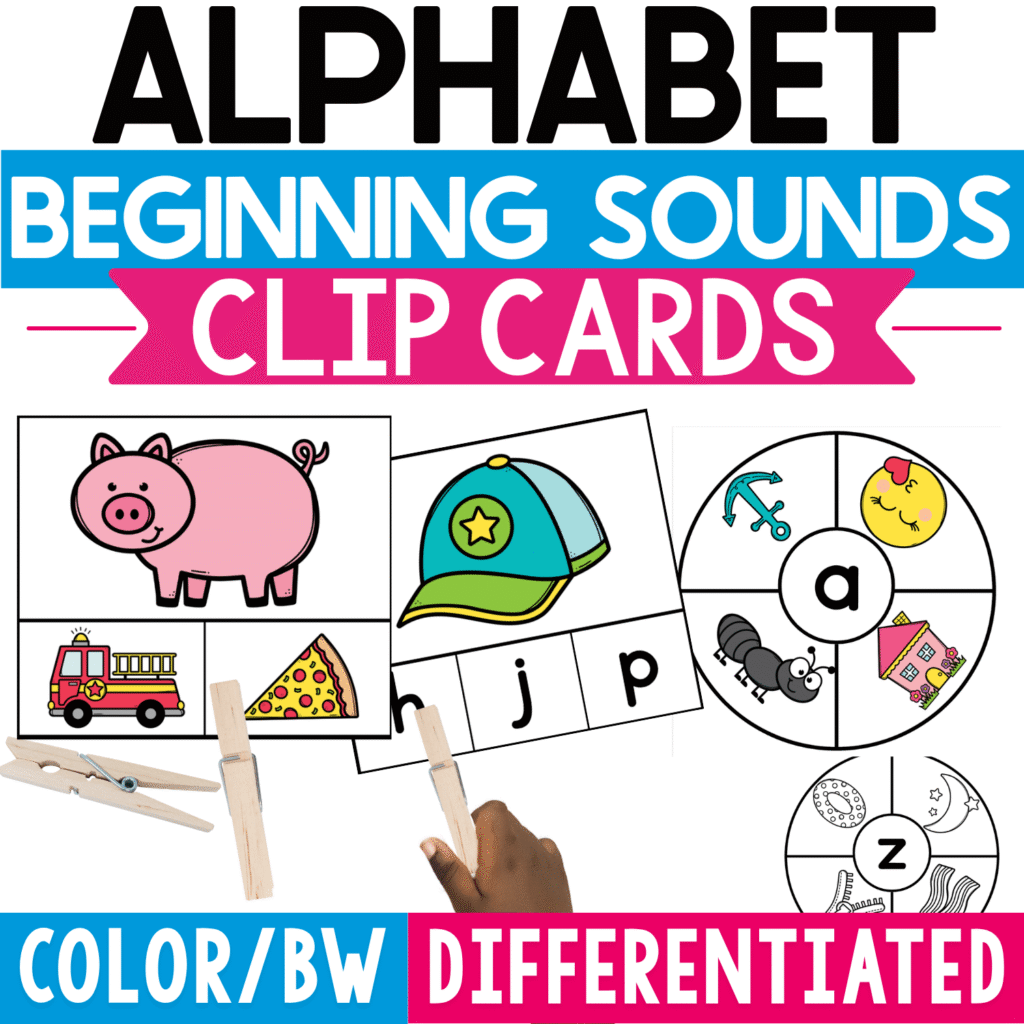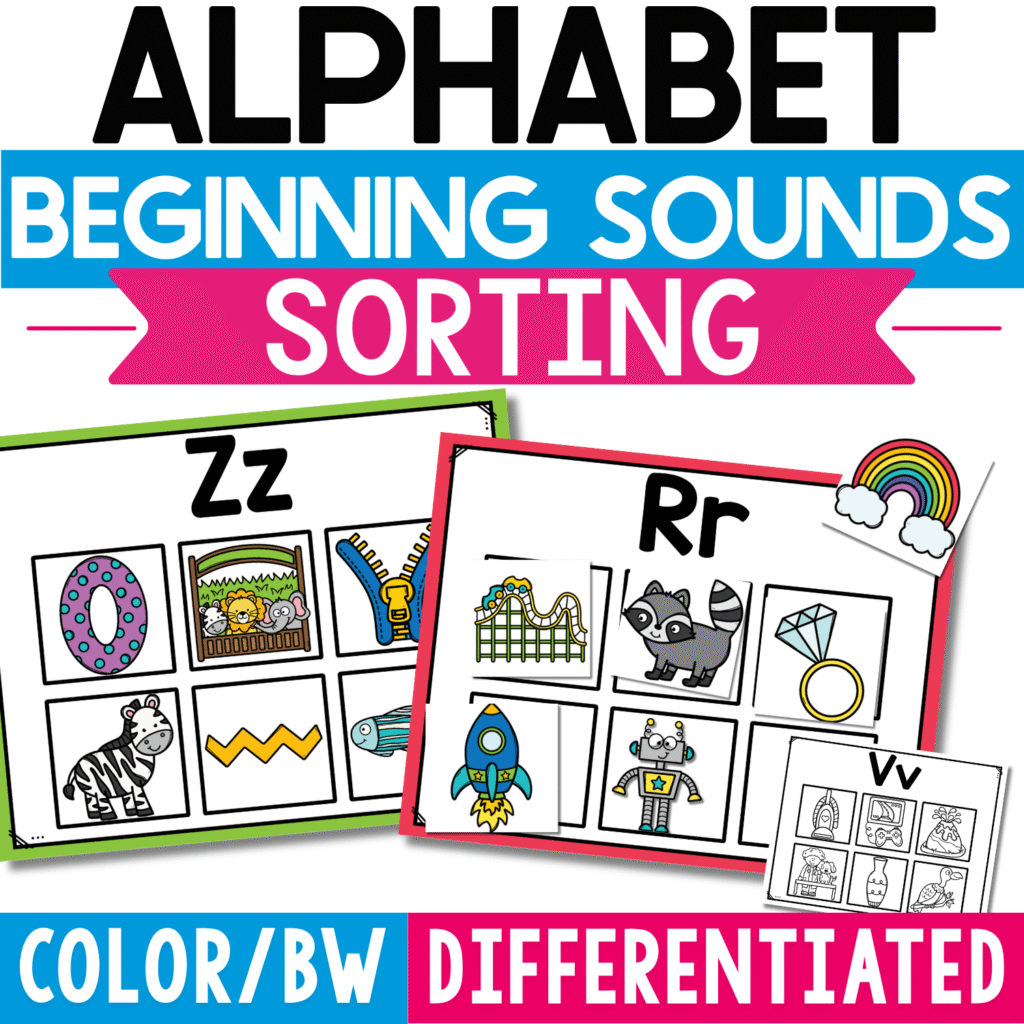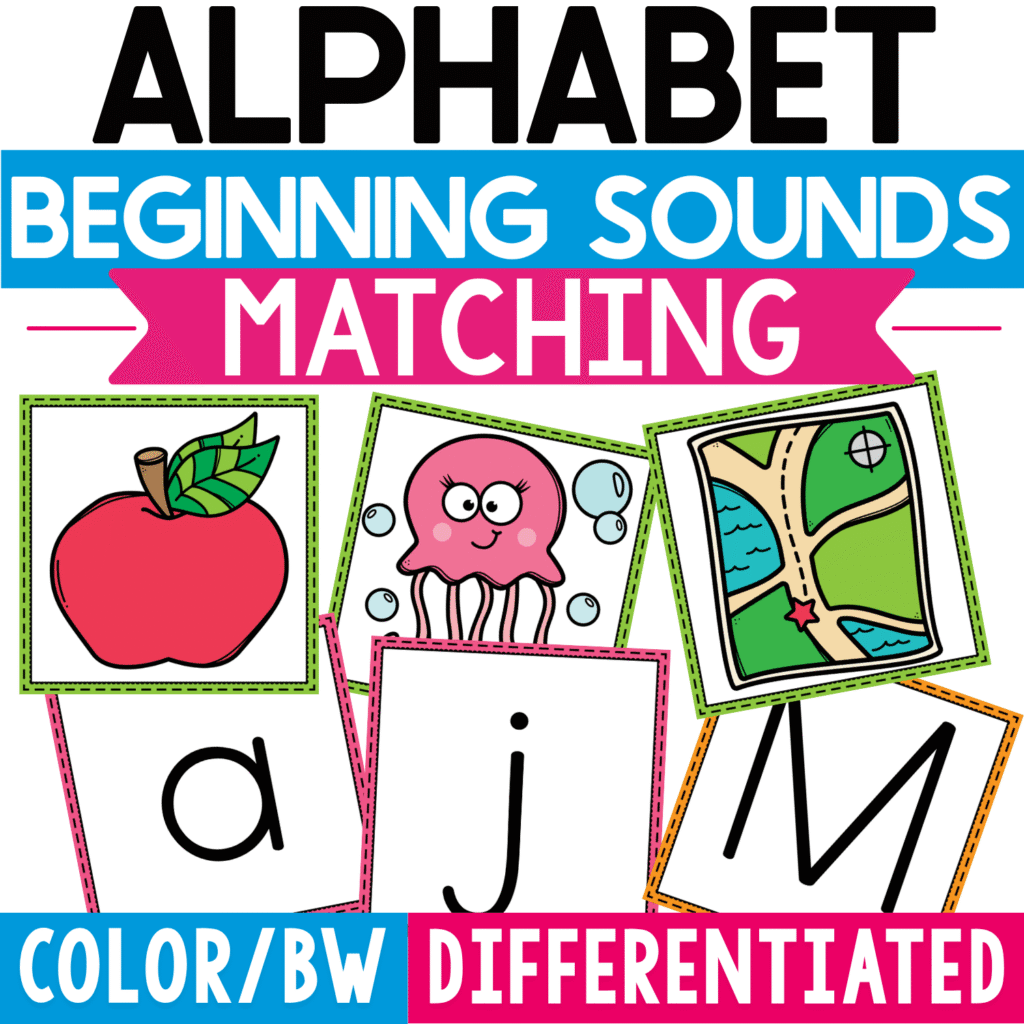
beginning sounds Center Activities: Play Dough Mats
Recommended Grade Level:
Type of Resource: PDF
Number of Pages: 57

You must be a Monthly, Annual or Forever Member to Access this Resource.
Join the Life Over C’s Club to Access

Already a member? Login below:
Coordinating Activities


What’s Included in Beginning Sounds Play Dough Mats
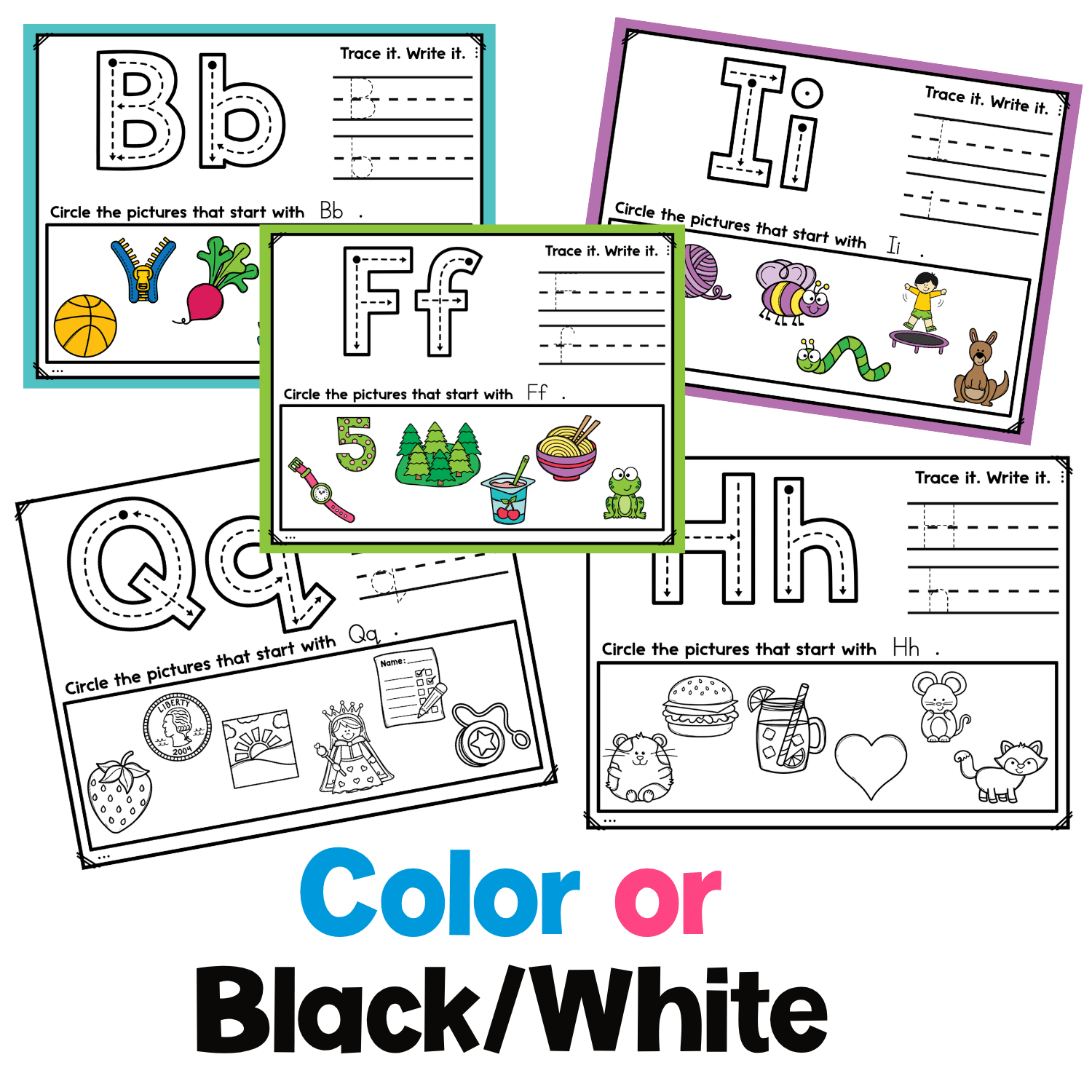
- 26 color alphabet play dough mats, one for each letter A to Z
- 26 black and white alphabet play dough mats
- Large uppercase and lowercase letters to build with play dough
- “Trace it. Write it.” handwriting lines on every mat
- A box of pictures to name and circle on every mat
- Teacher prep and how-to-use page
Required Materials:
- Printer, paper and ink
- Play dough
- Dry erase markers, crayons or markers
- Laminator or dry erase pockets (optional)
Standards Connections
Building and writing each letter, then circling the pictures that start with its sound on the beginning sounds play dough mats connect with these early literacy standards.
Common Core State Standards
- CCSS.ELA-LITERACY.RF.K.2.D: Isolate and pronounce the initial, medial vowel and final sounds (phonemes) in three-phoneme (CVC) words.
- CCSS.ELA-LITERACY.RF.K.3.A: Demonstrate basic knowledge of one-to-one letter-sound correspondences by producing the primary sound or many of the most frequent sounds for each consonant.
- CCSS.ELA-LITERACY.RF.K.1.D: Recognize and name all upper- and lowercase letters of the alphabet.
Texas Prekindergarten Guidelines
- PK4.III.B.1: Child names at least 20 upper and at least 20 lowercase letters in the language of instruction.
- PK4.III.B.2: Child recognizes at least 20 letter sounds in the language of instruction.
- PK4.III.C.4: Child can isolate the initial sound in a spoken word.
Texas Essential Knowledge and Skills (TEKS)
- TEKS K.2.A.vi: Identify the individual sounds in spoken one-syllable words.
- TEKS K.2.B.i: Identify and match the common sounds that letters represent.
Virginia Standards of Learning
- K.PFS.1 C: Identify and produce the initial sound of a spoken word.
- K.PFS.2 B: Match consonant and short vowel sounds to appropriate letters.
Skills Students Practice
- Letter recognition: naming uppercase and lowercase letters.
- Letter formation: building, tracing and writing each letter.
- Phonemic awareness: hearing the first sound in a spoken word.
- Letter-sound correspondence: matching pictures to the letter’s sound.
- Fine motor strength: rolling, pinching and pressing play dough.
- Vocabulary: naming everyday pictures.
Beginning Sounds Center Activities: Play Dough Mats
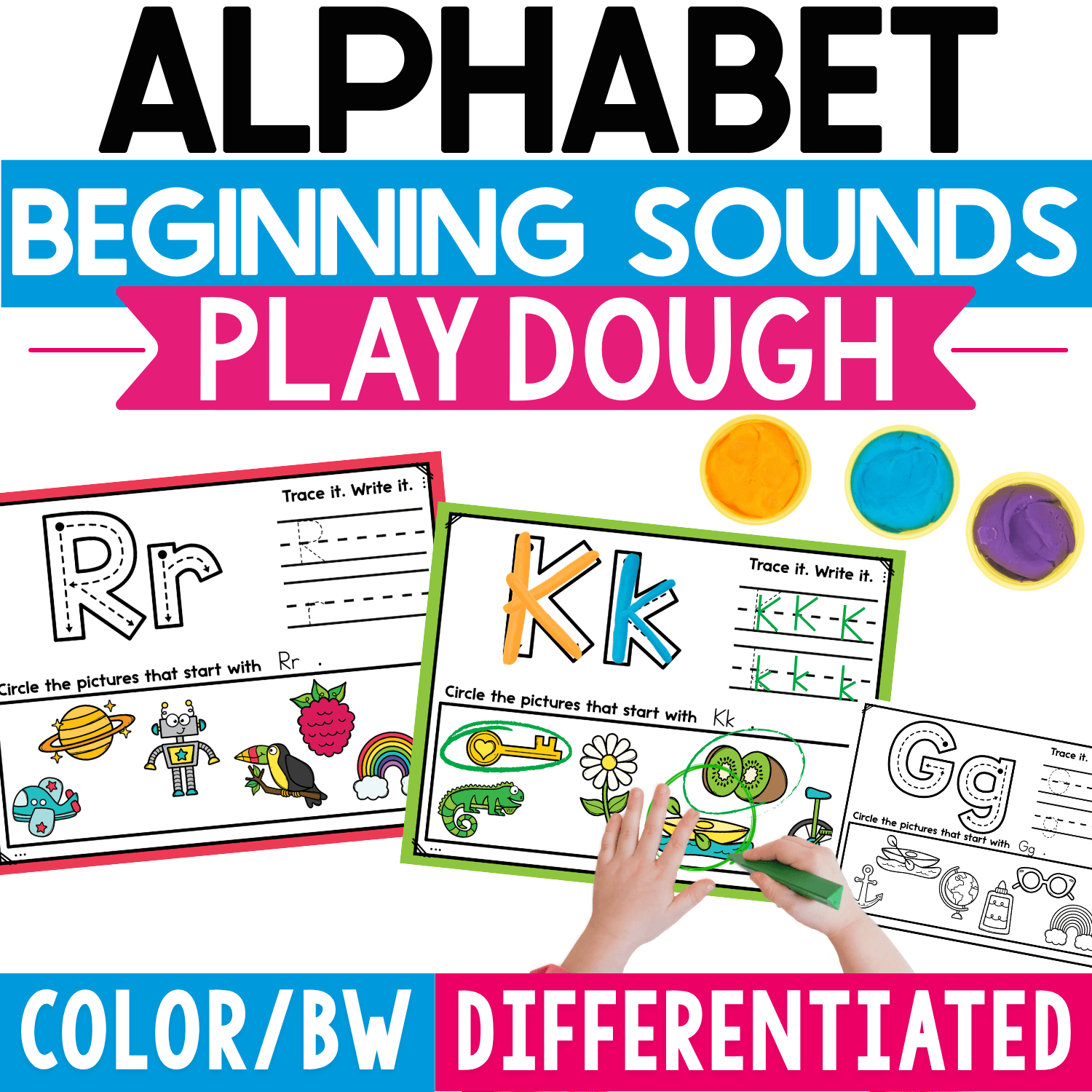
Beginning Sounds Play Dough Mats give preschool and kindergarten students one page per letter to build, trace and write the uppercase and lowercase letter, then circle the pictures that start with its sound.
Some kids learn a letter best with their hands. Rolling a play dough snake into the shape of a B and pressing it onto the mat gives the letter a feel, not just a look.
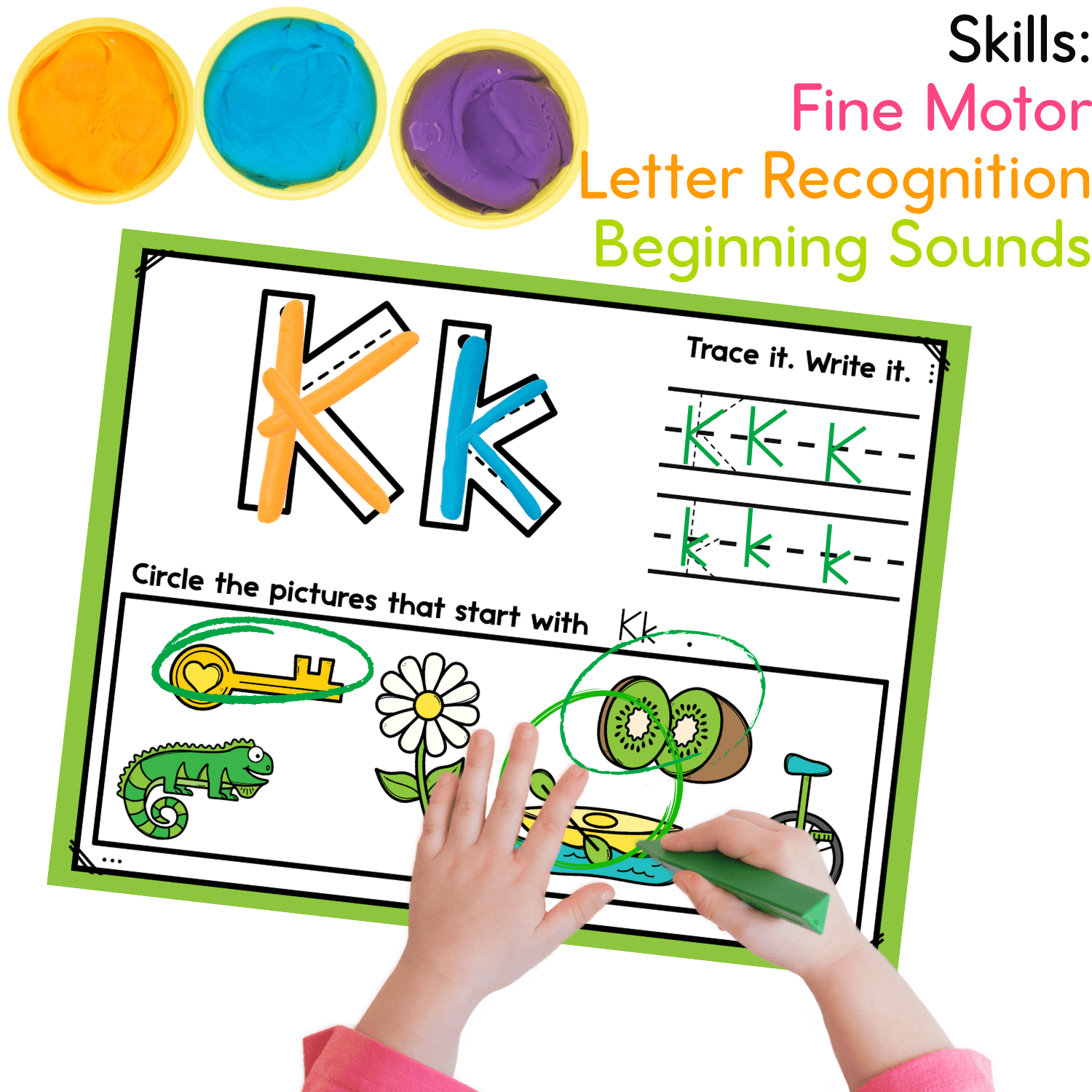
Each of the 26 alphabet mats has a large uppercase and lowercase letter to build, a “Trace it. Write it.” section with handwriting lines and a box of pictures at the bottom. Kids name each picture and circle the ones that start with the letter’s sound, so every mat connects letter formation to phonemic awareness.
Use the color mats with play dough and dry erase markers again and again, or print the black and white mats for one-time practice.
How to Use the Beginning Sounds Play Dough Mats
- Print the mats in color or black and white. Laminate them or slide them into dry erase pockets to use with play dough.
- Name the letter at the top of the mat and say its sound together.
- Kids roll play dough snakes and build the uppercase and lowercase letter on top of the large letters.
- They trace each letter with a finger, then trace and write it on the handwriting lines.
- Kids name each picture at the bottom, listen for the first sound and circle the pictures that start with the letter. For extra fine motor work, they can smash a small play dough ball on each correct picture.
Small Group: Give each child the same letter and build it together, then take turns naming the pictures.
Independent Practice: Keep the mats in a fine motor tub or literacy center with play dough and a dry erase marker. The black and white mats make easy letter-of-the-week homework.
Tips for Success
- Teach letter formation from the top, the same way kids will write it. Building the letter in the right order makes the handwriting lines easier.
- Name the pictures together before kids circle. Some pictures could have more than one name, and the right first sound depends on the right word.
- Keep play dough in small portions so it doesn’t end up all over the mat.
Easy Ways to Differentiate Beginning Sounds Play Dough Mats
During a letter-of-the-week center, you might have a three-year-old who needs help rolling a snake, a child who knows the letter shape but not its sound and a kindergartner ready to write words. Each mat has building, writing and sound sections, so you can choose which part each child focuses on.
For Children Who Need More Support
- Start with the play dough letter only and save the pictures for another day. One task at a time keeps young kids focused and successful.
- Pre-roll the play dough snakes for kids who are still building hand strength. They can still press the letter into shape and feel how it’s formed.
- Name each picture and stretch the first sound, like “aaaapple,” before kids decide whether to circle it. Hearing the sound stretched out helps kids notice it.
- Begin with letters that have easy-to-hear sounds, like m, s and f. Continuous sounds are easier to stretch and hear than quick sounds like b or t.
For On-Level Practice
- Have kids complete every section of the mat: build, trace, write and circle. Moving from building to writing helps kids remember how the letter is formed.
- Have kids say the letter name and sound before they start each mat. Saying both connects the name to the sound every time.
- Ask kids to explain why they didn’t circle a picture, like “Egg starts with /e/, not /a/.” Explaining a non-example shows they’re listening, not guessing.
- Mix in review mats for letters kids already learned. Repeated practice keeps letter sounds fresh.
For an Extra Challenge
- Have kids name another word that starts with the letter and draw it on the back. Thinking of their own word shows they understand the sound.
- Ask kids to write the word for one circled picture, like cat or sun. Spelling a short word stretches beginning sounds into full words.
- Use two mats with look-alike letters, like b and d, side by side. Comparing them builds careful attention to letter shapes and sounds.
- Have kids teach the mat to a younger child or partner. Explaining the steps shows they know the routine and the skill.
For Speech, OT, ELL or Special Education Support
- Fine motor: roll, pinch and press the play dough to build hand strength. Smashing play dough balls on the pictures adds even more finger work.
- ELL: name each picture in English and have kids repeat it. Kids need the English word before they can hear its first sound.
- Speech: use mats that match a child’s target sound and practice the picture names. The letter on the mat gives a visual cue for the sound.
- Sensory: offer kinetic sand or a dry erase marker for kids who don’t like the feel of play dough. They still get to build and trace the letter.
Beginning Sounds Center Activities: Play Dough Mats Is Perfect For:
- Preschool and pre-K
- Kindergarten
- Letter-of-the-week routines
- Literacy centers and fine motor tubs
- Morning work and homework
- Homeschool phonics
- Speech therapy and OT sessions
- ELL and multilingual learners
- Special education