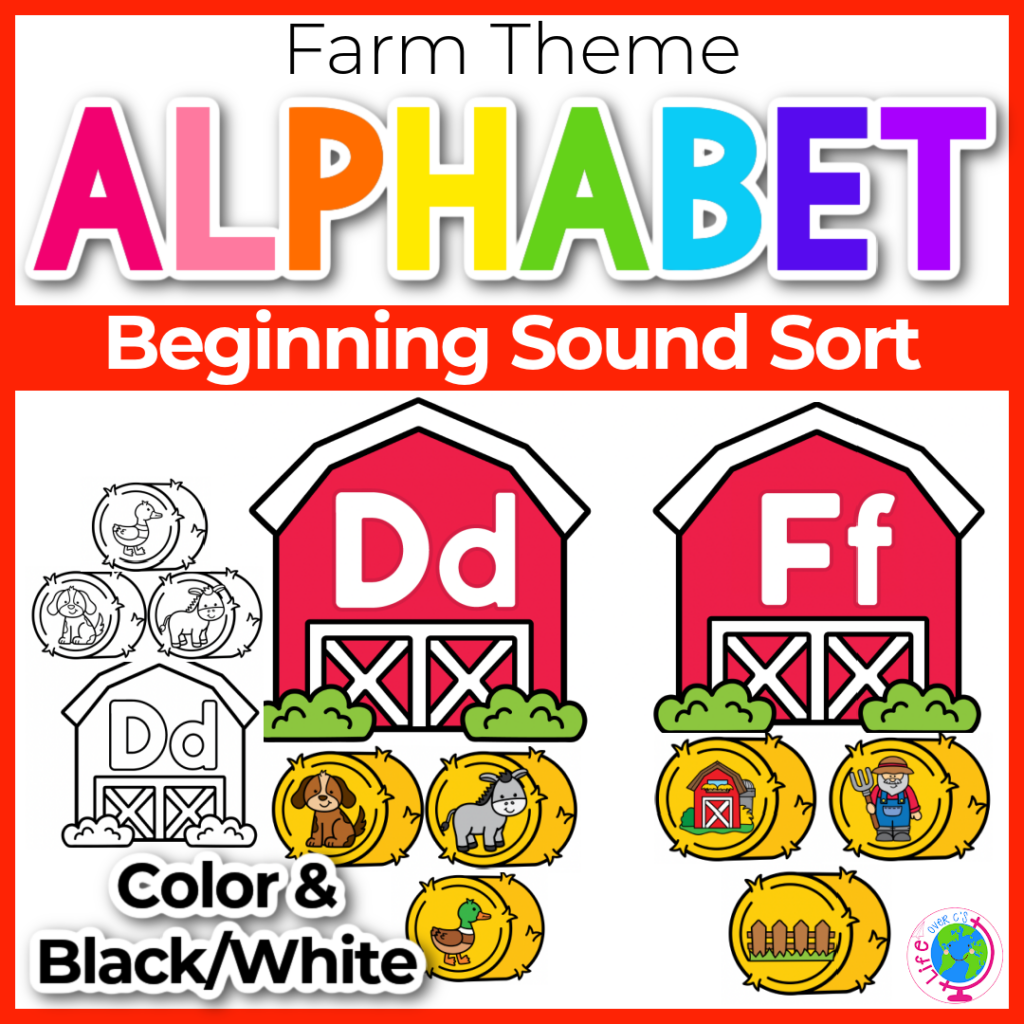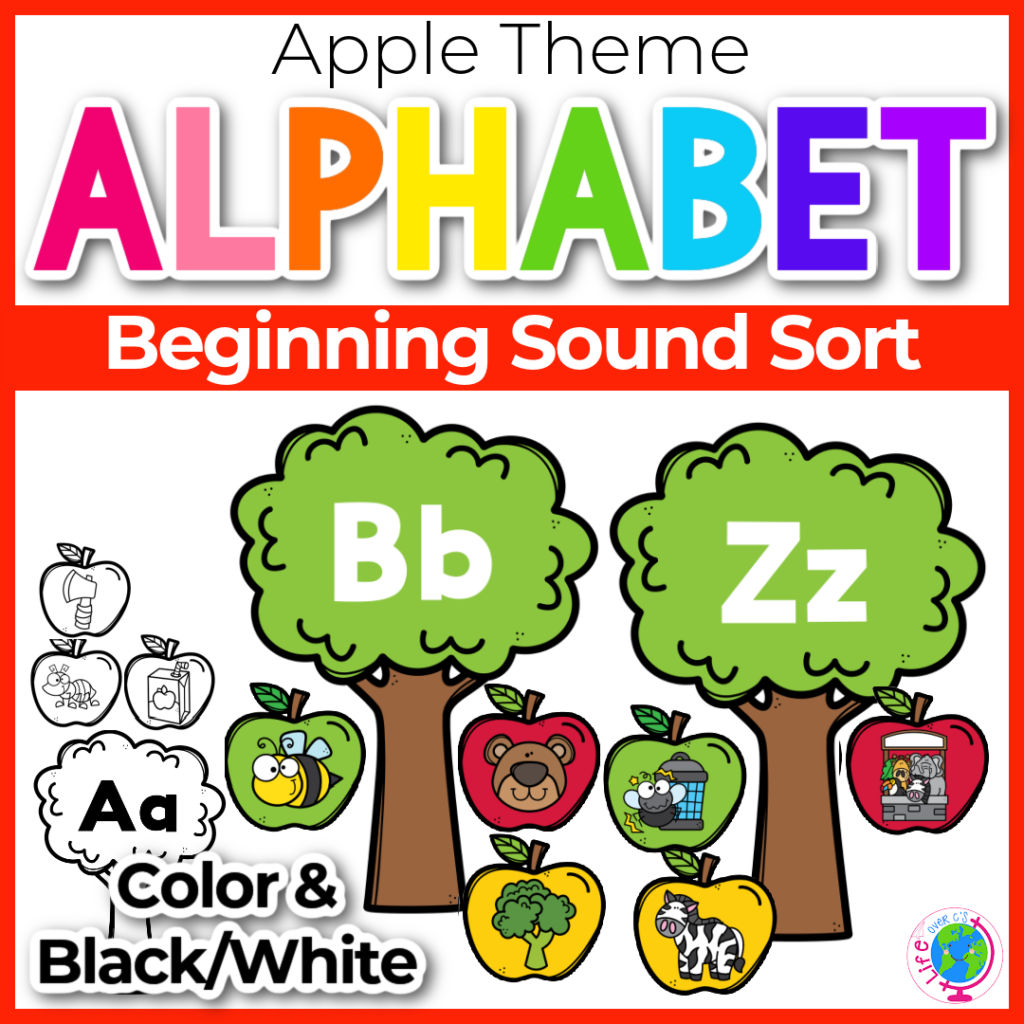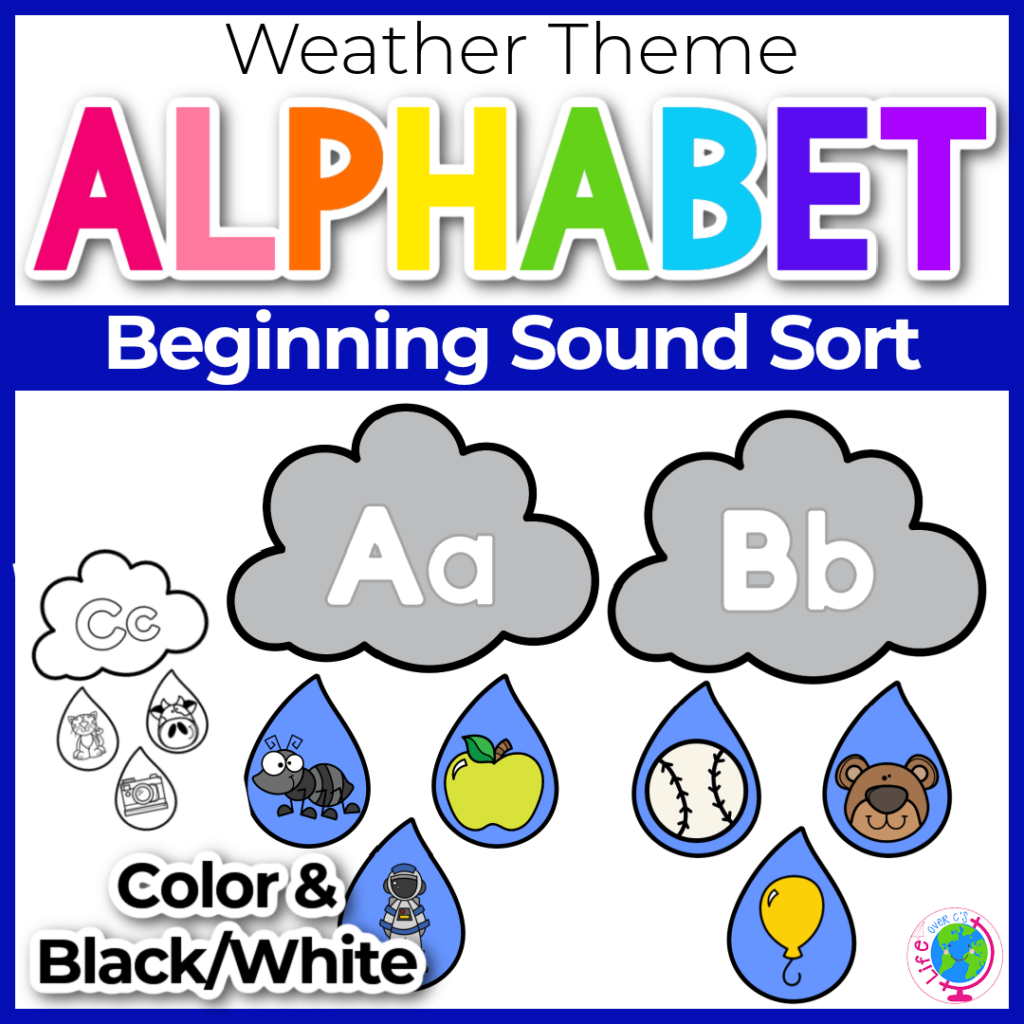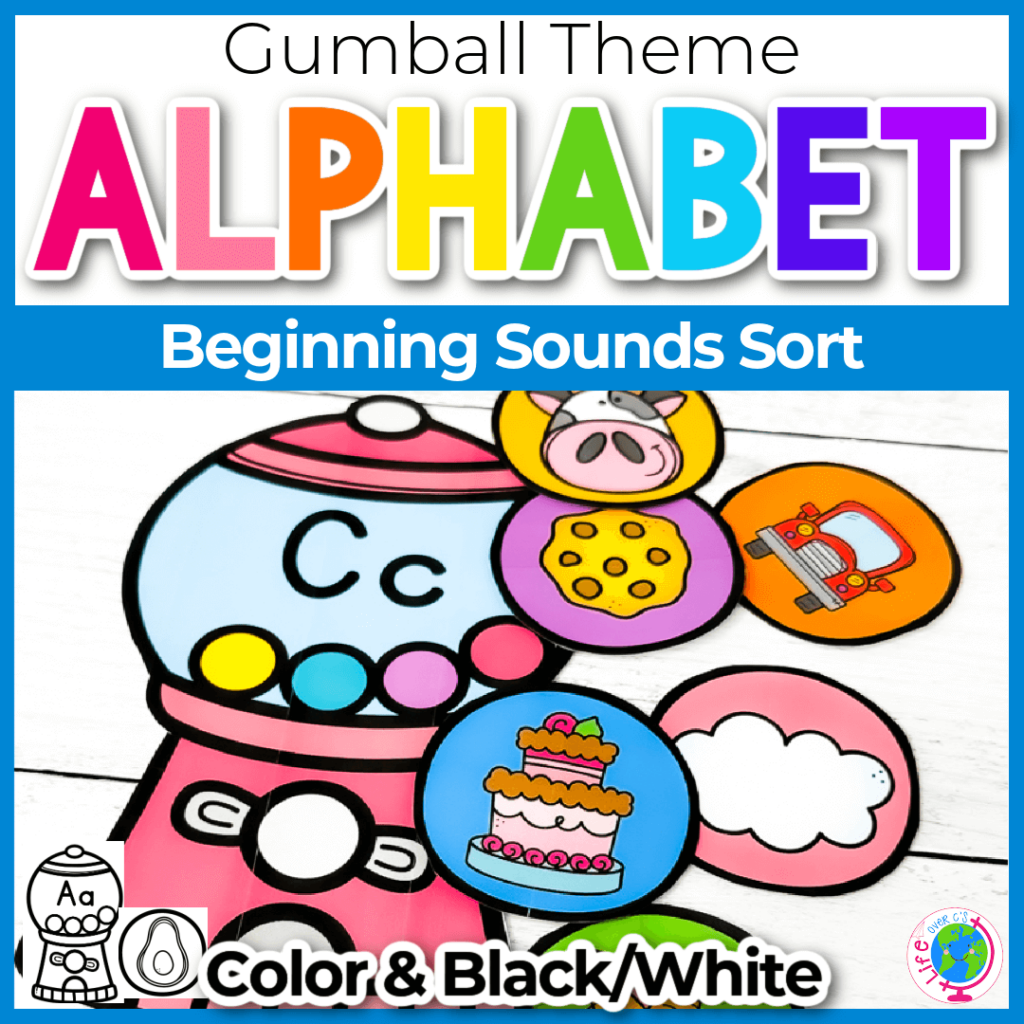
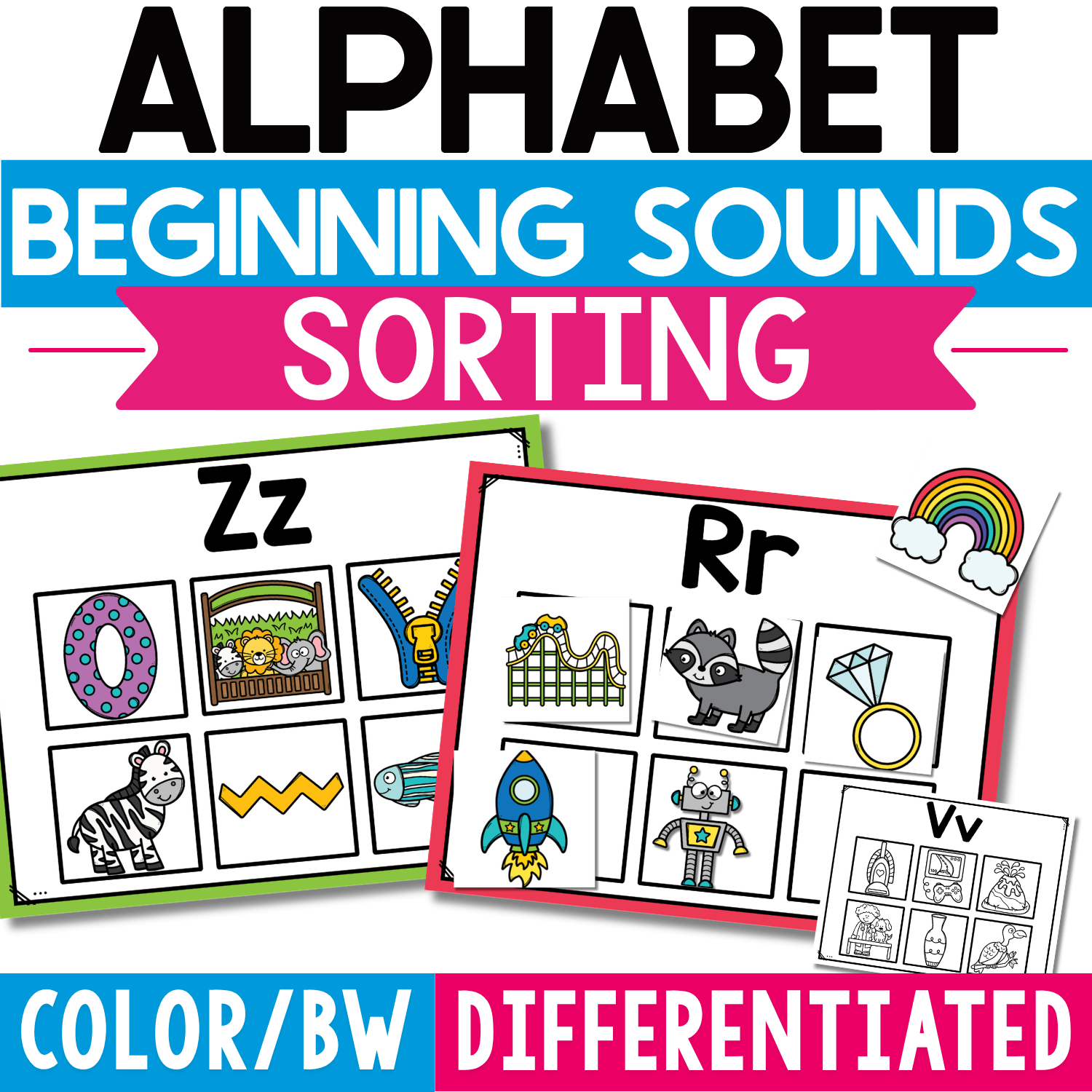
beginning sounds Center Activities: Sorting Mats
Recommended Grade Level:
Type of Resource: PDF
Number of Pages: 28
You must be a Monthly, Annual or Forever Member to Access this Resource.
Join the Life Over C’s Club to Access
Already a member? Login below:
Coordinating Activities


What’s Included in the Beginning Sounds Center Activities: Sorting Mats
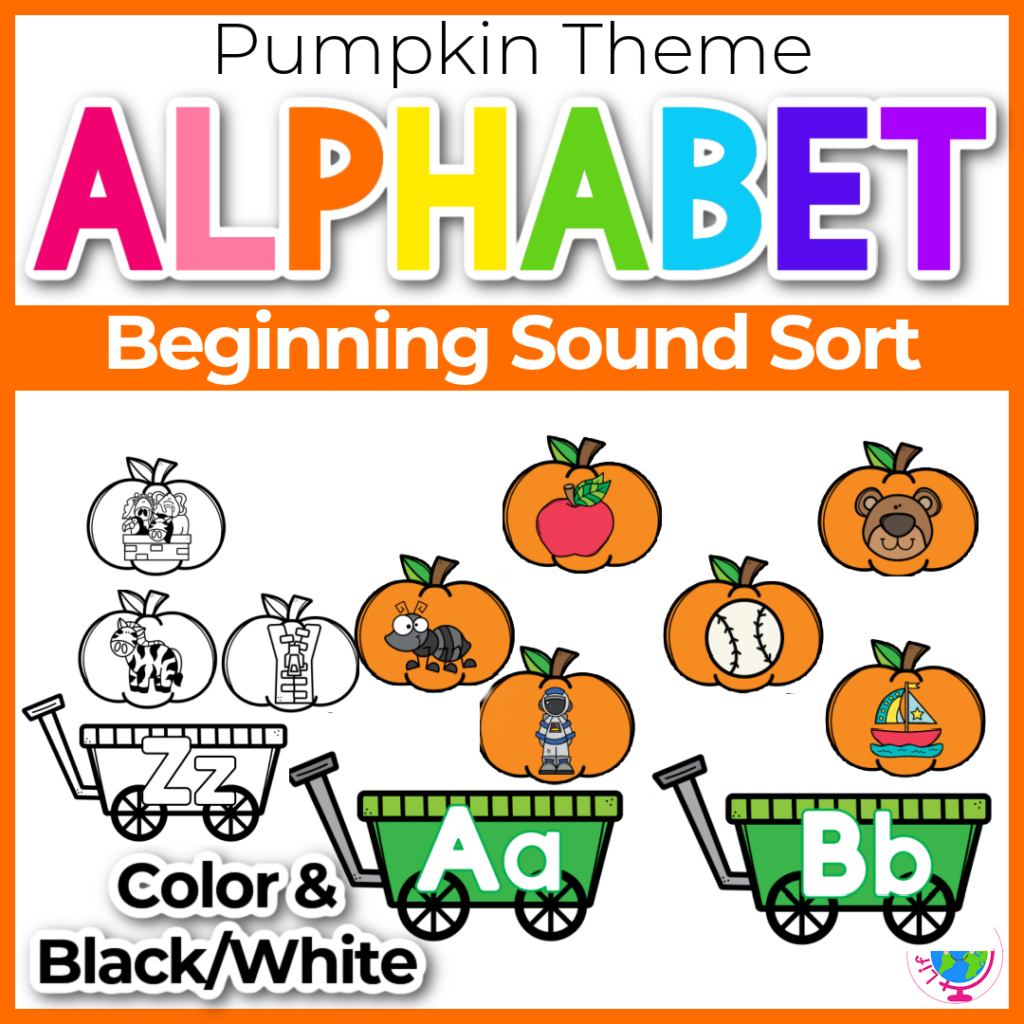
This beginning sounds resource includes the pieces you need to introduce, practice, and differentiate initial sound sorting with one easy-to-use activity.
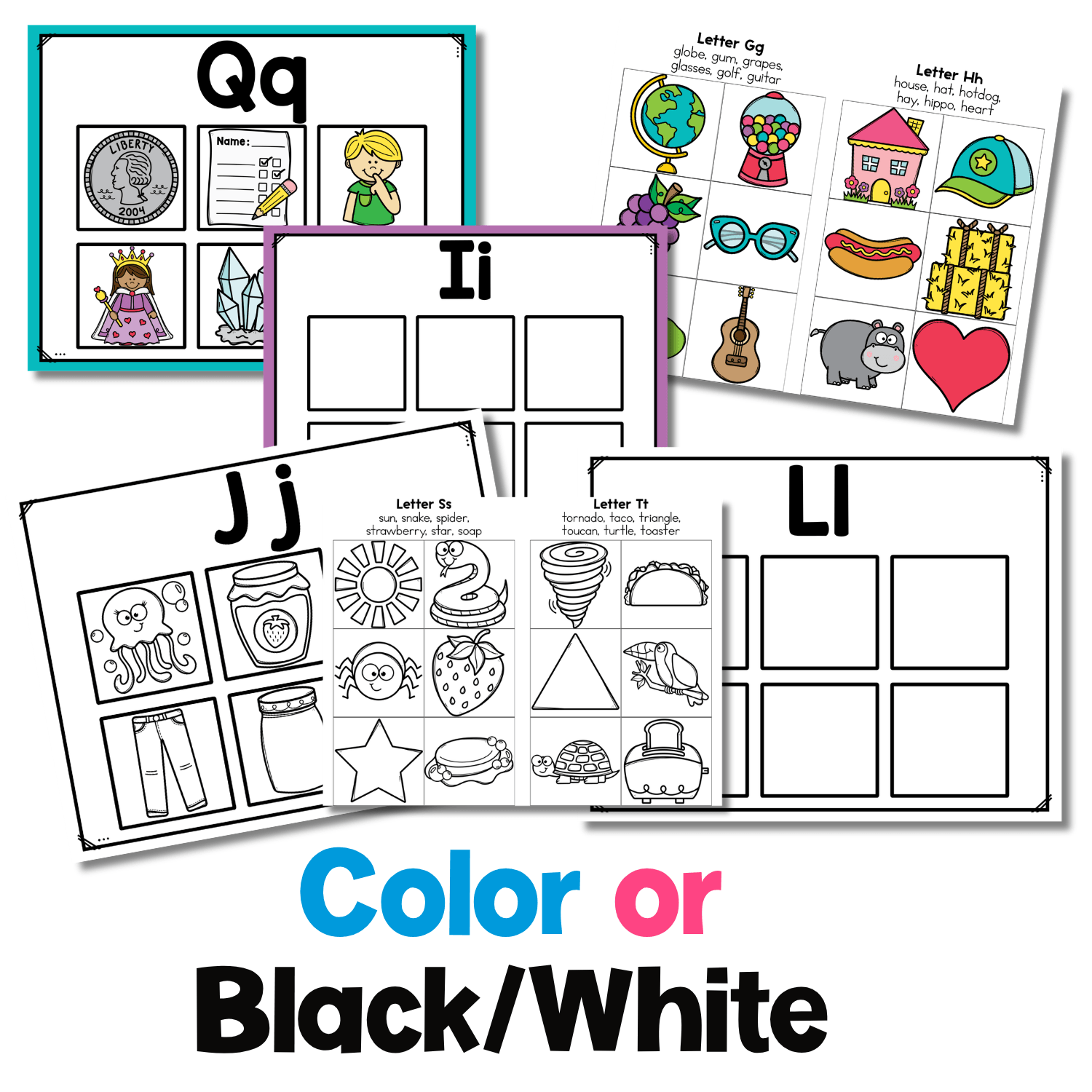
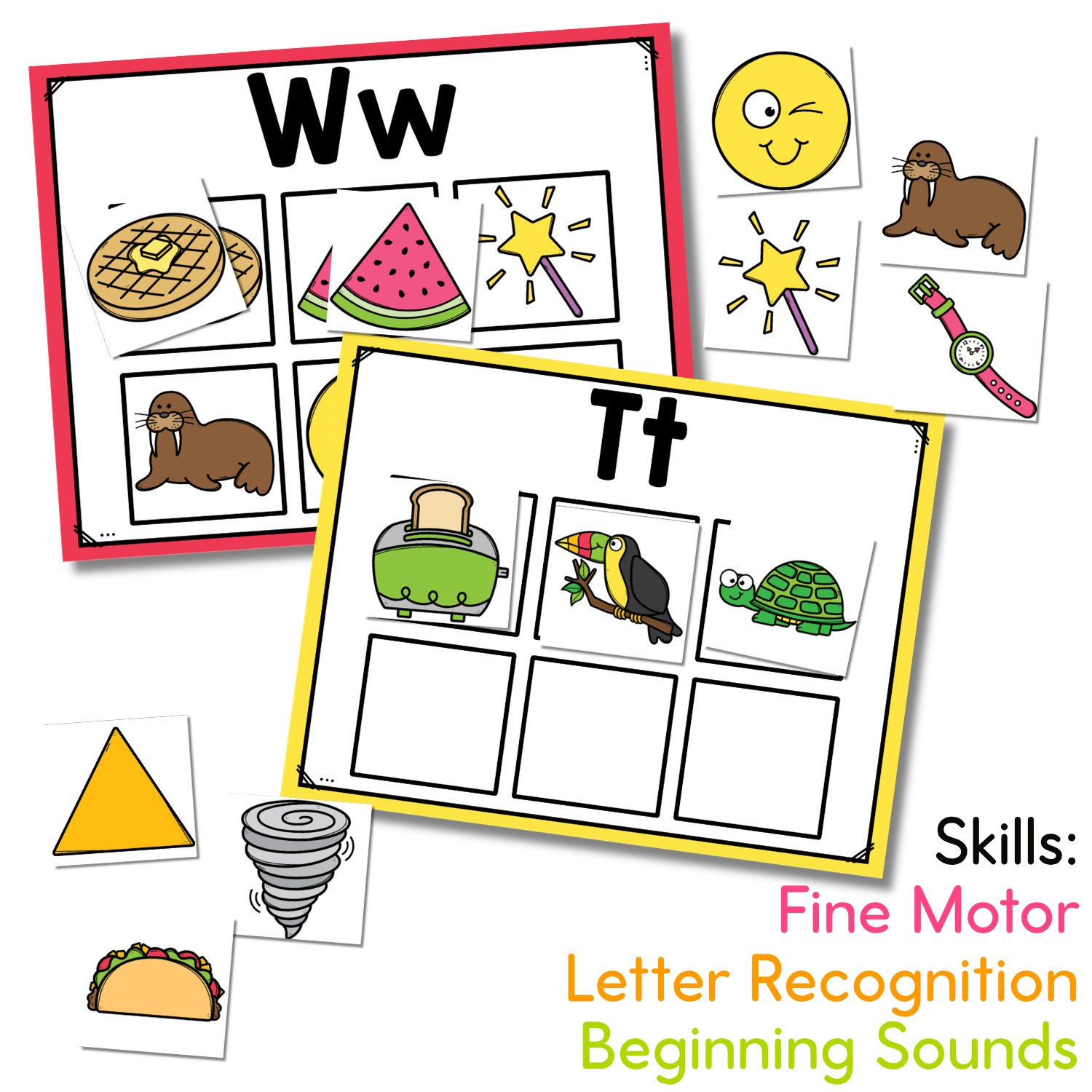
- Picture-supported beginning sounds sorting mats in color
Each mat includes six pictures, so students can match the picture cards directly to the mat while practicing beginning sounds with strong visual support. - Blank beginning sounds sorting mats in color
These mats include the target uppercase and lowercase letter with empty sorting boxes. Students listen for the initial sound and sort the picture cards without relying on picture matches. - Picture-supported beginning sounds sorting mats in black-and-white
The same supportive matching format is included in an easy-print version that works well for extra practice, take-home use, or student coloring. - Blank beginning sounds sorting mats in black-and-white
These lower-ink mats keep the focus on listening skills, letter recognition, and beginning sound sorting. - Beginning sounds picture cards in color and black-and-white
Students name each card, listen for the beginning sound, and place it on the matching letter mat. - Uppercase and lowercase letters on each mat
Together, the picture-supported mats, blank mats, and picture cards make it easy to adjust the same beginning sounds activity for different skill levels.
Required Materials:
- Laminator
- Paper Cutter
- Paper, Printer, Ink
Standards Alignment
This beginning sounds sorting activity supports early literacy standards connected to phonological awareness, letter-sound relationships, oral vocabulary, and sorting.
Standards supported include:
- CCSS RF.K.2: Demonstrate understanding of spoken words, syllables, and sounds.
- CCSS RF.K.2.d: Isolate and pronounce the initial, medial vowel, and final sounds in CVC words.
- CCSS RF.K.3.a: Demonstrate basic knowledge of letter-sound correspondences by producing primary or common consonant sounds.
- TEKS K.2.A.ii: Recognize spoken alliteration or groups of words that begin with the same spoken onset or initial sound.
- TEKS K.2.B.i: Identify and match the common sounds that letters represent.
- Virginia English SOL Kindergarten: Supports early phonological awareness, letter recognition, and letter-sound connections.
- Virginia ELDS CLLD2.3: Learning spoken language is composed of smaller segments of sound.
- Virginia ELDS CLLD2.4: Learning how letters and print work to create words and meaning.
These standards connections make the activity a strong fit for beginning sounds instruction, phonemic awareness practice, early phonics review, and developmentally appropriate literacy centers.
These Beginning Sounds Sorting Mats support key early literacy skills that help students prepare for phonics, reading, and spelling. Students work with spoken words, picture vocabulary, letters, and sounds in one hands-on activity.
Students practice:
- Beginning sounds
- Initial sound recognition
- Phonemic awareness
- Letter recognition
- Uppercase and lowercase letter identification
- Letter-sound correspondence
- Matching and sorting
- Listening skills
- Vocabulary development
- Visual discrimination
- Fine motor skills
- Oral language
Because students name each picture card before sorting, this activity also supports speech practice, vocabulary growth, and language development in preschool, pre-k, kindergarten, speech therapy, and intervention settings.
Beginning Sounds Center Activities: Sorting Mats
Engage your preschool, pre-k, and kindergarten students with these Beginning Sounds Sorting Mats and give them hands-on practice with initial sounds, listening skills, matching and sorting, letter recognition, and vocabulary.
Students look at the target letter, name each picture card, listen for the beginning sound, and place each card on the correct beginning sounds mat.
This phonemic awareness activity includes two levels of differentiated support, making it easy to introduce beginning sounds with picture-to-picture matching and then move students toward more independent initial sound sorting.
Hands-On Beginning Sounds Practice Students Can See, Say, Hear, and Sort
Beginning sounds are an important early literacy skill, but students need more than a quick “What sound does this start with?” during circle time. These sorting mats give students repeated opportunities to hear the first sound in a word, connect that sound to a letter, and sort picture cards by initial sound.
Students practice:
- Identifying uppercase and lowercase letters
- Naming picture cards to build vocabulary
- Listening for the beginning sound in each word
- Matching pictures with the same initial sound
- Sorting picture cards onto letter mats
- Comparing words that begin with the same sound
- Strengthening fine motor skills as they pick up and place cards
The clear sorting routine keeps the activity structured while still giving students an active, developmentally appropriate way to practice early phonemic awareness skills.
How to Use the Beginning Sounds Sorting Mats
Step 1: Choose a letter mat.
Select the mat you want students to use. Begin with the picture-supported mat for extra visual support, or choose the blank sorting mat when students are ready for a more independent challenge.
Step 2: Name the letter, sound, and pictures.
Students look at the uppercase and lowercase letter at the top of the mat. Then they say the letter sound and name each picture card.
Step 3: Sort the picture cards by beginning sound.
Students listen to the beginning sound in each picture word and place the matching picture cards on the mat. On the picture-supported mats, students match each card to the same picture. On the blank mats, students place the matching cards in the empty boxes.
Where to Implement:
These beginning sounds clip cards work best during quiet, focused parts of the day:
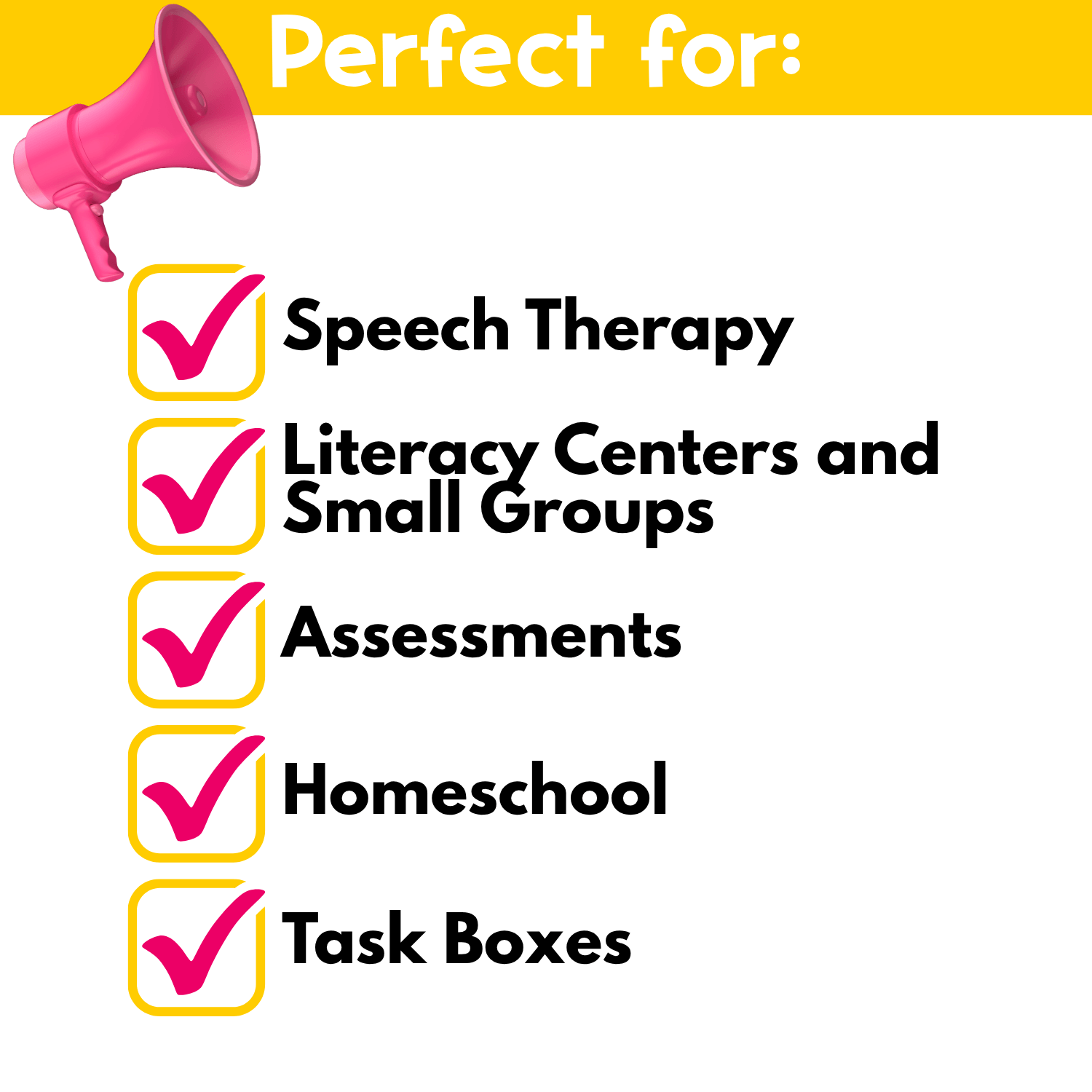
- Literacy centers for independent or partner phonics practice
- Small group instruction when targeting specific beginning sounds or skill levels
- Speech therapy sessions to support articulation and sound awareness
- Task boxes for structured, independent literacy work
- Early intervention and special education settings that benefit from hands-on repetition
- Homeschool phonics lessons that need low-prep, skill-focused activities
- Informal assessments to observe beginning sounds understanding
- Early finisher work that reinforces phonemic awareness without busy work
The predictable structure helps students stay focused while practicing an important early reading skill.