Numbers 0-120 Hide and Seek: Dinosaur
Recommended Grade Level:
Type of Resource: PDF
Number of Pages: 29


Coordinating Resources:




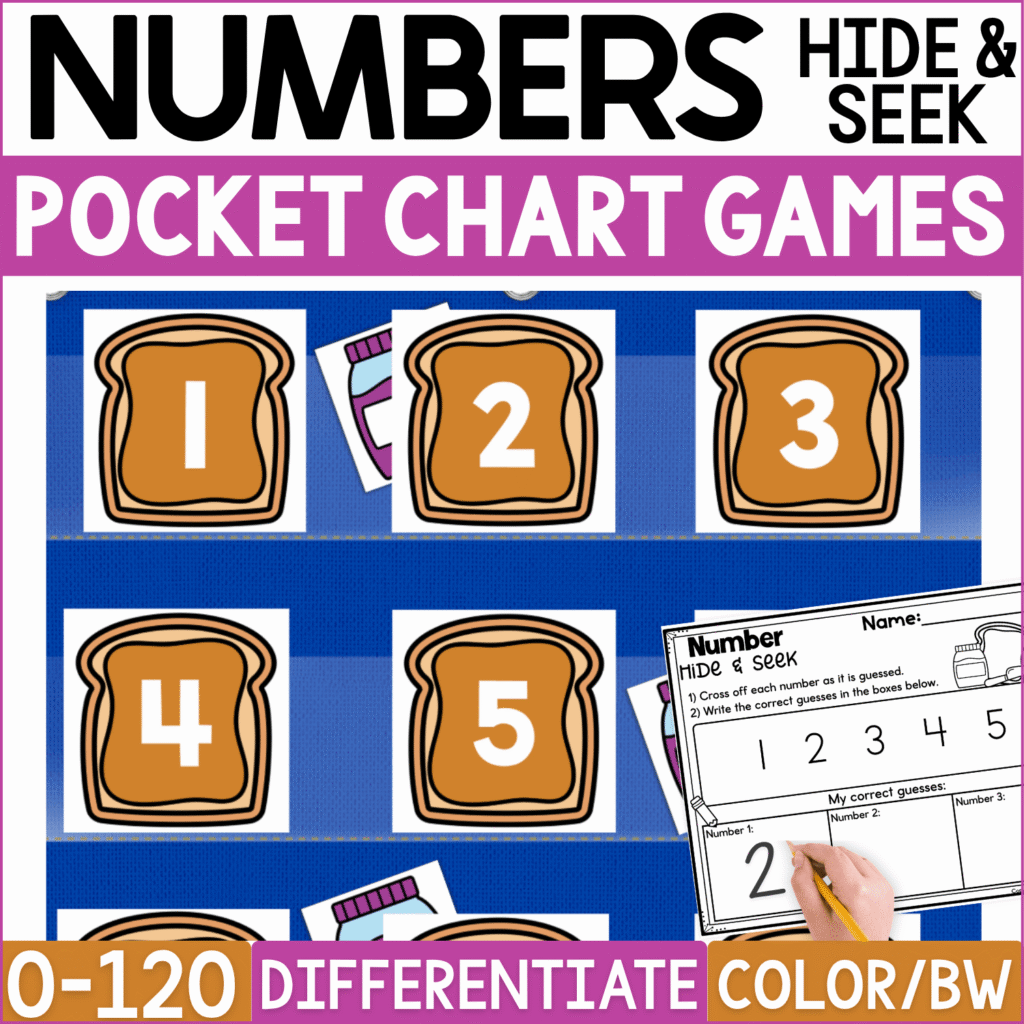
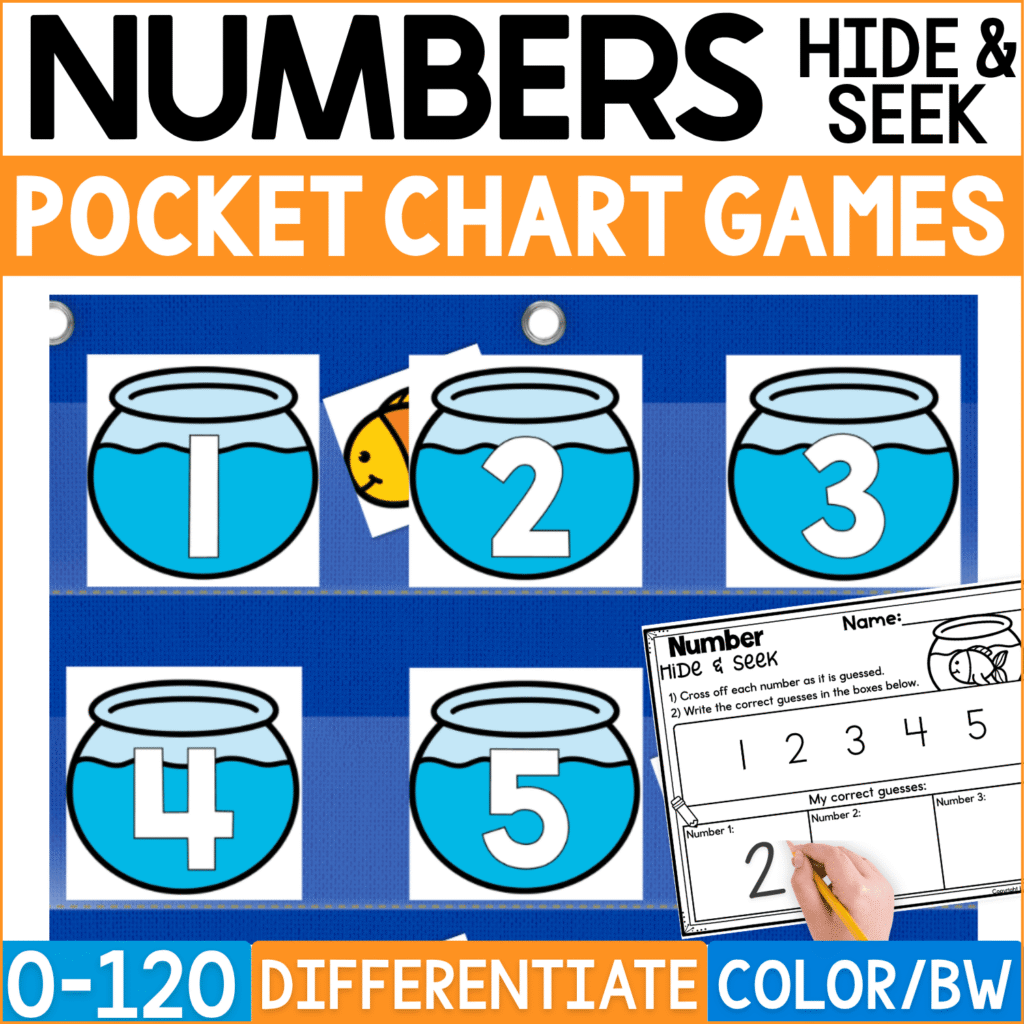
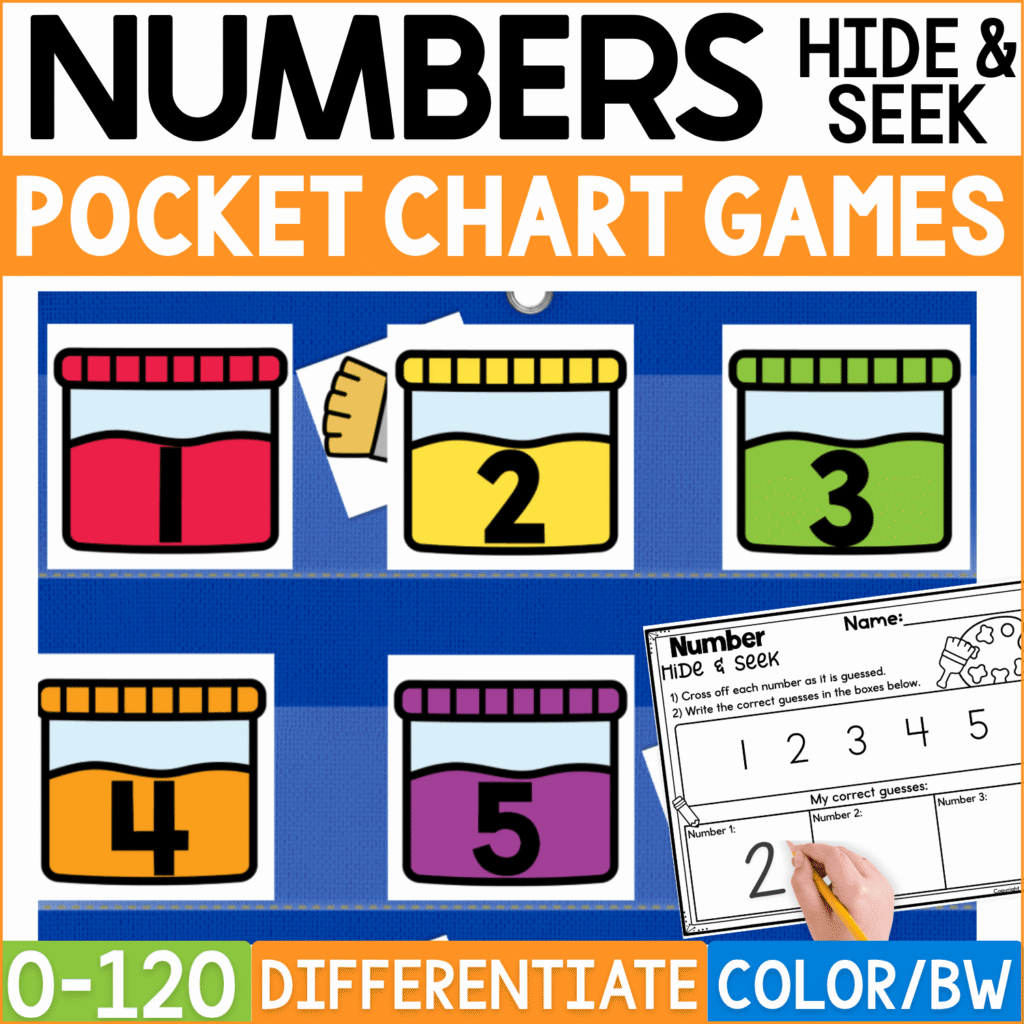
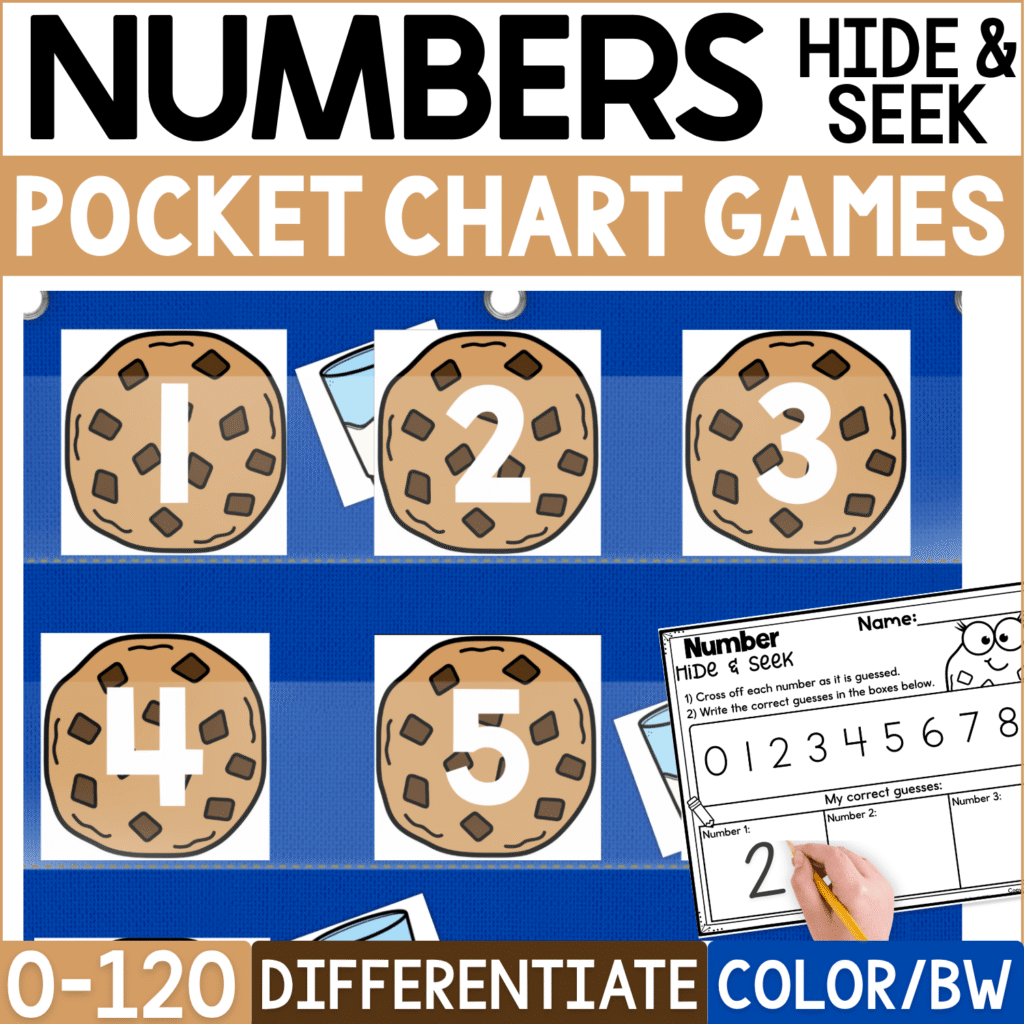
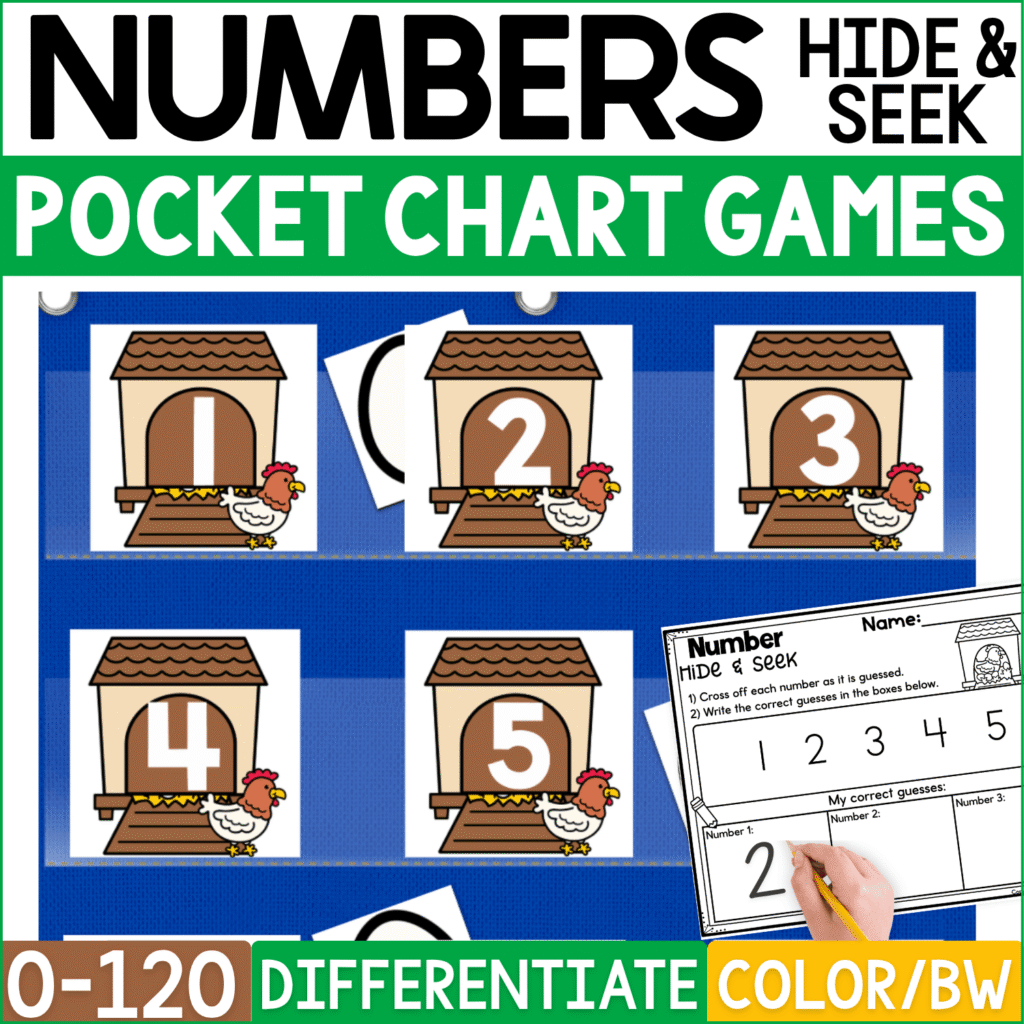
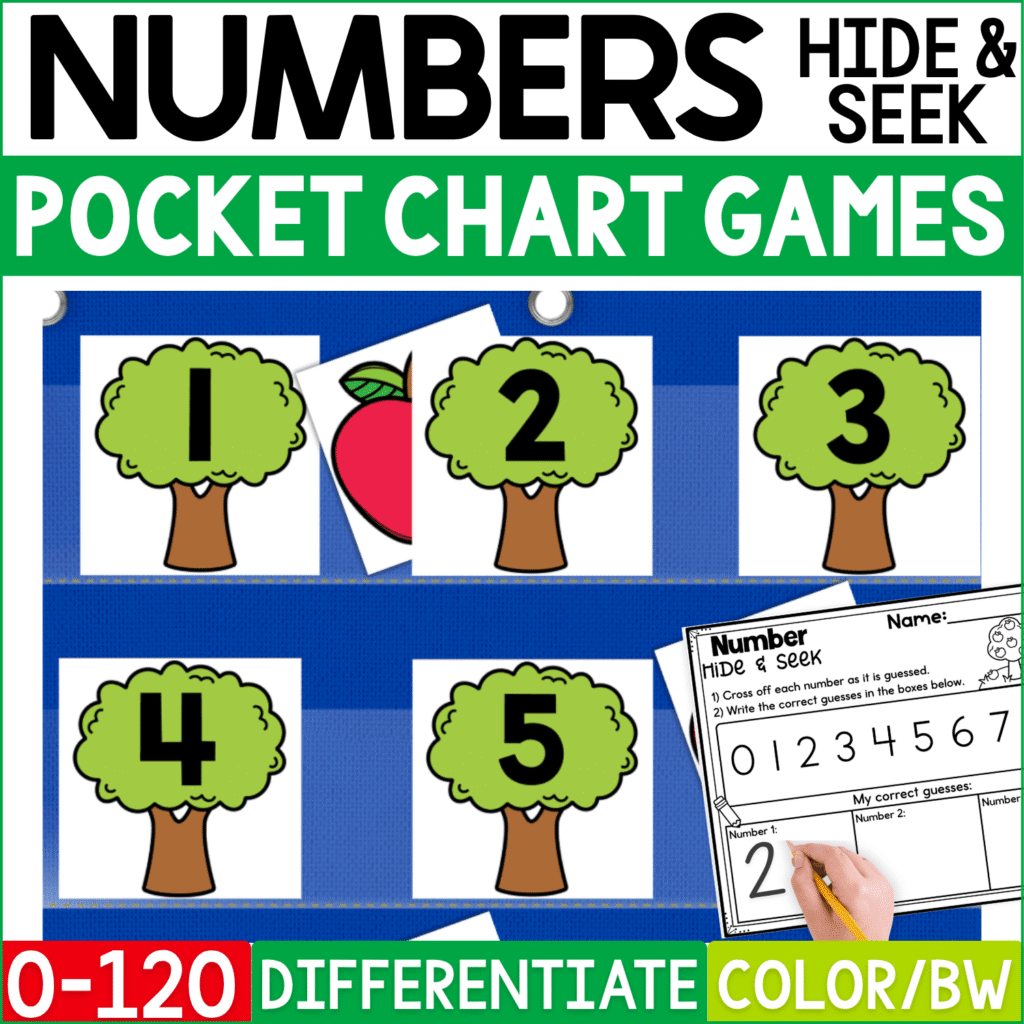
What’s Included in the Numbers Pocket Chart Game
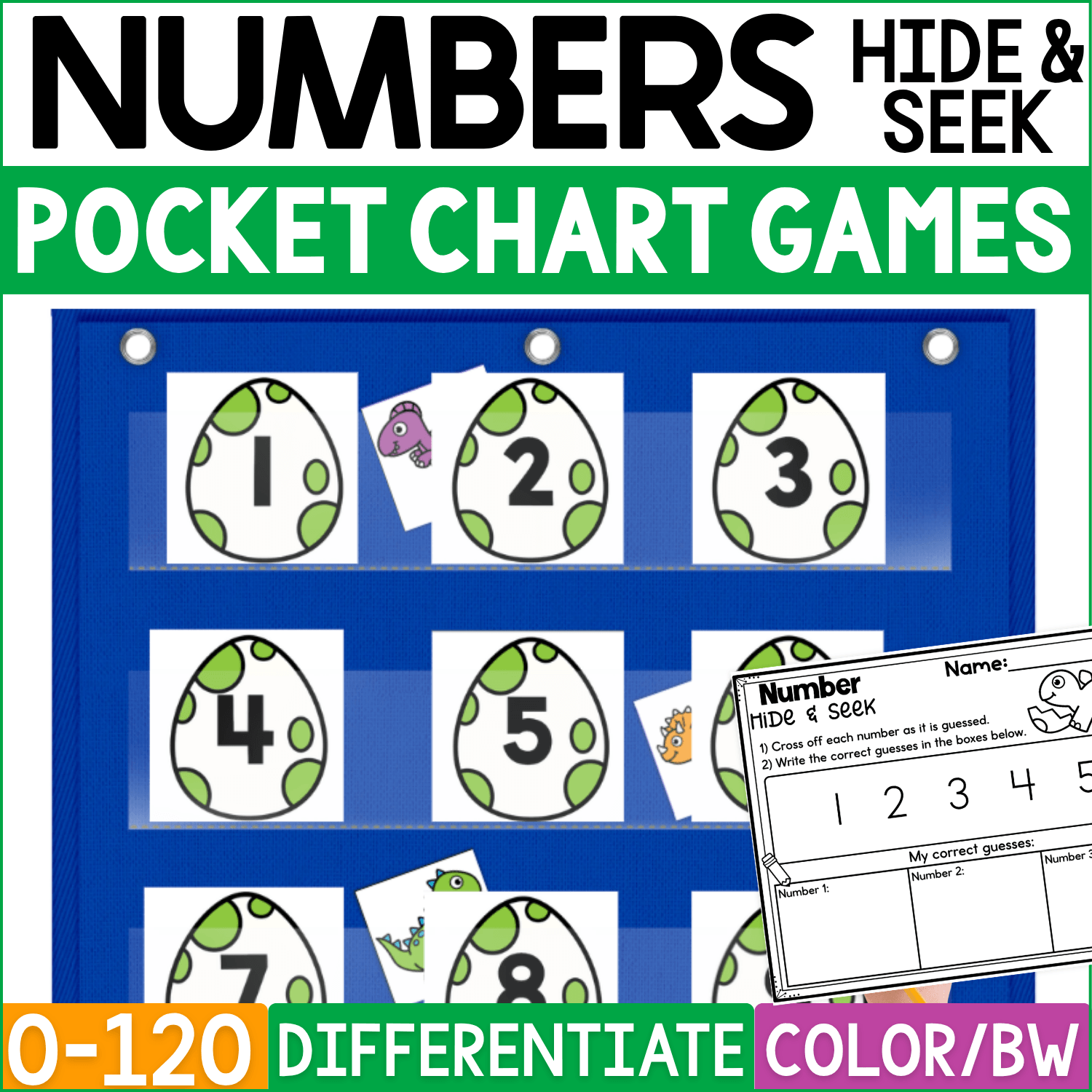
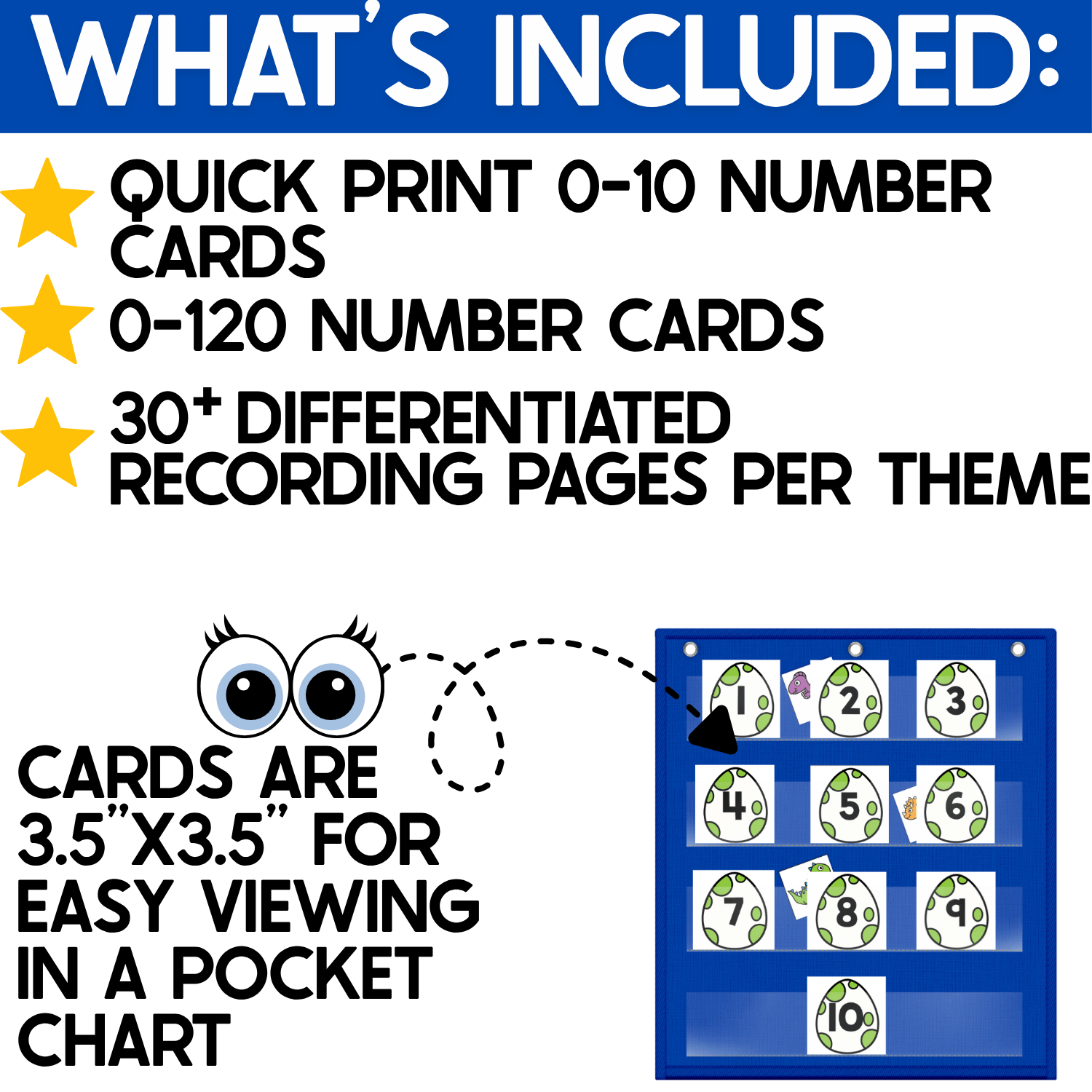
- Quick-print number cards for numbers 0-10
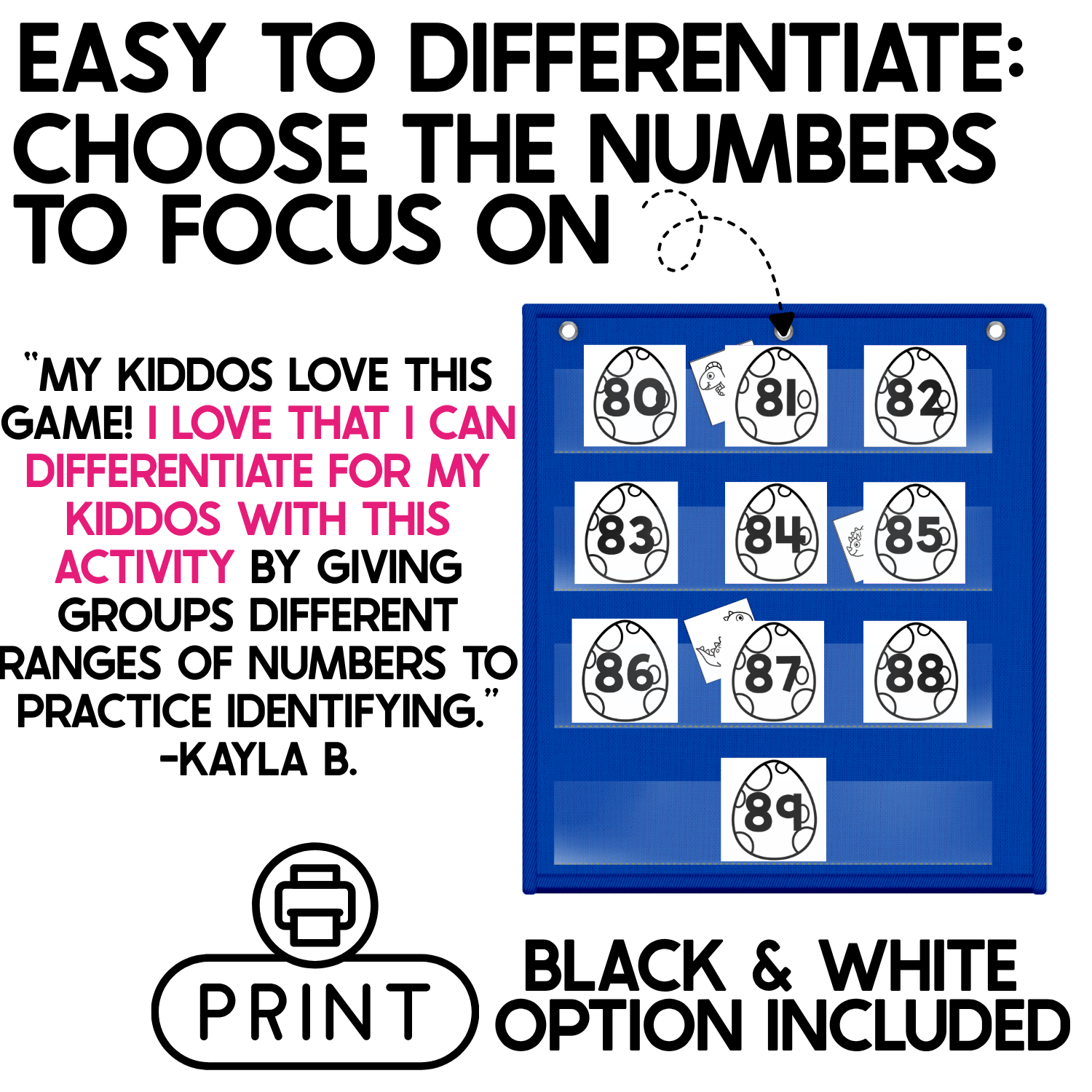
- Number cards for numbers 0-120
- 8 hiding cards
- Color and black-and-white printing options
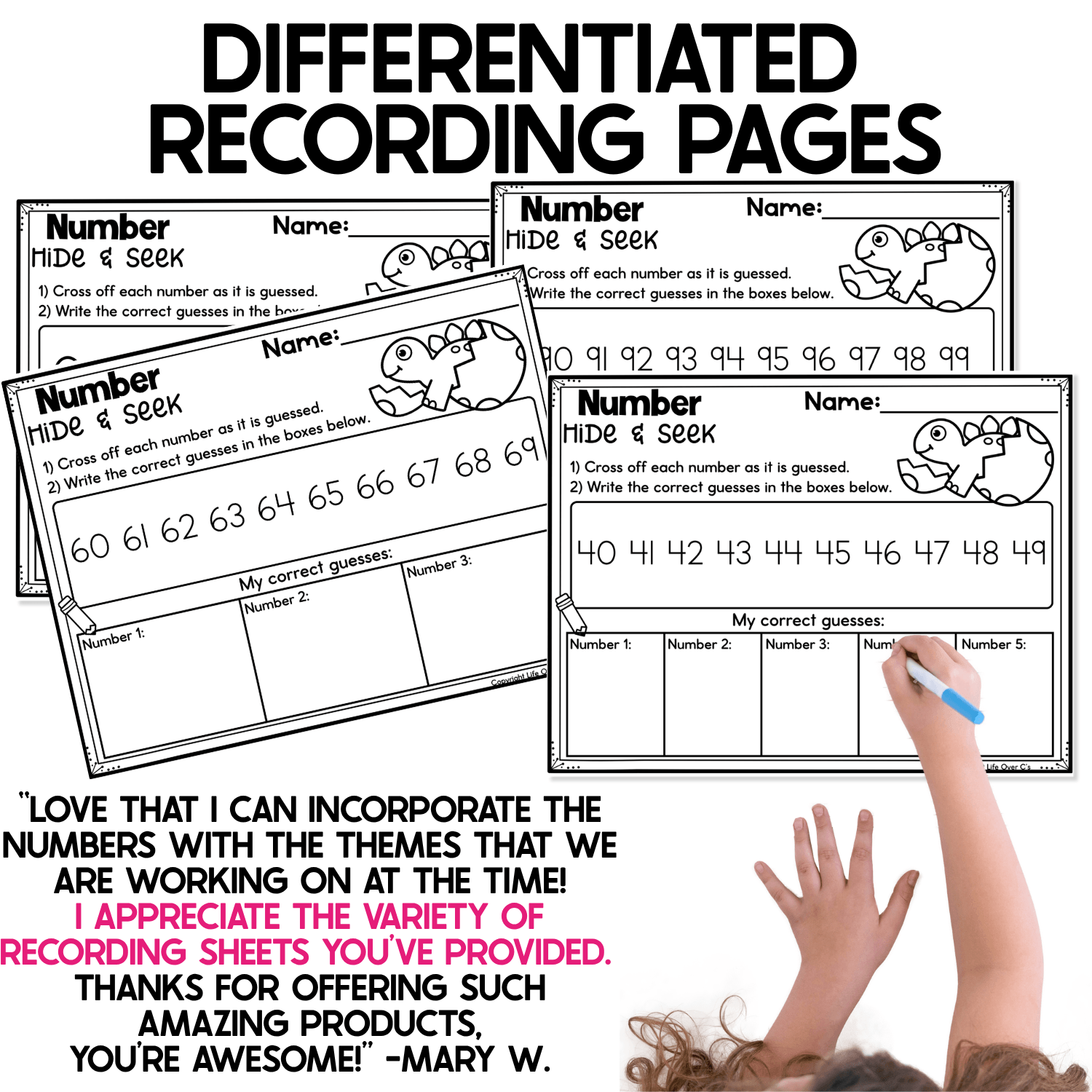
- 29 differentiated recording pages
- Recording pages for 3 or 5 hidden pictures
- Number-range recording pages
- Open-ended recording pages
- Teacher instructions
- Visual student directions
The range of number cards and recording pages allows one prepared pocket chart activity to support several groups. Keep the choices small for beginning learners, change the number range as students progress, and add number writing when it fits your lesson.
You can differentiate this number recognition game by changing the cards in the pocket chart, the number of hiding cards, and the recording page students use.
Required Materials:
- Laminator
- Paper Cutter
- Paper, Printer, Ink
Number Recognition Standards Alignment
This numbers pocket chart game supports early math instruction with repeated practice in number recognition, counting, reading numbers and number order.
Texas Essential Knowledge and Skills (TEKS):
- K.2.A Practice counting forward and backward within selected number ranges.
- K.2.B Read, write and represent whole numbers using number cards and recording pages.
- 1.5.A Practice reciting numbers forward and backward from a given number within 120.
Virginia Standards of Learning (SOL):
- K.NS.1 Develop counting skills and understanding of number sequence.
- 1.NS.1 Count forward by ones to 120 beginning with different starting numbers.
Common Core State Standards (Math):
- K.CC.A.1 Count to 100 by ones and tens.
- K.CC.A.2 Count forward beginning from a given number within the known sequence.
- K.CC.A.3 Write numbers 0-20 and represent quantities with written numerals.
- 1.NBT.A.1 Count to 120 beginning at any number less than 120 and read and write numerals within that range.
Texas Prekindergarten Guidelines 2022:
- Develop the oral counting sequence.
- Recognize written numerals within beginning number ranges.
- Connect spoken number names with printed numerals during interactive math practice.
Virginia Foundation Blocks for Early Learning:
- Build number and number sense through oral counting.
- Recognize and name written numerals.
- Develop understanding of number sequence through repeated number practice.
Number Skills Students Practice
Primary Academic Skills
- Number recognition from 0-120: Identify, name and locate printed numbers within a selected group.
- Reading numbers aloud: Say the number when making a guess during the hide and seek game.
- Counting forward: Begin with a displayed number and continue counting within the selected range.
- Counting backward: Arrange the number cards in sequence and count backward from a chosen number.
- Number order and sequence: Recognize where numbers belong within an ordered group of number cards.
- Numbers before and after: Identify the number immediately before or after a selected number.
- Writing numbers: Record guesses and write the numbers where hidden pictures are found.
- Comparing numbers: Compare selected numbers and identify which is greater or less.
- Identifying similar-looking numbers: Practice distinguishing between numbers such as 12 and 21 or 68 and 86.
- Building confidence with larger numbers: Practice a small group of numbers before adding additional numbers through 120.
Secondary Life and Learning Skills
- Taking turns
- Listening to classmates
- Maintaining attention
- Remembering previous guesses
- Making and checking predictions
- Following directions
- Communicating choices
- Using mathematical language
- Waiting during group play
- Building confidence during group participation
Numbers 0-120 Hide and Seek: Dinosaur
Baby dinosaurs are hiding behind the number cards, and kids read numbers to find them all.
Kids name a number, check behind it and stomp like a dinosaur when they find one. The fun routine keeps kids reading numbers again and again.
The set includes quick-print cards for 0 to 10, a full set of cards for 0 to 120, color and black and white versions and recording pages, so the same game works for many levels.
How to Play This Numbers Hide and Seek Game
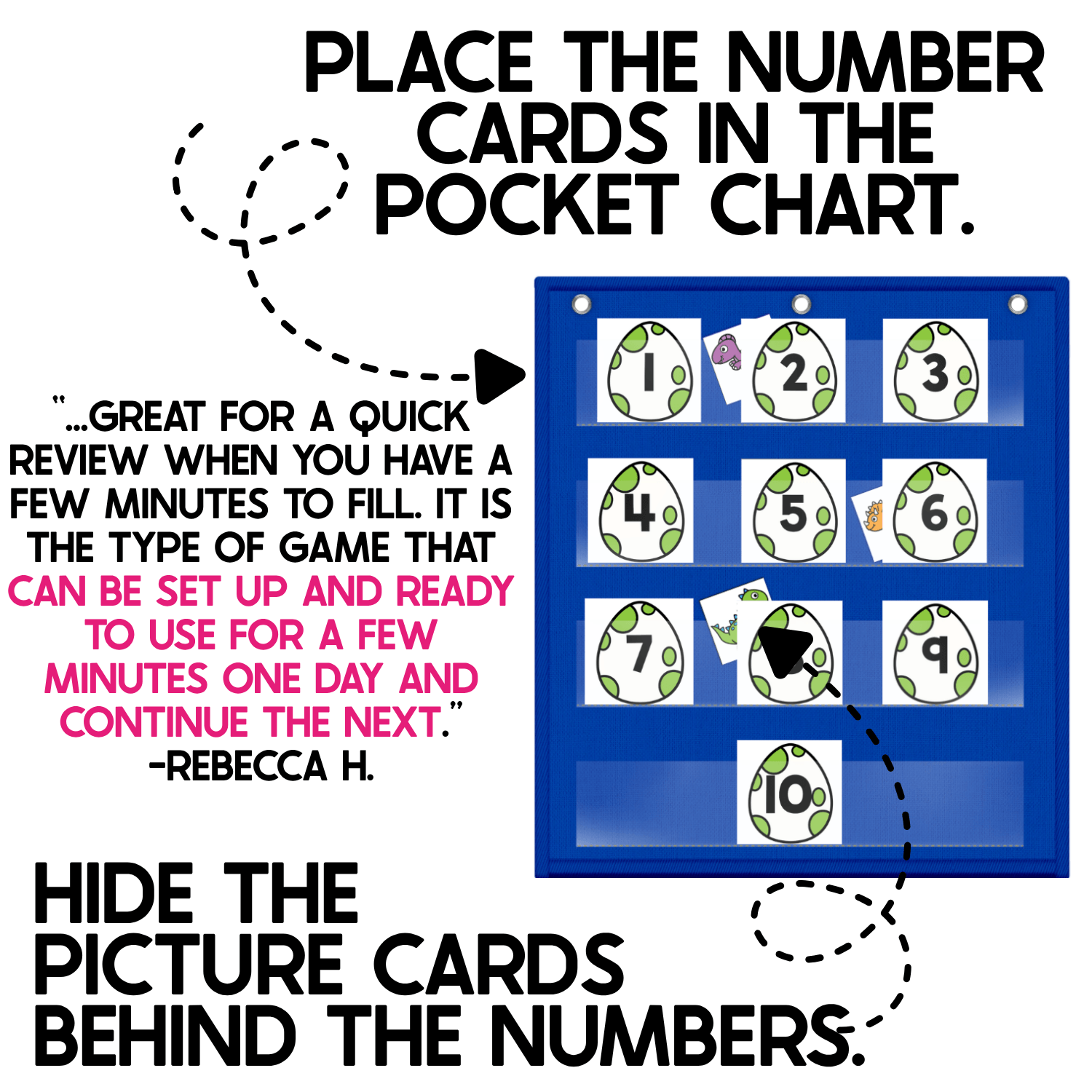
- Choose the number cards for the range your group is practicing and place them in a pocket chart.
- Have kids close their eyes while you hide 1 to 5 dinosaur cards behind the numbers.
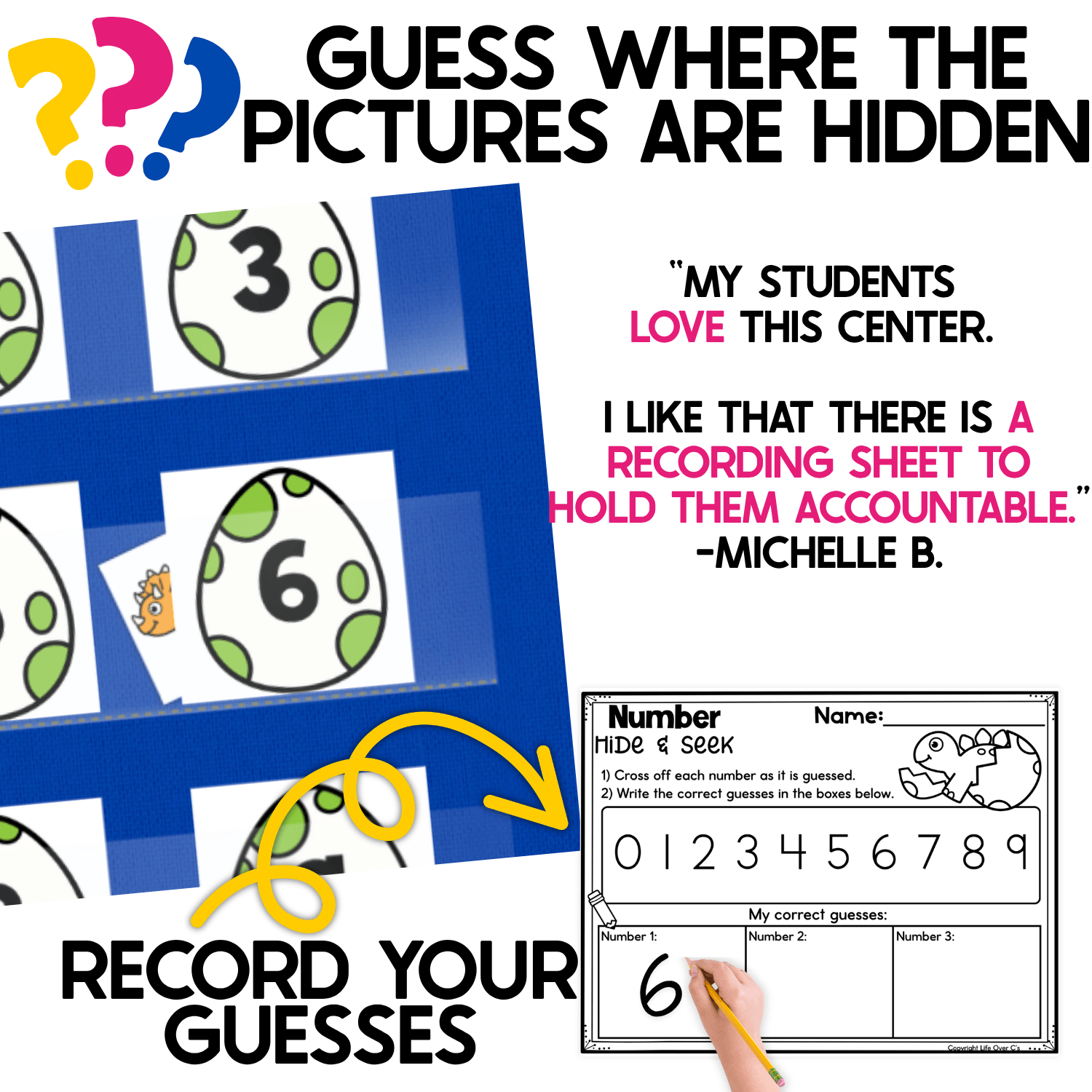
- Kids take turns saying a number and checking behind that card.
- Keep playing until every dinosaur card is found.
- Add a recording page when kids are ready to cross off guesses and write the numbers they find.
Easy Ways to Differentiate This Numbers Hide and Seek Game
Some kids are still learning the numbers 0 to 10, some can read numbers to 20 and some are ready for two- and three-digit numbers up to 120. The game stays the same for everyone. What changes is which number cards go in the pocket chart and how kids guess.
For Children Who Need More Support
- Use the 0 to 5 cards and hide one dinosaur. A small set builds confidence.
- Count the row together from zero before guessing. Counting helps kids find numbers.
- Have kids stomp once for each number as you count the row together. A stomp per number keeps counting steady.
- Accept pointing, then say the number together. Kids keep playing while they learn.
For On-Level Practice
- Use the cards from 0 to 40 and hide four dinosaurs. More cards mean more numbers.
- Have kids say the number that comes before their guess. Naming the number before builds sequence.
- Have kids cross off each guessed number on the recording page and circle the ones that hid a dinosaur. Marking two ways keeps kids tracking the game.
- Let kids take turns hiding the dinosaurs for each other. Hiding means reading numbers.
For an Extra Challenge
- Mix numbers from 60 to 120 and hide all the dinosaurs. Big numbers take careful reading.
- Give clues like the dinosaur is behind 1 hundred, 1 ten and 2 ones. Place value clues build understanding.
- Have kids find the biggest and smallest found numbers. Comparing builds number sense.
- Have kids write the found numbers in expanded form. Expanded form shows what each digit means.
For Speech, OT, ELL or Special Education Support
- For speech practice, use the d sound in dinosaur and dig. Theme words give focused practice.
- For OT practice, have kids press dinosaur feet into play dough to make tracks after each find. Pressing builds hand strength.
- For ELL support, teach dinosaur, egg, hide and number before playing. Theme words help kids join in.
- For special education support, give each child a dinosaur egg card to hold while they wait. Holding the card makes waiting easier to see.
Numbers 0-120 Hide and Seek: Dinosaur Is Perfect For:
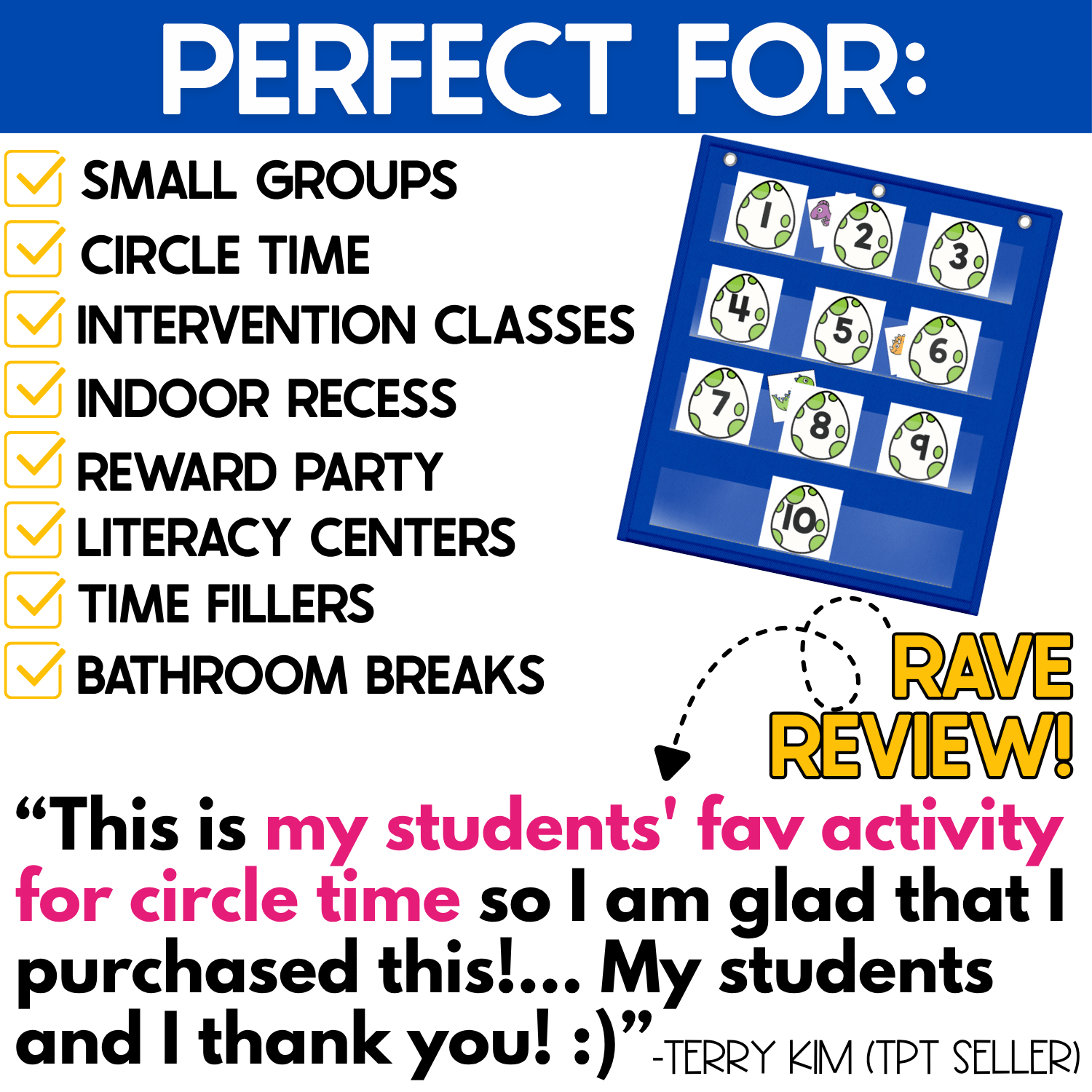
- Circle time and morning meeting
- Math centers and pocket chart centers
- Small group number recognition practice
- Intervention and special education groups
- Homeschool math lessons