Numbers 0-120 Hide and Seek: Fish
Recommended Grade Level:
Type of Resource: PDF
Number of Pages: 89

You must be an Annual or Forever Member to Access this Resource.
Join the Life Over C’s Club to Access

Already a member? Login below:
Coordinating Activities
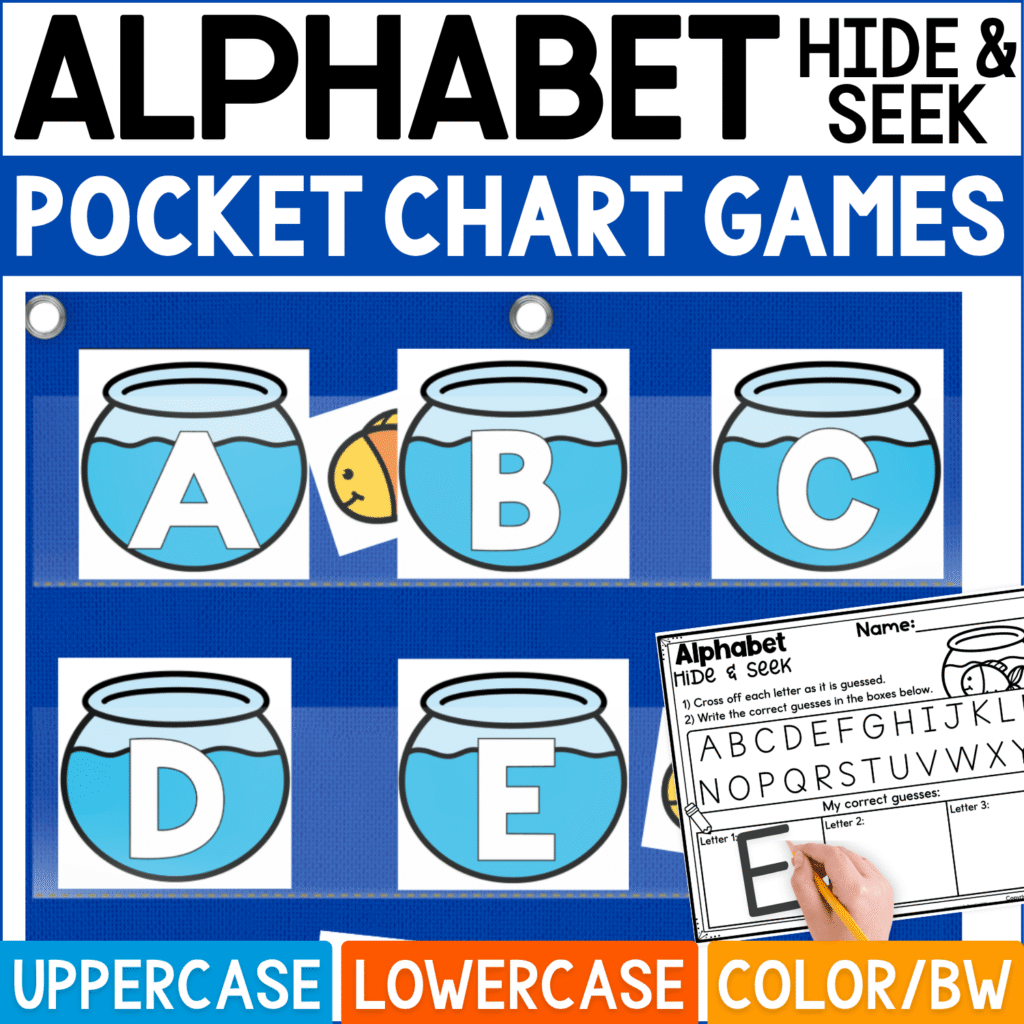


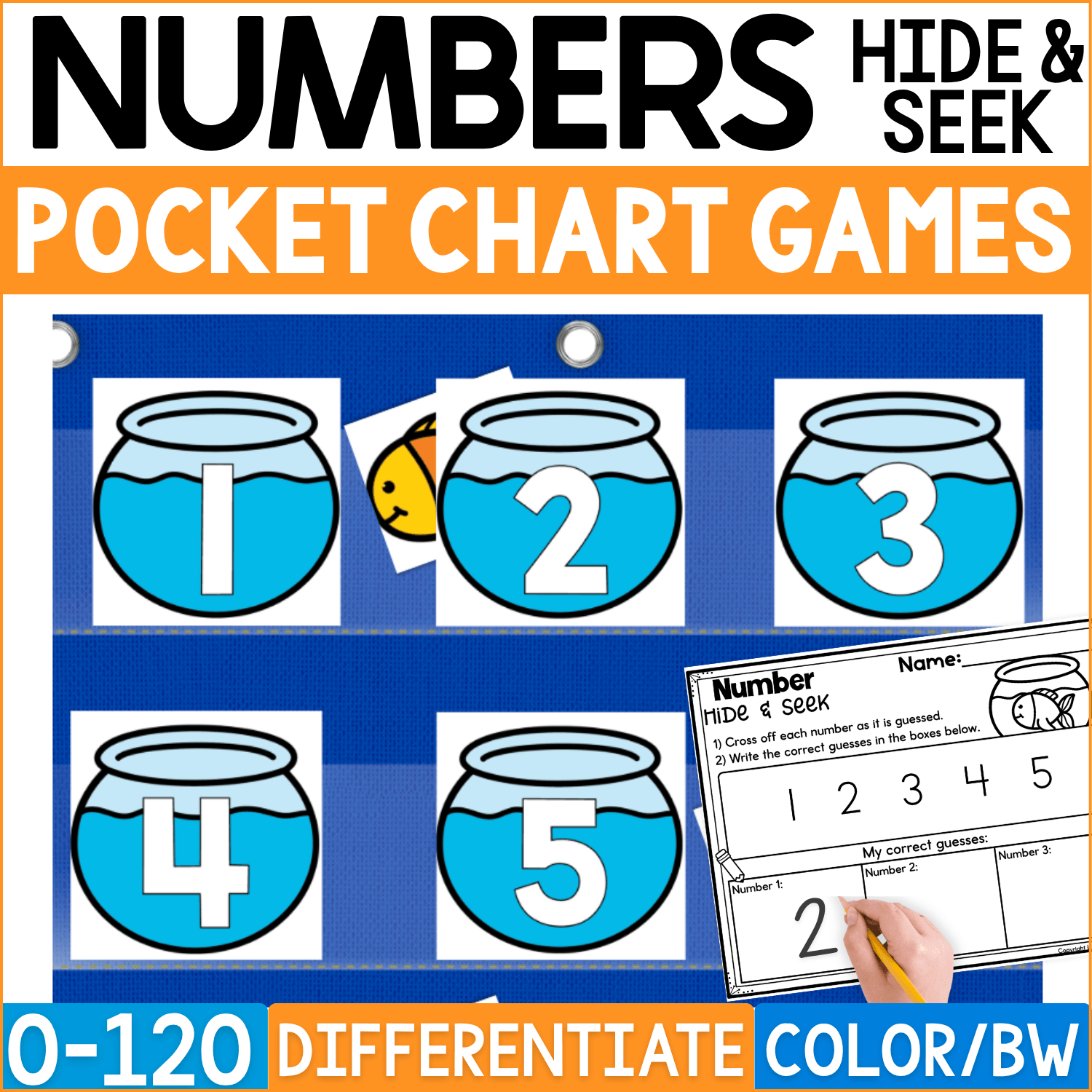
Fish Numbers 0-120 Hide and Seek
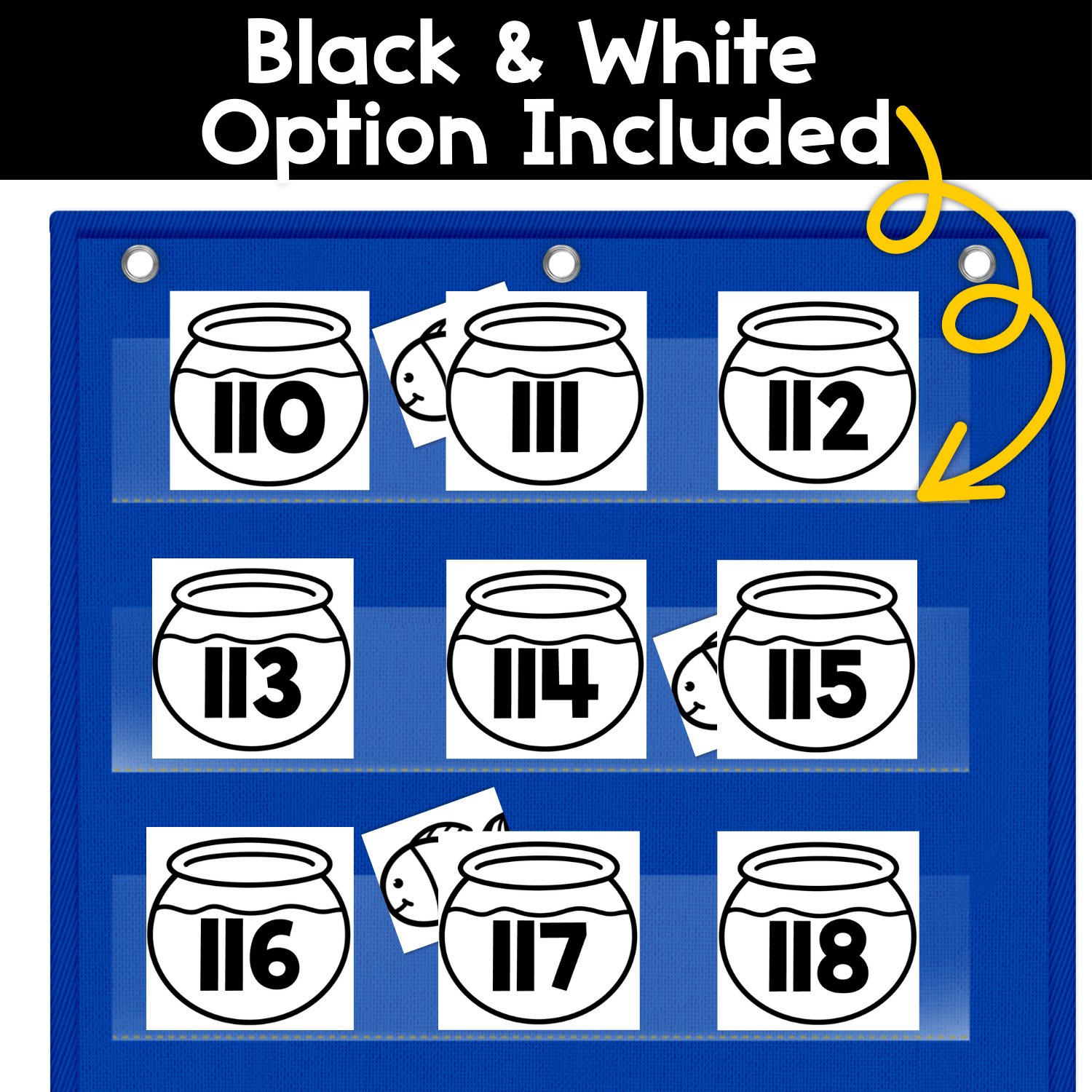
- Number cards 0-120 in color and black and white
- Hiding cards (fish)
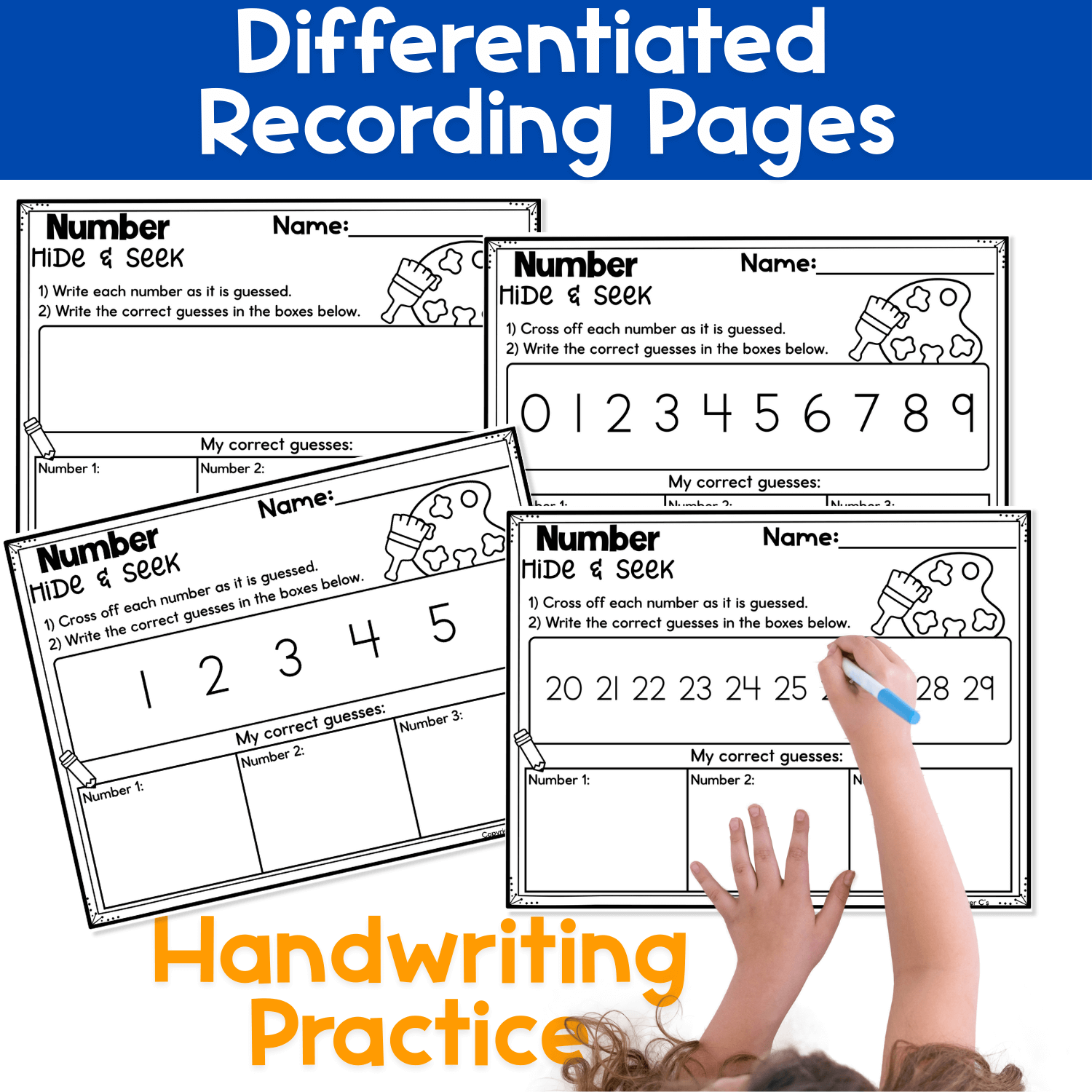
- Recording sheets
- Instruction pages
Kids name a number each time they guess where the fish are hiding, so every turn is a chance to practice number recognition.
Required Materials:
- Paper, printer and ink
- Pocket chart (or a table)
- Laminator
- Paper cutter or scissors
Standards for Number Recognition
This numbers hide and seek game supports early math standards connected to reading numerals, counting and number order to 120.
Common Core State Standards: Mathematics
- CCSS.MATH.CONTENT.K.CC.A.1: Count to 100 by ones and by tens. Kids practice number order as they set up the pocket chart.
- CCSS.MATH.CONTENT.K.CC.A.3: Write numbers from 0 to 20. Represent a number of objects with a written numeral 0-20. Kids read and write the numbers they find.
- CCSS.MATH.CONTENT.1.NBT.A.1: Count to 120, starting at any number less than 120. In this range, read and write numerals. Kids use the bigger number cards.
Texas Prekindergarten Guidelines and TEKS for Mathematics
- PK4.V.A.5: Child recognizes numerals 0-10. Kids name each number they pick.
- TEKS K.2(B): Read, write and represent whole numbers from 0 to at least 20 with and without objects or pictures. Kids read each number card.
Virginia Mathematics Standards of Learning
- K.NS.2.a: Read, write and identify the numerals 0 through 30. Kids identify each number before checking behind it.
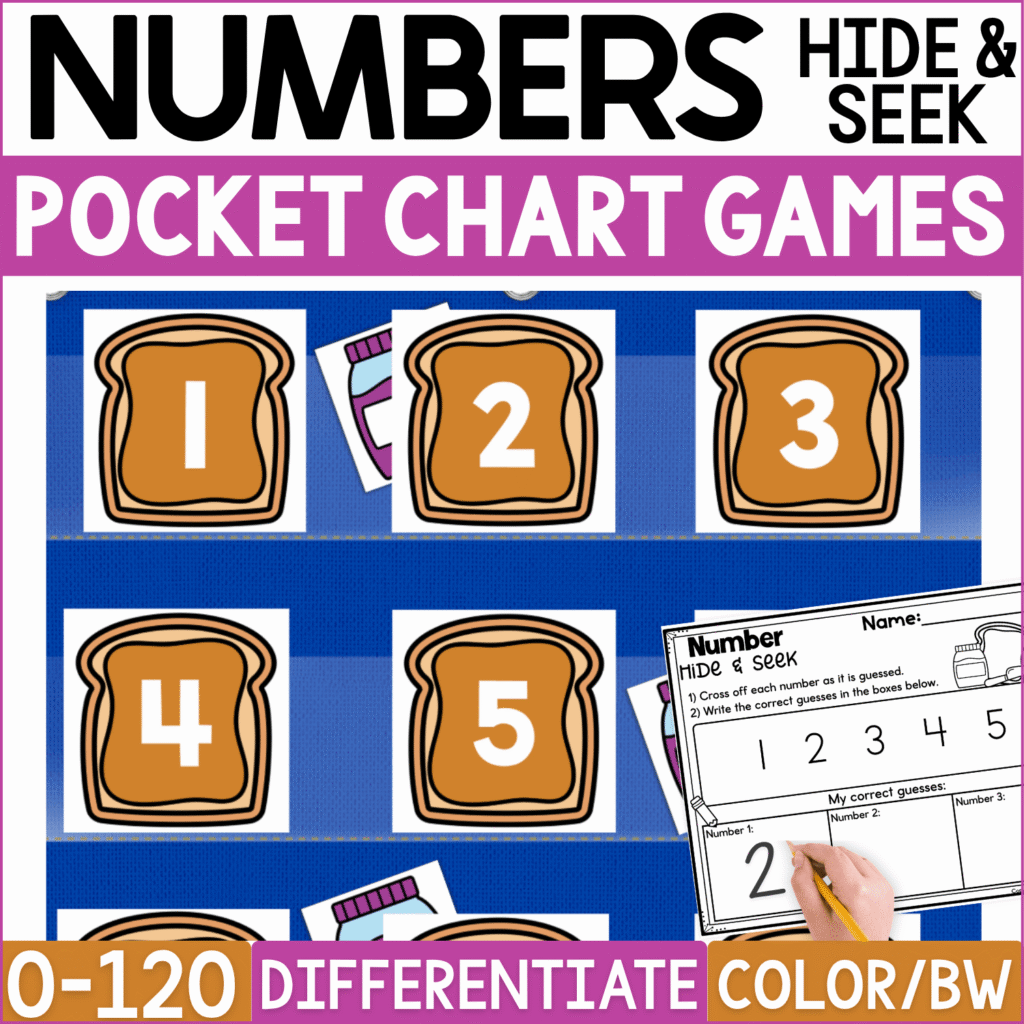
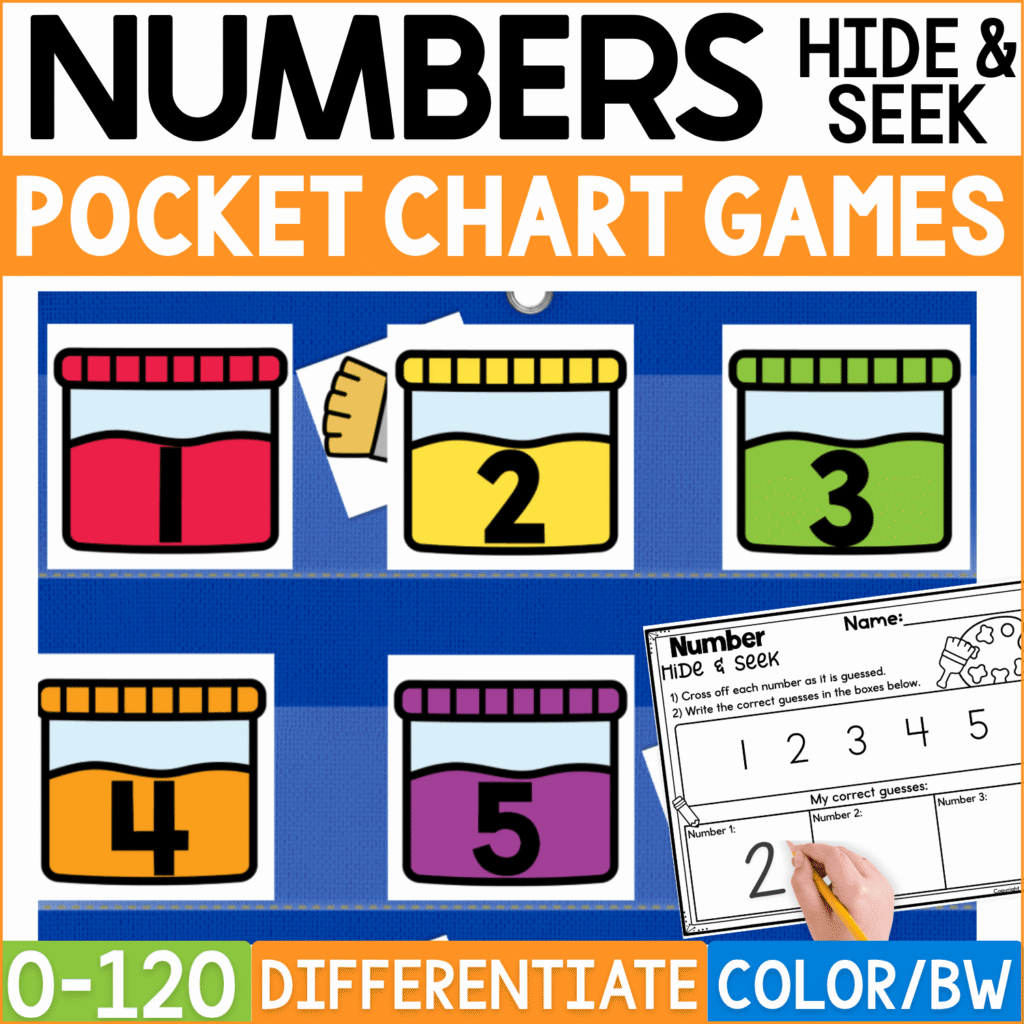
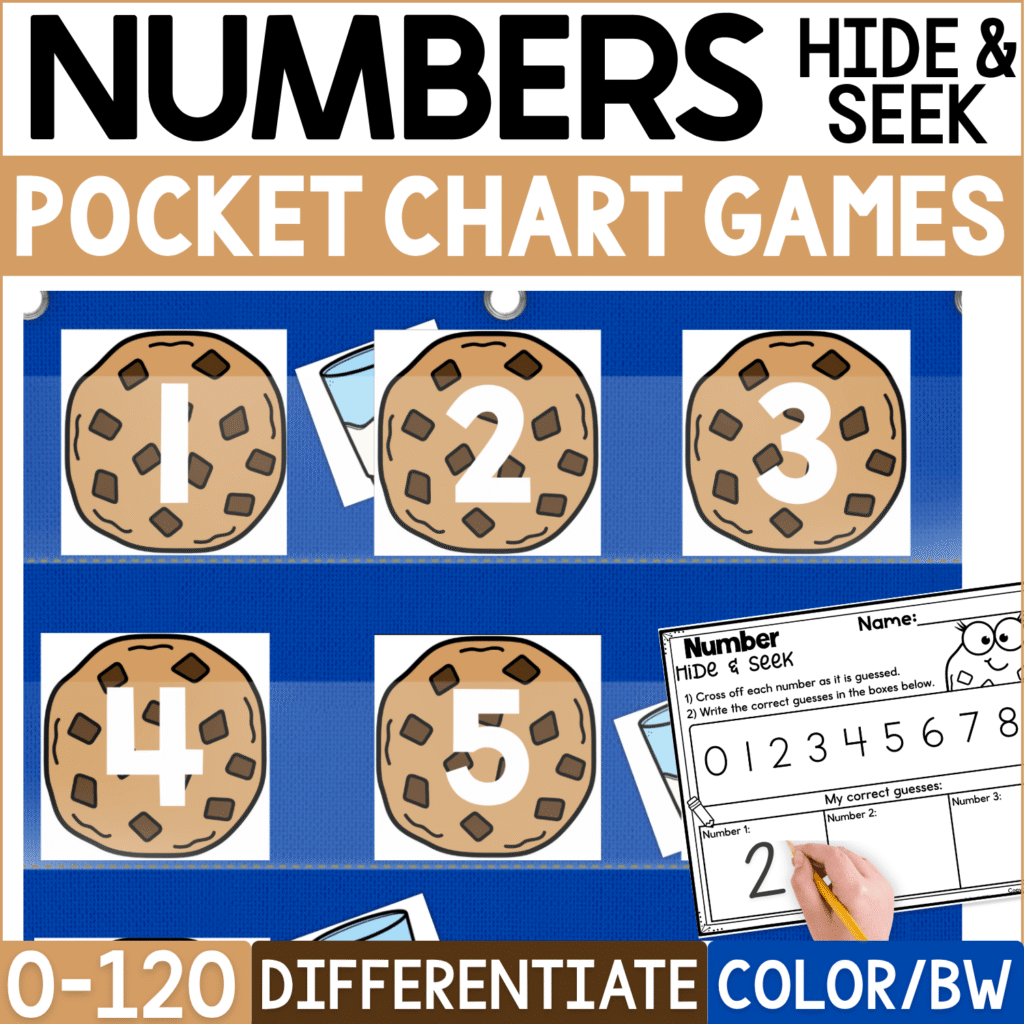
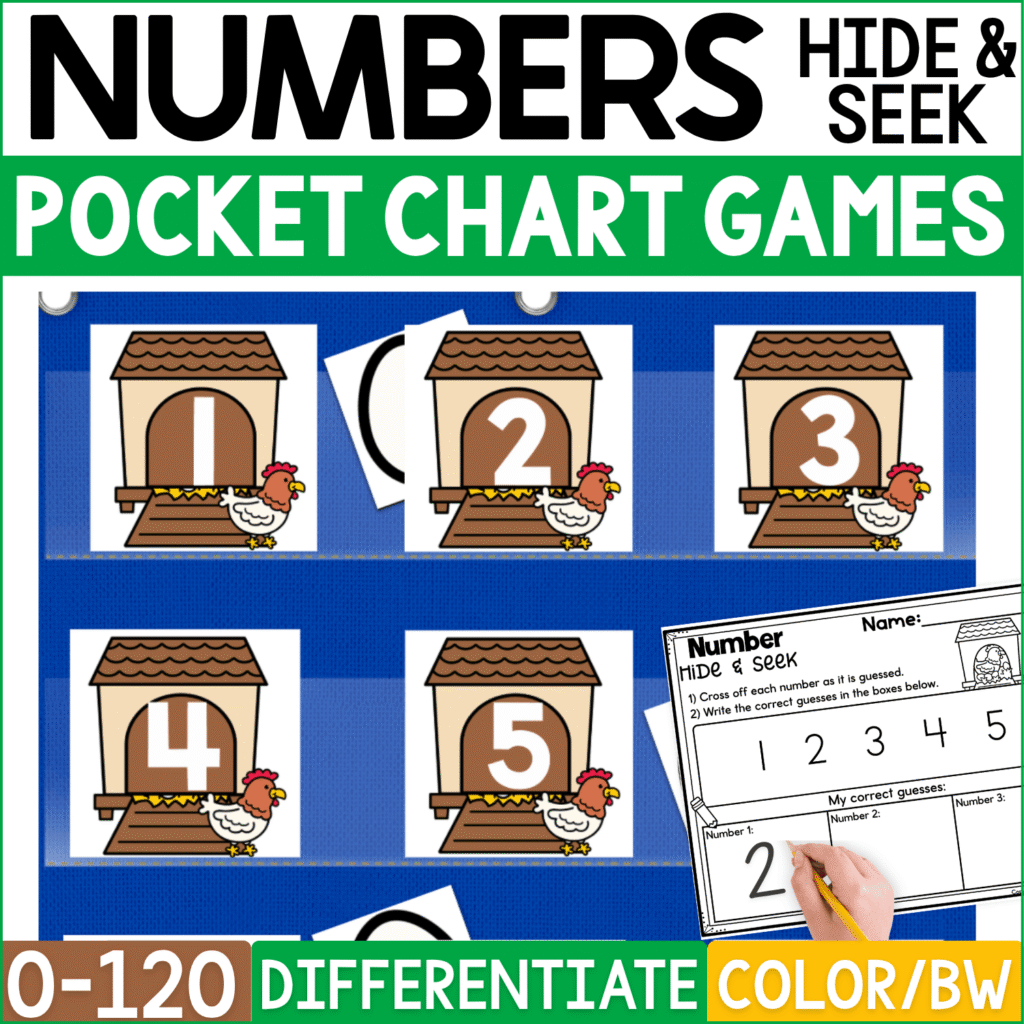
Fish Numbers 0-120 Hide and Seek is a pocket chart guessing game that gives preschool and kindergarten kids hands-on practice reading numbers as they search for the hiding fish.
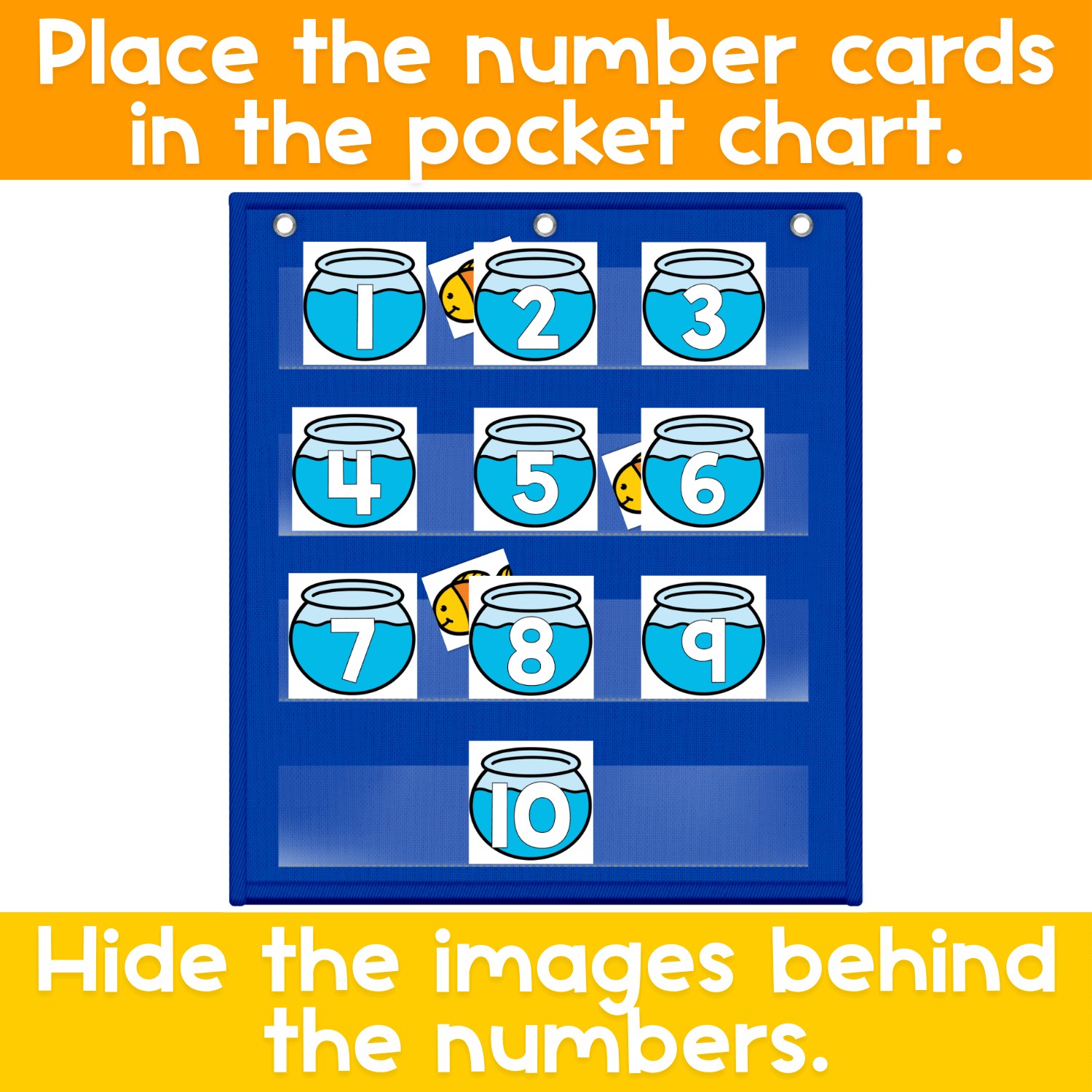
The numbers sit on fishbowls and the fish are hiding. Kids name a number to see if a fish is in that bowl.
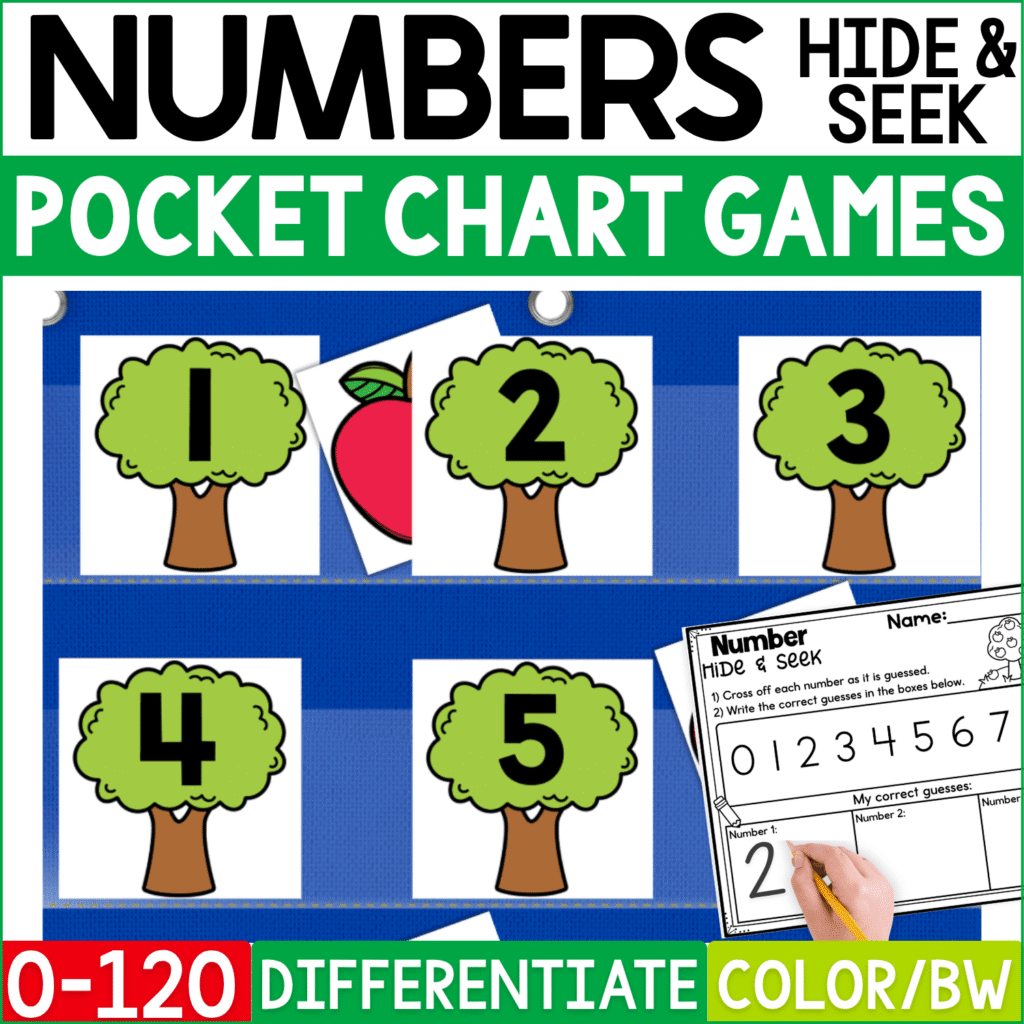
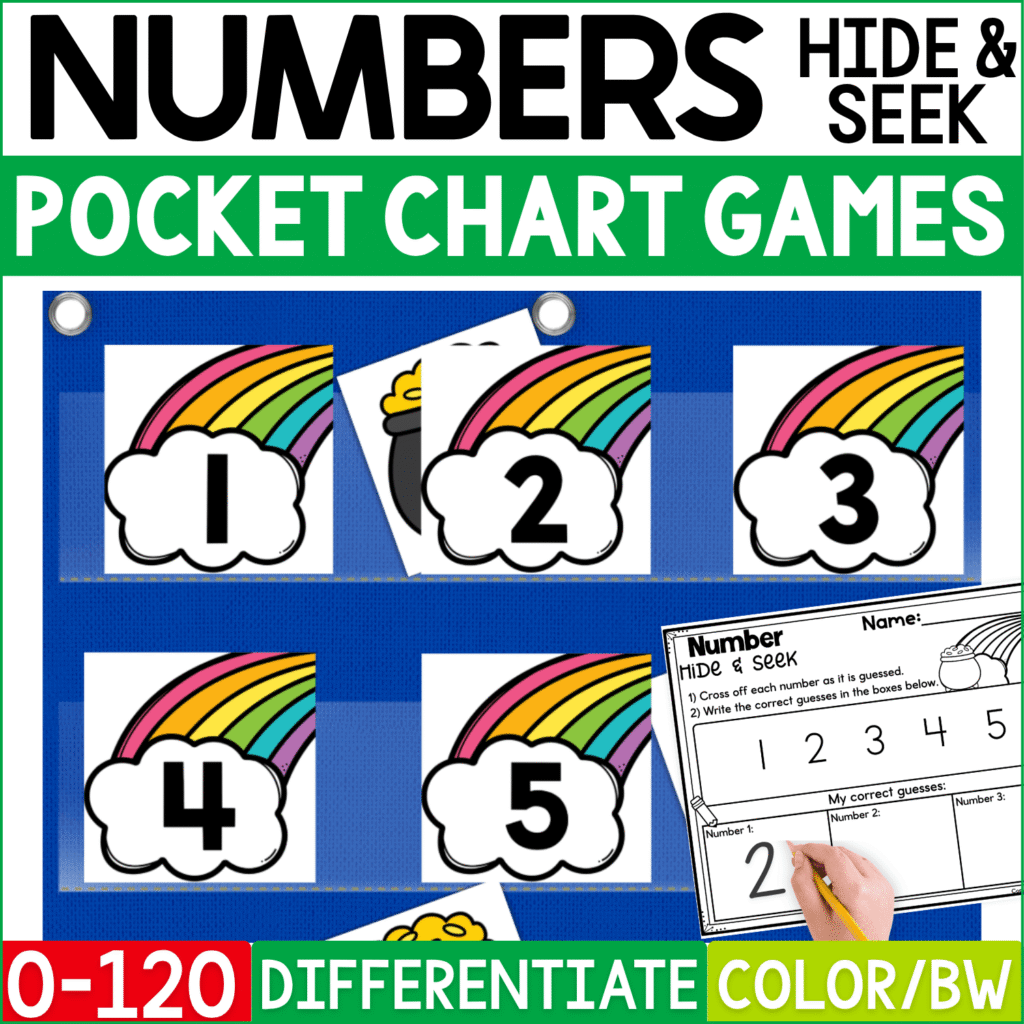
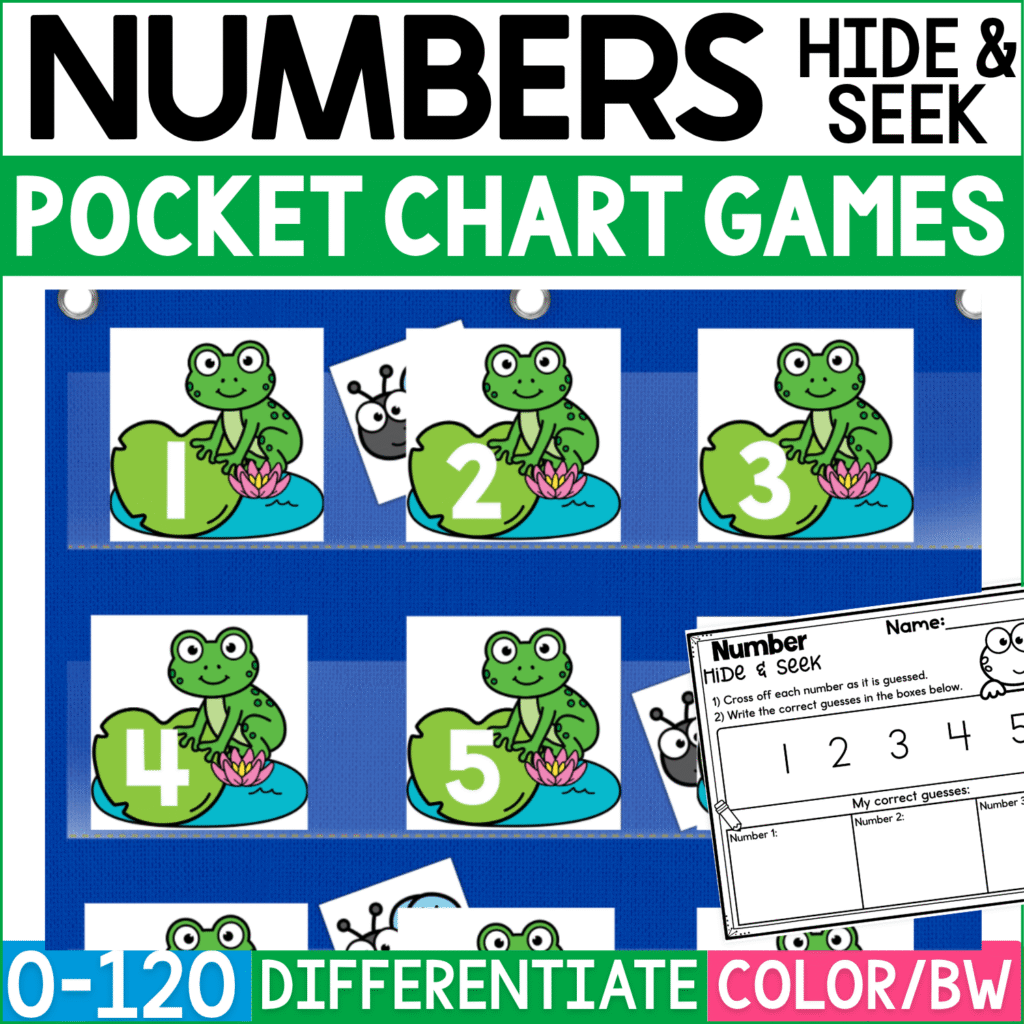
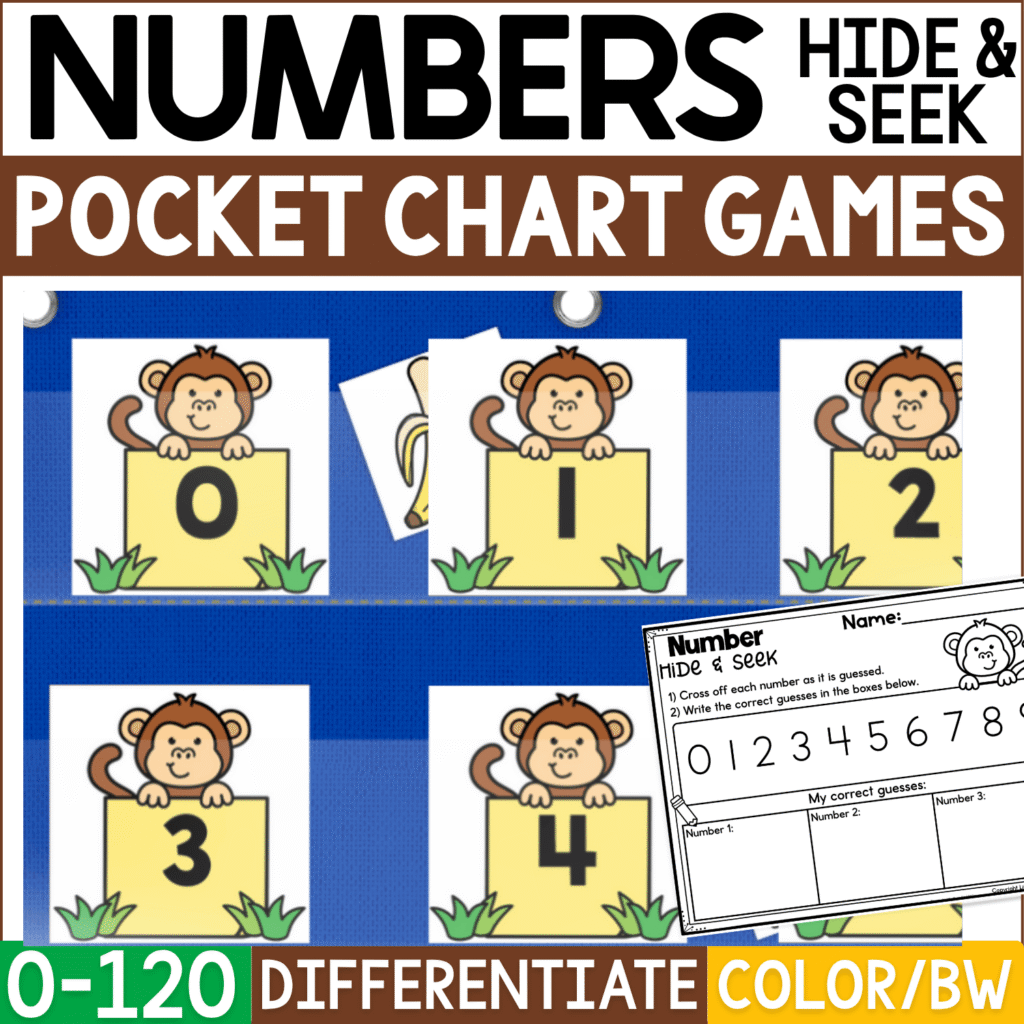
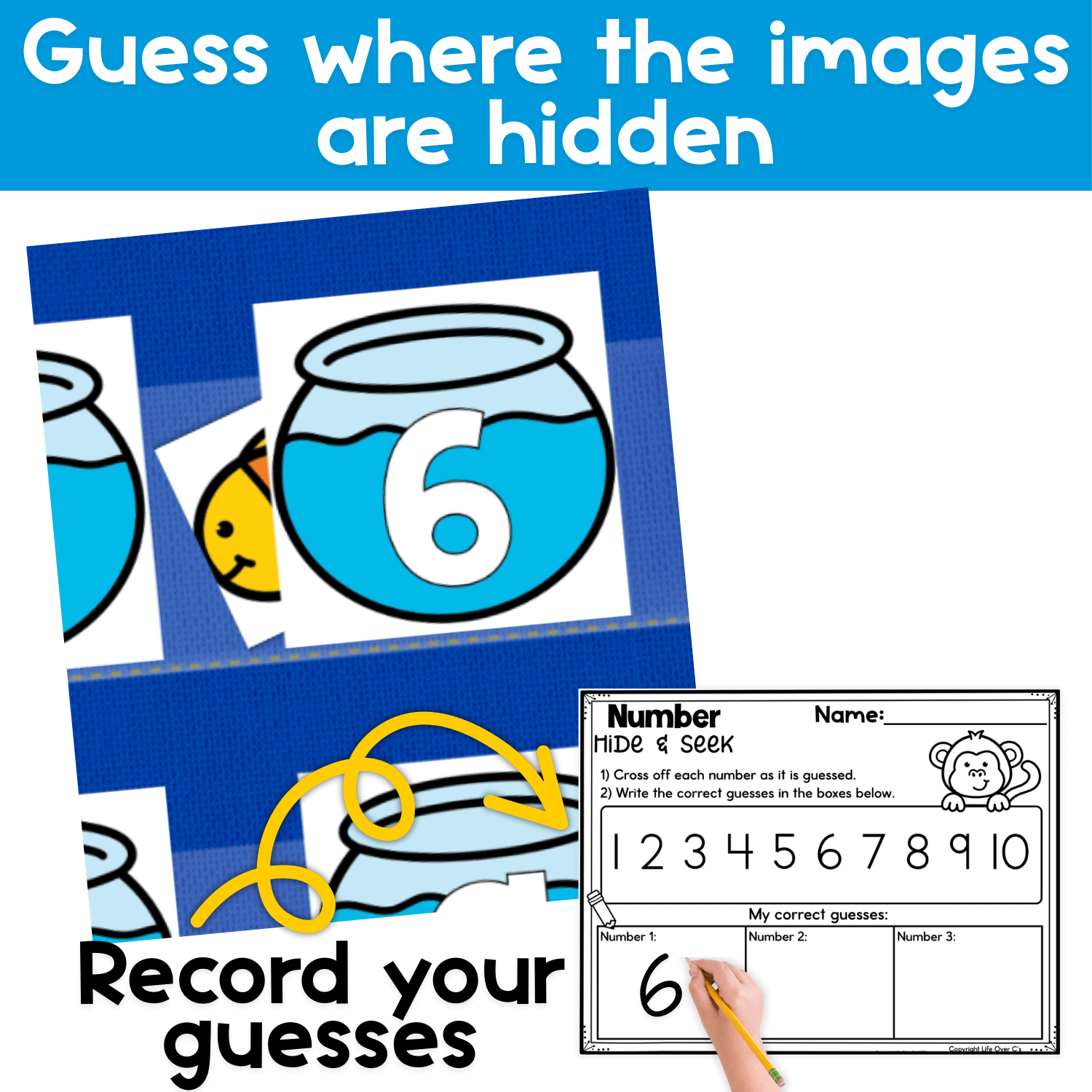
Place the number cards you want to practice in a pocket chart and secretly tuck the fish behind a few of the bowls. Kids take turns naming a number, like “Is it behind 7?”, then lift the card to check.
Start with 0-10 and add bigger numbers as kids grow. The number cards go all the way to 120.
How to Play Fish Numbers 0-120 Hide and Seek
- Place the number cards in a pocket chart.
- While the children close their eyes, hide the fish behind some of the cards.
- Kids take turns naming a number and checking behind it.
- Keep playing until all the fish are found, then hide them again.
Circle Time: The whole group takes turns guessing.
Math Center: Partners take turns hiding and guessing.
Easy Ways to Differentiate This Hide and Seek Game
Some kids in your group are still learning numbers to 20, some can read numbers to 100 and some are ready for three-digit numbers to 120. With cards from 0 to 120, you can build a pocket chart that fits each group and change it as kids grow.
For Children Who Need More Support:
- Start with 1 to 3 numbers, like the instructions suggest, and hide just one fish. A tiny set lets beginners practice naming numbers without guessing at random.
- Use numbers 0 to 10 for kids still learning to recognize numerals. Small numbers are the foundation for everything else on the chart.
- Model the guess, “Is it behind the 7?” and have kids repeat it. A sentence frame gives kids the words they need to take a turn.
- Accept pointing to a card, then say the number back. Kids hear the number name right when they’re looking at the numeral.
For On-Level Practice:
- Fill the chart with a full decade, like 20 to 29, and hide several fish. Saying every number in the same decade builds counting patterns.
- Have kids use the number in a full sentence when they guess. Saying “Is it behind 34?” out loud is practice reading two-digit numbers correctly.
- Count how many guesses it takes to find all the fish, then try to beat it next round. Counting guesses adds a reason to guess carefully.
- After the game, have kids put the cards back in order. Ordering the numbers shows kids understand which number comes next.
For an Extra Challenge:
- Use numbers past 100, up to 120, for kids ready for three-digit numbers. Reading 108 and 118 correctly is a first grade standard, and it’s easy to mix them up.
- Give clues instead of letting kids guess freely, like “It’s behind the number that is 10 more than 45.” Kids have to think about place value to find it.
- Mix cards from different decades in the chart and have kids find the biggest and smallest number before they guess. Comparing numbers builds number sense.
- Have kids write each number they guess on the recording sheet. Writing two- and three-digit numbers catches common reversals, like 21 for 12.
For Speech, OT, ELL or Special Education Support:
- Speech: number words give lots of practice with sounds like /th/ in thirty and /f/ in fifty. Pick the decade that matches a child’s target sound.
- Fine motor: have kids tuck the fish cards behind the number cards when it is their turn to hide. Sliding cards into the pocket works a pincer grasp.
- ELL: model the full question every turn and point to the number as you say it. English teen and decade names, like thirteen and thirty, sound alike, so a clear model helps.
- Turn-taking: hand a fishbowl card to the child whose turn it is and have them pass it on after guessing. Holding the bowl makes the turn easy to see.
Fish Numbers 0-120 Hide and Seek Is Perfect For:
- Preschool and pre-K
- Kindergarten
- First grade
- Pet and ocean themes
- Circle time
- Pocket chart centers
- Math centers
- Small-group instruction
- Morning tubs
- Intervention
- Special education
- ELL and multilingual learners
- Homeschool
You must be an Annual or Forever Member to Access this Resource.
Join the Life Over C’s Club to Access
Already a member? Login below: