Number Counting Grids: Fall Leaves
Recommended Grade Level:
Type of Resource: PDF
Number of Pages: 23

Coordinating Activities
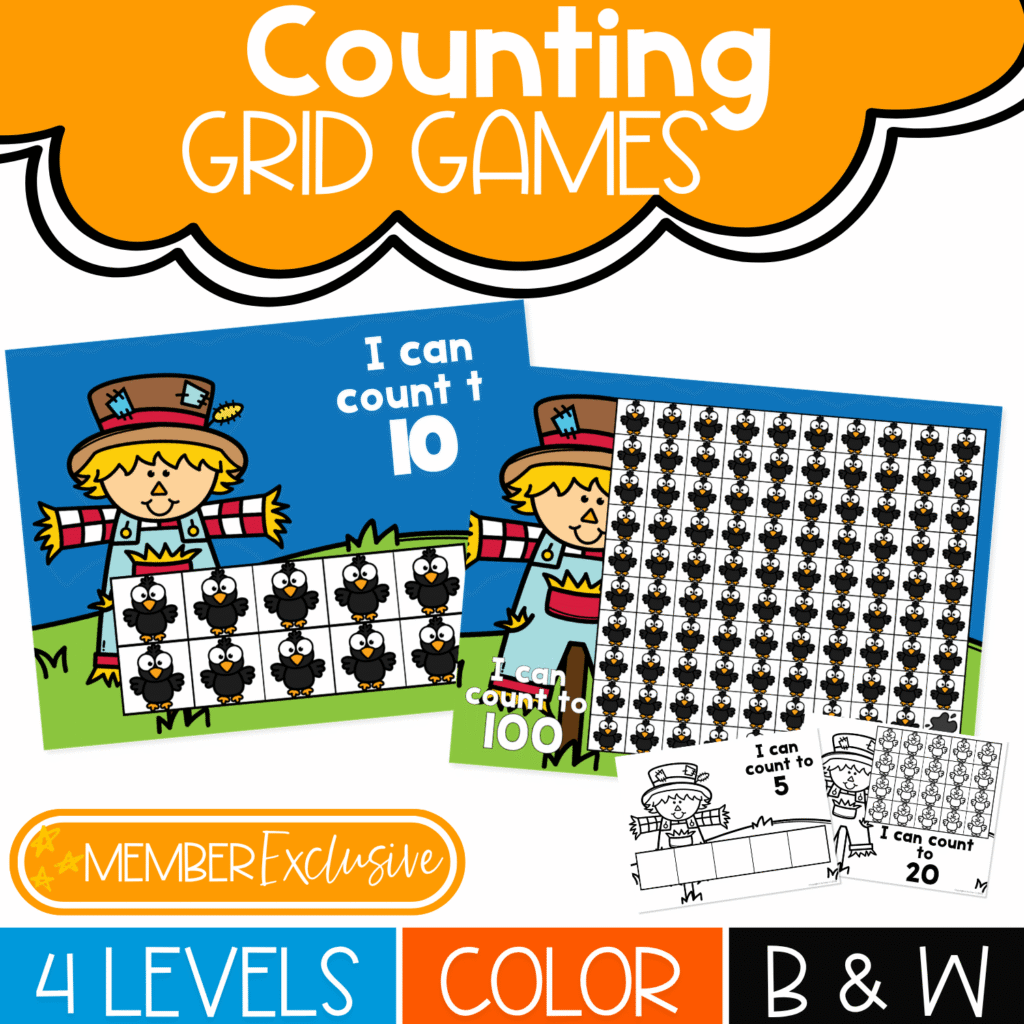


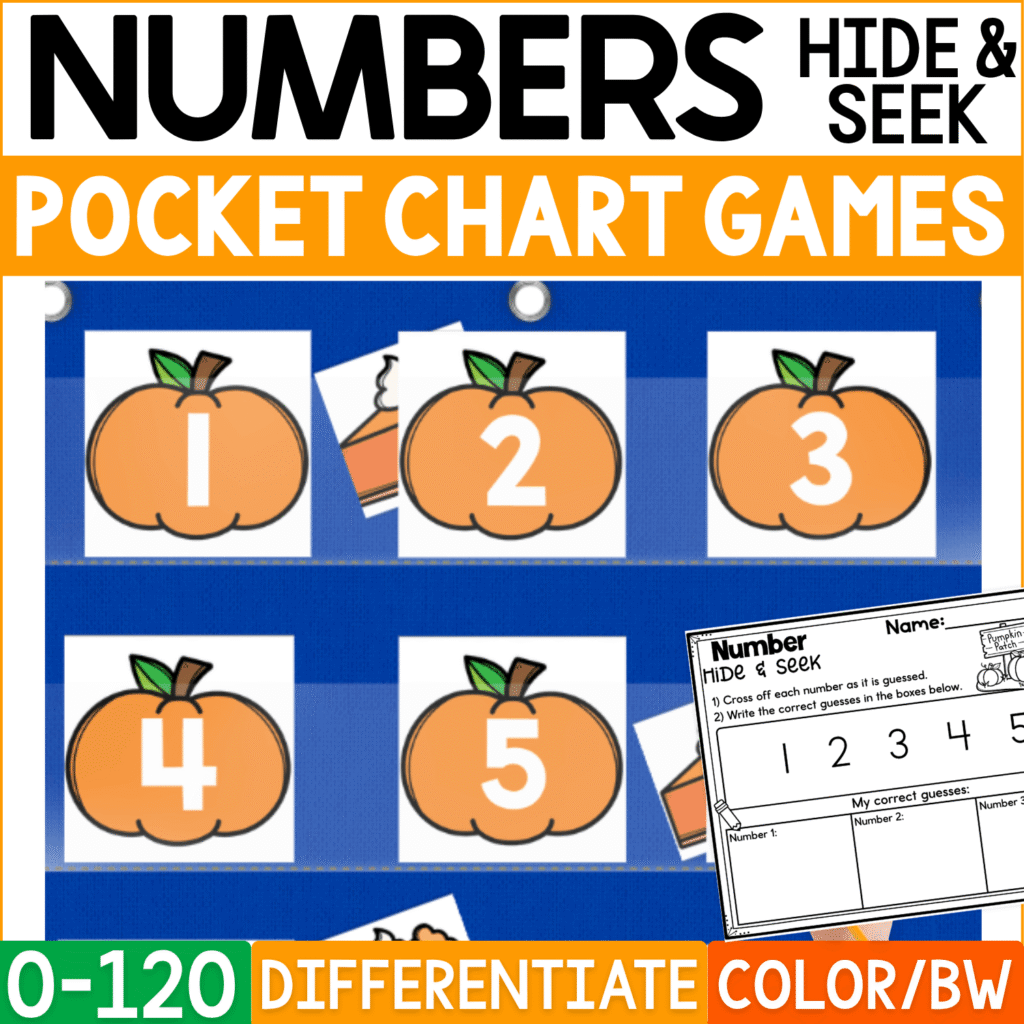
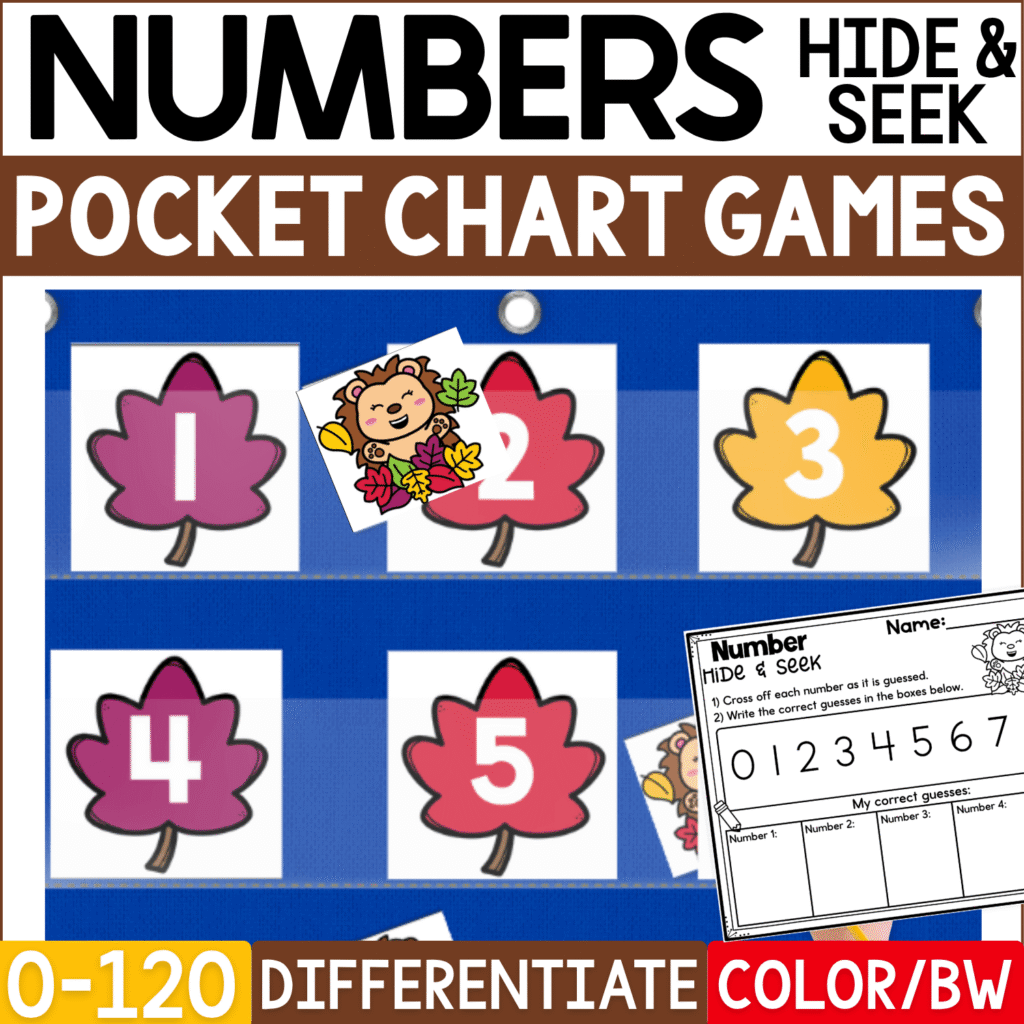
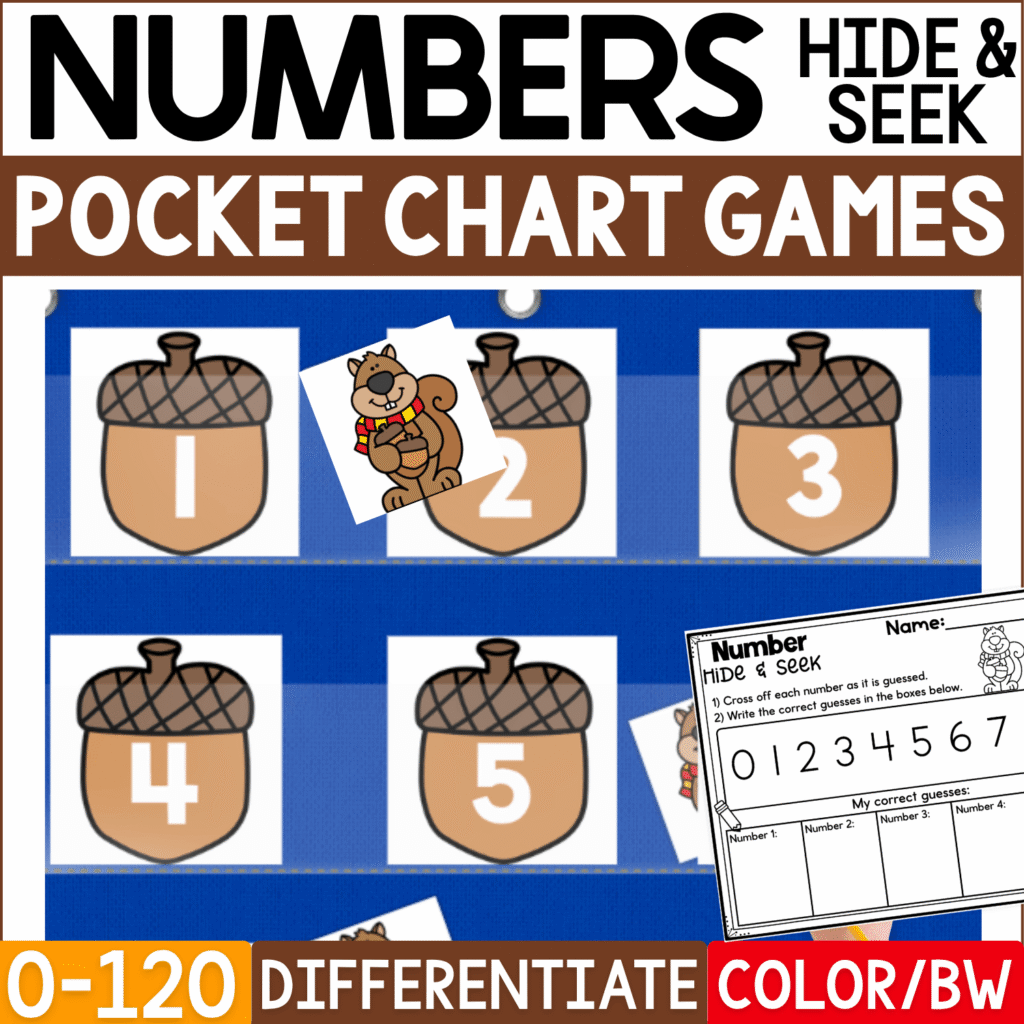
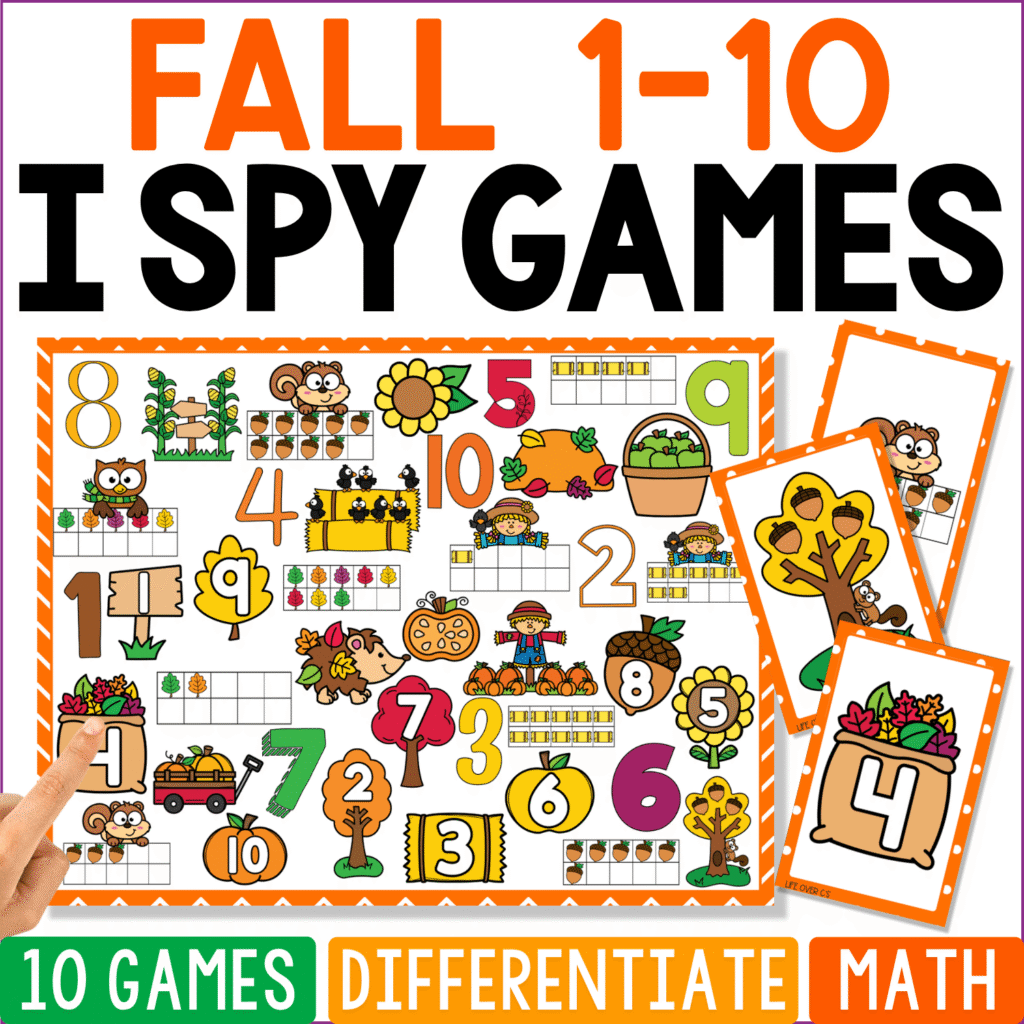

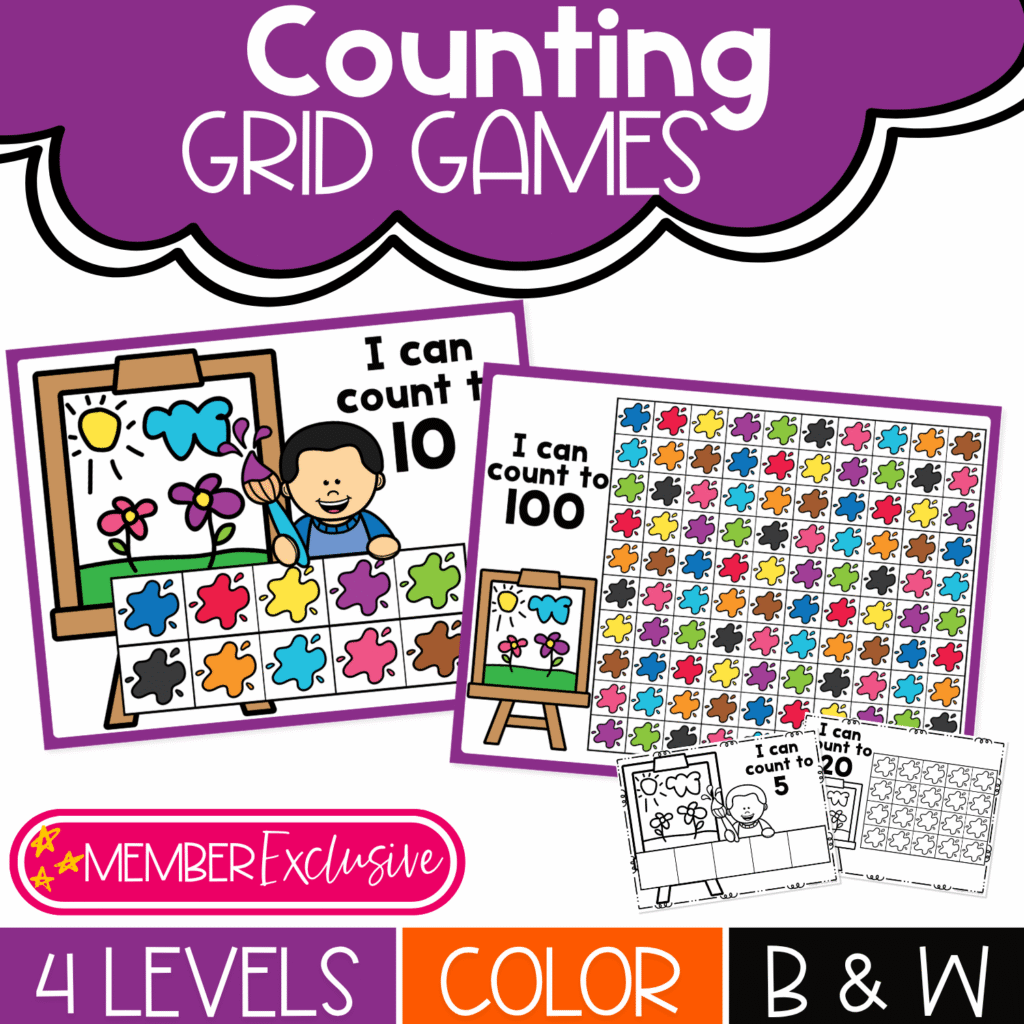
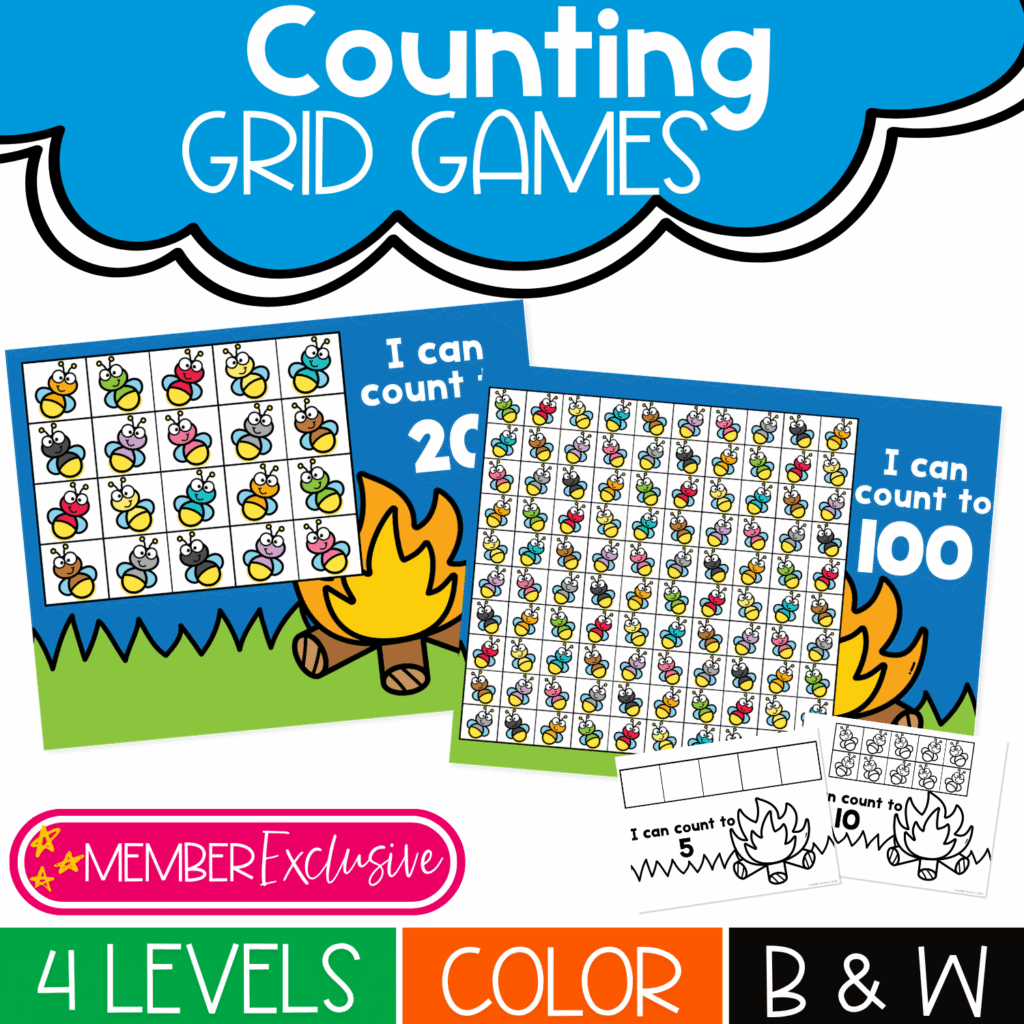
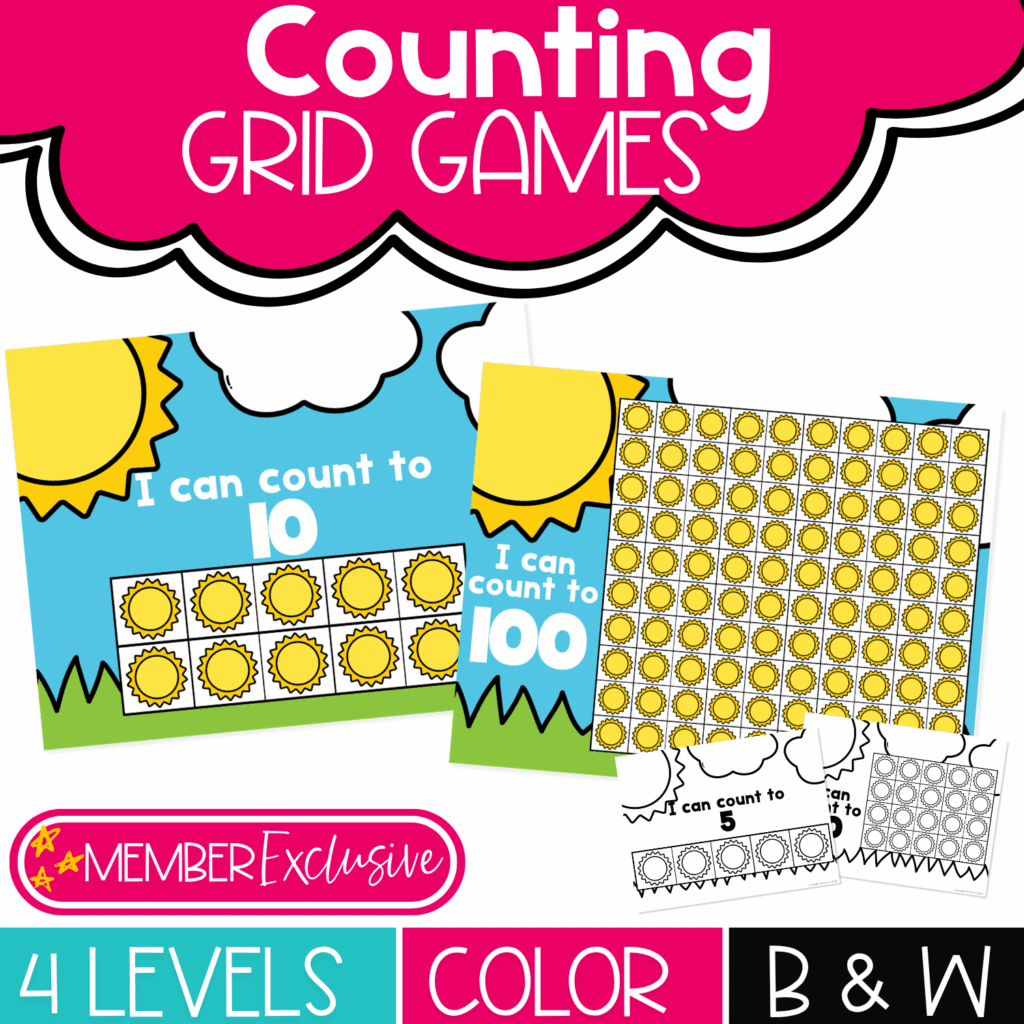
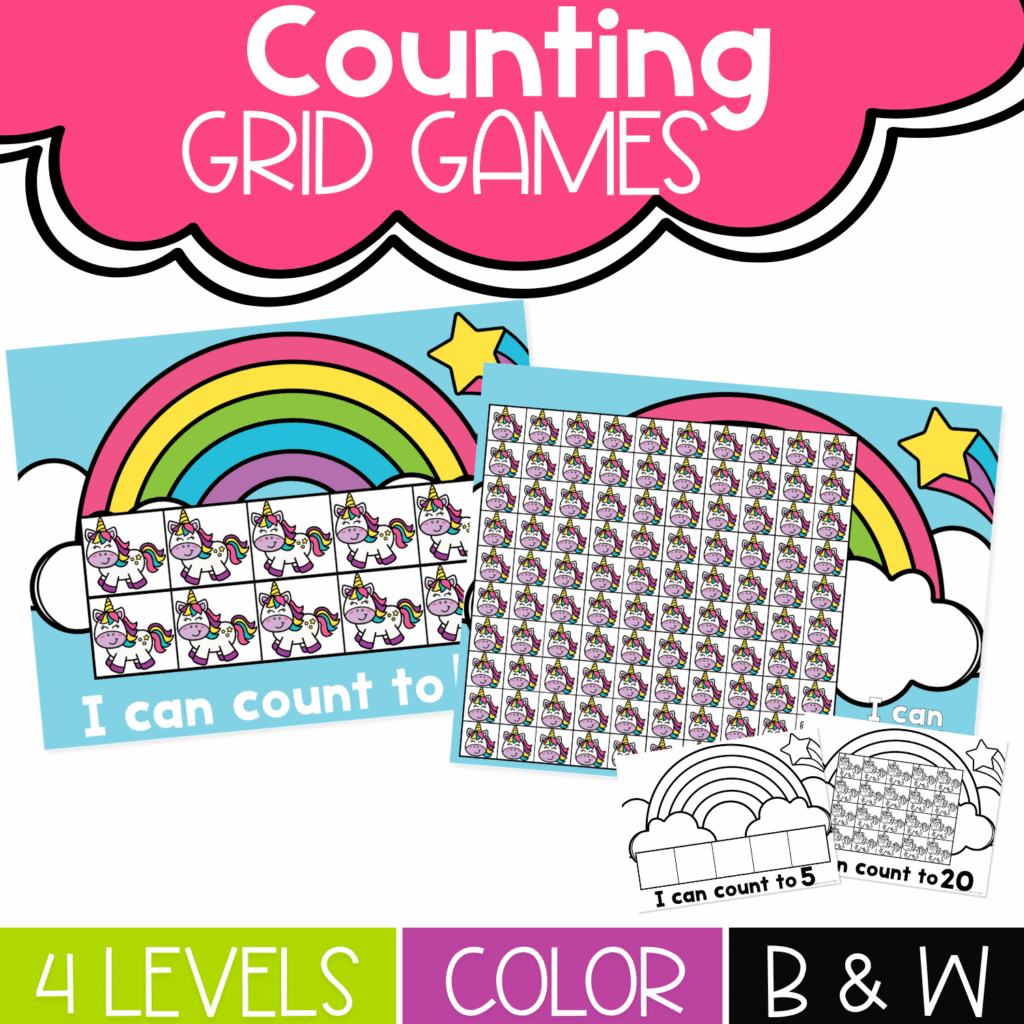
Fall Leaves Counting Grids
- Counting grids for 10, 20 and 100 in color and black and white
- Cube inserts for each set:
- Dice for counting up to 3
- Dice for counting up to 6
- The same grids and cube inserts in Spanish (Puedo contar hasta) in color and black and white
- 1 page of directions
Print the grids in color or black and white. Laminate the grids and the cube inserts so they last.
Required Materials:
- Paper, Printer, Ink
- Laminator
- Paper Cutter or scissors
- Differentiated cube (a foam cube with clear pockets) or a standard die
- Counters (mini leaf erasers)
Standards for Counting and Cardinality
These Fall Leaves counting grids support early math standards connected to counting objects, one-to-one correspondence and counting to 10, 20 and 100.
Common Core State Standards: Mathematics
- CCSS.MATH.CONTENT.K.CC.A.1: Count to 100 by ones and by tens. Kids count all the way to 100 on the largest grid.
- CCSS.MATH.CONTENT.K.CC.B.4: Understand the relationship between numbers and quantities. Kids connect the number they roll to a set of counters.
- CCSS.MATH.CONTENT.K.CC.B.5: Count to answer “how many?” questions. Kids count the counters on the grid to find how many.
Texas Prekindergarten Guidelines and TEKS for Mathematics
- PK4.V.A.2: Children count up to 10 objects with one-to-one correspondence. Kids place one counter in each space as they count.
- PK4.V.A.3: Children count up to 10 items and show that the last number counted tells how many are in the set.
- TEKS K.2A: Count forward and backward to at least 20 with and without objects. Kids count forward as they fill the 20 grid.
Virginia Mathematics Standards of Learning
- K.NS.1.a: Use one-to-one correspondence to find how many are in a set. Kids place one counter in each space as they count.
- K.NS.2.b: Build a set of objects to match a given numeral. Kids build a set of counters to match the number they roll.
Fall Leaves Counting Grids help preschool and kindergarten kids count objects with one-to-one correspondence and build sets to 10, 20 and 100 with a hands-on printable math activity in English and Spanish.
Kids rake up some counting fun with colorful fall leaves.
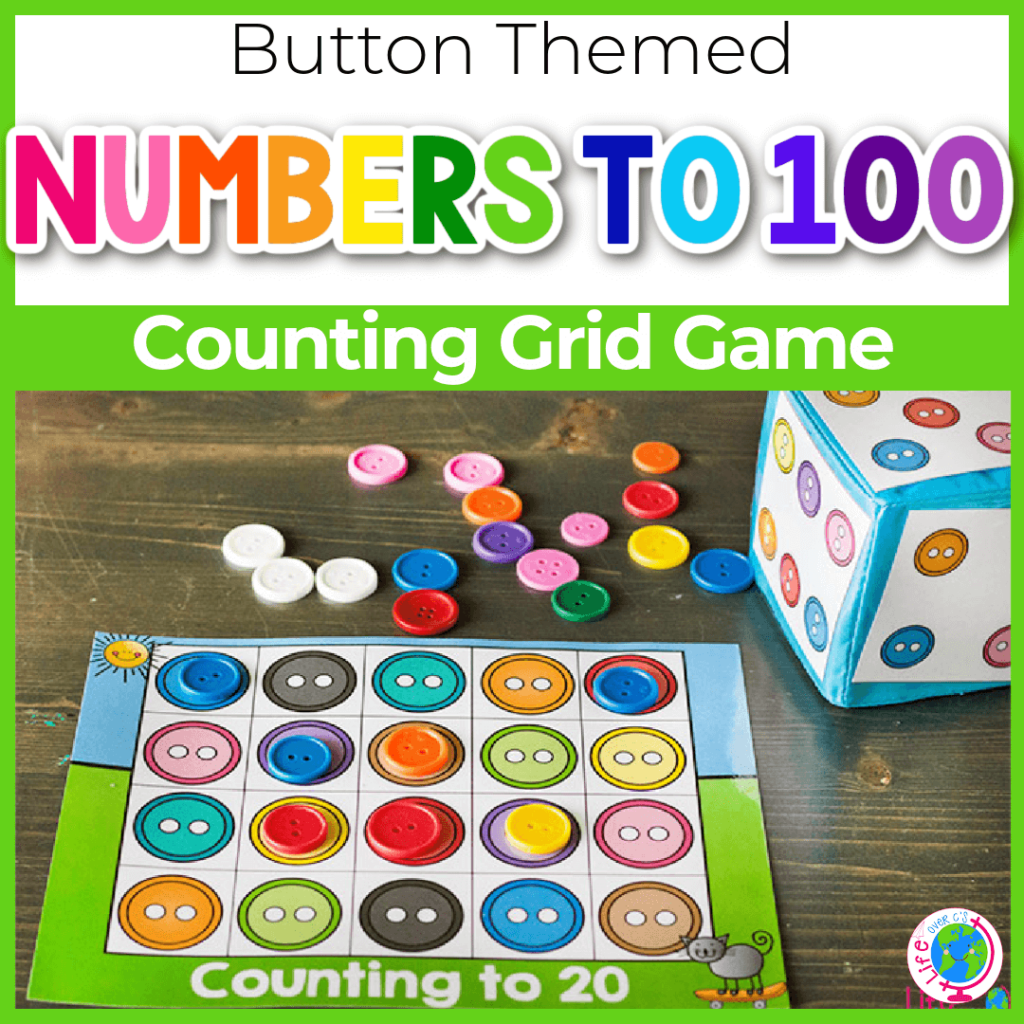
Each grid has spaces to fill and an “I can count to” goal of 10, 20 or 100. Kids roll the cube or die, count the dots and place that many mini leaf erasers on the grid. They keep rolling until the whole grid is full.
The cube inserts come in two levels, with dice for counting up to 3 and dice for counting up to 6 so kids can start small and grow. There is no right or wrong place to put the counters so kids decide where each one goes.
Spanish versions of every grid make this set a great fit for dual-language classrooms and multilingual learners.
Store the grids, the cube and a cup of counters together in a math tub for a quick center.
How to Use Fall Leaves Counting Grids
- Choose the 10, 20 or 100 grid.
- Roll the cube or die and count the dots.
- Place that many mini leaf erasers on the grid, one in each space.
- Keep rolling and counting until the grid is full.
Small Group: Give each child a grid. Take turns rolling one cube for the group, then everyone adds that many counters to their own grid.
Independent Practice: Set the grids in a math center with a cube and a cup of mini leaf erasers. Kids roll and fill a grid at their own pace.
Easy Ways to Differentiate These Counting Grids
Some kids in your group are still learning to count small groups without skipping, some count to 20 with ease and some are ready to keep track of a big number like 100. The grids come in different sizes and the cube inserts come in two levels, so every child can fill a grid that fits where they are.
For Children Who Need More Support:
- Start with the 10 fall leaf grid and the cube insert that counts up to 3. A small grid fills up fast, so kids feel successful.
- Have kids touch each dot on the fall leaf cube insert and say a number before placing any counters. Counting the dots first keeps the count matched.
- Let kids choose where to place counters on the fall leaf grid, as the directions suggest, then try filling it in rows. Comparing both ways shows rows are easier to count.
- Use larger counters or pom poms on the leaf grid for kids still building hand strength. Bigger pieces are easier to place.
For On-Level Practice:
- Move up to the 20 fall leaf grid and the cube insert that counts up to 6. Bigger rolls mean bigger groups to count.
- After each roll, ask “How many are on the fall leaf grid now?” Counting on from the last total is a key step toward adding.
- Have kids say how many more they need to fill the fall leaf grid when they are close. Thinking about what is left is early subtraction.
- Have partners take turns rolling and filling one shared fall leaf grid. Talking about each roll builds math talk.
For an Extra Challenge:
- Use the 100 fall leaf grid and have kids count by tens as each row fills. Ten rows of ten is the foundation for place value.
- Have kids name the dots on the fall leaf cube insert without counting one by one. Seeing amounts at a glance makes counting faster.
- Roll two cubes and add them before placing counters on the fall leaf grid. Combining two numbers turns the grid into an addition game.
- Have kids write the running total after each roll on the fall leaf grid. Recording the total connects counting to writing numerals.
For Speech, OT, ELL or Special Education Support:
- Fine motor: use tongs or tweezers to place mini erasers or counters on the leaves. Squeezing tongs builds pencil strength.
- OT: have kids hold a few counters in their palm and move them to their fingertips one at a time to cover the leaves. Palm to finger moves build dexterity.
- Spanish speakers: use the Spanish fall leaf grids and cube inserts (Puedo contar hasta) so kids count in their home language, then try the English grid. Number sense carries across languages.
- Visual attention: cover the rows of the fall leaf grid you are not working on with paper. A smaller area makes it easier to keep track.
Fall Leaves Counting Grids Are Perfect For:
- Preschool and pre-K
- Kindergarten
- ELL and multilingual learners
- Fall and leaf themes
- Math centers
- Morning tubs
- Small-group instruction
- Intervention
- Special education
- Speech, OT and early intervention sessions
- Homeschool preschool and kindergarten
- Substitute plans