
Brain Break Gross motor Dice: Valentine’s Day Exercises
Recommended Grade Level:
Type of Resource: PDF
Number of Pages: 8

Coordinating Activities
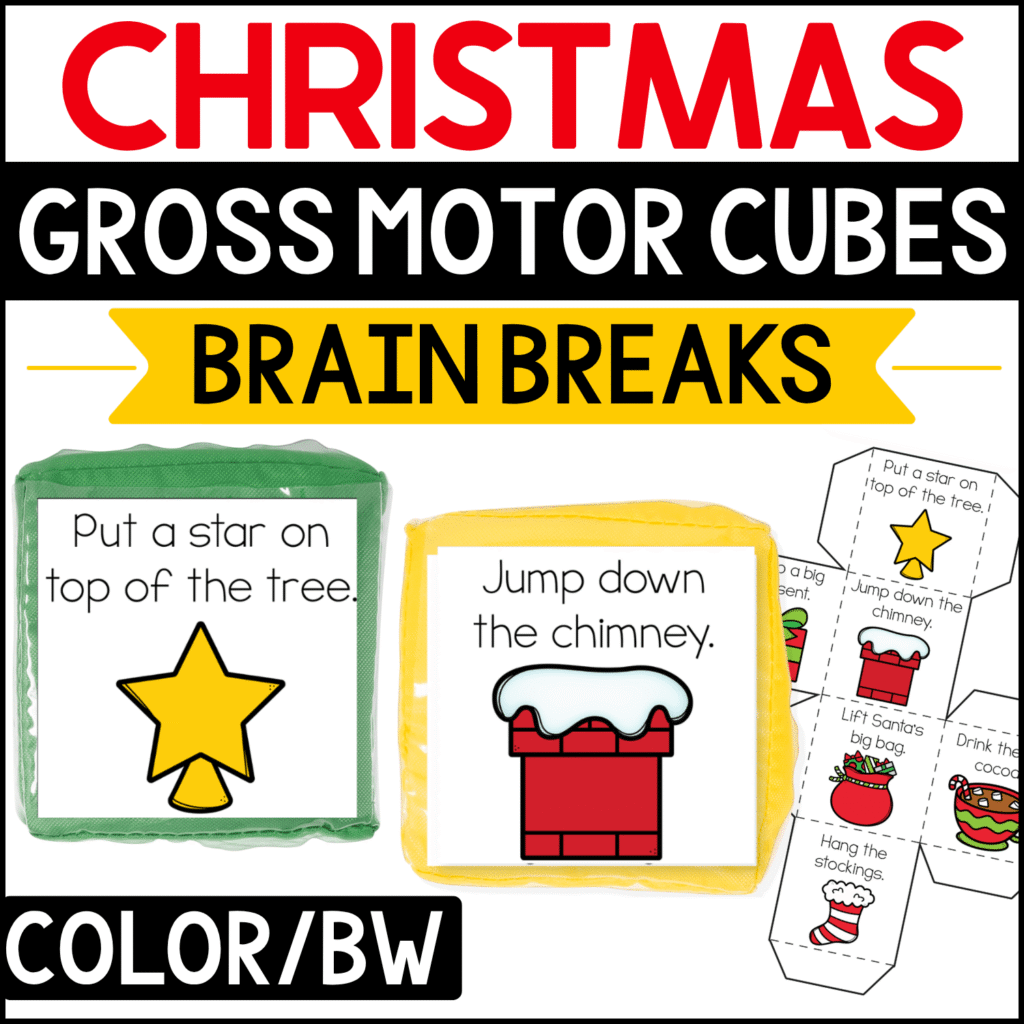
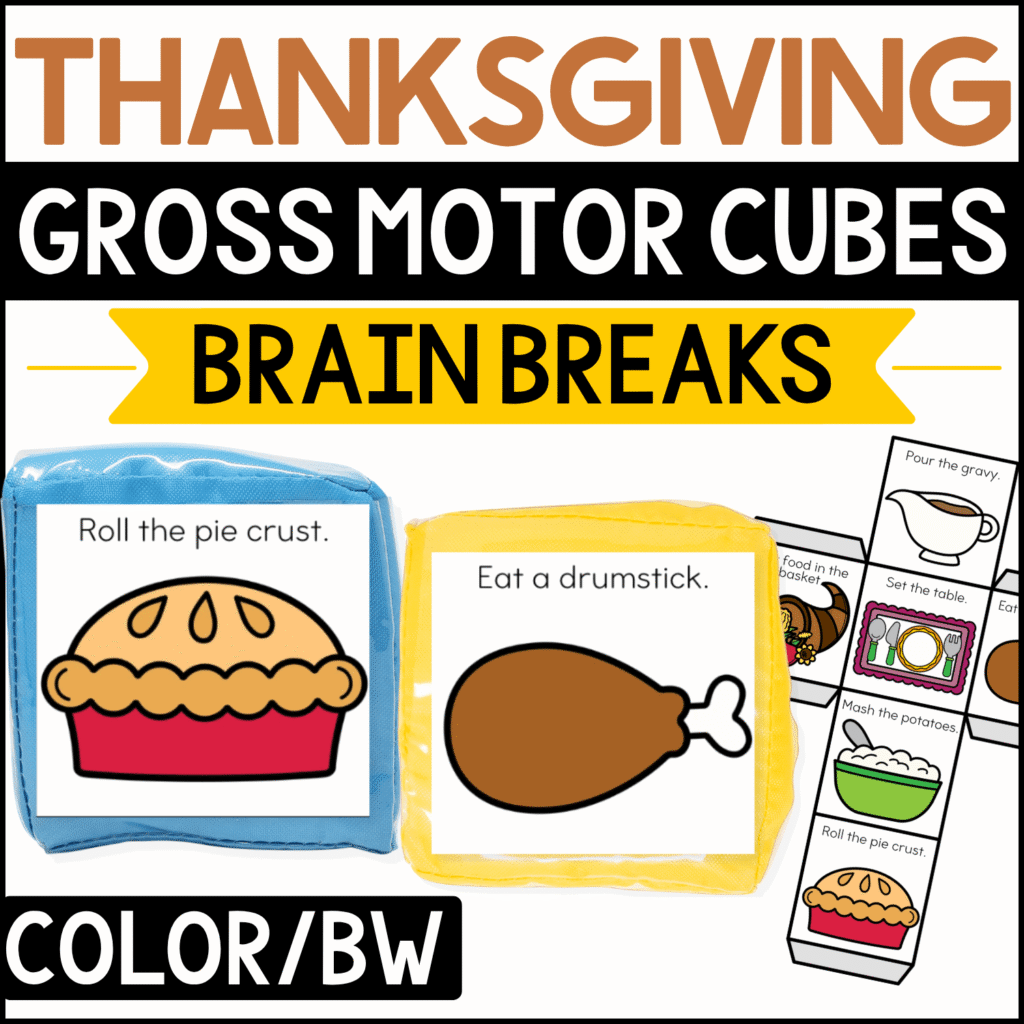
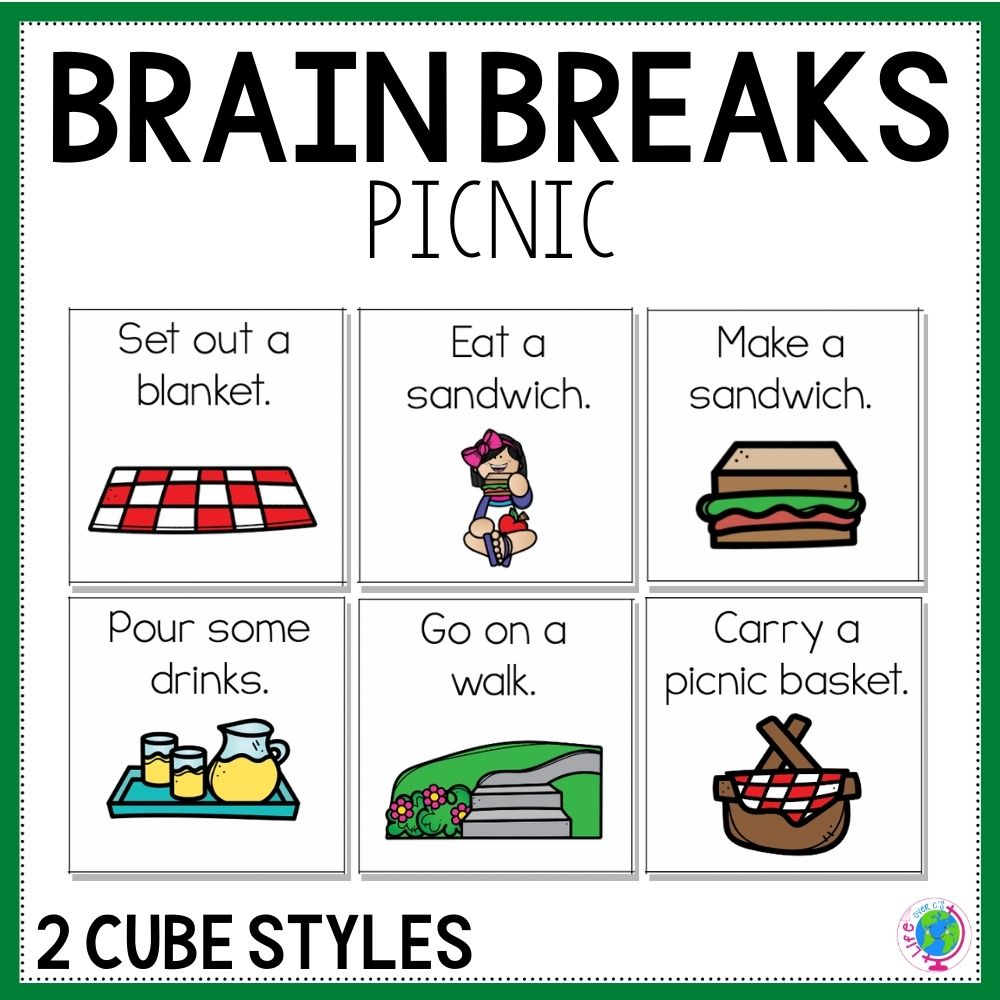
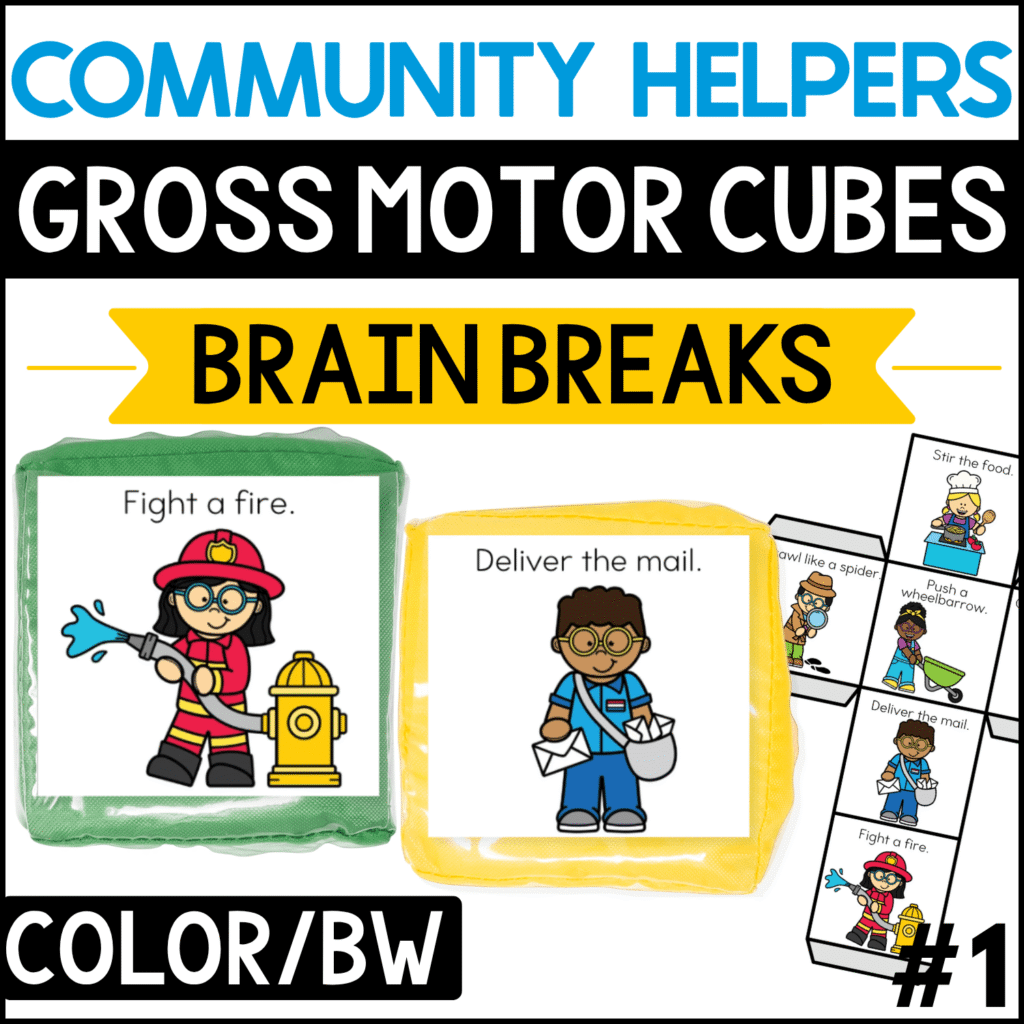

Brain Break Gross Motor Dice: Valentine’s Day Exercises
- 18 Valentine’s Day fitness cards with heart pictures, like jumping jacks, toe touches, jog in place, arm circles, hop on one foot, squats, lunges and a dance party
- Directions for using the cards
Print the cards on cardstock, cut them apart and laminate for extra durability.
Required Materials:
- Paper, Printer, Ink
- Cardstock
- Scissors or paper cutter
- Laminator (optional)
- A jar or a pocket cube (optional)
- Timer (optional)
Standards for Movement and Physical Education
Movement breaks give kids practice with locomotor and nonlocomotor skills while they move safely with a group.
SHAPE America National Physical Education Standards
- SHAPE America S1.E1.K: Performs locomotor skills (hopping, galloping, running, sliding and skipping) while maintaining balance.
TEKS for Physical Education
- TEKS PE K.1(A): Travel in different ways in a large group without bumping into others or falling.
Virginia Physical Education Standards of Learning
- K.1.a: Demonstrate and differentiate between walking, jogging, running, hopping, galloping and jumping.
- K.1.b: Demonstrate bending, pushing, pulling, turning and balancing on one foot.
- K.4.a: Demonstrate cooperative and safe behaviors during play.
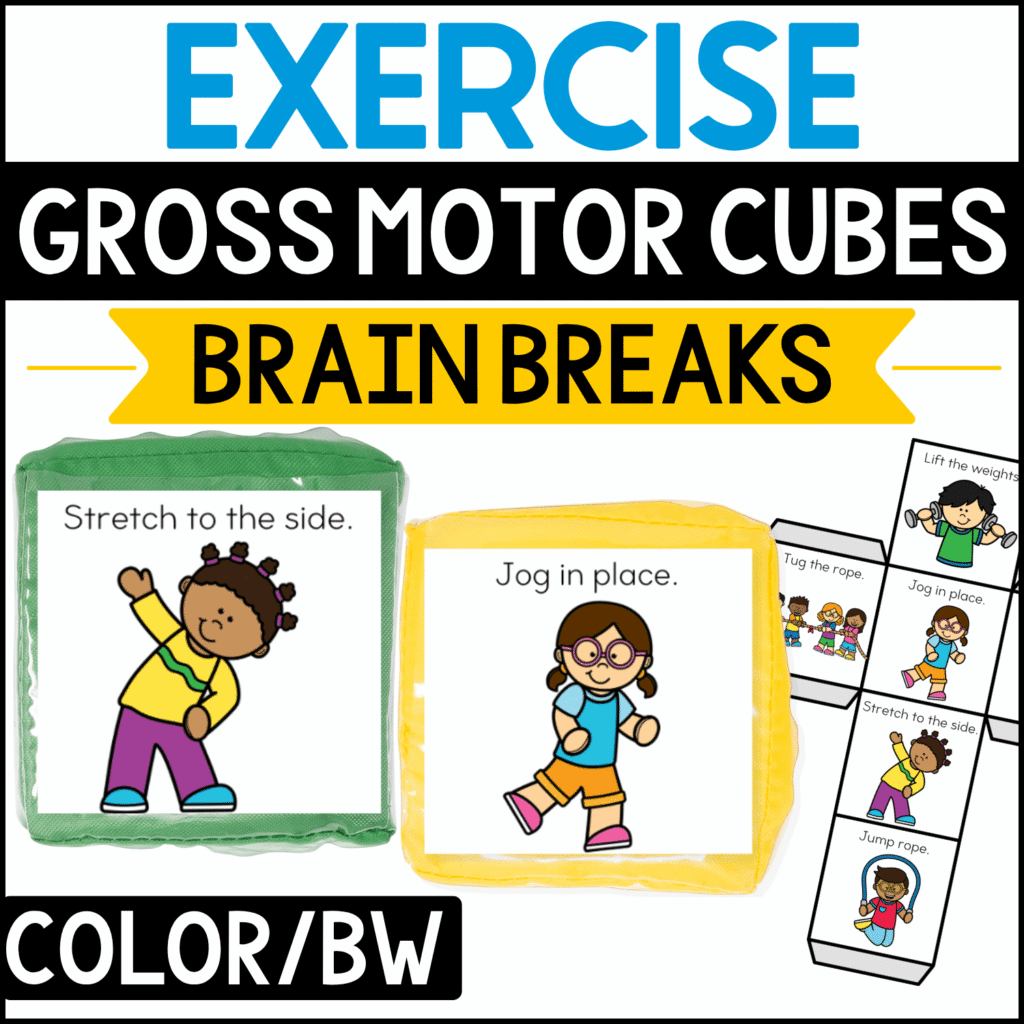
Brain Break Gross Motor Dice: Valentine’s Day Exercises is a set of 18 heart-themed fitness cards that give kids a quick, active brain break all through February.
Pull a card and get moving! The 18 Valentine’s Day fitness cards include jumping jacks, toe touches, jogging in place, arm circles, hopping on one foot, squats, lunges, a dance party and more. Each card has a heart picture and the name of the exercise.
Drop the cards in a jar and let kids pull one when they need a break from sitting. Set a timer, cheer them on or join in yourself. A minute or two of movement can make the next lesson go a whole lot smoother.
The mix of moves works on strength, balance, coordination and stretching, and there are plenty of easy picks for little ones alongside tougher ones like push-ups and cartwheels for kids who want a challenge.
Print the cards on cardstock, cut them apart and laminate them, and they’ll be ready for every brain break in February and beyond.
How to Use Brain Break Gross Motor Dice: Valentine’s Day Exercises
- Print, cut and laminate the cards.
- Put the cards in a jar or a small bucket.
- When kids need a break, have one child pull a card.
- Read the exercise together and show how to do it.
- Set a timer for 30 seconds to a minute and get moving!
Whole Group: Pull one card for the whole class and do the exercise together, counting out loud.
Small Group: Let each child pull a card and lead the group in that exercise.
Easy Ways to Differentiate These Fitness Cards
Some kids in your group need help planning how to move, some are ready to follow along right away and some want a real workout. The 18 cards stay the same. What changes is which cards are in the jar and how long and how many times kids do each move.
For Children Who Need More Support:
- Take out the hardest cards, like cartwheels, push-ups and the head stand, and start with jogging in place, arm circles and toe touches. Early success keeps kids willing to try.
- Show each exercise yourself before kids try it, saying the words as you do it, so kids who struggle with motor planning can copy you.
- Do each move for a short time, like 15 seconds, and stop before kids get tired. A brain break should leave kids ready to learn, not worn out.
- Offer a seated or wall-supported version, like push the wall in place of push-ups, so every child can join in.
For On-Level Practice:
- Do each exercise for 30 seconds to a minute with a timer, which gives a clear start and end.
- Count each jumping jack or toe touch out loud together, which adds counting practice.
- Pull two cards and do both in a row without stopping. Remembering two steps builds working memory.
- Let kids take turns being the leader who pulls the card and shows the move, which builds confidence.
For an Extra Challenge:
- Roll a die and do the exercise that many times, then double it, which adds math to the movement.
- Pull three cards and do them as a short workout, in order, without looking.
- Count how many jumping jacks kids can do in 30 seconds and try to beat it the next day. Tracking progress is motivating.
- Have kids make a new Valentine’s Day exercise card and teach it to the class, which takes planning and clear directions.
For Speech, OT, ELL or Special Education Support:
- Use the cards for balance, coordination and strength goals, and stand close to kids who need support.
- Practice action words like jump, hop, stretch and bend.
- For kids with sensory needs, let them choose the speed or skip moves that are too much.
- For multilingual learners, show the heart card and do the move as you name it.
Brain Break Gross Motor Dice: Valentine’s Day Exercises Are Perfect For:
- Preschool and pre-K
- Kindergarten
- Elementary brain breaks
- Valentine’s Day and February
- Indoor recess
- Gross motor practice
- Physical therapy and OT sessions
- Special education
- Early intervention
- Homeschool
- Classroom transitions
- Rainy day activities