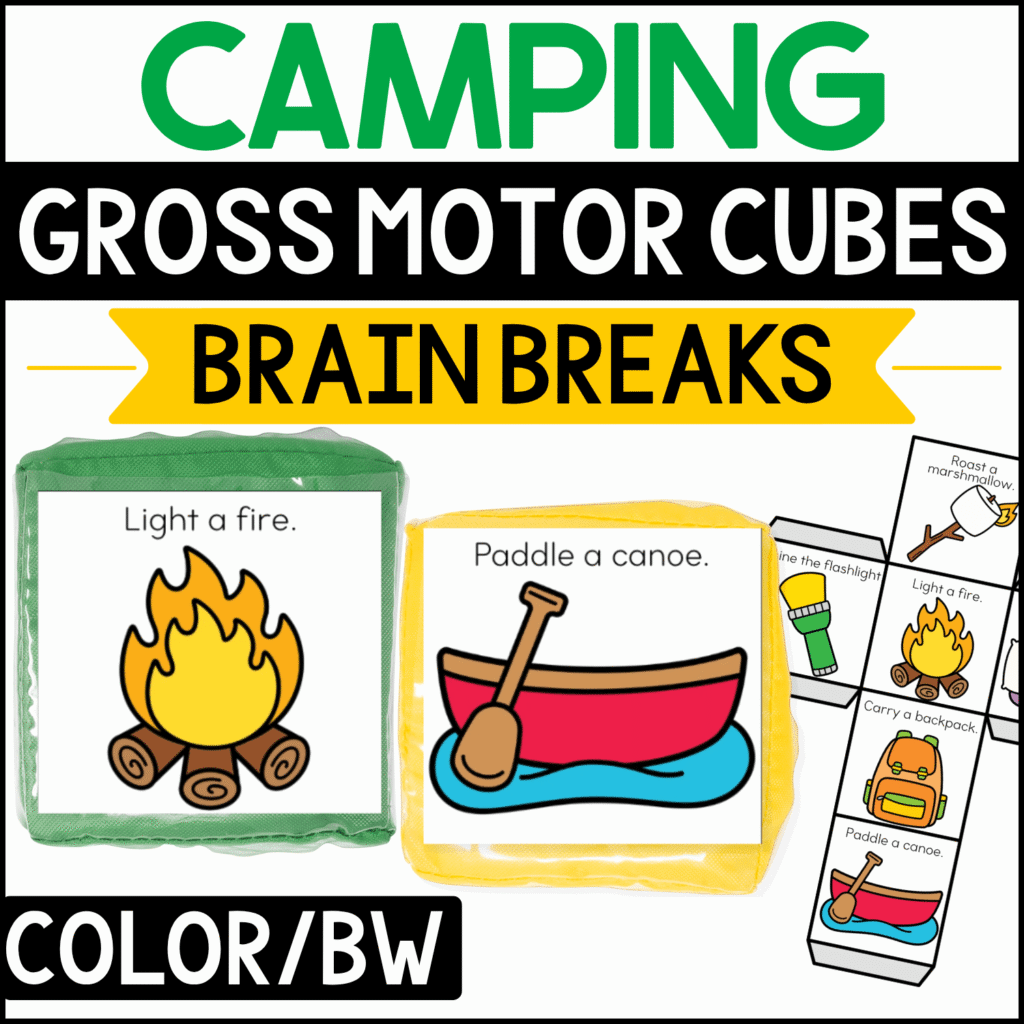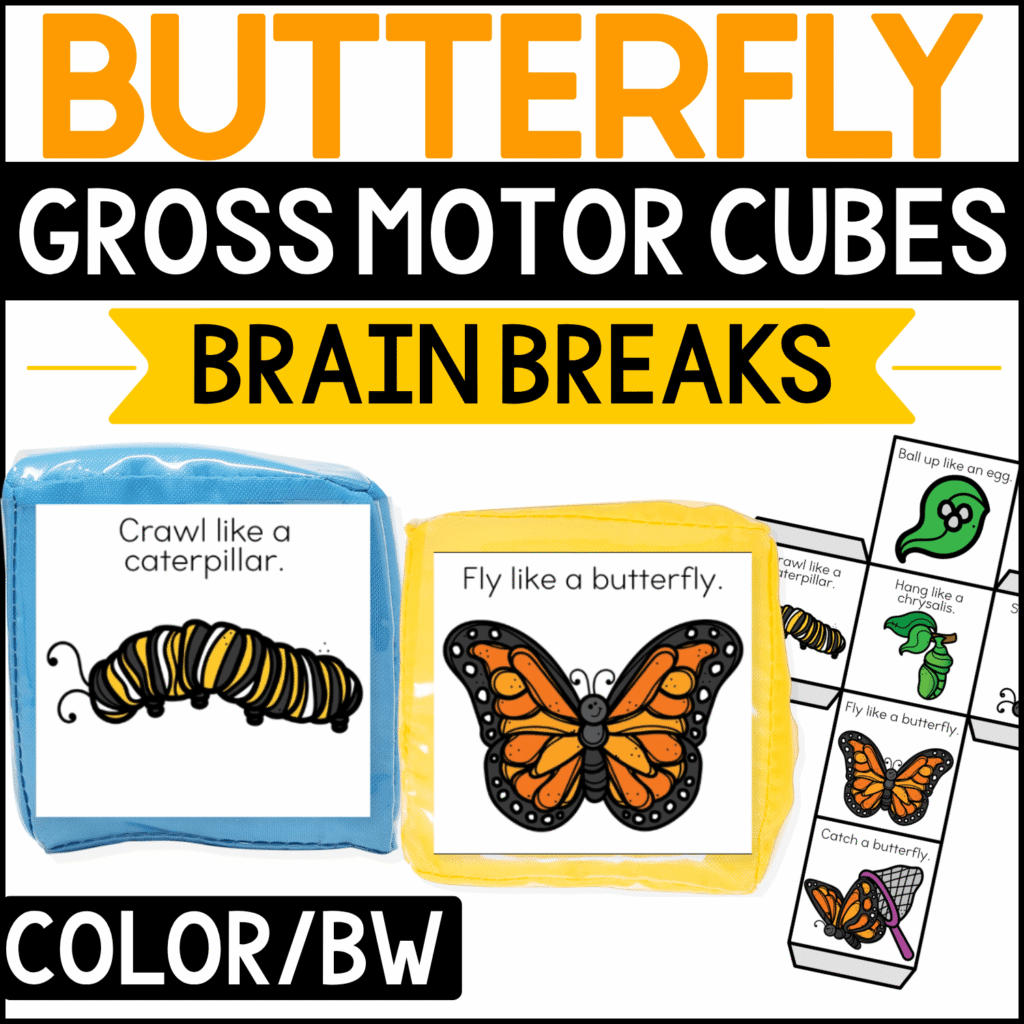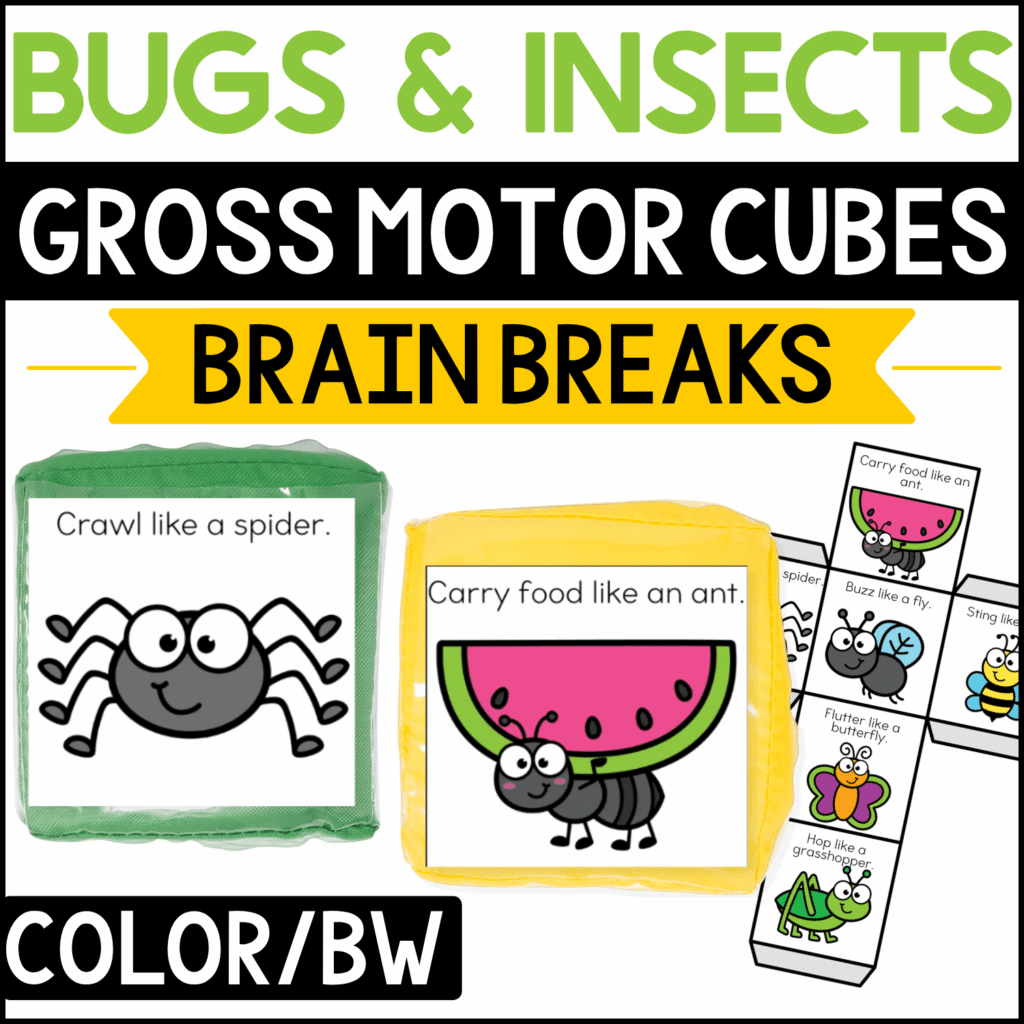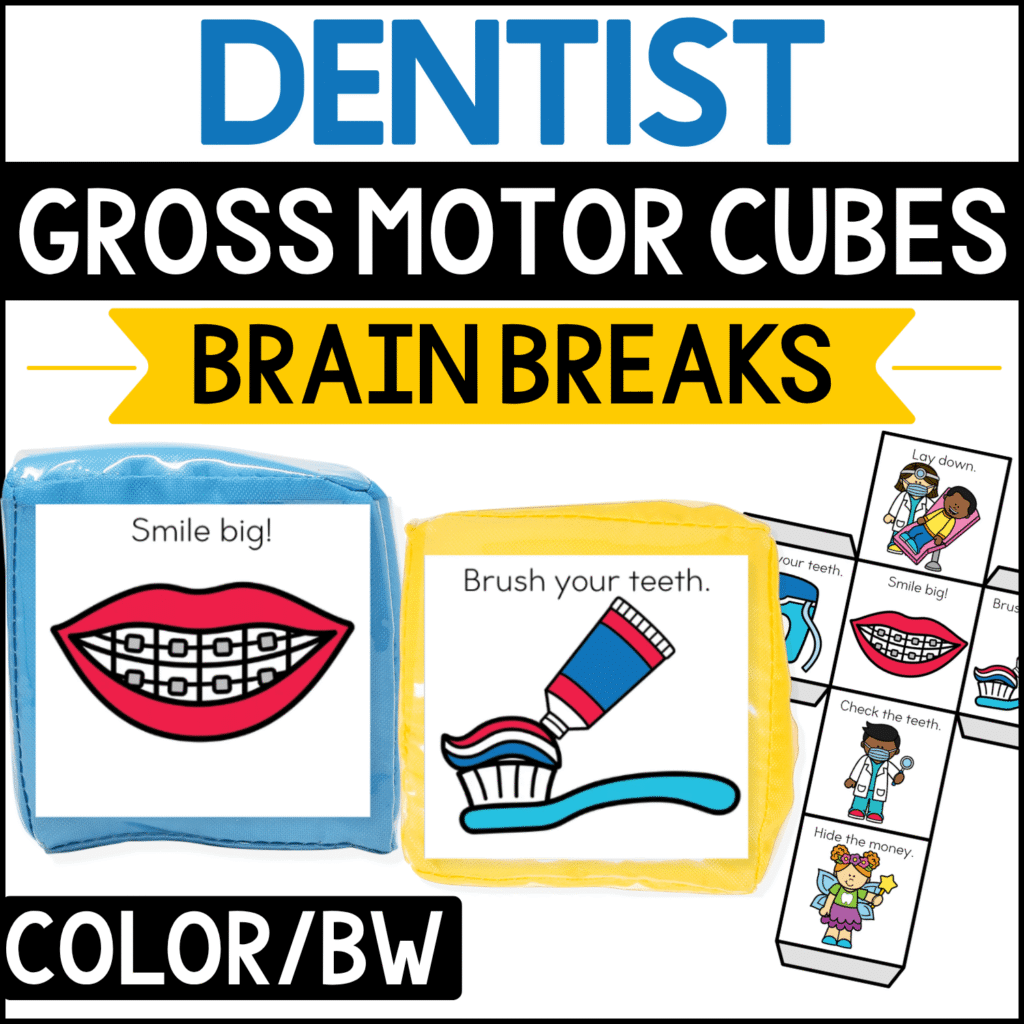
Brain Break Dice: Community Helpers Set #1
Recommended Grade Level:
Type of Resource: PDF
Number of Pages: 8

You must be an Annual or Forever Member to Access this Resource.
Join the Life Over C’s Club to Access

Already a member? Login below:
Coordinating Activities


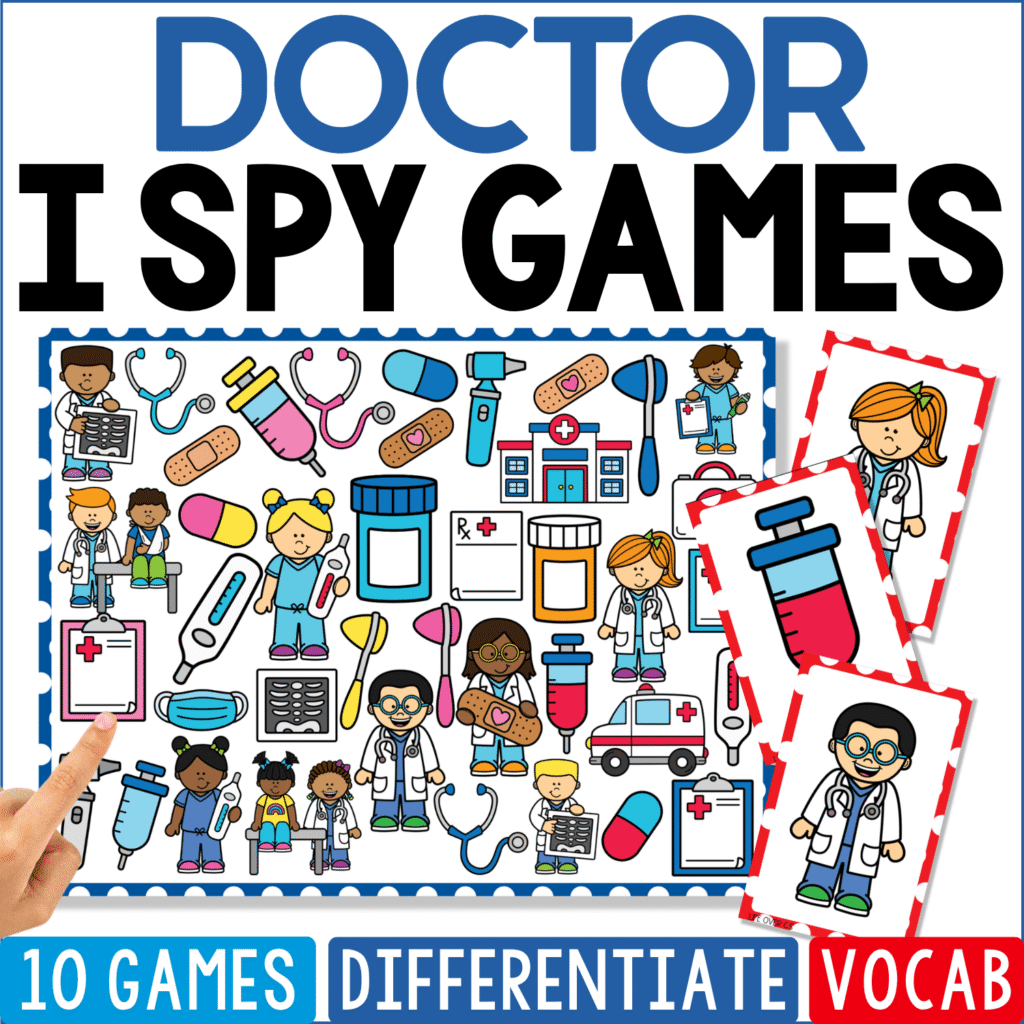
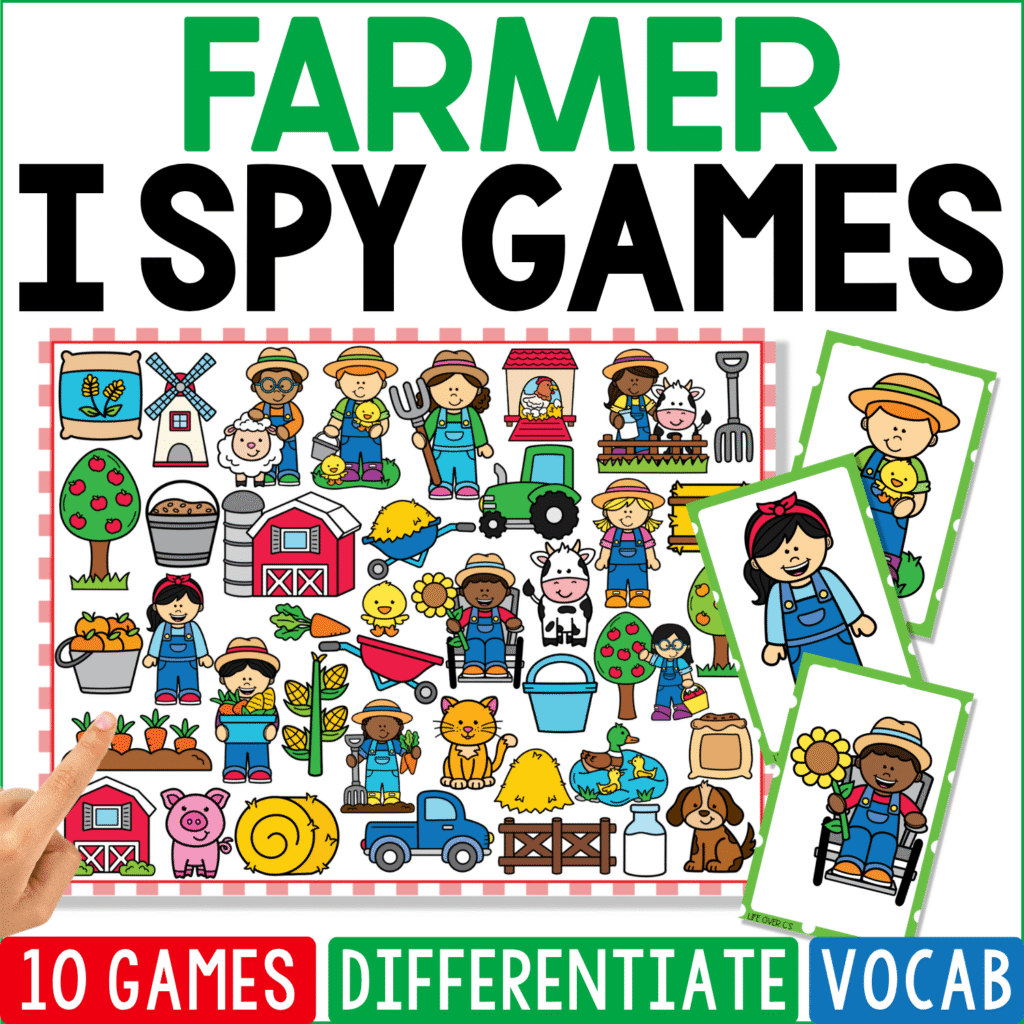
Community Helpers Set #1 Brain Break Dice
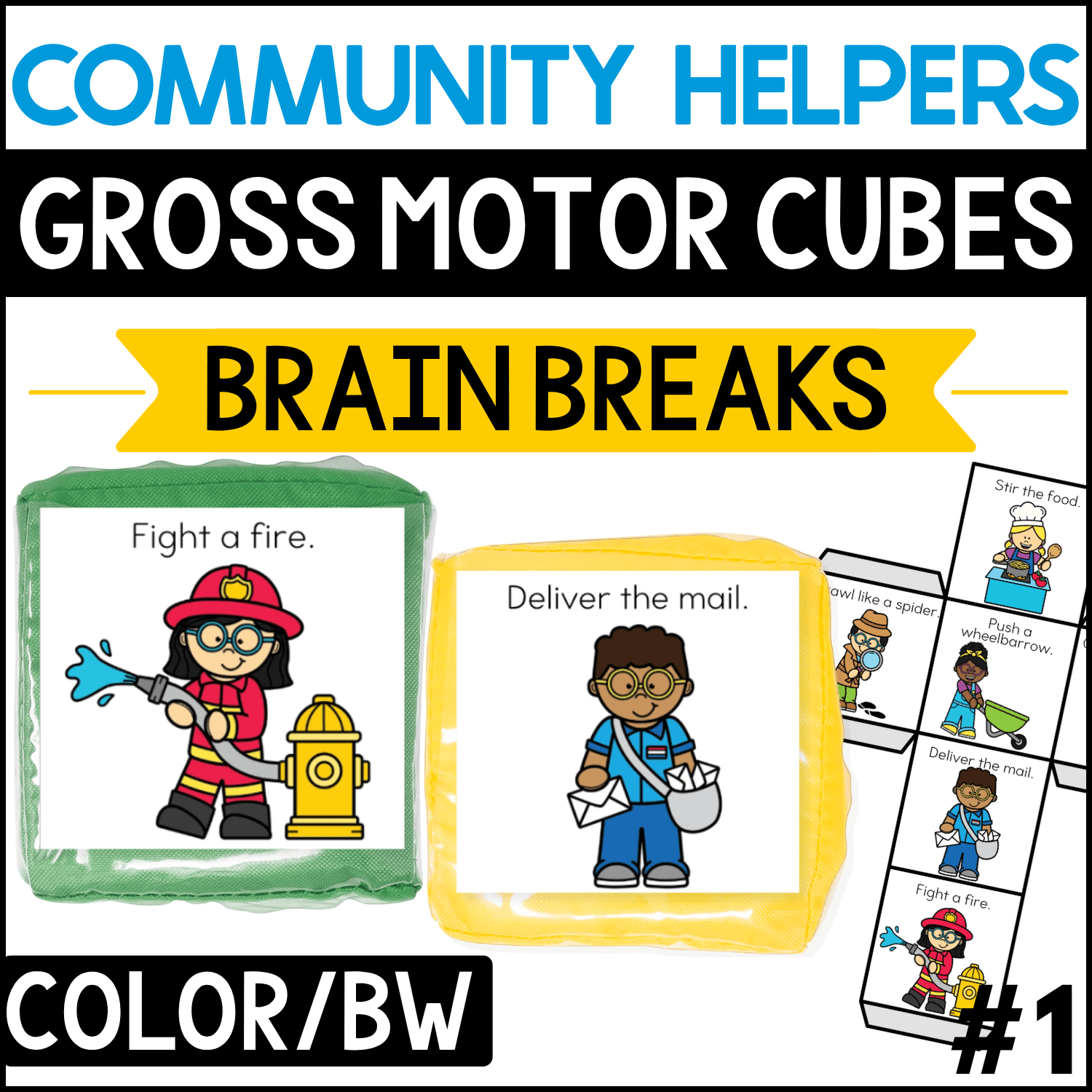
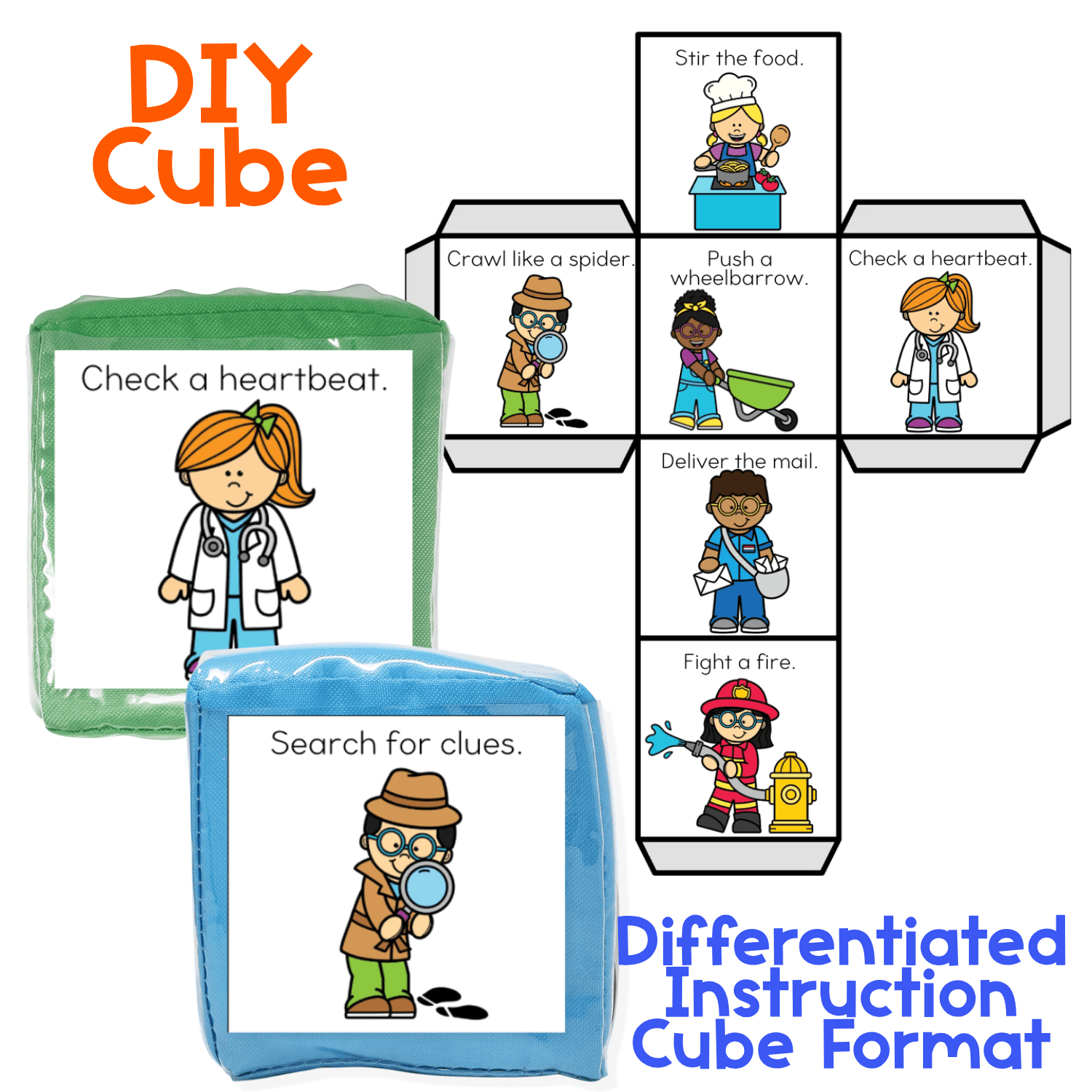
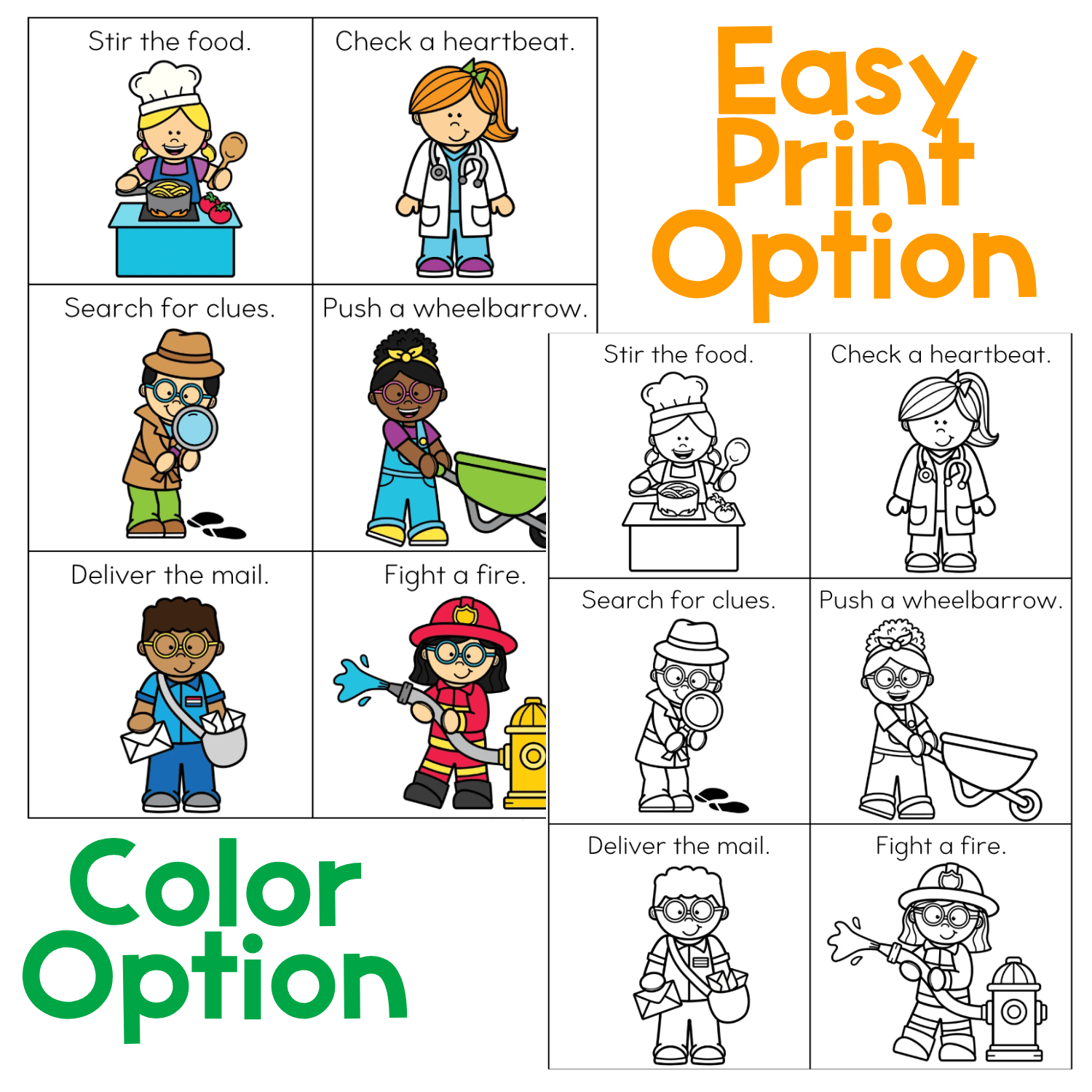
- 6 community helper movement cards to slide into a pocket cube, in color (deliver the mail, fight a fire, stir the food, check a heartbeat, search for clues and push a wheelbarrow)
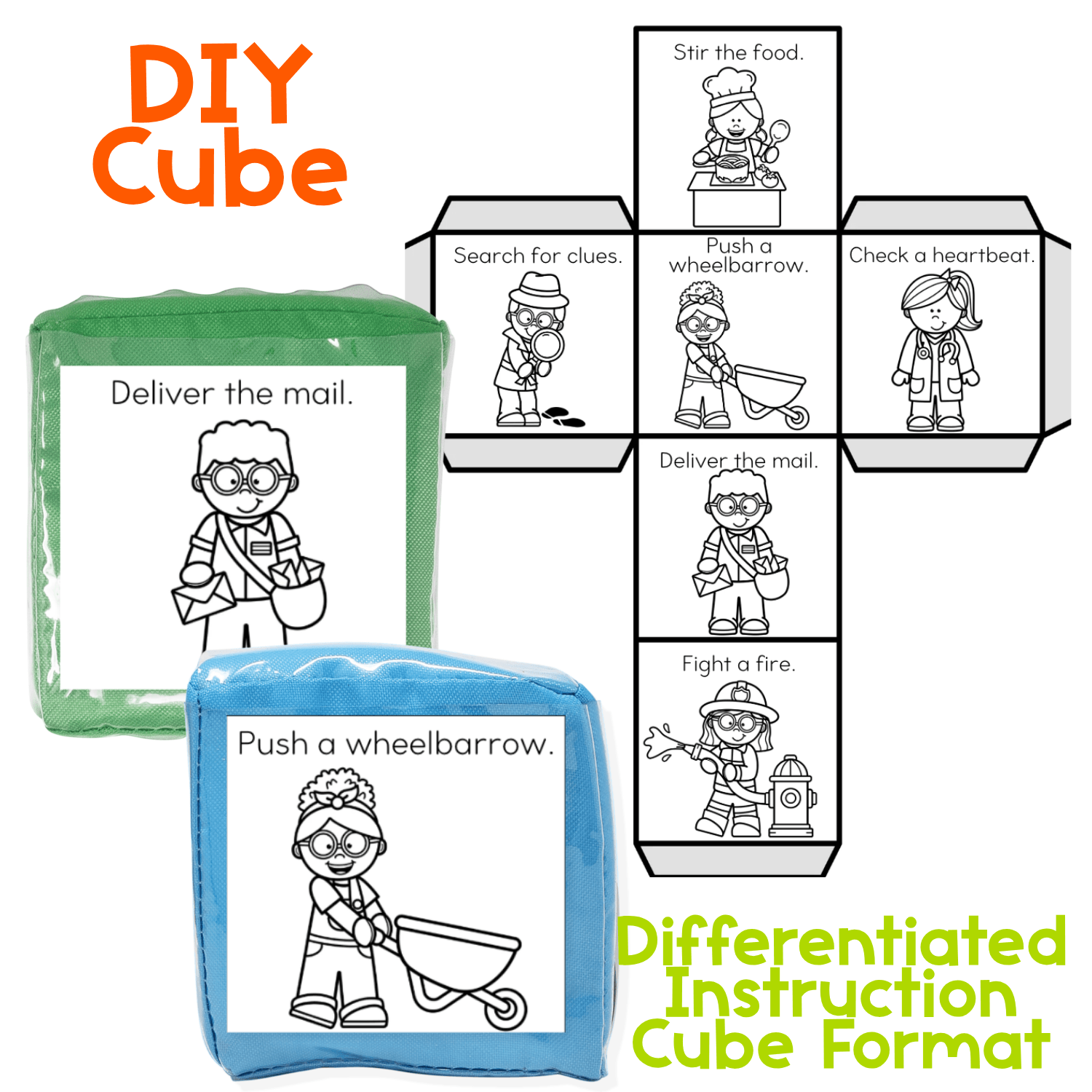
- The same cube inserts in black and white
- Build-your-own paper cube template in color and black and white
- Instruction page
Slide the inserts into a clear pocket cube or print, cut, fold and tape the paper cube. Kids roll it and act out the movement that lands on top.
Required Materials:
- Paper, printer and ink
- Scissors or a paper cutter
- Tape (for the paper cube)
- Optional: a clear pocket cube and a laminator
Standards for Gross Motor Skills, Listening and Vocabulary
This community helper brain break supports early learning standards connected to gross motor coordination, following directions and acting out action words.
Common Core State Standards: English Language Arts
- CCSS.ELA-LITERACY.L.K.5.D: Distinguish shades of meaning among verbs describing the same general action by acting out the meanings. Kids act out each action word on the cube.
- CCSS.ELA-LITERACY.L.K.6: Use words and phrases acquired through conversations, reading and being read to and responding to texts. Kids learn community helper words and action words as they play.
Texas Prekindergarten Guidelines and TEKS for Physical Education
- PK4.IX.A.1: Child demonstrates coordination and balance in isolation. Kids balance and move their bodies to match each action.
- PK4.IX.A.2: Child coordinates sequence of movements to perform tasks. Kids put together the steps of each pretend movement.
- TEKS PE K.1(C): Demonstrate visual tracking and tracing, simple balancing, cross lateralization and sequencing of two skills.
- TEKS PE K.6(C): Demonstrate safe practices by following rules, procedures and directions during class and activities. Kids listen to the action and follow it safely.
Virginia Physical Education Standards of Learning
- K.1.b: Demonstrate bending, pushing, pulling, turning and balancing on one foot.
- K.2.c: Demonstrate the concept of personal and general space. Kids act out each movement in their own space.
- K.4.a: Demonstrate cooperative and safe behaviors during play. Kids take turns rolling and move safely as a group.
Brain Break Dice: Community Helpers Set #1 is a community helper movement cube that gives preschool and kindergarten kids a quick brain break full of pretend play and big body movement.
Roll it, read it and move! Each side shows a community helper action to act out: deliver the mail, fight a fire, stir the food, check a heartbeat, search for clues and push a wheelbarrow. Kids roll, look at the picture and do the move until it’s time to roll again.
Little bodies need to move, and a two-minute brain break between lessons can really help kids refocus. These moves get kids stretching, jumping, crawling and balancing while they use their imaginations, so it feels like play and not exercise.
The movement cards slide right into a pocket cube (the clear plastic photo cubes), so you can switch themes in seconds. No pocket cube? Use the build-your-own paper cube template, which comes in color and in black and white.
Use it during circle time, between centers, during indoor recess or any time the wiggles take over. It fits right into a community helpers unit too.
How to Use Community Helpers Set #1 Brain Break Dice
- Slide the movement cards into a pocket cube or build the paper cube.
- Have kids stand up with plenty of space around them.
- Roll the cube and look at the picture together.
- Name the move and act it out for 15 to 30 seconds.
- Roll again and keep going until the brain break is over.
Whole Group: Let one child roll for the class each time and have everyone act out the move together.
Small Group: Take turns rolling and choosing how many times to do each move. Count the moves out loud together.
Easy Ways to Differentiate This Movement Cube
Some kids need a slow model, some are ready to roll and go and some can handle a sequence of moves. This community helpers die has kids deliver the mail, fight a fire, stir the food, check a heartbeat, search for clues and push a wheelbarrow.
For Children Who Need More Support:
- Show fight a fire by holding a pretend hose with both hands while you say the words. A clear model helps kids plan the move.
- Start with stir the food and check a heartbeat, which can be done standing still. Moves in place are easier at first.
- Let kids push a wheelbarrow from a chair by pushing their arms forward. A seated version lets every child join.
- Have kids stir the food in slow circles for a count of five. Slow movement takes more control.
For On-Level Practice:
- Have kids name the helper for each move, like a firefighter fights a fire. Naming helpers builds vocabulary.
- Count to ten together while kids deliver the mail by walking and handing out pretend letters. Counting adds math to the break.
- Have kids search for clues by looking high, low and side to side with a pretend magnifying glass. Looking in different directions builds body awareness.
- Let a child be the helper leader who shows each move. Leading builds confidence.
For an Extra Challenge:
- Roll three times and do all three helper moves in order. Keeping three moves in order builds sequencing skills.
- Have kids check a heartbeat after jumping and again after resting, then talk about the difference. Feeling the change builds body awareness.
- Ask kids to make up a move for another helper, like a farmer, and teach it. Inventing a move takes planning.
- Have kids tell what tools each helper uses for their move. Talking about tools builds vocabulary.
For Speech, OT, ELL or Special Education Support:
- For speech practice, use the f sound in fire and fight each time that move comes up. Repeated words give focused practice.
- For OT practice, use push a wheelbarrow and stir the food for arm strength goals. These moves work the shoulders and arms.
- For ELL support, teach the helper names with the moves, like mail carrier and deliver. Pairing the job with the action helps kids learn both.
- For special education support, show a picture of each helper next to the move. A picture helps kids understand who they are pretending to be.
Community Helpers Set #1 Brain Break Dice Is Perfect For:
- Preschool and pre-K
- Kindergarten
- Brain breaks
- Circle time
- Transitions
- Indoor recess
- Gross motor practice
- Physical therapy and OT sessions
- Speech therapy sessions
- Special education
- Early intervention
- Homeschool preschool
You must be an Annual or Forever Member to Access this Resource.
Join the Life Over C’s Club to Access
Already a member? Login below: