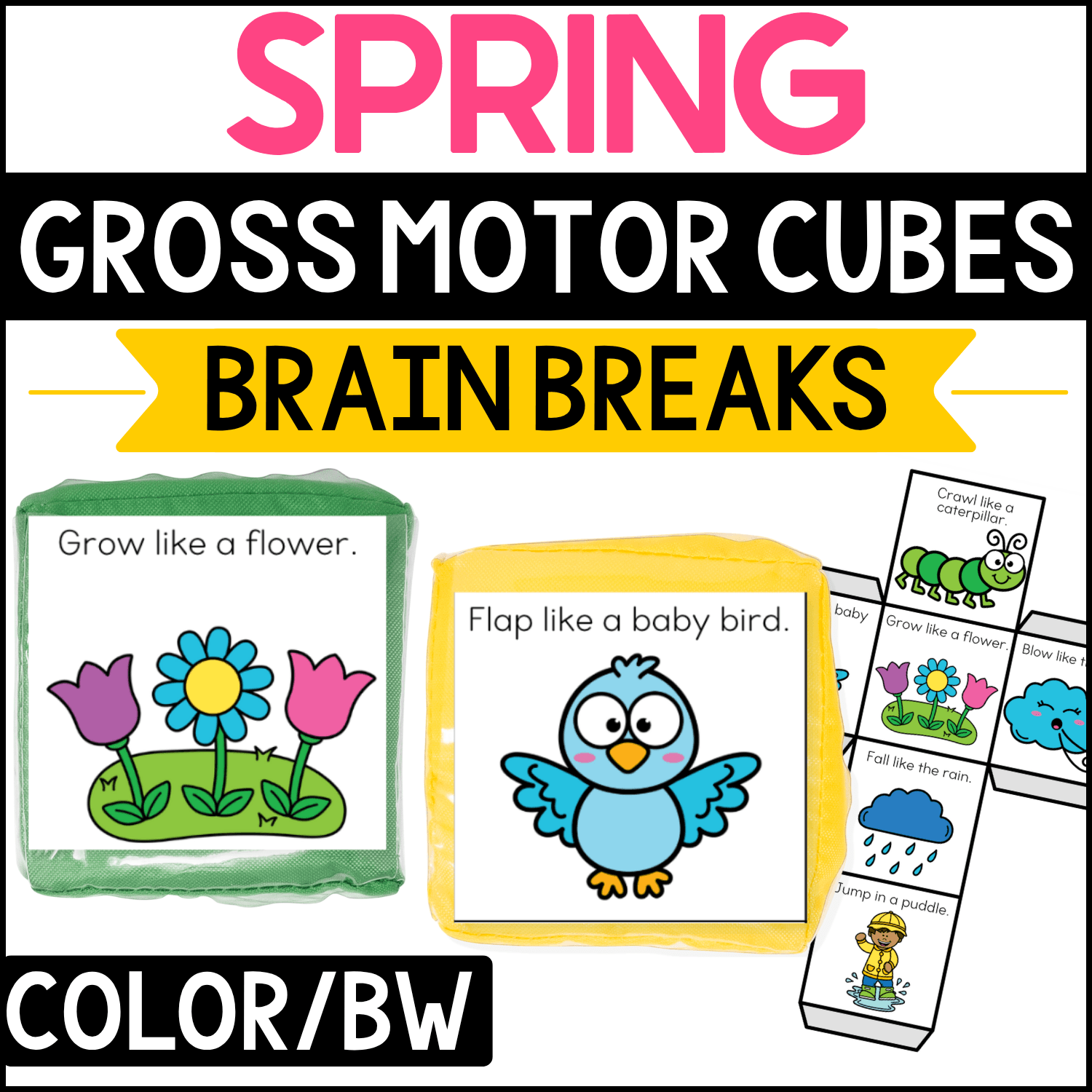


Gross Motor Brain Break Dice: Spring Theme
Recommended Grade Level:
Type of Resource: PDF
Number of Pages: 8

Coordinating Activities


Spring Brain Break Dice
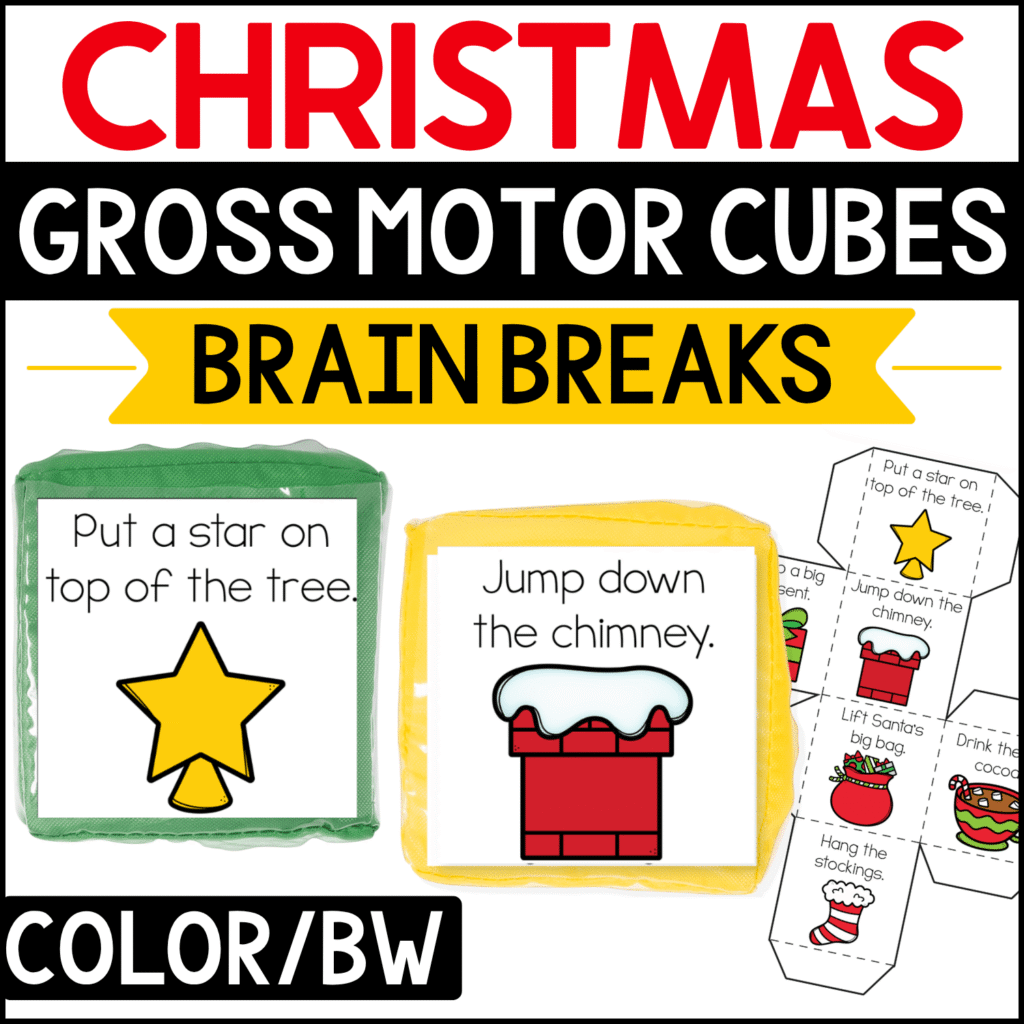
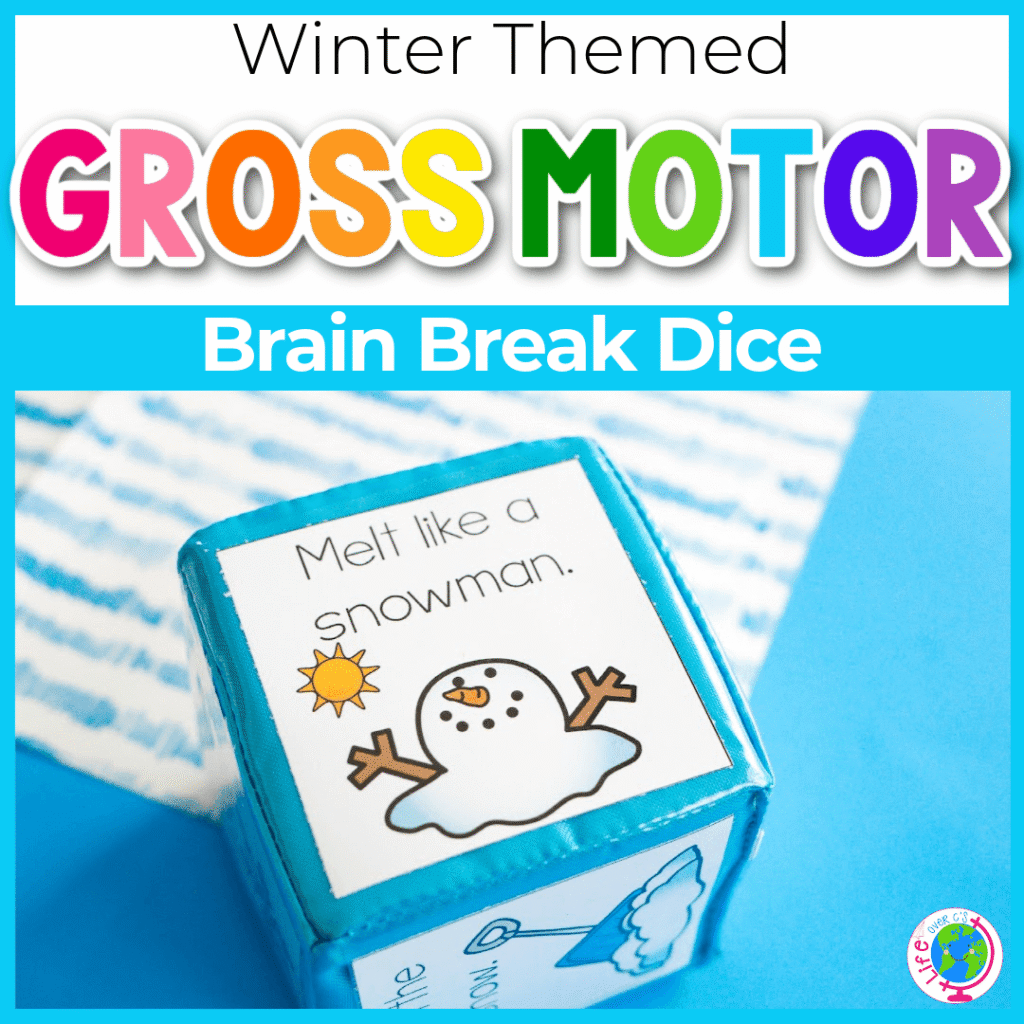
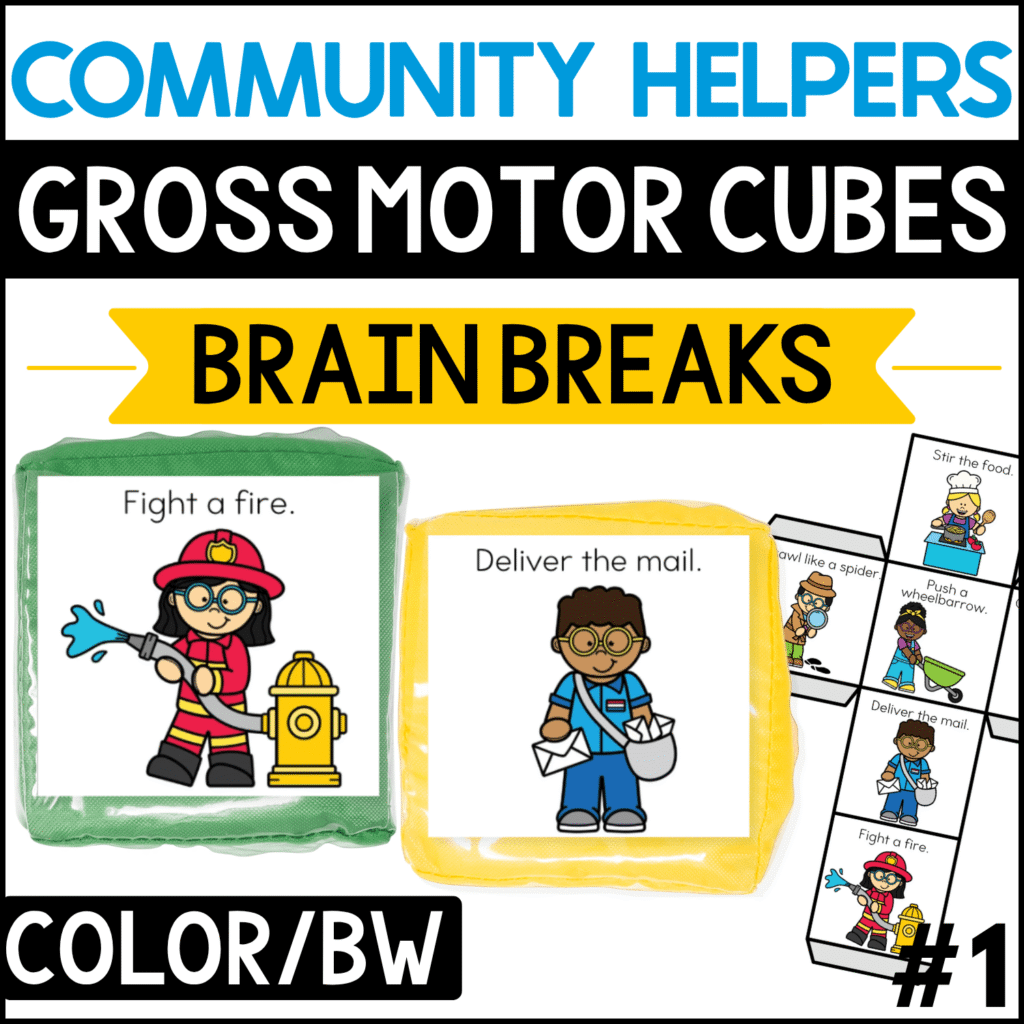
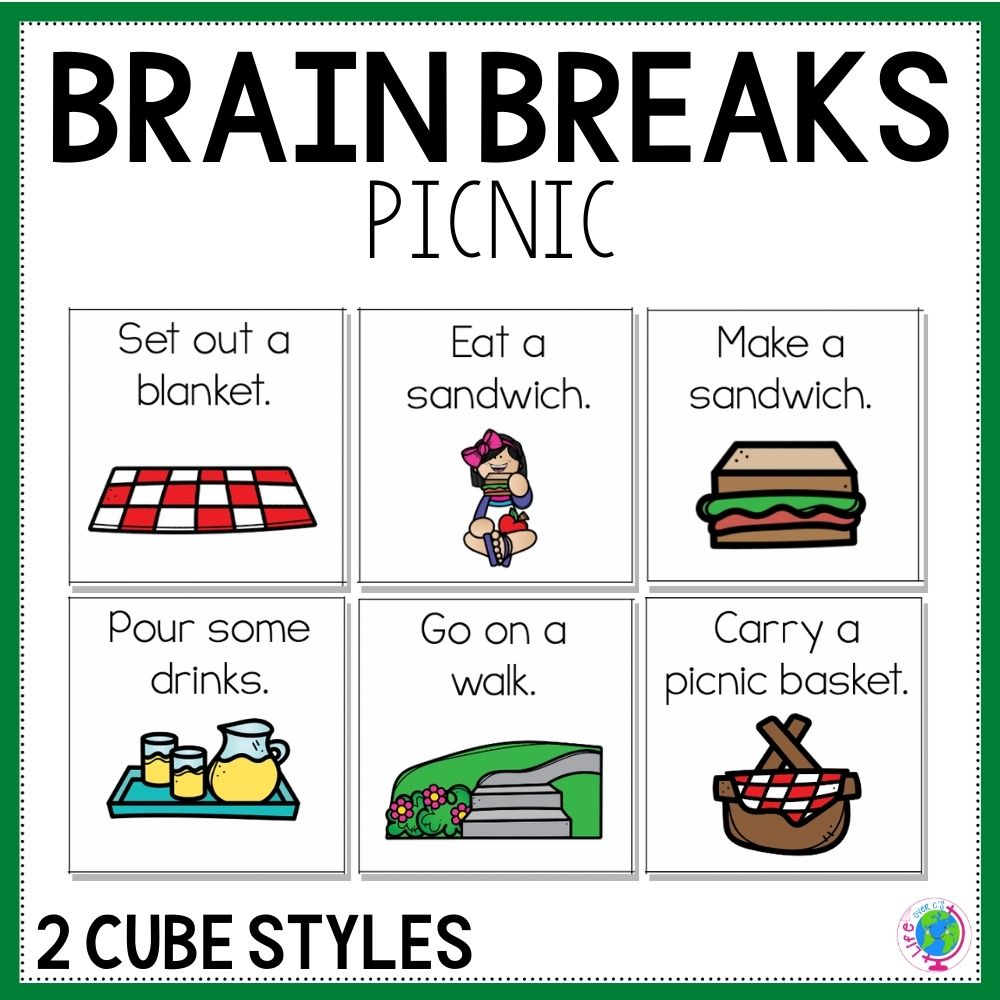
- 6 spring movement cards to slide into a pocket cube, in color (crawl like a caterpillar, grow like a flower, flap like a baby bird, blow like the wind, fall like the rain and jump in a puddle)
- The same cube inserts in black and white
- Build-your-own paper cube template in color and black and white
- Instruction page
Slide the inserts into a clear pocket cube or print, cut, fold and tape the paper cube. Kids roll it and act out the movement that lands on top.
Required Materials:
- Paper, printer and ink
- Scissors or a paper cutter
- Tape (for the paper cube)
- Optional: a clear pocket cube and a laminator
Standards for Gross Motor Skills, Listening and Vocabulary
This spring brain break supports early learning standards connected to gross motor coordination, following directions and acting out action words.
Common Core State Standards: English Language Arts
- CCSS.ELA-LITERACY.L.K.5.D: Distinguish shades of meaning among verbs describing the same general action by acting out the meanings. Kids act out each action word on the cube.
- CCSS.ELA-LITERACY.L.K.6: Use words and phrases acquired through conversations, reading and being read to and responding to texts. Kids learn spring words and action words as they play.
Texas Prekindergarten Guidelines and TEKS for Physical Education
- PK4.IX.A.1: Child demonstrates coordination and balance in isolation. Kids balance and move their bodies to match each action.
- PK4.IX.A.2: Child coordinates sequence of movements to perform tasks. Kids put together the steps of each pretend movement.
- TEKS PE K.1(C): Demonstrate visual tracking and tracing, simple balancing, cross lateralization and sequencing of two skills.
- TEKS PE K.6(C): Demonstrate safe practices by following rules, procedures and directions during class and activities. Kids listen to the action and follow it safely.
Virginia Physical Education Standards of Learning
- K.1.b: Demonstrate bending, pushing, pulling, turning and balancing on one foot.
- K.2.c: Demonstrate the concept of personal and general space. Kids act out each movement in their own space.
- K.4.a: Demonstrate cooperative and safe behaviors during play. Kids take turns rolling and move safely as a group.
Spring Brain Break Dice gives preschool and kindergarten kids a quick gross motor brain break with 6 spring movements to act out every time they roll.
Kids crawl, grow, flap and splash their way through a spring day.
The cube asks kids to crawl like a caterpillar, grow like a flower, flap like a baby bird, blow like the wind, fall like the rain and jump in a puddle. Each side has a picture and a short action phrase, so kids who aren’t reading yet can follow along while you read the words.
Roll the cube during circle time, between lessons or any time kids need to move. A few quick rolls help kids reset their bodies and get ready to focus again.
How to Use Spring Brain Break Dice
- Print the color or black and white cube inserts.
- Slide the inserts into a pocket cube or cut, fold and tape the paper cube.
- Have a child roll the cube.
- Read the action together and have everyone act it out.
- Roll again until kids are ready to get back to work.
Circle Time: Pass the cube around the circle so each child gets a turn to roll.
Transitions and Indoor Recess: Keep the cube by the carpet or door for a quick movement break between activities or on a rainy day.
Easy Ways to Differentiate This Brain Break
Some kids need a slow model, some are ready to roll and go and some can handle a sequence of moves. This spring die has kids crawl like a caterpillar, grow like a flower, flap like a baby bird, blow like the wind, fall like the rain and jump in a puddle.
For Children Who Need More Support:
- Show grow like a flower by starting curled on the floor and slowly rising tall while you narrate. A slow model helps kids plan each part.
- Start with grow like a flower and flap like a baby bird for the first few days. These moves are easy and calm.
- Let kids blow like the wind while sitting, waving their arms side to side. A seated version lets everyone join in.
- Have kids hold the tallest part of grow like a flower for a count of five. Holding a stretch builds control.
For On-Level Practice:
- Have kids say the move before doing it, like jump in a puddle. Saying it first connects words to action.
- Count to ten together while kids crawl like a caterpillar. Counting adds math to the break.
- Have kids fall like the rain by wiggling their fingers from high to low. Moving from high to low builds body awareness.
- Let kids take turns being the leader who rolls and shows the move. Leading builds confidence.
For an Extra Challenge:
- Roll twice and do both moves in a row, like grow like a flower then blow like the wind. Two steps in a row build sequencing.
- Have kids jump in a puddle softly, then with a big splash, then on one foot. Changing how they jump builds control.
- Ask kids to invent a spring move, like open like a butterfly, and teach it. Inventing a move takes planning.
- Talk about how caterpillars, flowers and rain change in spring. Linking the moves to science builds vocabulary.
For Speech, OT, ELL or Special Education Support:
- For speech practice, use the fl blend in flower and flap. Repeating the blend in fun moves gives focused practice.
- For OT practice, use crawl like a caterpillar for core strength and jump in a puddle for two-footed jumping. These moves match common goals.
- For ELL support, teach crawl, grow, flap and jump by acting each one out. Moving with words helps kids learn them.
- For sensory needs, let kids choose grow like a flower as a quiet option. A calm choice helps kids stay regulated.
Spring Brain Break Dice Is Perfect For:
- Preschool and pre-K
- Kindergarten
- Circle time
- Transitions
- Indoor recess
- Morning meeting
- Movement breaks
- OT and PT sessions
- Speech therapy
- ELL and multilingual learners
- Special education
- Substitute plans
- Homeschool