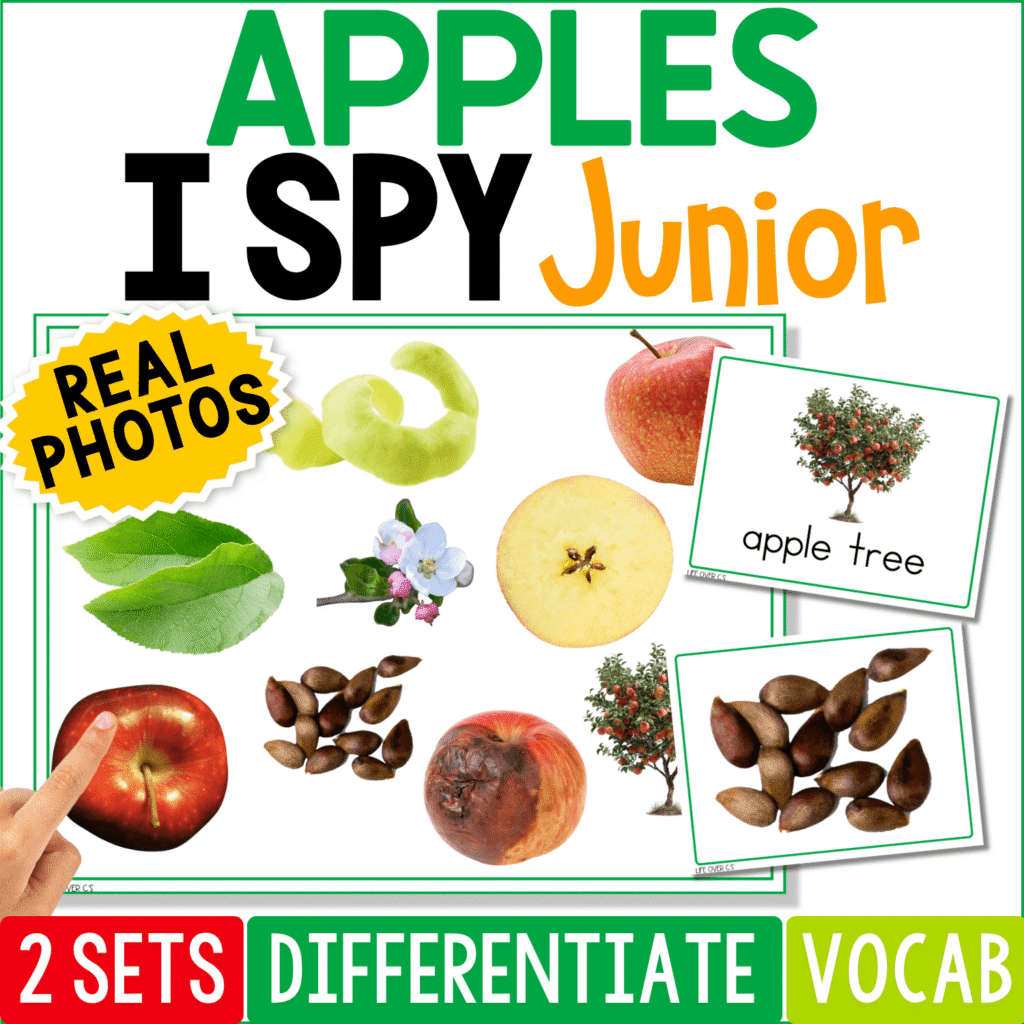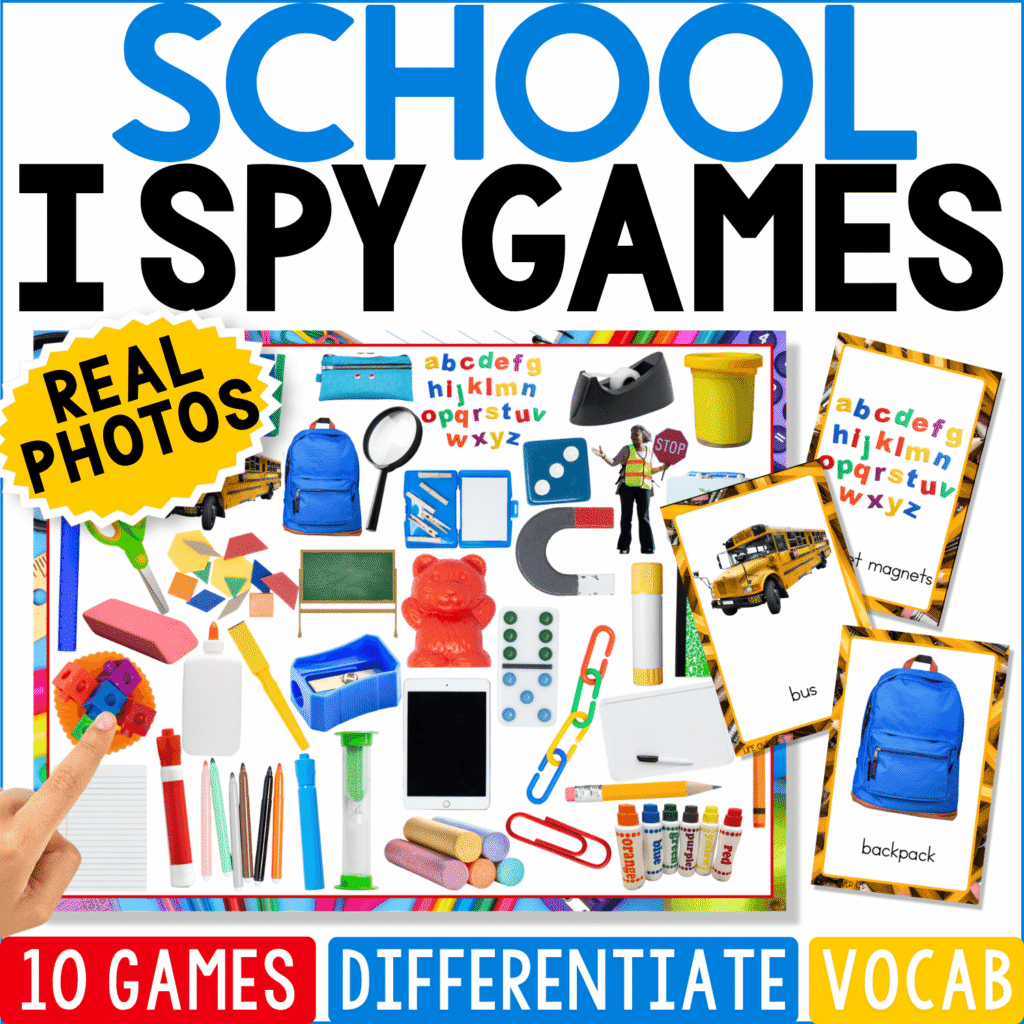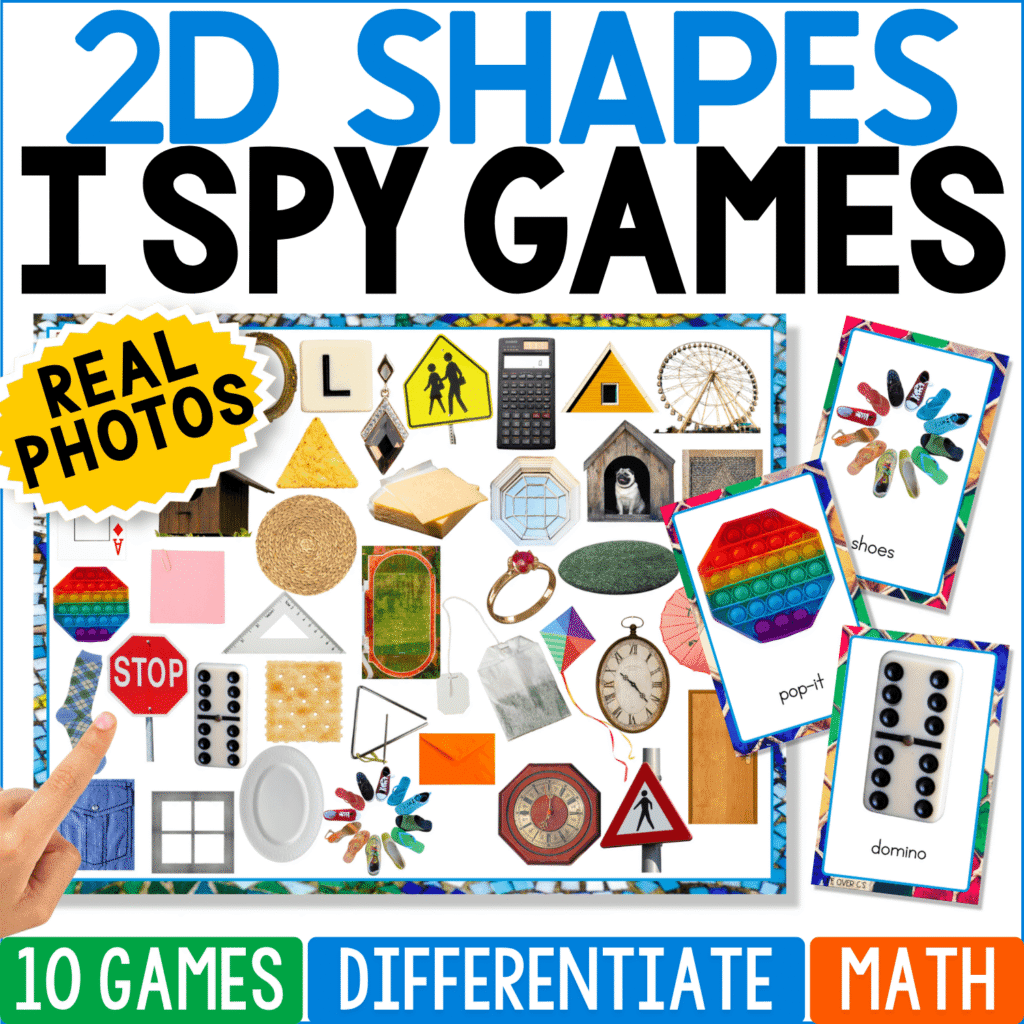
I Spy “Flip” Junior Board Game: Real Life fall
Recommended Grade Level:
Type of Resource: PDF
Number of Pages: 22

You must be a Paid Member to Access this Resource.
Join the Life Over C’s Club to Access

Already a member? Login below:
Coordinating Activities


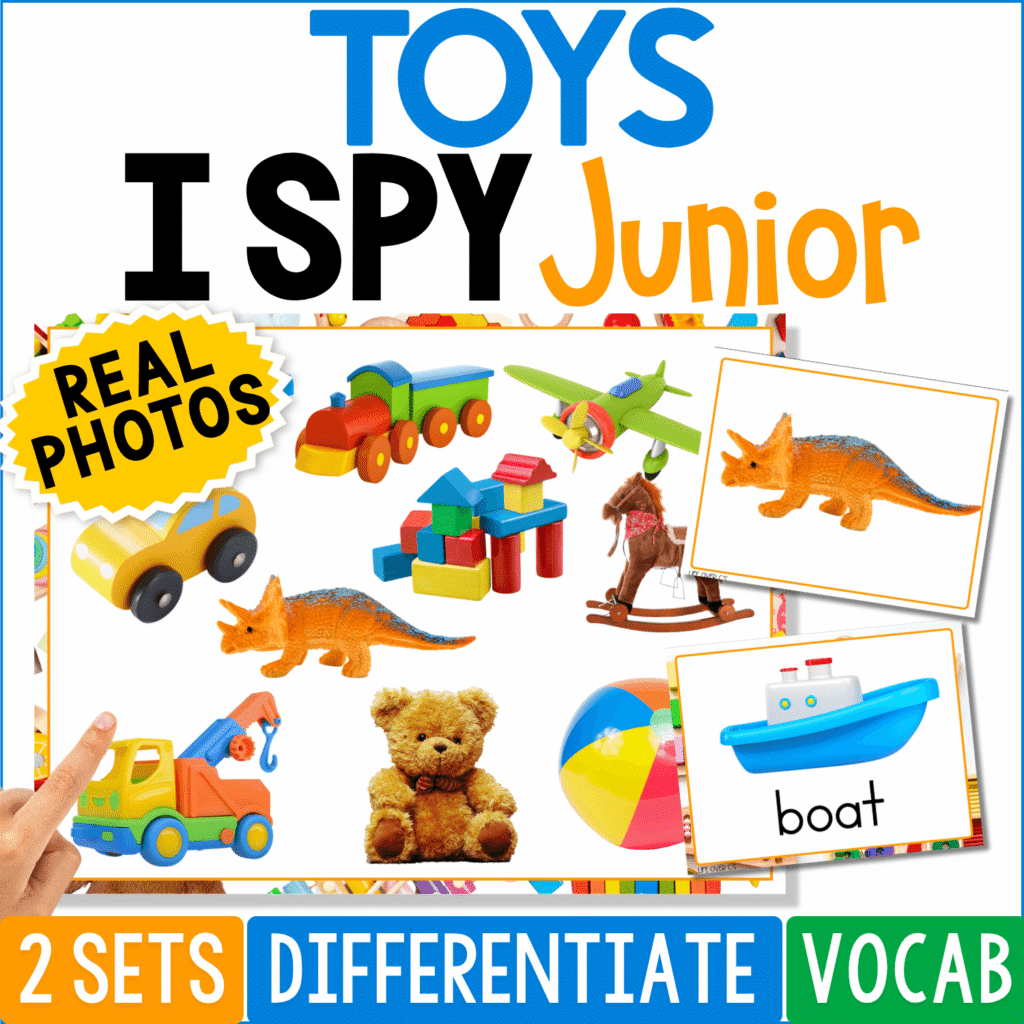
What’s Included in the Toys I Spy Junior Game
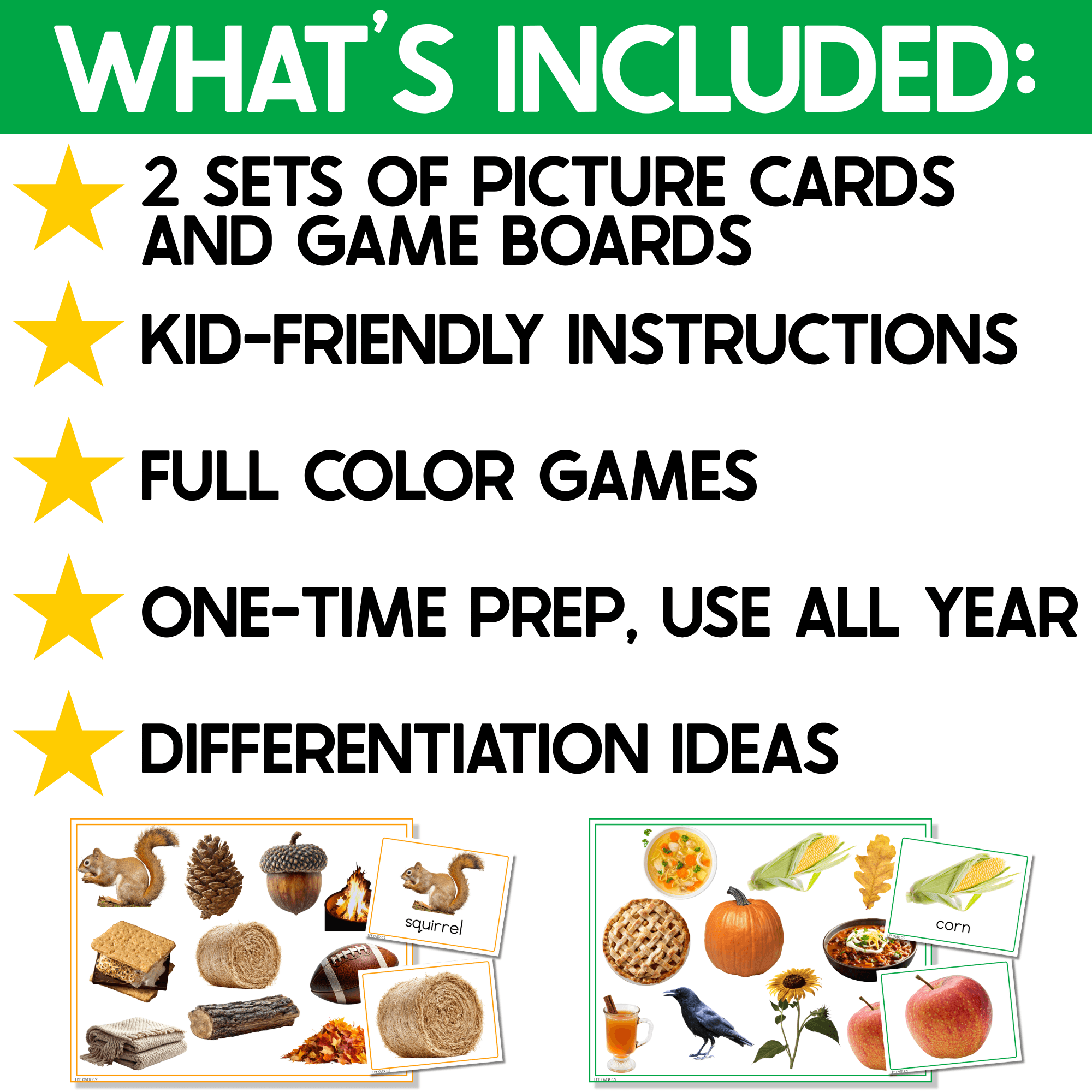
- 2 sets of I Spy Junior Games
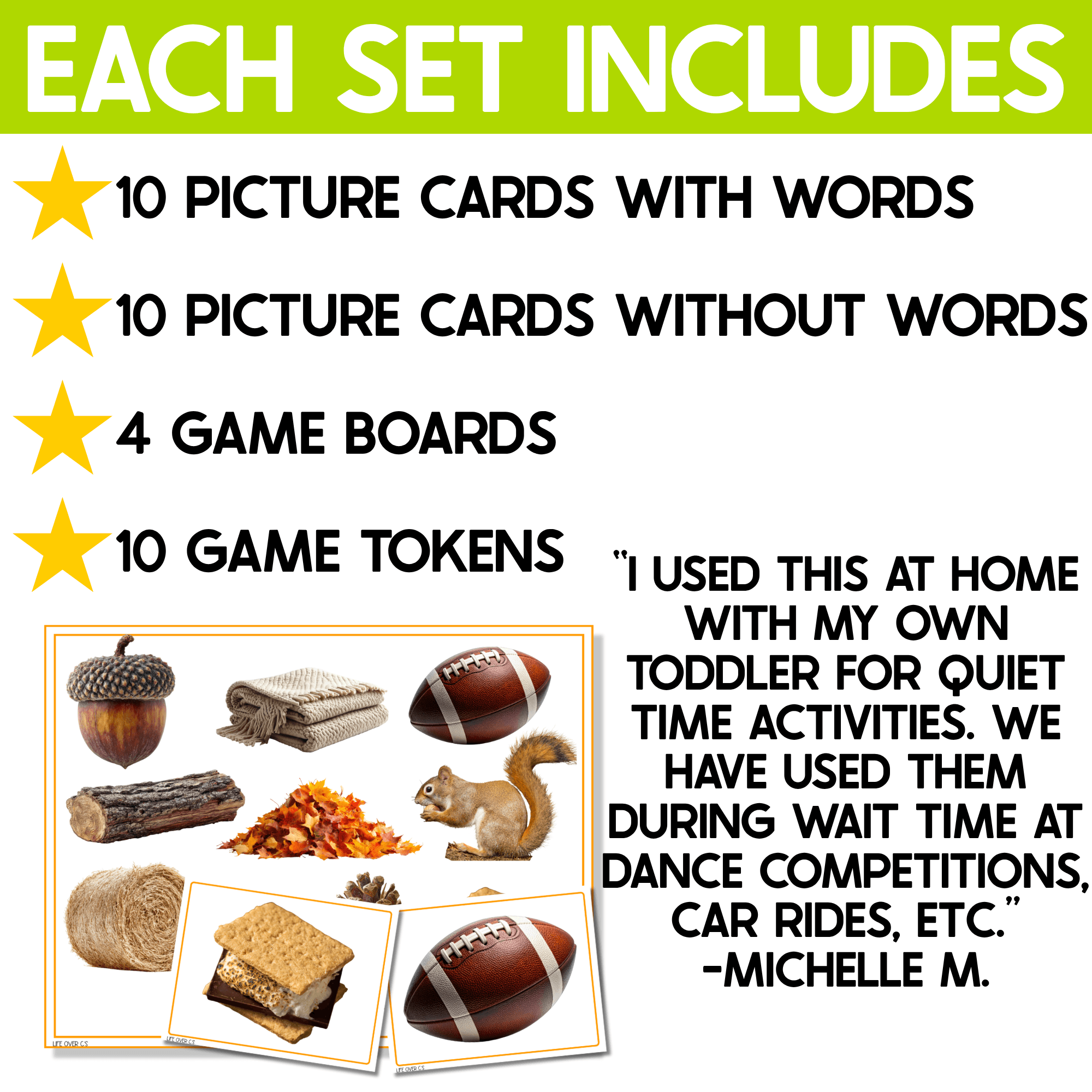
- Each I Spy Junior Game includes
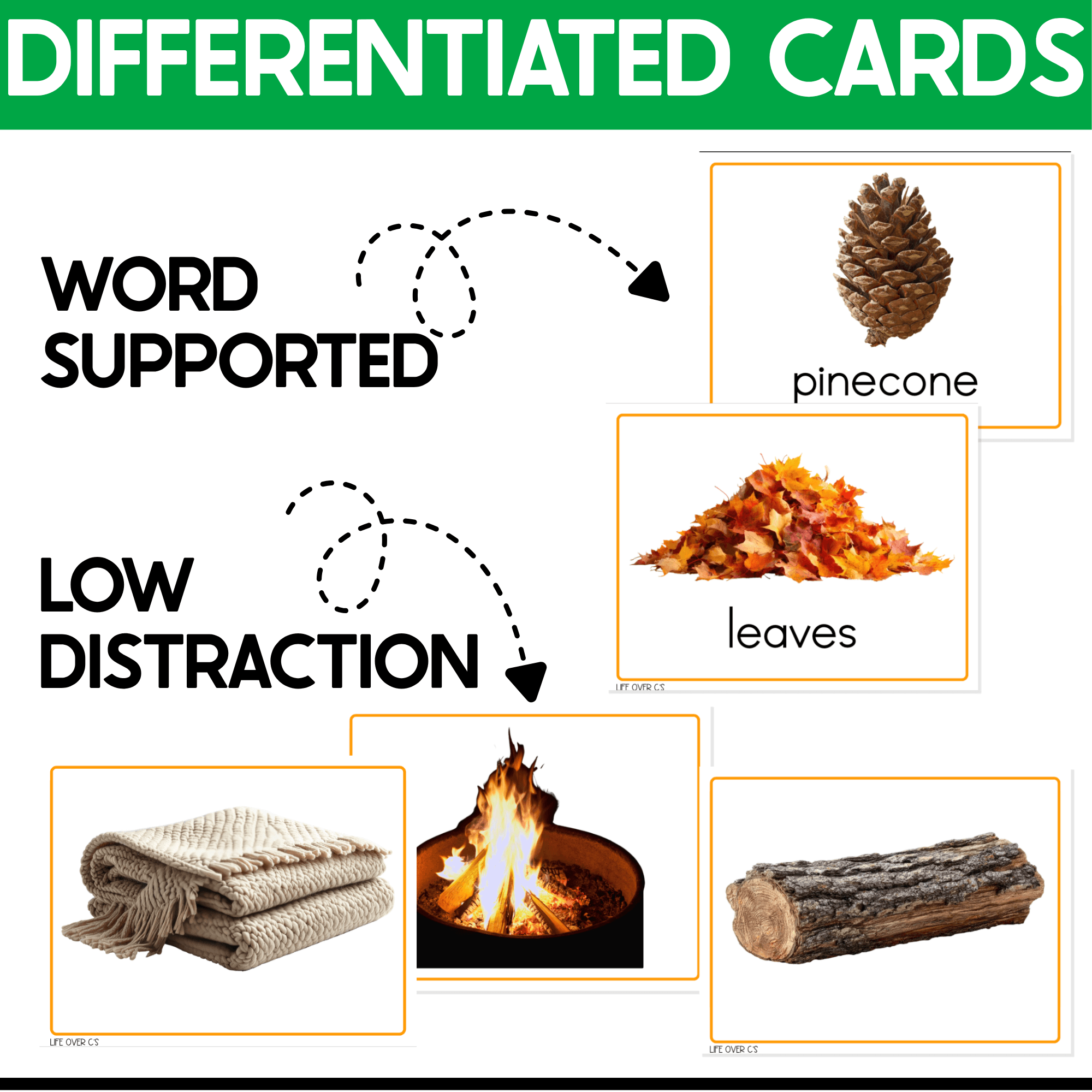
- 10 picture cards with words
- 10 picture cards without words
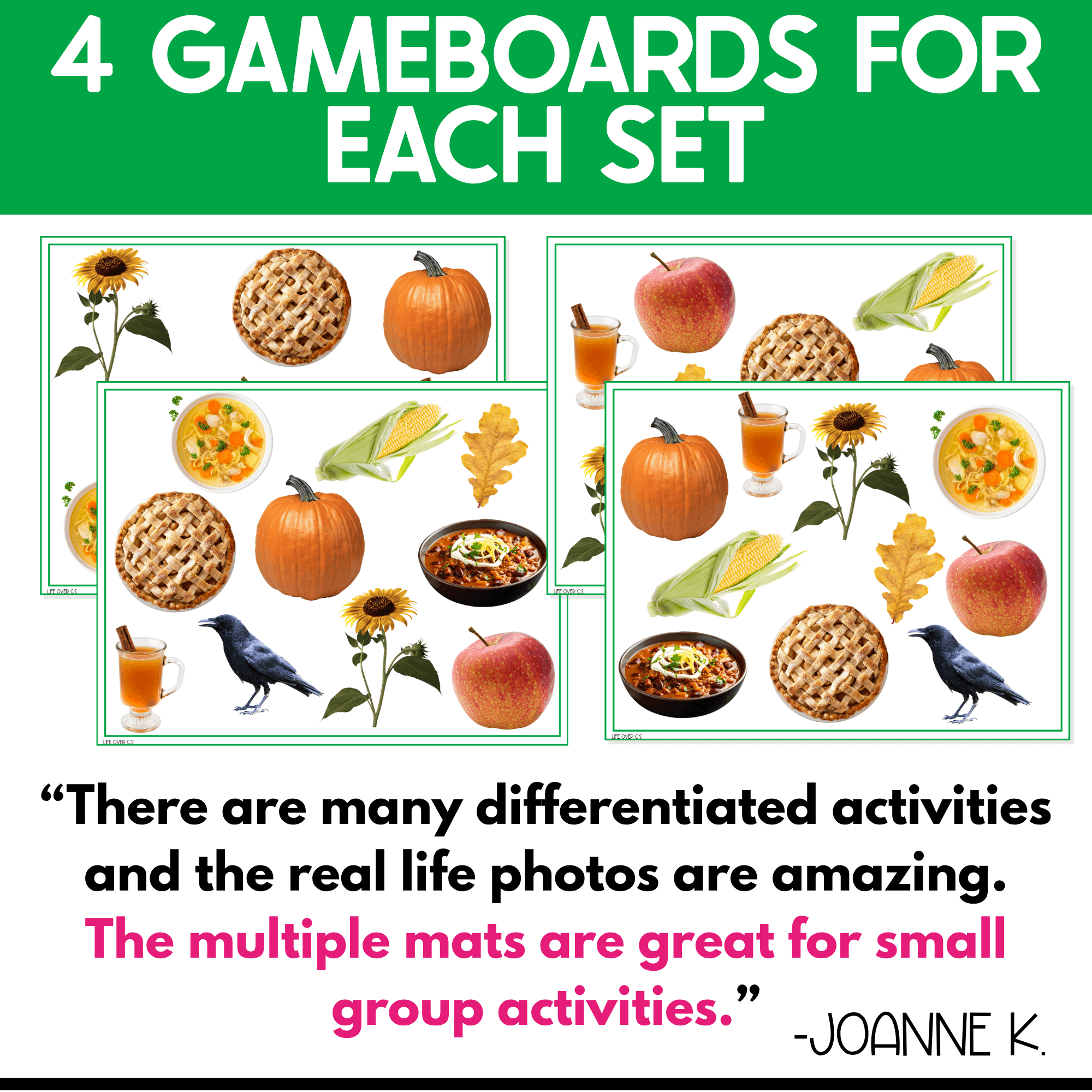
- 4 game boards
- 10 game tokens
- I Spy “Flip” game instructions
- Cooperative and independent play directions
- Differentiation suggestions
- Preparation directions
The two smaller picture sets give you an easy way to control the amount of visual information children need to process. Choose the set and card format that fits your group, then reuse the game for small groups, individual practice, language activities, or special education support.
Required Materials:
- Laminator
- Paper Cutter
- Paper, Printer, Ink
Standards for Vocabulary, Speaking and Listening, and Visual Matching
This real photo I Spy vocabulary and matching game supports early learning standards connected to vocabulary development, visual information, speaking and listening, categorizing familiar objects, and collaborative learning.
Common Core State Standards: English Language Arts
- CCSS.ELA-LITERACY.SL.K.1: Participate in collaborative conversations with peers and adults.
- CCSS.ELA-LITERACY.SL.K.2: Confirm understanding of information presented visually or orally.
- CCSS.ELA-LITERACY.SL.K.4: Describe familiar people, places, things, and events with details.
- CCSS.ELA-LITERACY.SL.K.6: Speak audibly and express ideas clearly.
- CCSS.ELA-LITERACY.L.K.5.A: Sort common objects into categories.
- CCSS.ELA-LITERACY.L.K.5.C: Identify real-life connections between words and their use.
Texas Prekindergarten Guidelines for Language and Vocabulary Development
- Language and Communication: Supports vocabulary development, listening comprehension, and speaking skills through picture-supported conversations.
- Emergent Literacy: Supports oral language and concept development as children name, describe, and discuss familiar objects.
Virginia Early Learning and Development Standards for Vocabulary and Cognitive Development
- Communication, Language, and Literacy Development: Supports vocabulary growth, expressive language, and comprehension using real photo visual supports.
- Cognitive Development: Supports matching, comparing, sorting, and identifying attributes of familiar objects.
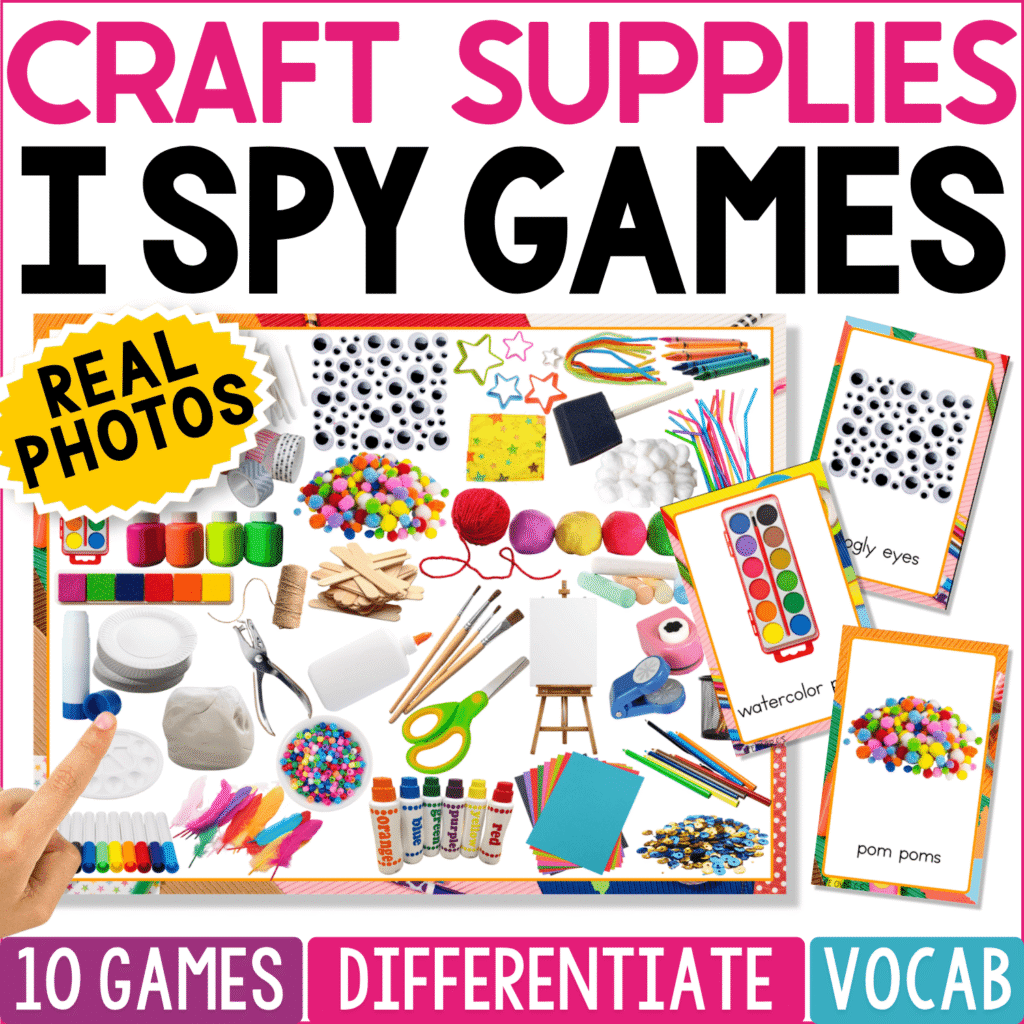
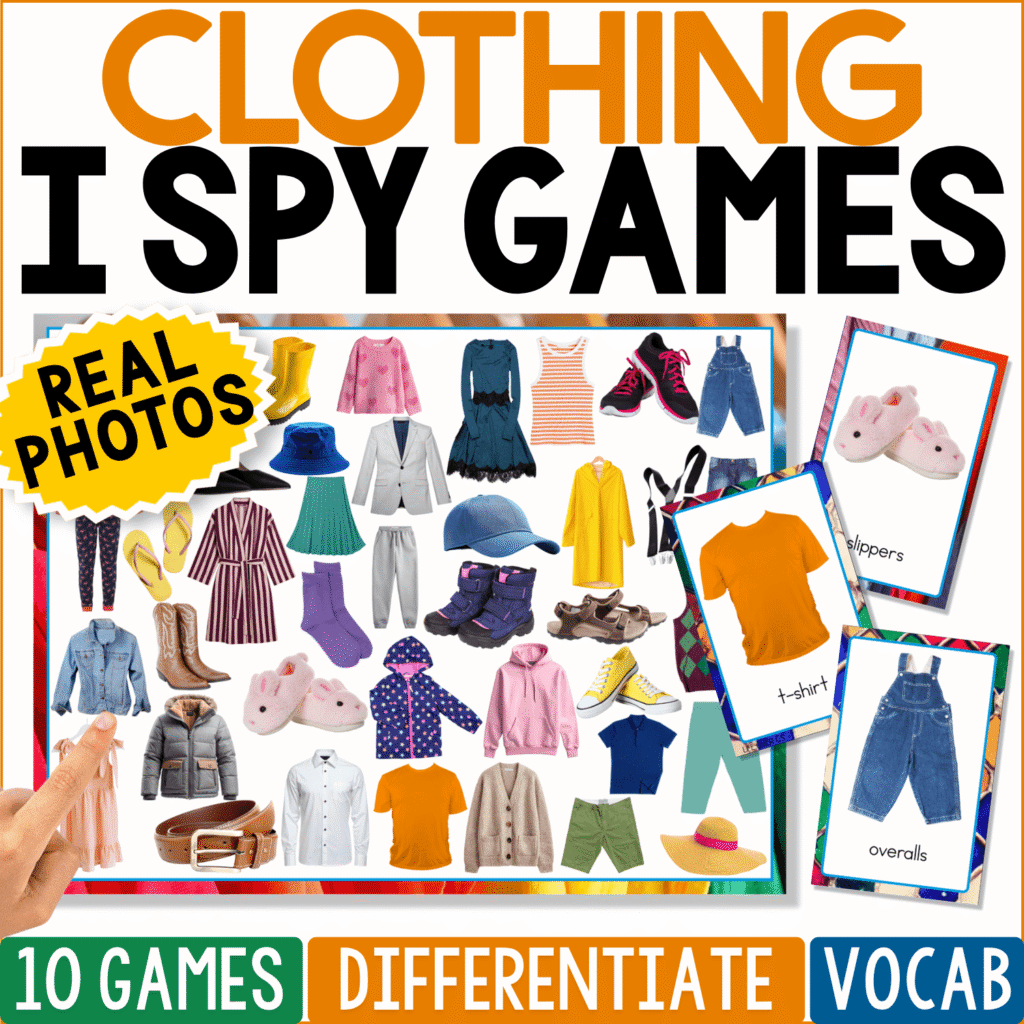
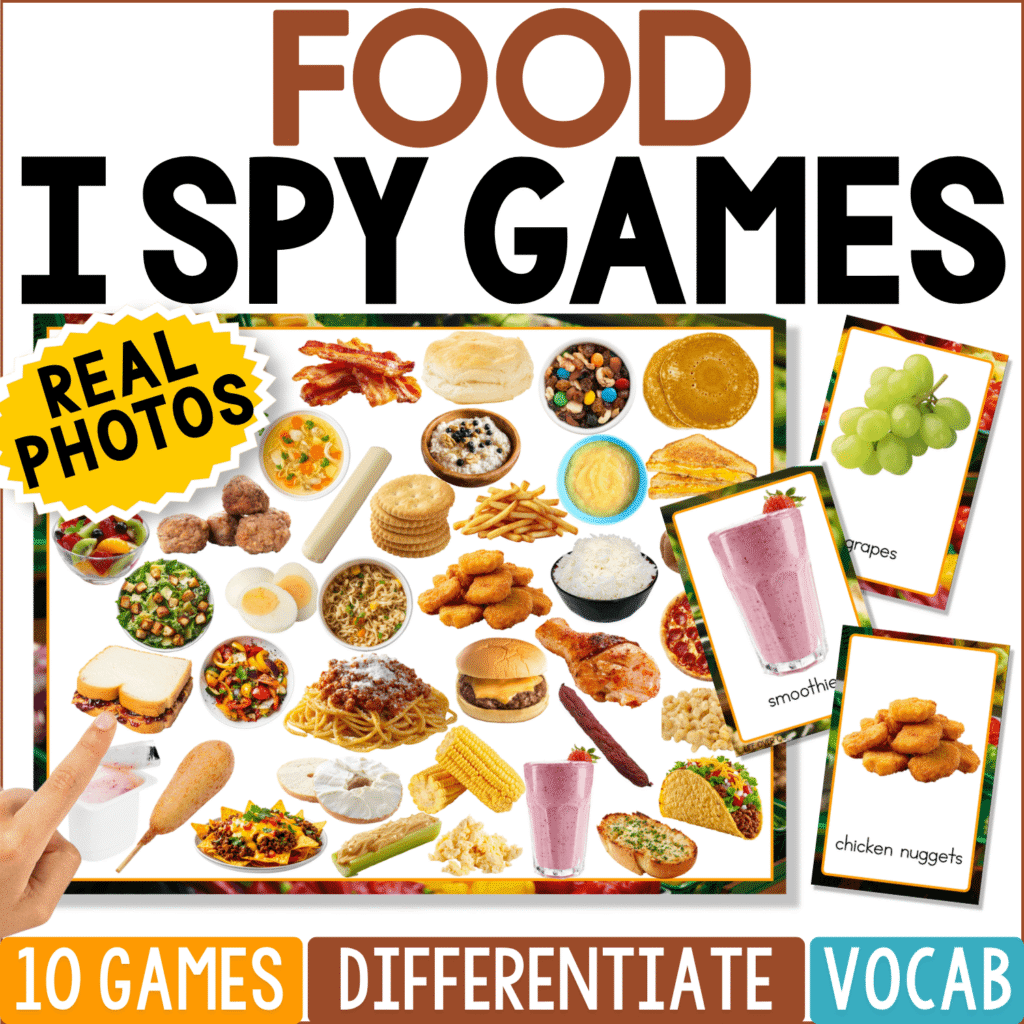
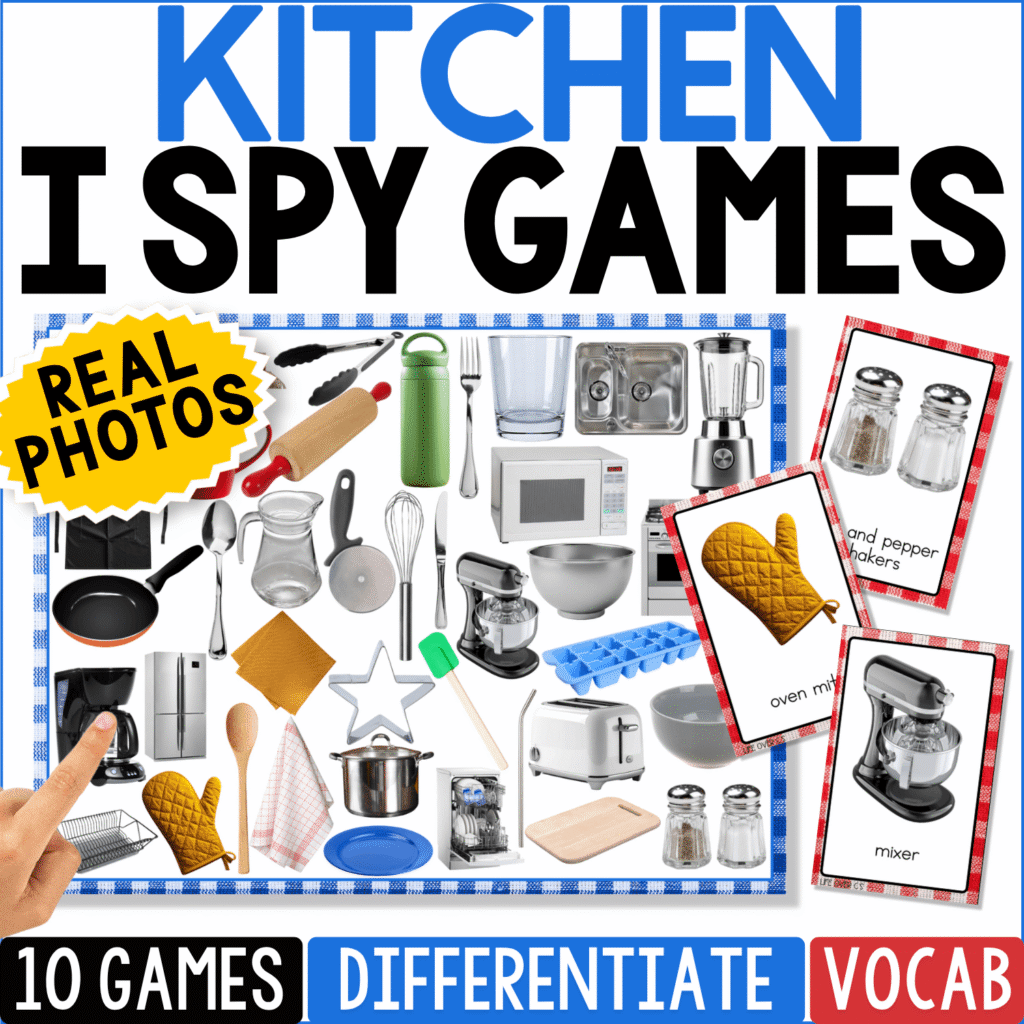
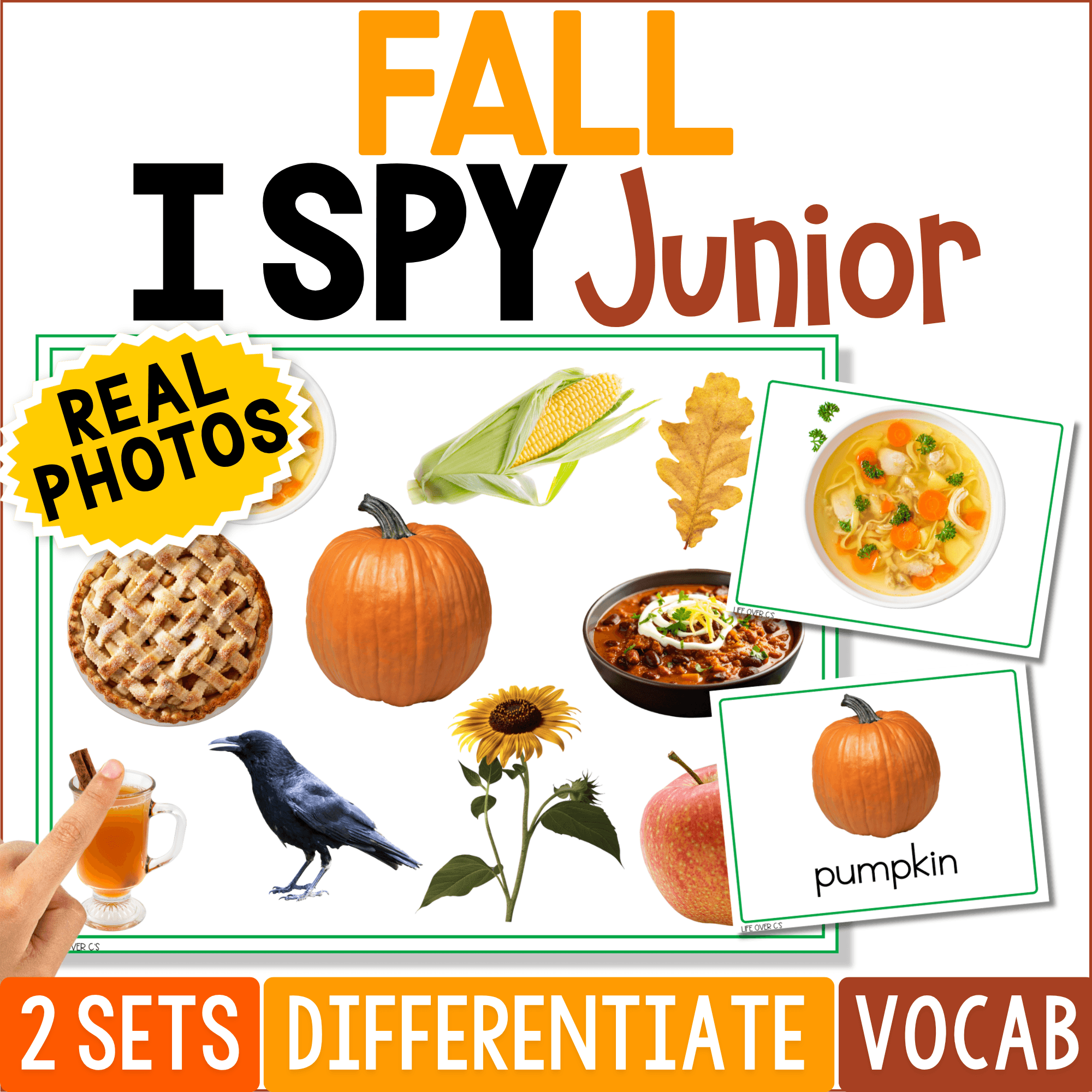
I Spy Junior gives 3-4-year-olds and special needs children a developmentally appropriate real-photo I Spy board game to build toy vocabulary, visual discrimination, and receptive and expressive language through active play.
Young children get lots practice looking closely, finding familiar picture, and connecting each picture with a simple vocabulary word!
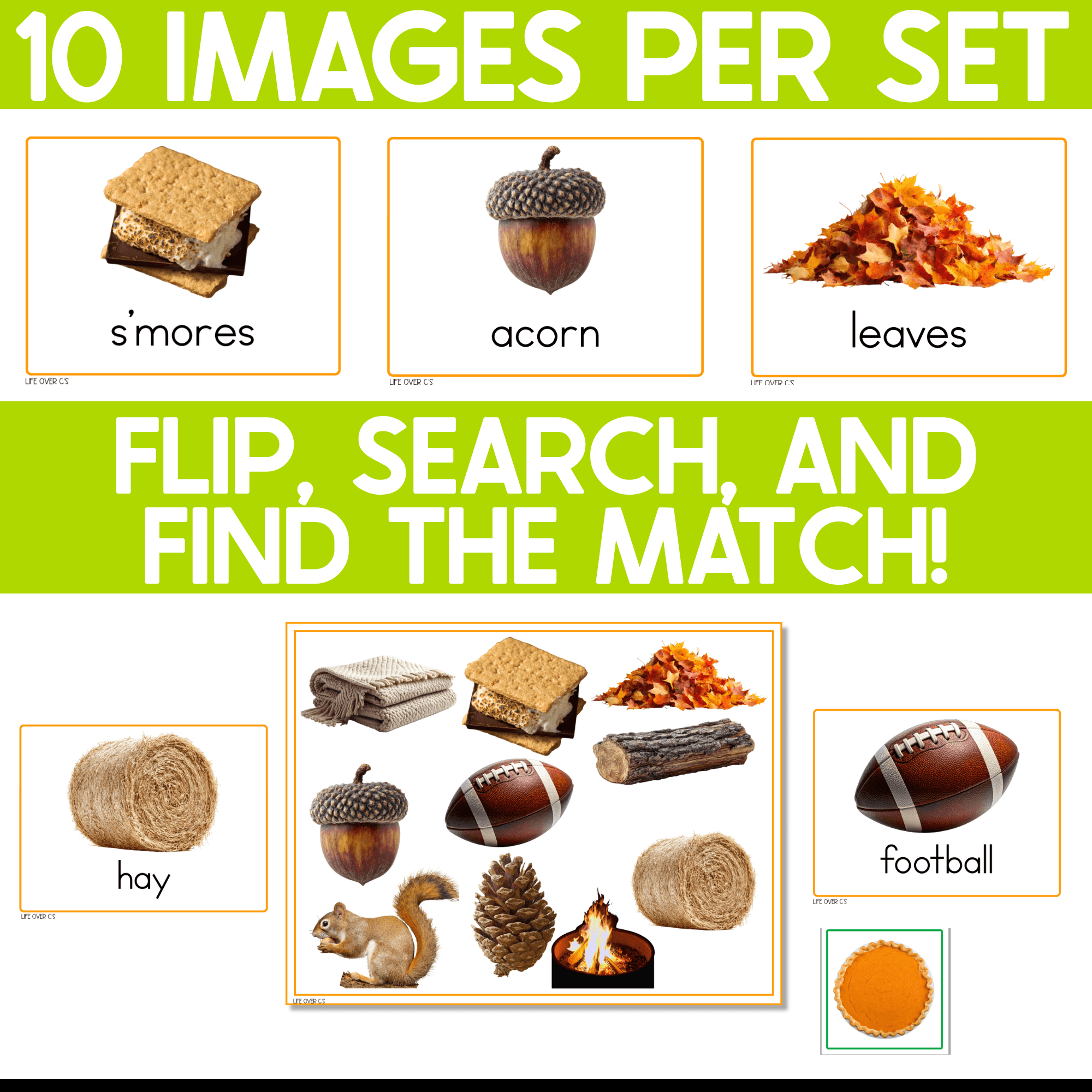
The Junior format keeps the visual field manageable with 10 pictures on each game board, making it easier for preschoolers and children in special education to scan the pictures, find a match, and stay involved from one turn to the next.
Children flip a picture card, look at the toy, and search the I Spy board for the matching real photo. They can point to or touch the match, name the picture, and collect a token before starting the next round.
Two sets of pictures let children practice a total of 20 familiar vocabulary words without crowding all of the images onto one board.
Cards are also included with and without words. The printed words give adults a consistent vocabulary prompt, but children do not need to read the words to play.
How to Play the Toys I Spy 'Junior' Game
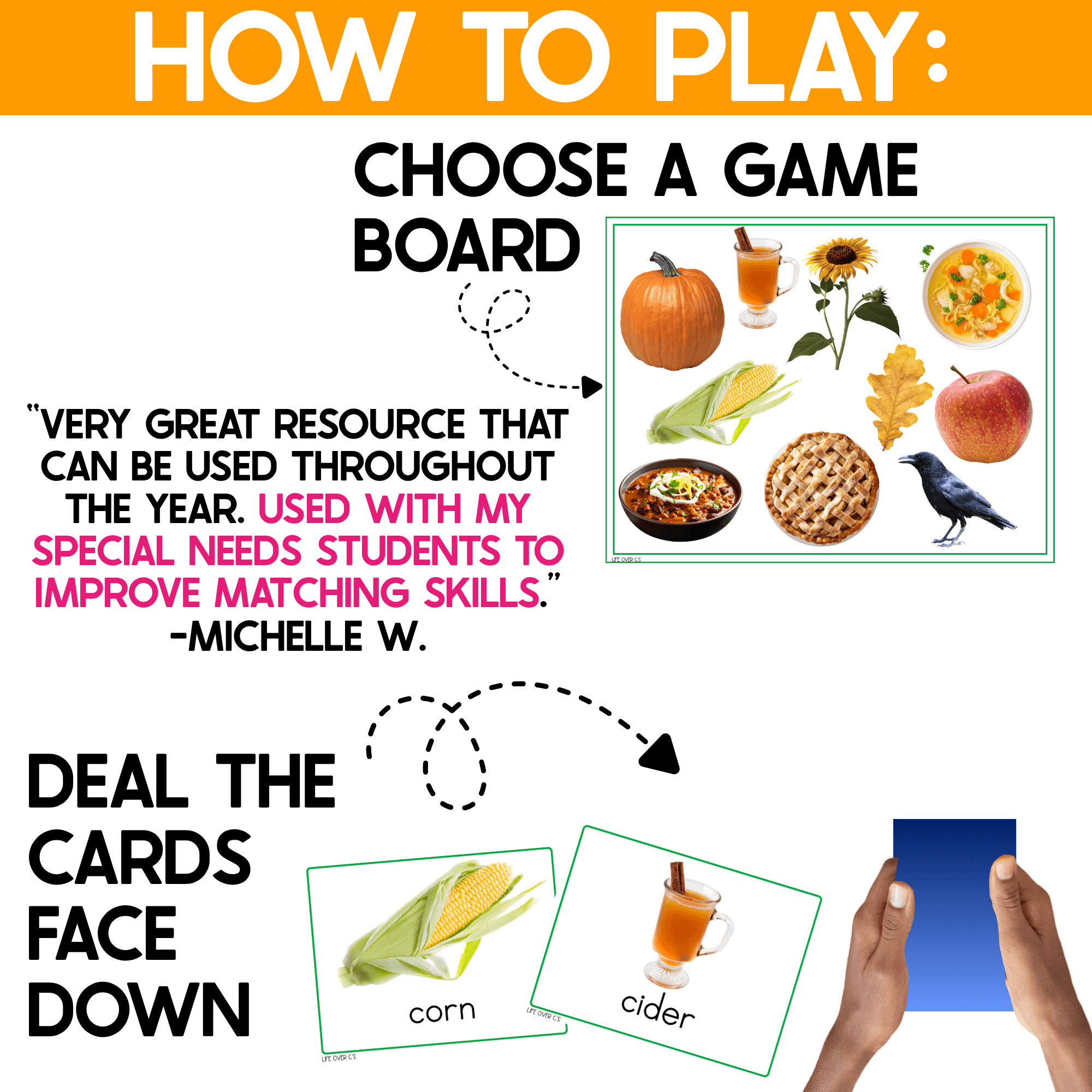
- Choose one toy set and place an I Spy game board where everyone can see it.
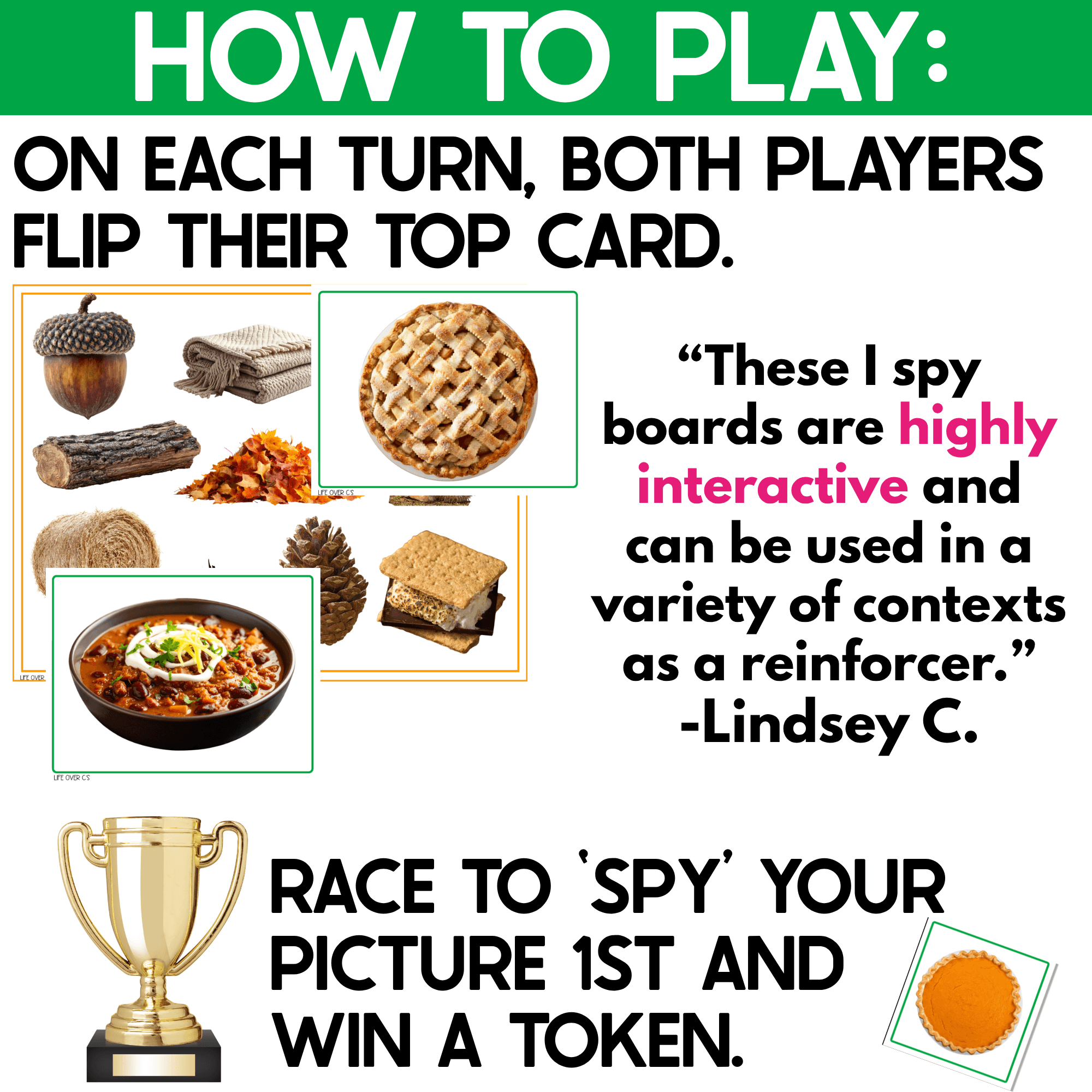
- Players flip their top picture cards and search the board for the matching toys.
- The first player to point to or touch the correct picture earns a token. Continue until all of the cards have been played.
For a quieter activity, children can also take turns flipping from one shared pile or work through the cards independently.
Easy Ways to Differentiate This Toy Theme I Spy Junior Game
Children at this age may need very different amounts of visual, language, motor, or communication support. The smaller Junior format makes those adjustments easy without changing the basic matching activity.
For Children Who Need More Support:
- Begin with 3-5 picture cards from one set.
- Name the picture and let the child point to or touch the matching object.
- Model the first few turns.
- Use the cards without words for a cleaner visual presentation.
- Increase the number of cards as the child becomes more confident.
For On-Level Practice:
- Play with all 10 pictures from one set.
- Encourage children to name each object as it appears.
- Practice taking turns, locating the match, and collecting tokens.
For an Extra Challenge:
- Let the child name the picture without an adult model.
- Select a card without showing it and give a simple category or function clue.
- Ask the child to describe or give a clue for an object while another player searches.
For Speech, ELL, or Special Education Support:
- Accept pointing, touching, gestures, AAC, or spoken responses based on the child’s communication needs.
- Use the word cards as consistent adult vocabulary prompts.
- Repeat the same simple object name during the card flip, search, and match.
- Play cooperatively when the learning goal is vocabulary or visual matching rather than speed.
- Turn the cards for children who need additional motor support so they can focus on looking, locating, and communicating.
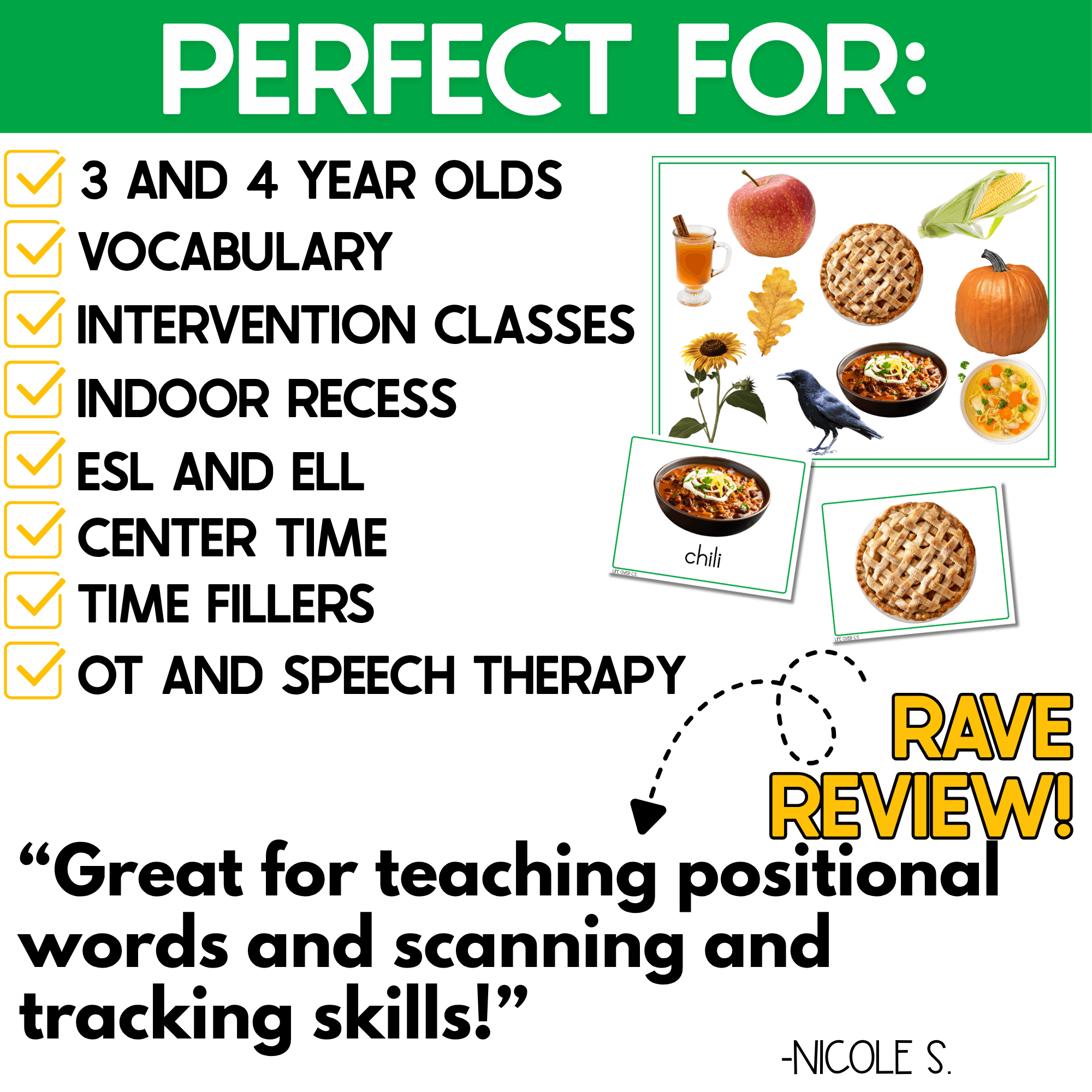
This Toy Theme I Spy "Junior" Game is Perfect For:
- 3-4-year-old preschool activities
- Pre-k learning centers
- Special education classrooms
- Life skills classrooms
- Speech and language therapy
- Receptive and expressive vocabulary practice
- ELL and ESL language support
- Early intervention
- Small-group instruction
- One-on-one learning
- Independent matching practice
- Morning tubs and centers
- Indoor recess
- Homeschool preschool
- Library activity stations