


Play Dough Pretend Play: Princess
Recommended Grade Level:
Type of Resource: PDF
Number of Pages: 5

Coordinating Activities
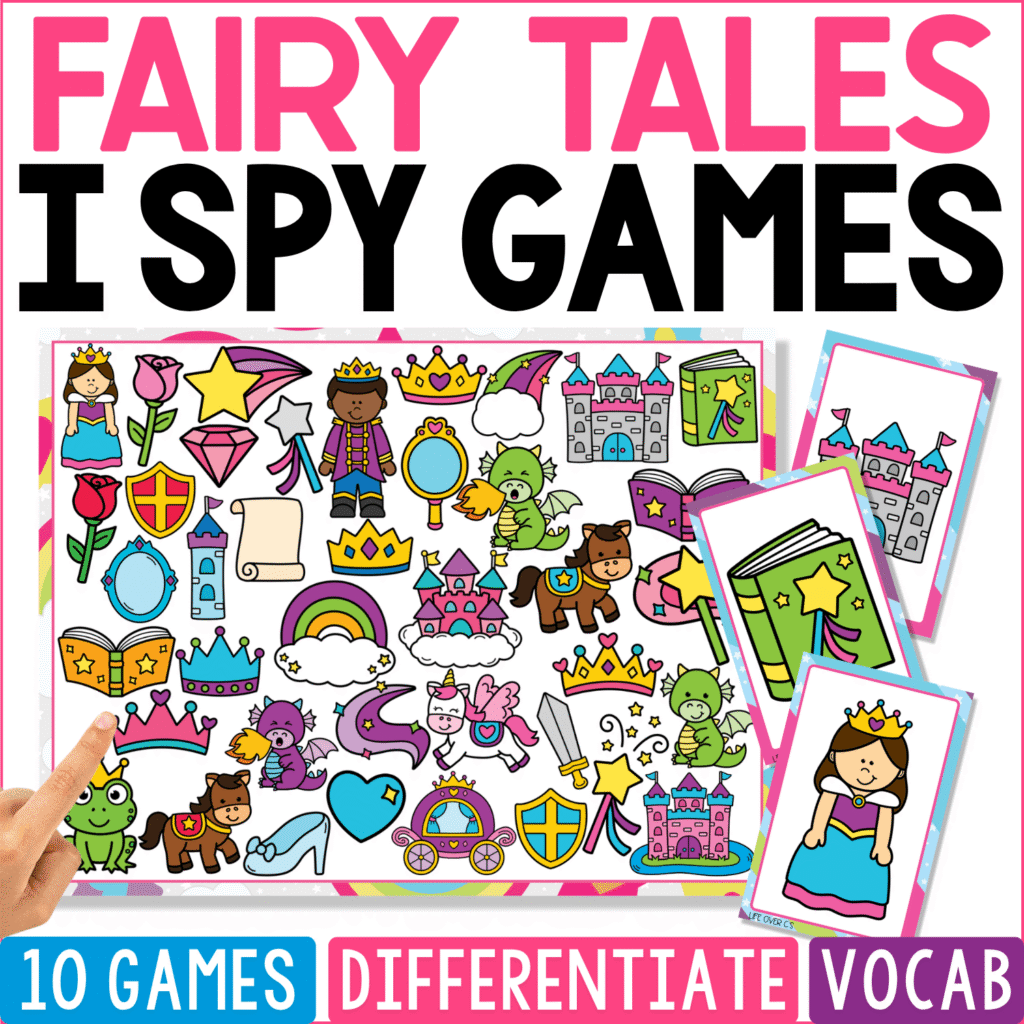



Play Dough Pretend Play: Princess
- Color princess play dough pieces: princesses, a castle, a carriage, a mirror and a perfume bottle
- Pieces to cut out and stand up in play dough or use in a sensory bin
Print on cardstock in color, laminate and cut out each piece. The pieces can be used again and again.
Required Materials:
- Paper, Printer, Ink
- Cardstock
- Laminator
- Scissors
- Play dough
- Sensory bin filler (optional)
Standards for Language and Pretend Play
Pretend play gives kids a reason to name things, tell stories and talk with friends as they play.
Common Core State Standards: English Language Arts
- CCSS.ELA-LITERACY.L.K.5.C: Identify real-life connections between words and their use.
- CCSS.ELA-LITERACY.SL.K.1: Participate in collaborative conversations with peers and adults in small and larger groups.
Texas Prekindergarten Guidelines and TEKS for English Language Arts and Reading
- PK4.II.D.1: Child understands and uses a wide variety of words to label, describe and make connections among objects, people, places, actions and events.
- PK4.II.D.3: Child consistently understands and uses new vocabulary acquired through books, conversations and play.
- TEKS ELA K.1(C): Share information and ideas by speaking audibly and clearly using the conventions of language.
Virginia English Standards of Learning
- K.RV.1.C: Use vocabulary from across content areas.
- K.RV.1.F: Use newly learned words and phrases in discussions and speaking activities.
- K.C.2.A: Describe personal experiences using complete sentences.
Play Dough Pretend Play: Princess is a set of printable princess pieces kids stand up in play dough to build a scene and tell their own stories.
Squish, build and play! This set comes with princesses, a castle, a carriage, a mirror and a perfume bottle. Kids press the pieces into play dough to stand them up, then build the rest of the scene with their hands.
Kids can build a play dough path to the castle, roll the carriage up to the door and plan a royal party.
Pretend play like this is where a lot of language happens. Kids name what they’re making, explain what each character is doing and make up stories as they go, all while squeezing, rolling and pinching play dough that builds hand strength for writing.
Print the pieces on cardstock, laminate them and cut them out, and they will last through years of play dough centers. They work just as well in a sensory bin with rice, beans or shredded paper when you want a change.
How to Use Play Dough Pretend Play: Princess
- Print, laminate and cut out the pieces.
- Set out play dough and a few pieces at a time.
- Have kids build part of the scene from play dough, like the ground, a hill or a path.
- Press the bottom of each piece into the play dough so it stands up.
- Play, build and tell a story about what is happening in the scene.
Small Group: Build one scene together and take turns adding pieces. Ask questions as you play, like “What happens next?” or “Where is the princess going?”
Independent Practice: Set out the pieces, play dough and a few simple tools like rollers and plastic knives in a play dough or dramatic play center.
Easy Ways to Differentiate This Play Dough Set
Some kids in your group are just starting to play beside others, some are ready to tell a simple story and some can plan a whole scene with a beginning, middle and end. The princess pieces stay the same for everyone. What changes is how much you model, the questions you ask and how much language you expect back.
For Children Who Need More Support:
- Start with the princess and the castle and add the carriage later. A small set keeps the story clear.
- Name each piece before play begins (princess, castle, carriage, mirror and crown) and have the child point to it. Kids need the words before they can use them in a story.
- Roll a play dough path up to the castle first. A ready base gives play a starting point.
- Play alongside the child, having the princess speak in short sentences. Kids copy the language they hear.
For On-Level Practice:
- Ask kids to tell what the princess is doing as they move her. Narrating builds sentences.
- Ask a math question while kids play: Who is invited to the party, and how many guests are there? Counting real pieces in a scene makes numbers meaningful.
- Use position words as you play: inside the castle, in the carriage and up the path. Then ask kids to put a piece somewhere using those words.
- Have kids retell their castle story in order. Retelling builds sequencing.
For an Extra Challenge:
- Have kids plan a party at the castle and act out the guests arriving. Planning builds narrative skills.
- Have kids draw the castle and label the crown, mirror and carriage. Labeling builds writing.
- Have kids make play dough jewels for the crown and count them. Counting jewels adds math.
- Pair two kids to plan the castle party together. Shared planning builds cooperation.
For Speech, OT, ELL or Special Education Support:
- For OT practice, have kids roll tiny play dough jewels. Rolling small balls builds finger control.
- For speech practice, use the k sound in castle and crown. Theme words give focused practice.
- For ELL support, teach castle, crown, carriage and party with the pieces. Story words help kids join the play.
- For sensory needs, offer a bin of soft fabric scraps and gems instead of play dough. A different texture helps kids who avoid sticky dough.
Play Dough Pretend Play: Princess Is Perfect For:
- Preschool and pre-K
- Kindergarten
- Play dough centers
- Dramatic play
- Sensory bins
- Fine motor practice
- Language and vocabulary building
- Speech and language therapy
- Special education
- Early intervention
- ELL and multilingual learners
- Homeschool preschool


