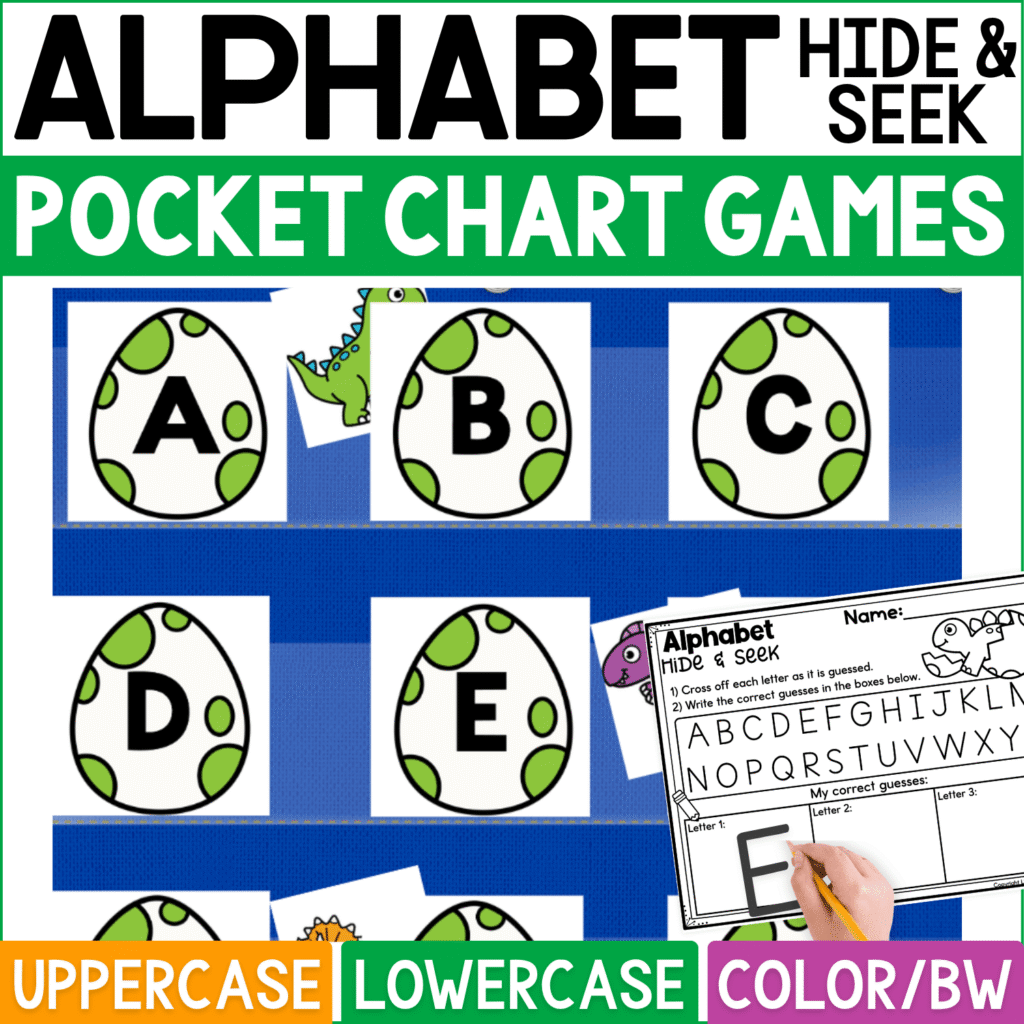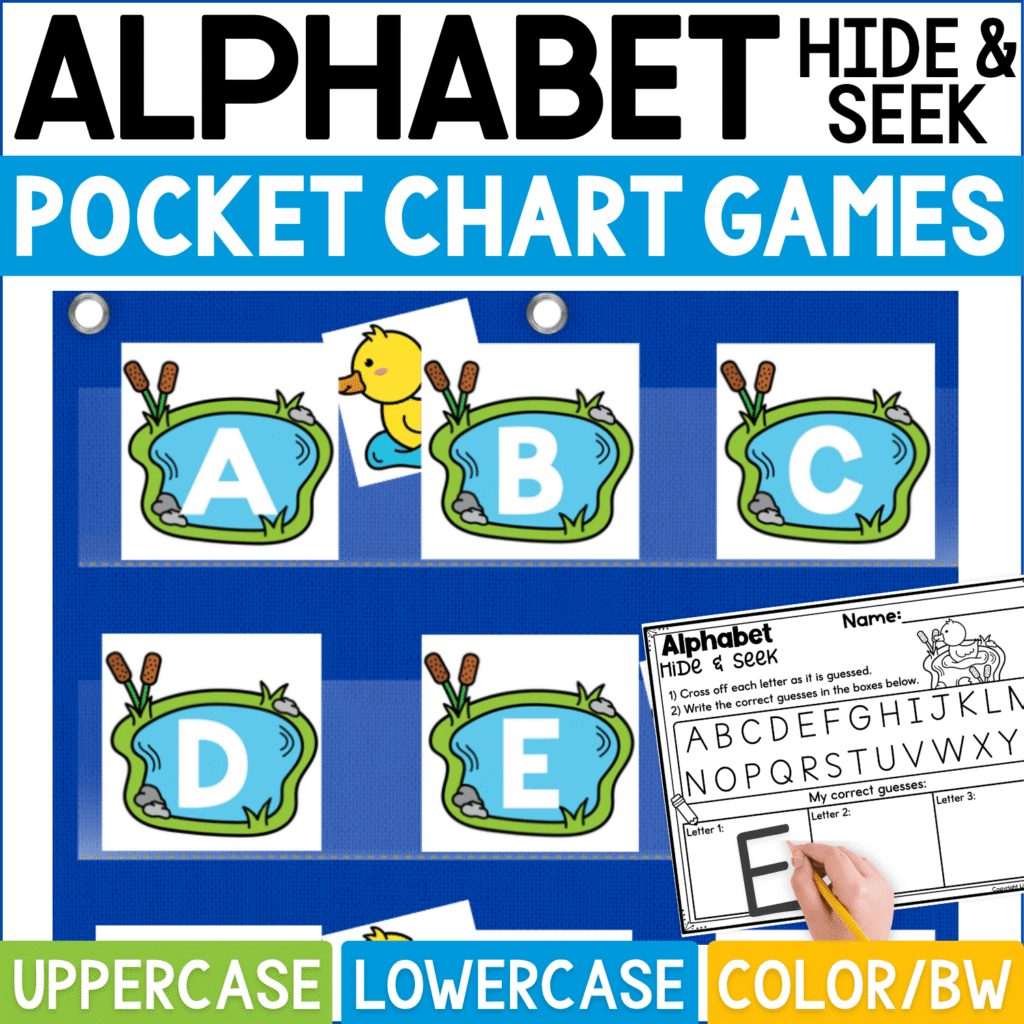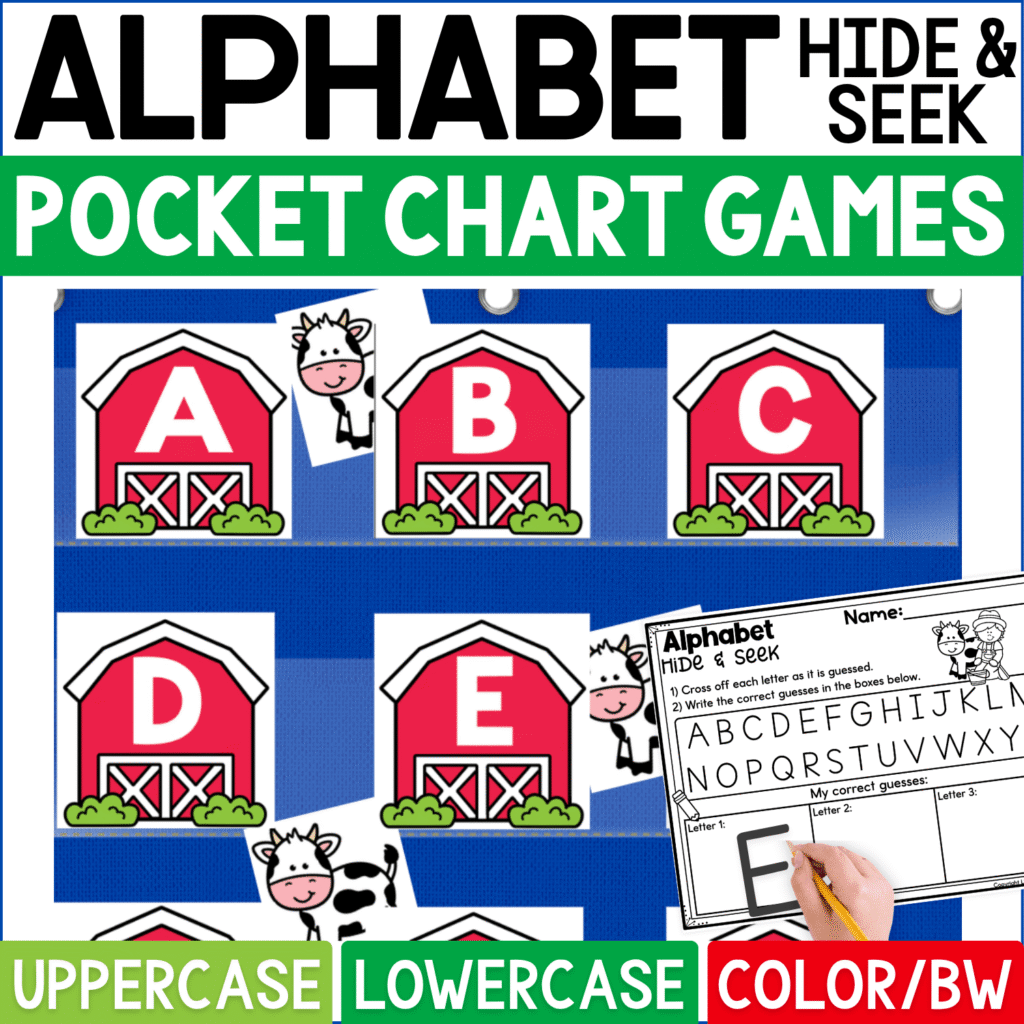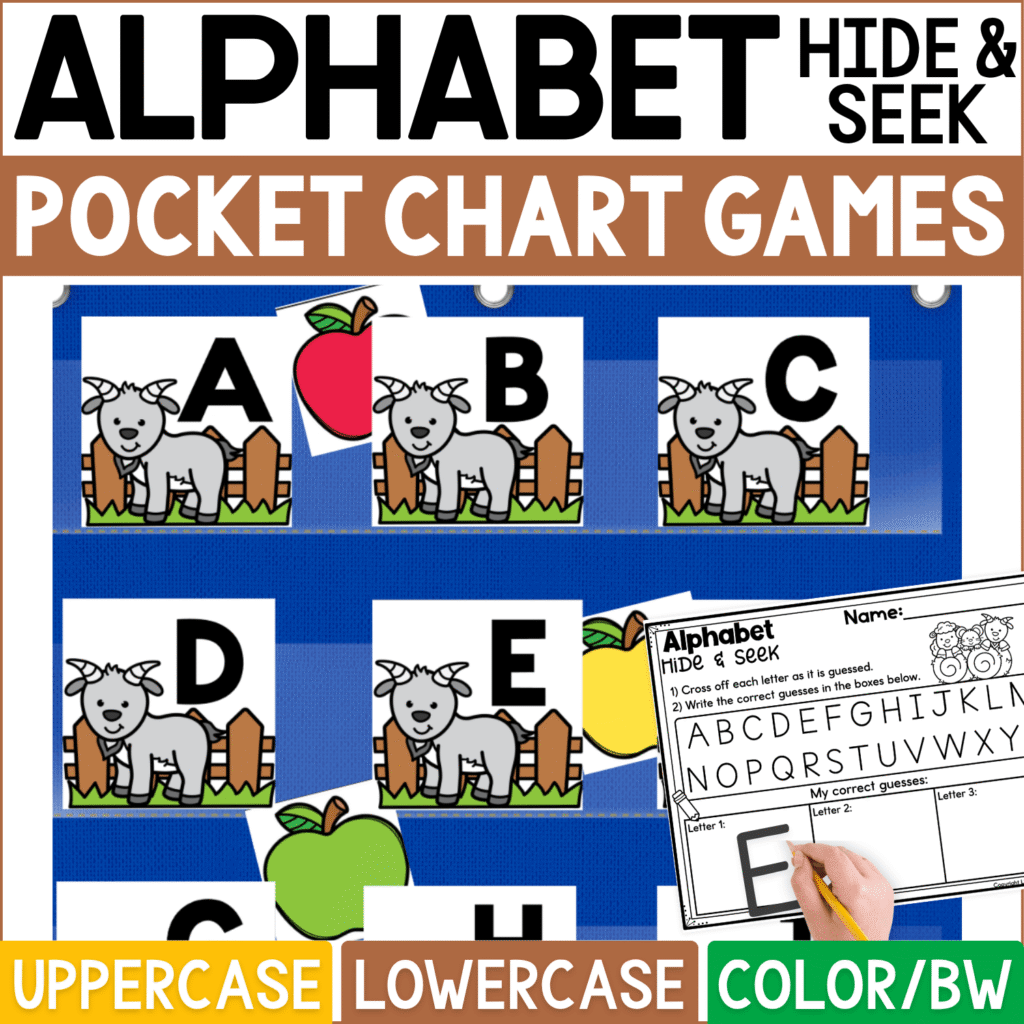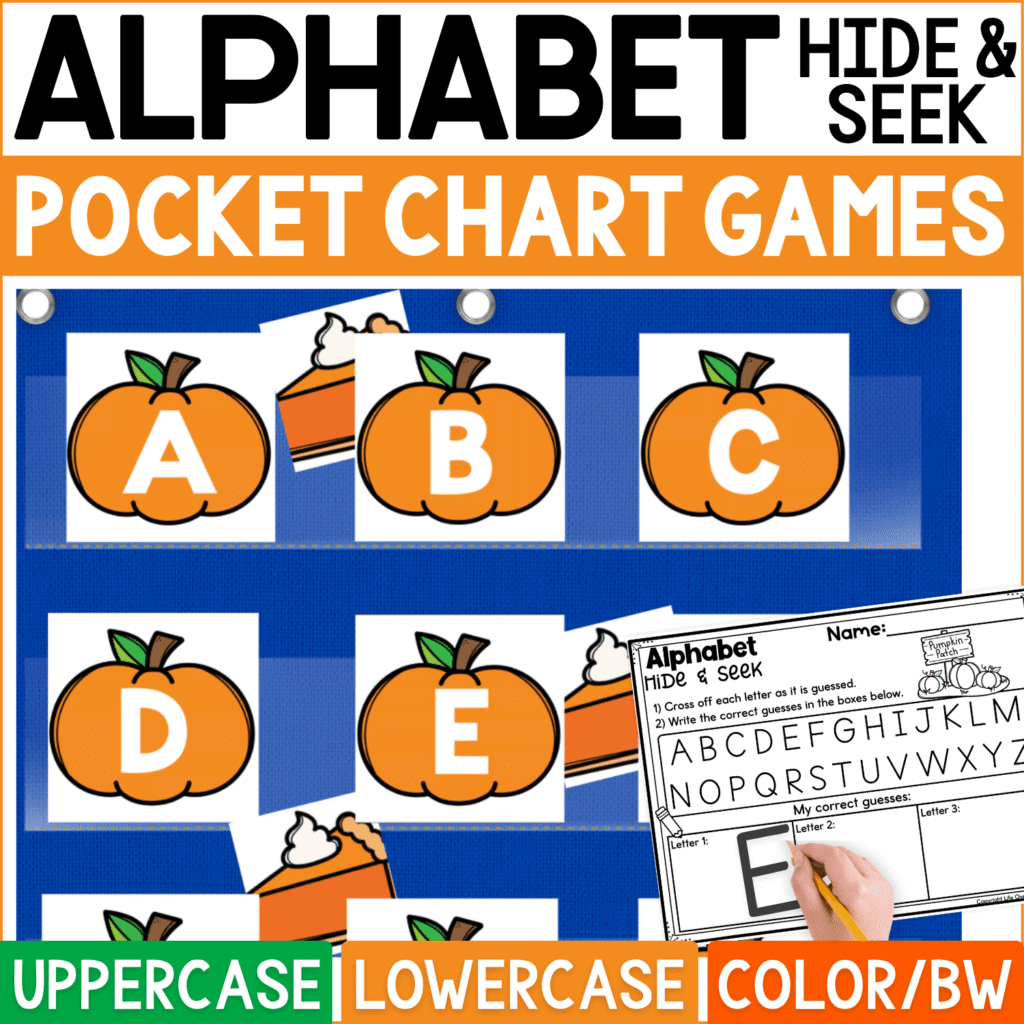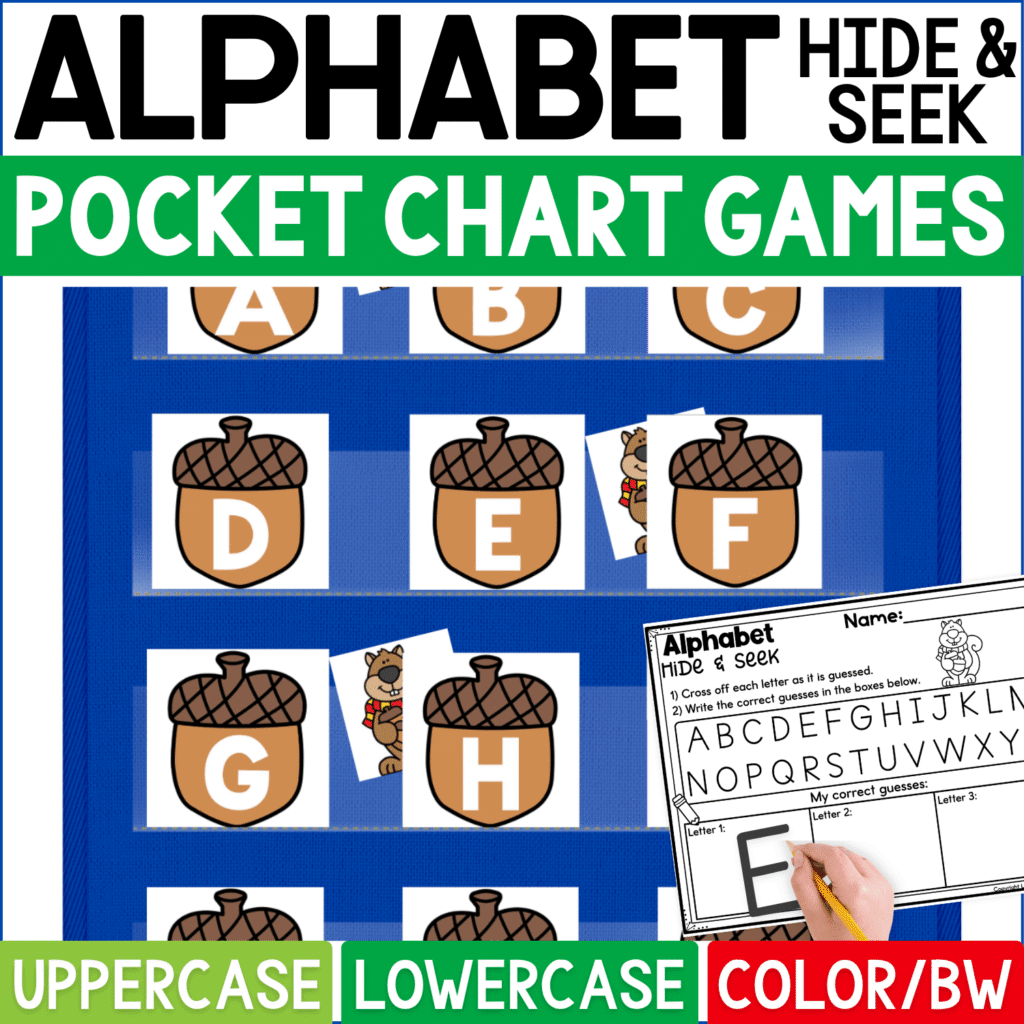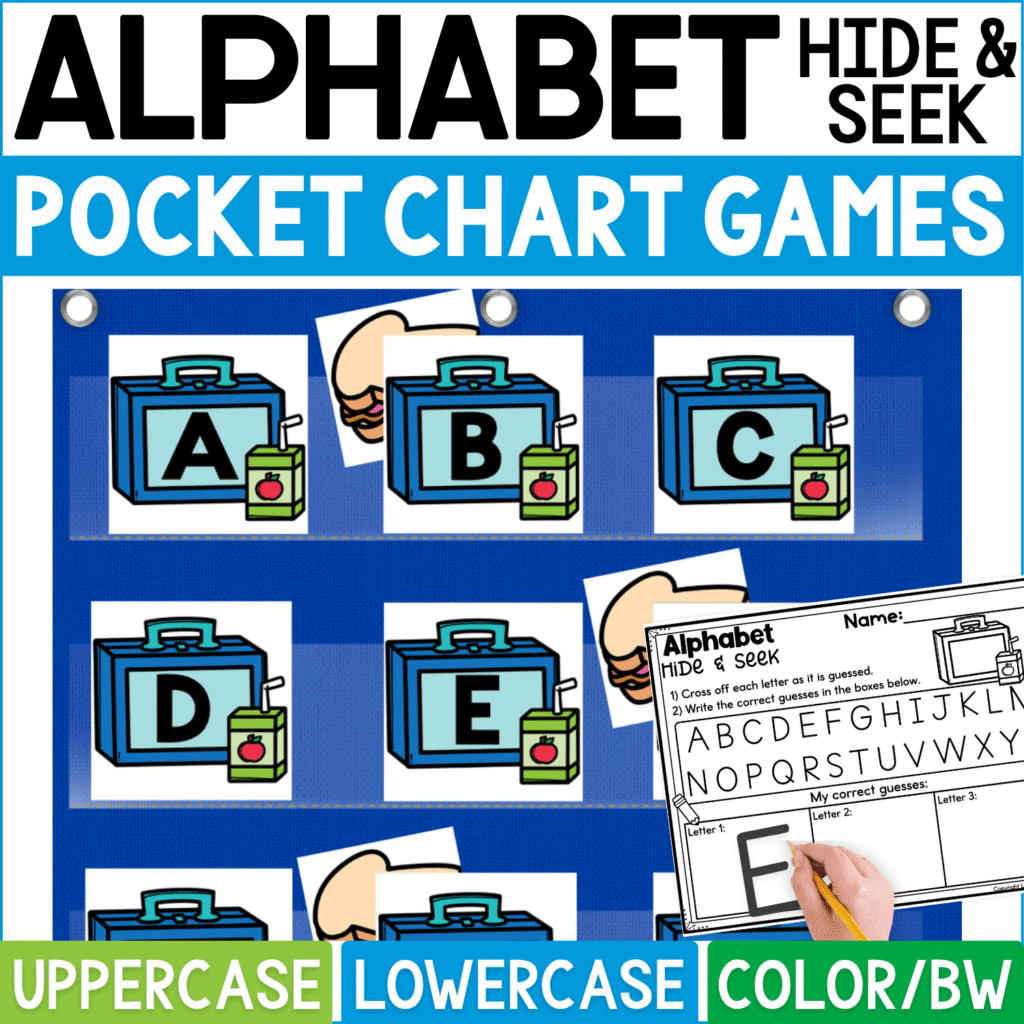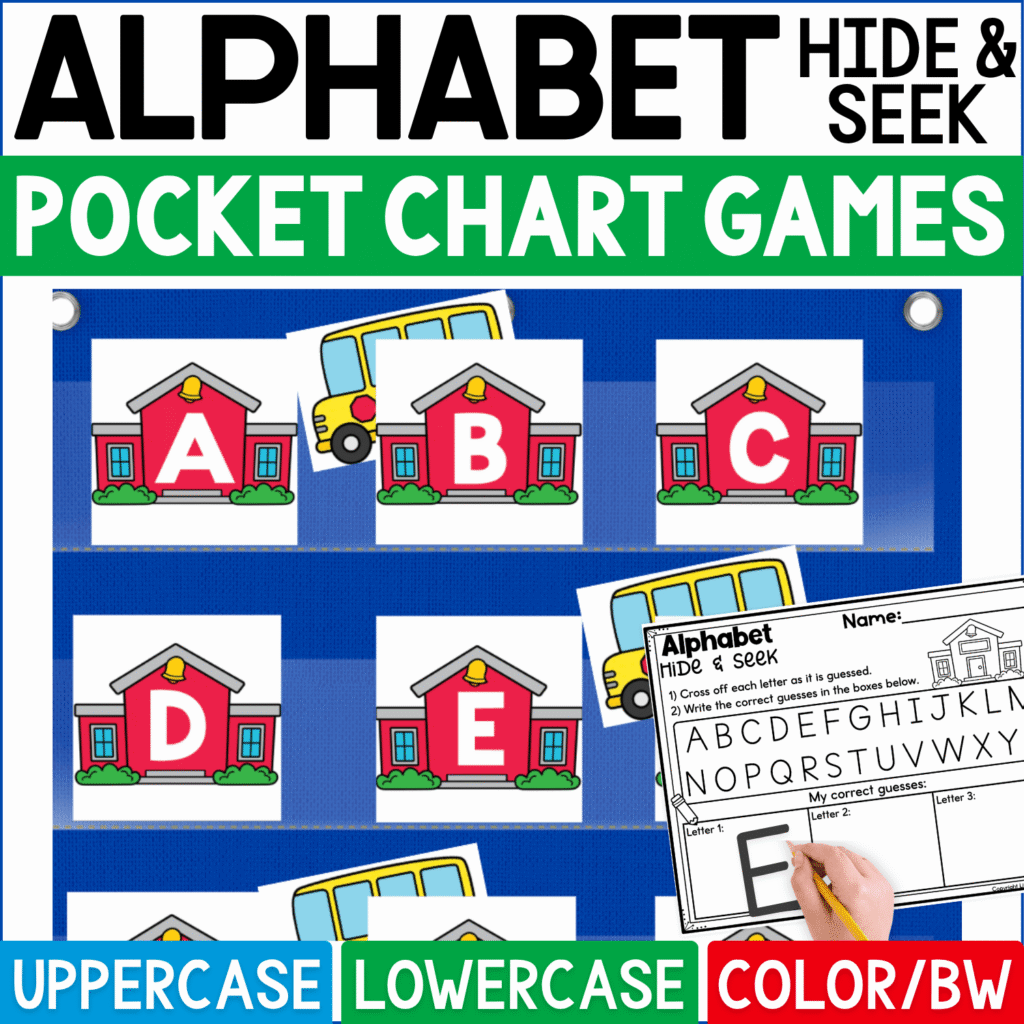


Alphabet Hide And Seek: Rainbow
Recommended Grade Level:
Type of Resource: PDF
Number of Pages: 28

You must be an Annual or Forever Member to Access this Resource.
Join the Life Over C’s Club to Access

Already a member? Login below:
Coordinating Activities


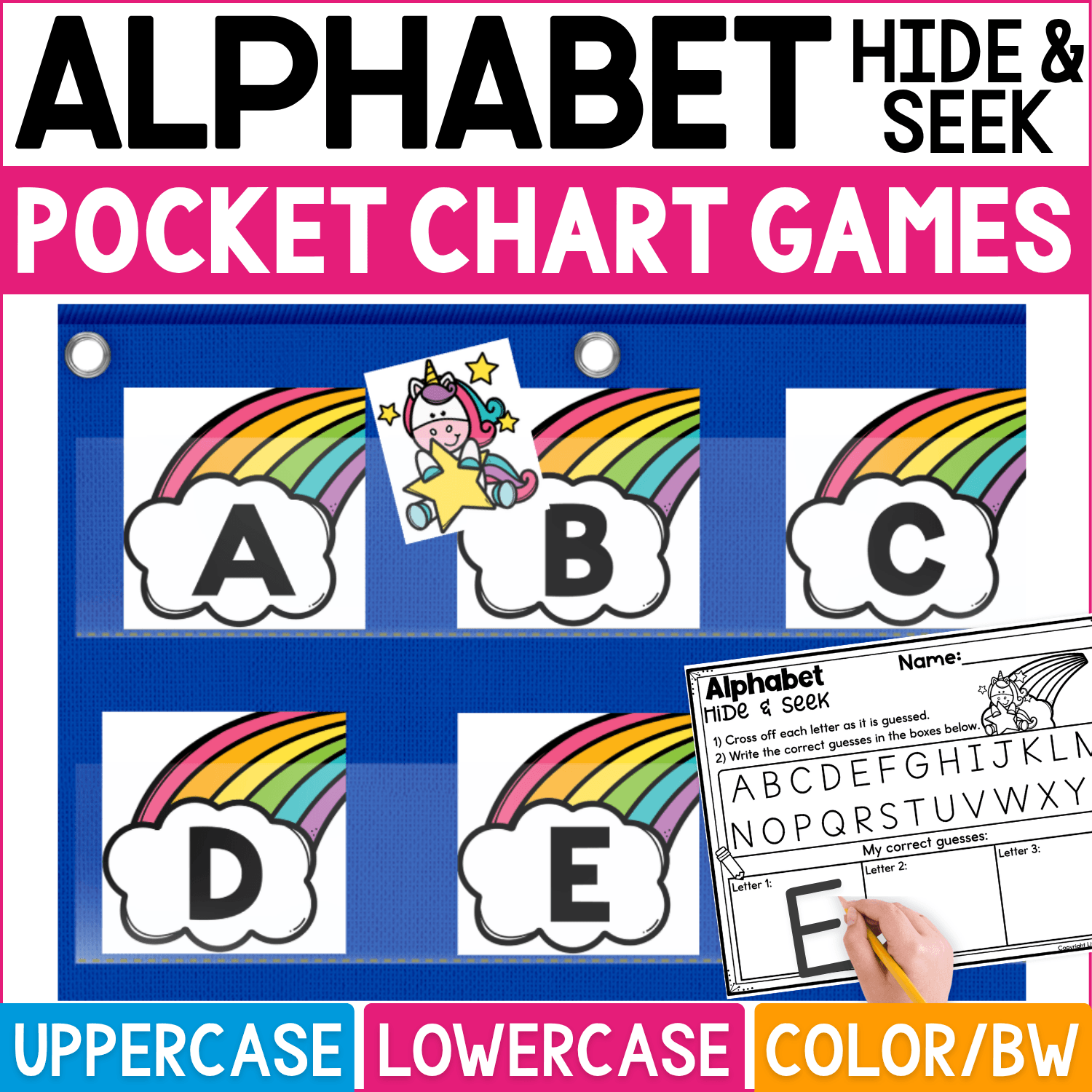
Rainbow Alphabet Hide and Seek
- 26 uppercase letter cards on rainbows in color and black and white
- 26 lowercase letter cards on rainbows in color and black and white
- 8 pots of gold hiding cards in color and black and white
- 4 recording sheets (2 uppercase and 2 lowercase) to cross off guessed letters and write correct guesses
- Instruction pages
Kids name a letter each time they guess where the pots of gold are hiding, so every turn is a chance to practice letter recognition.
Required Materials:
- Paper, printer and ink
- Pocket chart (or a table)
- Laminator
- Paper cutter or scissors
- Pencils for the recording sheets
Standards for Letter Recognition
This rainbow alphabet game supports early literacy standards connected to naming uppercase and lowercase letters, writing letters and taking turns in a group.
Common Core State Standards: English Language Arts
- CCSS.ELA-LITERACY.RF.K.1.D: Recognize and name all upper- and lowercase letters of the alphabet. Kids name a letter with every guess.
- CCSS.ELA-LITERACY.L.K.1.A: Print many upper- and lowercase letters. Kids write their correct guesses on the recording sheet.
Texas Prekindergarten Guidelines and TEKS for English Language Arts and Reading
- PK4.III.C.1: Child recognizes and names at least 20 letters. Kids name each letter before they check behind the card.
- TEKS ELA K.2(D)(v): Demonstrate print awareness by identifying all uppercase and lowercase letters. Kids play with uppercase cards, lowercase cards or both.
- TEKS ELA K.1(D): Work collaboratively with others by following agreed-upon rules for discussion, including taking turns. Kids take turns guessing and checking.
Virginia English Standards of Learning
- K.FFR.3.A: Identify capital and lowercase letters of the alphabet. Kids name the letter on each card they pick.
- K.FFW.1.B: Print capital and lowercase letters of the alphabet. Kids write the letters they found on the recording sheet.
- K.C.1.A.i: Listen actively and follow agreed-upon rules for participating in discussions. Kids listen to each guess and wait for their turn.
Rainbow Alphabet Hide and Seek is a pocket chart guessing game that gives preschool and kindergarten kids hands-on practice naming uppercase and lowercase letters as they search for the hiding pots of gold.
The letters sit on rainbows and the pots of gold are hiding. Kids name a letter to see if a pot of gold is behind that rainbow.
Place the letter cards in a pocket chart and secretly tuck the pots of gold behind a few of the rainbows. Kids take turns naming a letter, like “Is it behind the B?”, then lift the card to check.
Use the uppercase cards, the lowercase cards or a mix. Start with a few letters kids already know and add more as they grow. The recording sheets let kids cross off each letter that has been guessed and write the letters where they found a hiding card.
How to Play Rainbow Alphabet Hide and Seek
- Place the letter cards you want to practice in a pocket chart. If you don’t have one, lay them face up on a table.
- While the children close their eyes, hide the pots of gold behind some of the cards.
- Kids take turns naming a letter and checking behind it until all the pots of gold are found. Then hide them again and play another round!
Circle Time: The whole group takes turns guessing. Count how many guesses it takes to find all the pots of gold.
Literacy Center: Partners take turns hiding and guessing and record their guesses on the recording sheet.
Easy Ways to Differentiate This Alphabet Hide and Seek Game
Some kids are still learning letter names, some know them but need practice with sounds and some are ready for clues. In this rainbow game, kids guess which rainbow is hiding a pot of gold, and you choose how many rainbows to use.
For Children Who Need More Support:
- Start with three rainbows and one pot of gold. A small chart makes the first game quick and fun.
- Put the letters in ABC order and point to each while you sing the alphabet. The song gives kids a way to find letters.
- Give two choices at a time, like is the gold behind the R or the S. Two choices make guessing easier.
- Name the letter for kids who are unsure and have them say it back. Hearing and repeating builds letter names.
For On-Level Practice:
- Use all 26 rainbows and hide all eight pots of gold. A full chart gives kids lots of letters to name.
- Have kids say each letter name and sound before checking. Saying the sound builds phonics.
- Have kids cross off guesses and record found letters on the recording page. Recording keeps track of the game.
- Have kids count the pots of gold found so far and how many are left. Counting adds math to the game.
For an Extra Challenge:
- Mix uppercase and lowercase rainbows. Kids have to know both forms.
- Give color clues, like the gold is behind the letter that starts the word red. Color words make the sound clues fit the theme.
- Have kids build a word from found letters. Making words adds early spelling.
- Have kids sort the found letters into letters with curves and letters with straight lines. Sorting by shape helps handwriting.
For Speech, OT, ELL or Special Education Support:
- For speech practice, use the r sound in rainbow and red during each turn. One sound repeated in theme words gives focused practice.
- For OT practice, have kids color the found letters on the recording page in rainbow colors. Coloring small spaces builds control.
- For ELL support, teach rainbow, gold, pot and colors before playing. Theme words help kids join the game.
- For special education support, cover the rows you are not using with paper. A smaller chart helps kids focus.
Rainbow Alphabet Hide and Seek Is Perfect For:
- Preschool and pre-K
- Kindergarten
- St. Patrick’s Day and spring themes
- Circle time
- Literacy centers
- Pocket chart centers
- Letter of the week
- Small-group instruction
- Special education
- ELL and multilingual learners
- Homeschool
You must be an Annual or Forever Member to Access this Resource.
Join the Life Over C’s Club to Access
Already a member? Login below: