

Number Counting Grid: Gumball Mini Eraser
Recommended Grade Level:
Type of Resource: PDF
Number of Pages: 24

Coordinating Activities

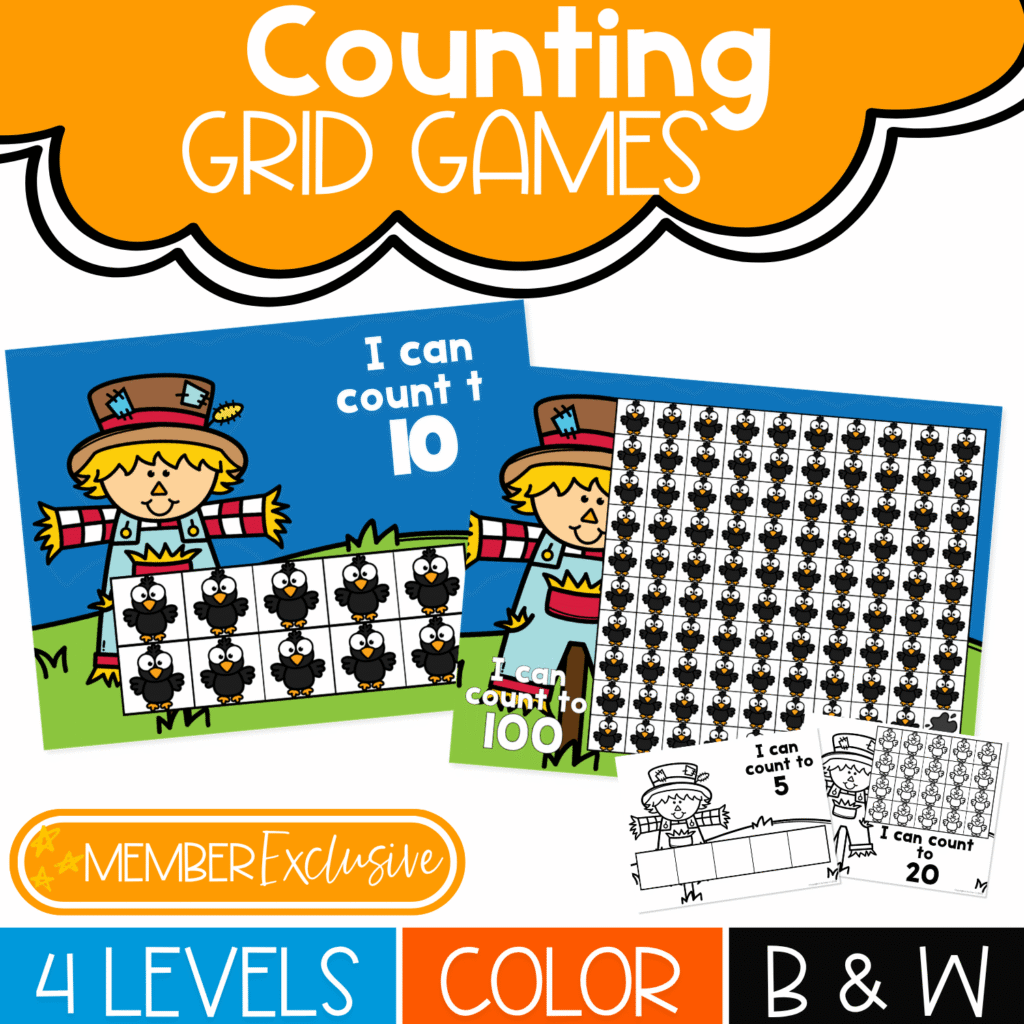


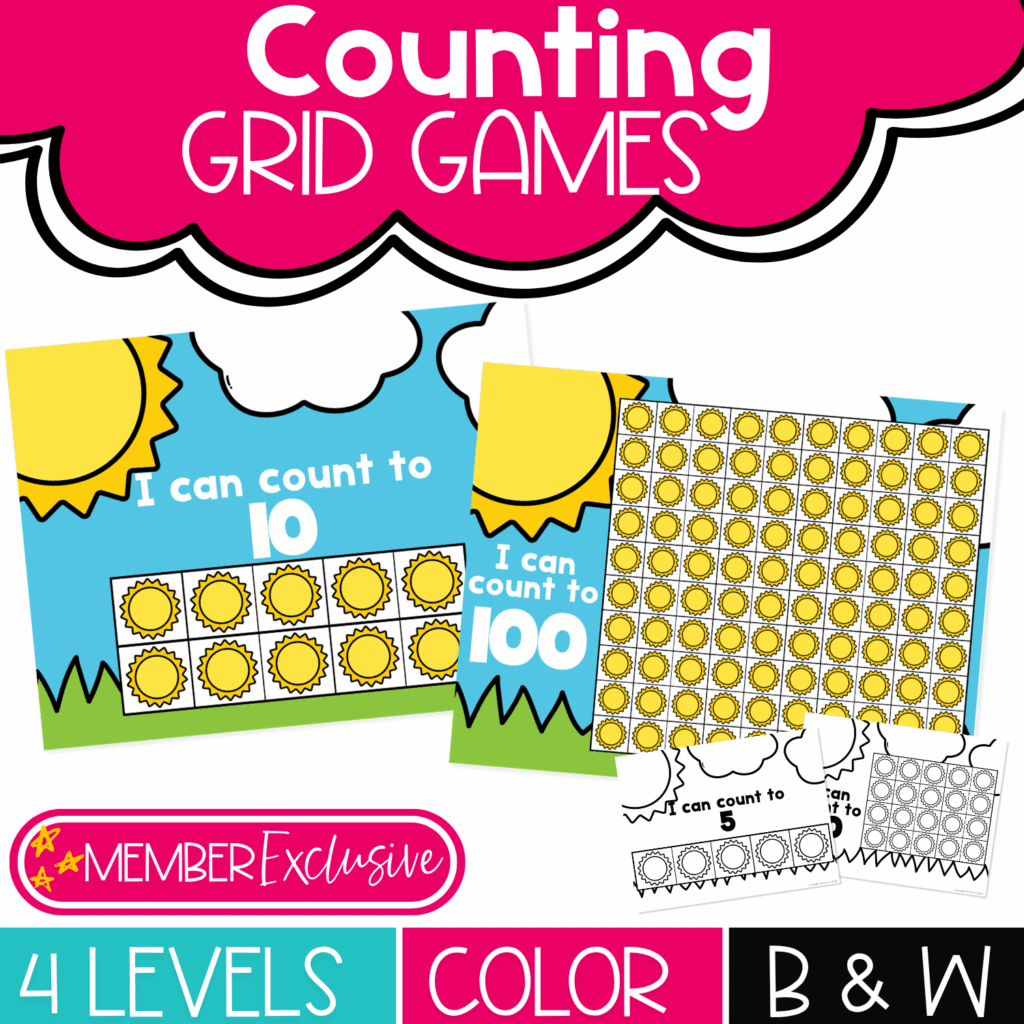
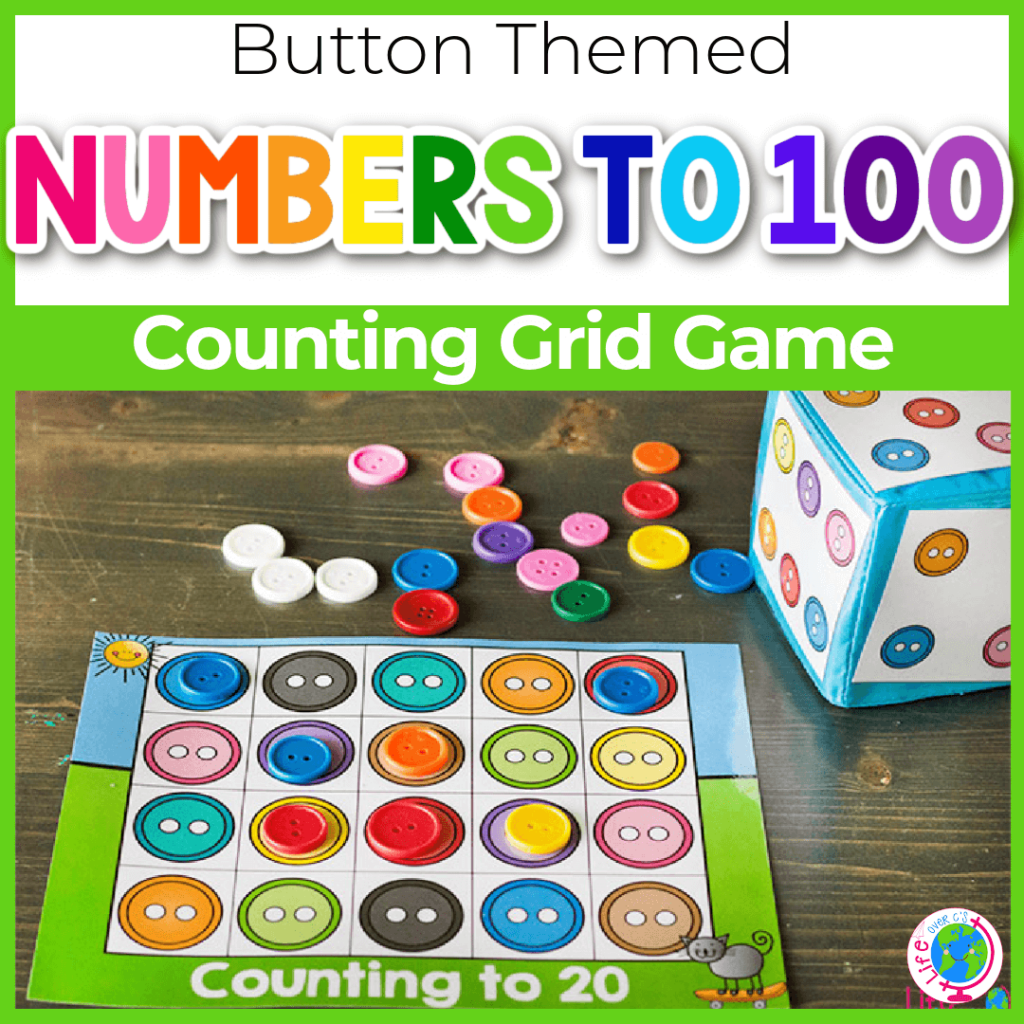

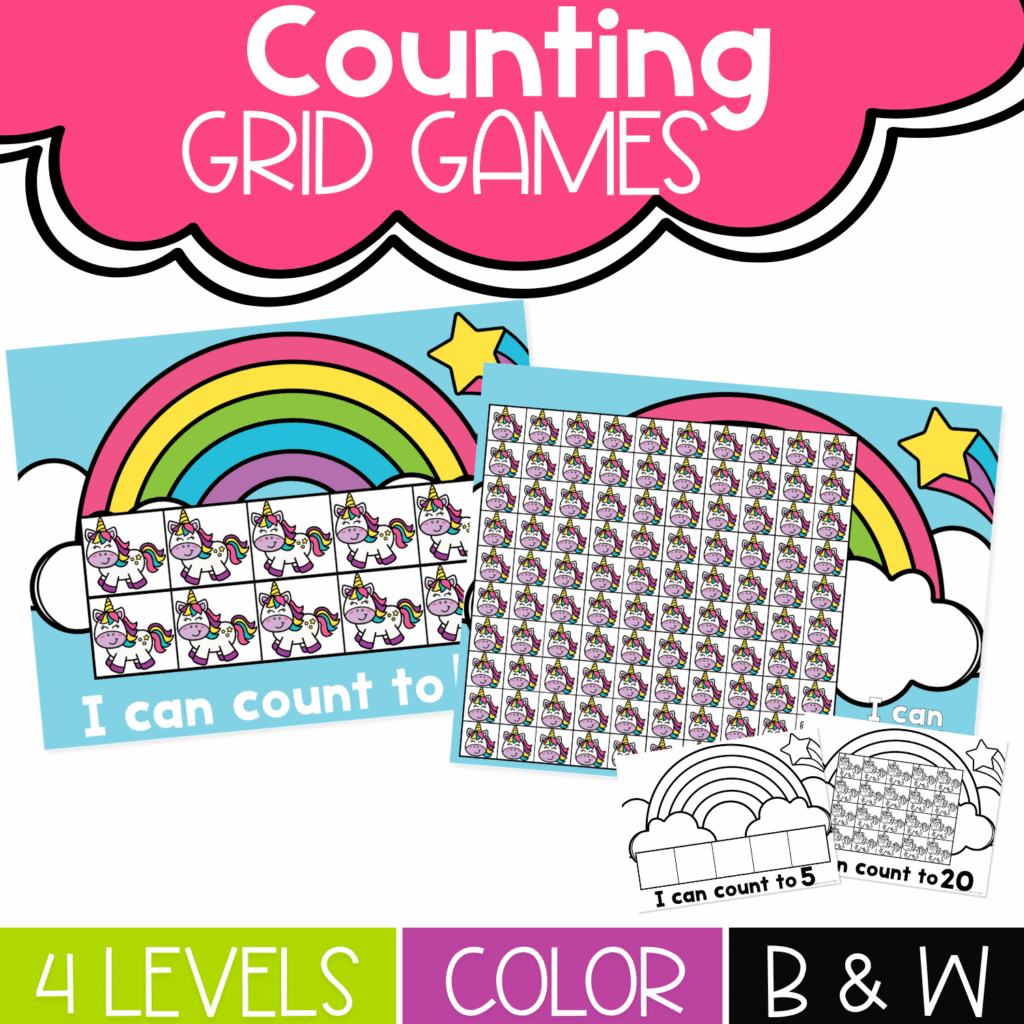
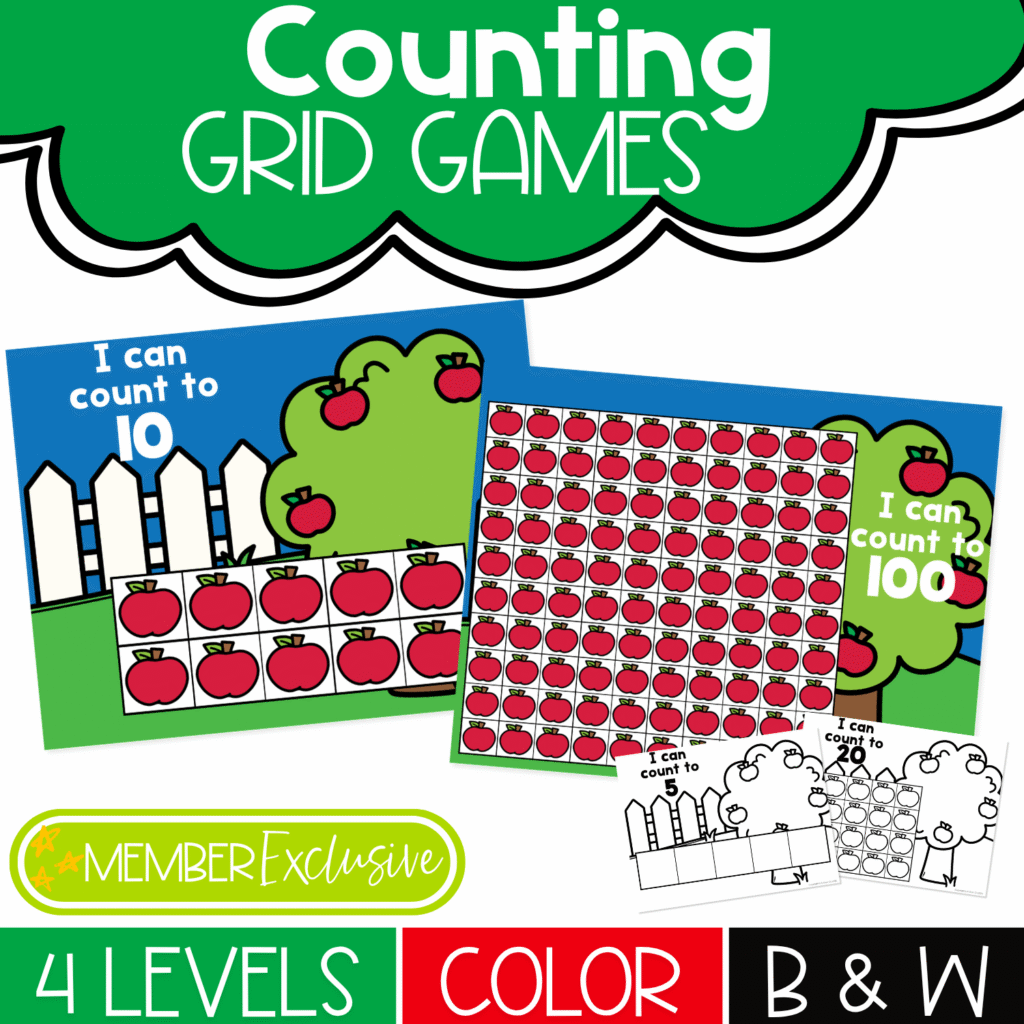
Gumball Counting Grids
- Counting grids for 10, 20 and 100 in color and black and white
- Cube inserts for each set:
- Dice for counting up to 3
- Dice for counting up to 6
- The same grids and cube inserts in Spanish (Puedo contar hasta) in color and black and white
- 1 page of directions
Print the grids in color or black and white. Laminate the grids and the cube inserts so they last.
Required Materials:
- Paper, Printer, Ink
- Laminator
- Paper Cutter or scissors
- Differentiated cube (a foam cube with clear pockets) or a standard die
- Counters (mini gumball erasers)
Standards for Counting and Cardinality
These Gumball counting grids support early math standards connected to counting objects, one-to-one correspondence and counting to 10, 20 and 100.
Common Core State Standards: Mathematics
- CCSS.MATH.CONTENT.K.CC.A.1: Count to 100 by ones and by tens. Kids count all the way to 100 on the largest grid.
- CCSS.MATH.CONTENT.K.CC.B.4: Understand the relationship between numbers and quantities. Kids connect the number they roll to a set of counters.
- CCSS.MATH.CONTENT.K.CC.B.5: Count to answer “how many?” questions. Kids count the counters on the grid to find how many.
Texas Prekindergarten Guidelines and TEKS for Mathematics
- PK4.V.A.2: Children count up to 10 objects with one-to-one correspondence. Kids place one counter in each space as they count.
- PK4.V.A.3: Children count up to 10 items and show that the last number counted tells how many are in the set.
- TEKS K.2A: Count forward and backward to at least 20 with and without objects. Kids count forward as they fill the 20 grid.
Virginia Mathematics Standards of Learning
- K.NS.1.a: Use one-to-one correspondence to find how many are in a set. Kids place one counter in each space as they count.
- K.NS.2.b: Build a set of objects to match a given numeral. Kids build a set of counters to match the number they roll.
Gumball Counting Grids help preschool and kindergarten kids count objects with one-to-one correspondence and build sets to 10, 20 and 100 with a hands-on printable math activity in English and Spanish.
Kids fill the gumball machine grid one gumball at a time.
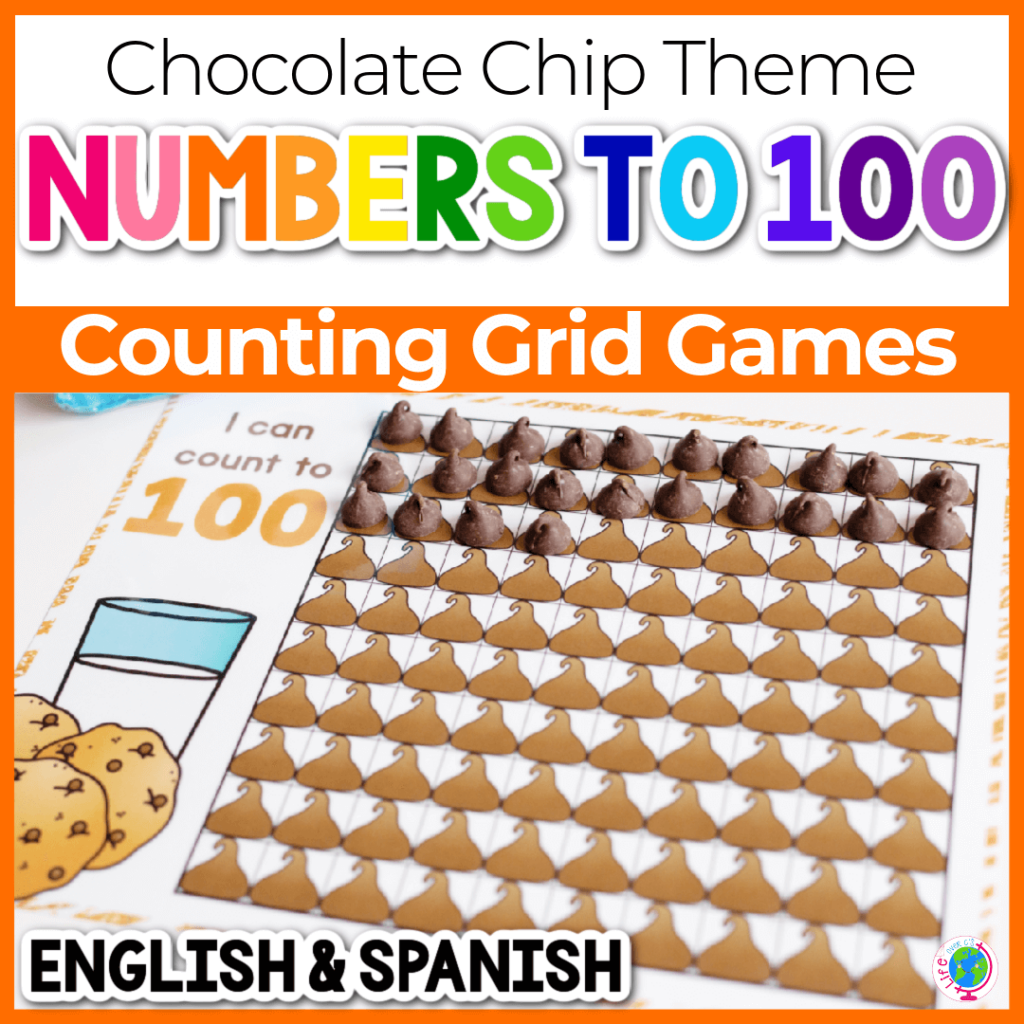
Each grid has spaces to fill and an “I can count to” goal of 10, 20 or 100. Kids roll the cube or die, count the dots and place that many mini gumball erasers on the grid. They keep rolling until the whole grid is full.
The cube inserts come in two levels, with dice for counting up to 3 and dice for counting up to 6 so kids can start small and grow. There is no right or wrong place to put the counters so kids decide where each one goes.
Spanish versions of every grid make this set a great fit for dual-language classrooms and multilingual learners.
Store the grids, the cube and a cup of counters together in a math tub for a quick center.
How to Use Gumball Counting Grids
- Choose the 10, 20 or 100 grid.
- Roll the cube or die and count the dots.
- Place that many mini gumball erasers on the grid, one in each space.
- Keep rolling and counting until the grid is full.
Small Group: Give each child a grid. Take turns rolling one cube for the group, then everyone adds that many counters to their own grid.
Independent Practice: Set the grids in a math center with a cube and a cup of mini gumball erasers. Kids roll and fill a grid at their own pace.
Easy Ways to Differentiate These Counting Grids
Some kids are still learning to count to 10, some are ready for 20 and some can count all the way to 100. These gumball counting grids come in sizes for 10, 20 and 100, plus dice cards for counting up to 3 or up to 6, and a matching set in Spanish. Kids roll and place that many gumball erasers anywhere on the grid.
For Children Who Need More Support:
- Begin with the smallest grid and the cube cards that only go up to 3. A short game builds confidence before bigger numbers.
- Count each gumball out loud as it goes on a square. One gumball per word builds one-to-one.
- Count the full grid together after each roll. A shared count shows how to check.
- Let kids pick where each gumball goes. Choosing keeps kids interested.
For On-Level Practice:
- Switch to the grid to 20 once kids fill the small grid easily, rolling the cards for counting up to 6. Bigger grids stretch counting.
- Fill one row at a time like a gumball machine. Rows keep the count organized.
- Say the running total after each roll. Running totals build counting on.
- Use the Spanish grids for dual-language counting. Two languages build vocabulary.
For an Extra Challenge:
- Use the grid to 100 and count by tens across full rows. Counting by tens builds place value.
- Tell how many gumballs are still needed to fill the grid. Finding what is left builds subtraction.
- Roll twice and add before placing. Adding builds addition.
- Sort the gumballs by color on the grid and count each color. Sorting adds data skills.
For Speech, OT, ELL or Special Education Support:
- For speech practice, use the g sound in gumball. Repeating theme words gives focused practice.
- For OT practice, have kids pick up gumballs with tongs. Tongs build hand strength.
- For ELL support, teach gumball, machine and the color words. Color words help kids describe what they count.
- For special education support, use only one row of the grid at a time. A smaller space keeps focus.
Gumball Counting Grids Are Perfect For:
- Preschool and pre-K
- Kindergarten
- ELL and multilingual learners
- Candy and gumball themes
- Math centers
- Morning tubs
- Small-group instruction
- Intervention
- Special education
- Speech, OT and early intervention sessions
- Homeschool preschool and kindergarten
- Substitute plans