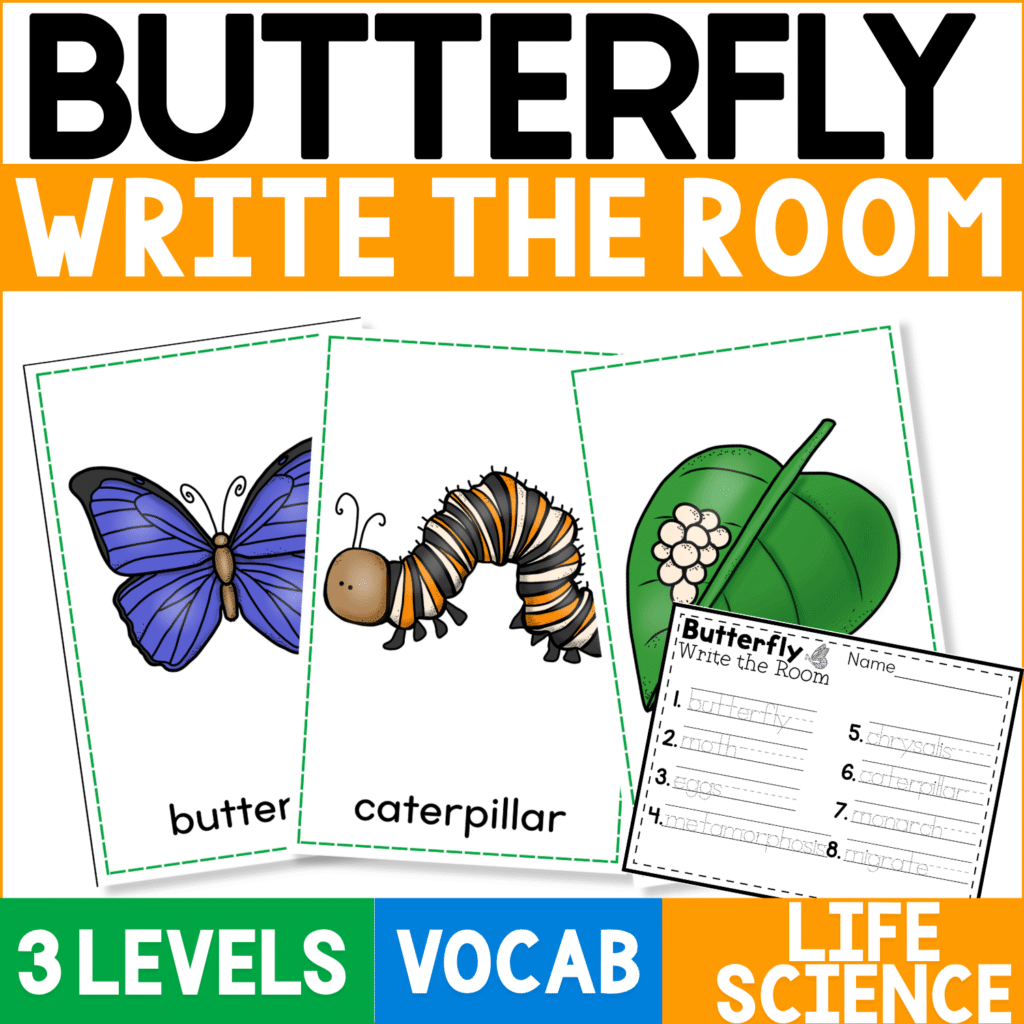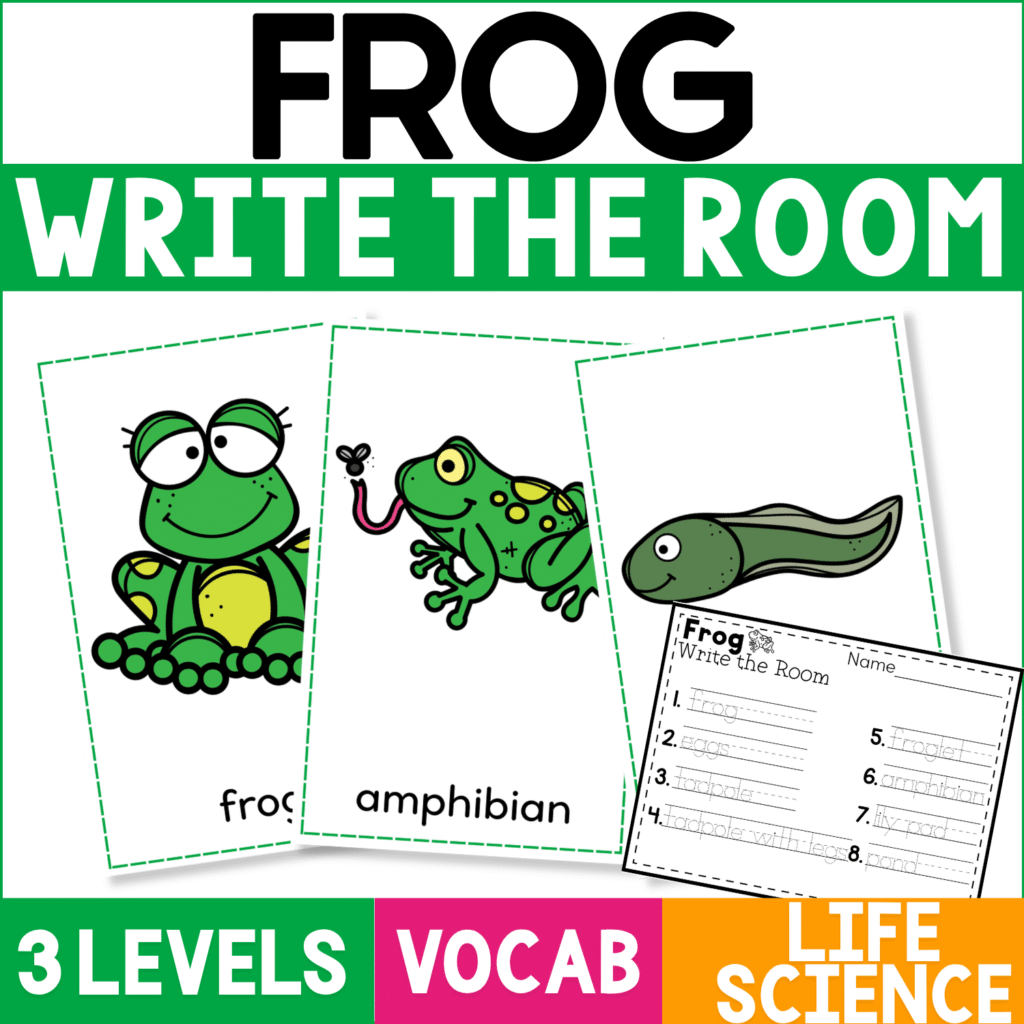


Write the Room: Fruit Theme (English and Spanish)
Recommended Grade Level:
Type of Resource: PDF
Number of Pages: 20

Coordinating Activities
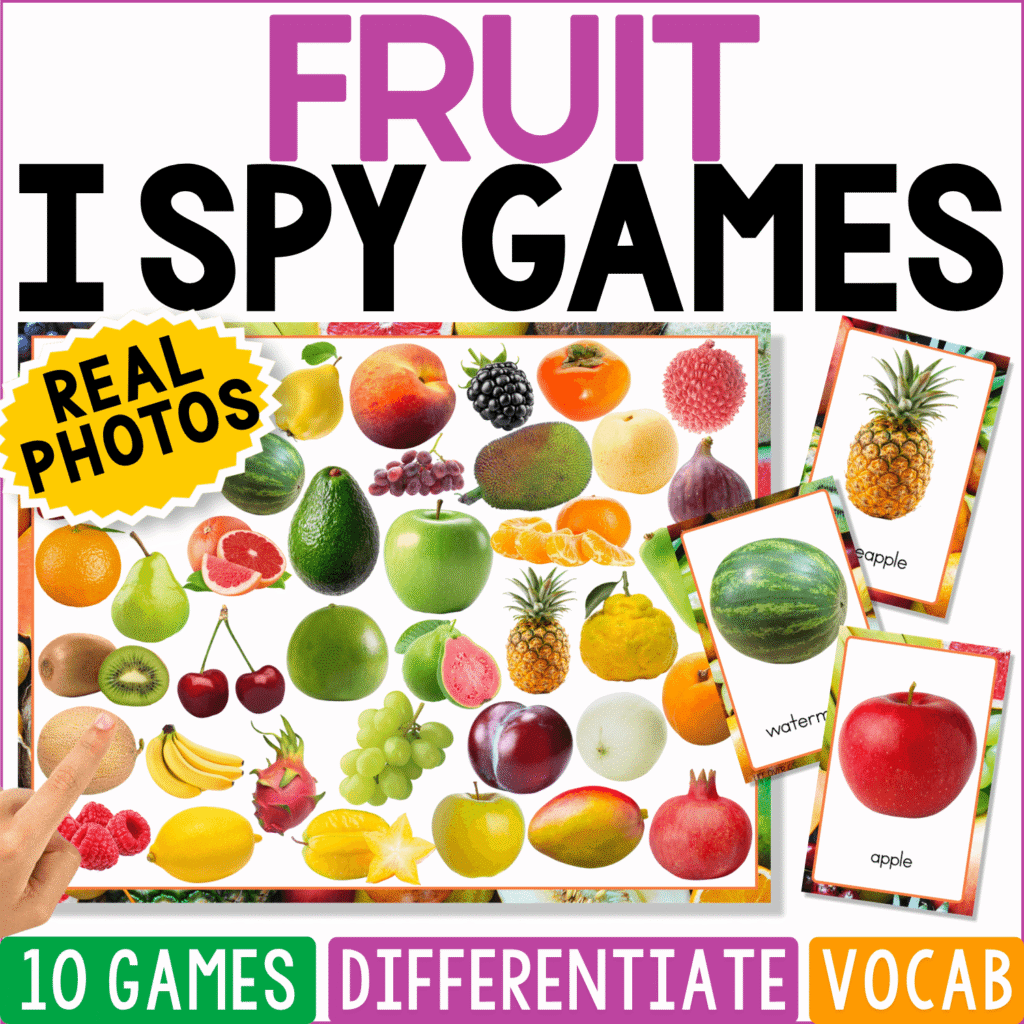


Fruit Write the Room (English and Spanish)
- 6 half-page fruit posters with words in color: banana, strawberry, apple, orange, grapes and blueberries
- The same posters in black and white
- Recording sheet in color and black and white: trace each fruit word, then color it
- Spanish version of the posters and recording sheet: banana, fresa, manzana, naranja, uvas and arándanos
- Table of contents and instruction page
The posters also work as big flash cards to introduce fruit words before kids head out to find them.
Required Materials:
- Paper, printer and ink
- Laminator
- Paper cutter or scissors
- Clipboards
- Pencils, crayons or colored pencils
Standards for Vocabulary and Writing
This fruit write the room activity supports early literacy standards connected to vocabulary, sorting words into categories and printing letters.
Common Core State Standards: English Language Arts
- CCSS.ELA-LITERACY.L.K.5.A: Sort common objects into categories to gain a sense of the concepts the categories represent. Every word on the posters belongs to the fruit category.
- CCSS.ELA-LITERACY.L.K.5.C: Identify real-life connections between words and their use. Kids talk about the fruits they eat at home and school.
- CCSS.ELA-LITERACY.L.K.1.A: Print many upper- and lowercase letters. Kids trace the letters in each fruit word.
Texas Prekindergarten Guidelines and TEKS for English Language Arts and Reading
- PK4.II.D.1: Child understands and uses a wide variety of words to label and describe people, places, things and actions. Kids name each fruit they find.
- PK4.II.D.3: Child consistently understands and uses new vocabulary learned through books, conversations and play. Kids hear and use the fruit words again and again.
- TEKS K.2(E): Develop handwriting by accurately forming all uppercase and lowercase letters. Kids trace each fruit word on the recording sheet.
Virginia English Standards of Learning
- K.RV.1.C: Use vocabulary from across content areas. Kids build food and fruit vocabulary.
- K.RV.1.F: Use newly learned words and phrases in discussions and speaking activities. Kids name each fruit when they find the poster.
Fruit Write the Room gets preschool and kindergarten kids moving around the room as they find fruit posters, read the words and trace them on their recording sheet.
Kids search for a banana, strawberry, apple, orange, grapes and blueberries. Each poster has a big picture and the fruit word, so kids can match the picture even before they read.
When kids find a poster, they trace the matching word on the recording sheet and color it. The posters are numbered to match the recording sheet.
A full Spanish version is included, so you can use the same activity with Spanish speakers, dual-language classrooms or kids learning a second language.
How to Use Fruit Write the Room
- Print and laminate the posters, then cut them in half.
- Hang the posters around the classroom.
- Give each child a clipboard, a crayon or pencil and a recording sheet.
- Kids find each poster, say the fruit word and trace it on their sheet.
- Color each word or fruit after it is found.
Circle Time: Show the posters as big flash cards. Name each fruit together before kids search the room.
Literacy Center: Hang the posters in a center and let kids find and trace the words with a partner.
Easy Ways to Differentiate This Write the Room Activity
Some kids in your group are still learning the fruit names, some can match the picture to the word and some are ready to write the words on their own. Each poster has a big picture and the fruit word, so every child can find the match, and the Spanish set lets you bring home languages into the hunt.
For Children Who Need More Support:
- Start with 3 posters. A short hunt lets kids finish and feel successful before the full set comes out.
- Show the posters as big flash cards and name each fruit together before kids search. Kids find posters faster when they already know the words.
- Have kids color the fruit pictures and skip the tracing at first. Coloring still shows they found the match while they build the fine motor skills for tracing.
- Hang the posters close together at kid eye level. Less walking and searching keeps the focus on the words.
For On-Level Practice:
- Have kids find all 6 posters and trace each fruit word. Tracing the word right after reading it connects the spoken word to how it’s spelled.
- Have kids say the fruit word out loud at each poster. Saying the word builds vocabulary and confidence speaking.
- Have kids point to the first letter of each fruit word and say its sound. Connecting the first sound to the letter turns a vocabulary game into phonics practice.
- Have kids walk back to a poster to check any word they aren’t sure about. Checking their own work is a habit that carries over to every subject.
For an Extra Challenge:
- Have kids write the fruit words without tracing. Writing from a model across the room is harder than tracing, so it stretches kids who are ready.
- Have kids sort the fruits by color after the hunt. Sorting and explaining builds category language.
- Use the Spanish posters too and have kids match each English word to its Spanish word. Comparing words like apple and manzana builds word awareness in both languages.
- Have kids draw a favorite fruit and label it. Labeling a picture is an early writing step.
For Speech, OT, ELL or Special Education Support:
- Speech: use the posters as picture cards for naming practice, and pick fruits that match a child’s target sound, like /b/ in banana and blueberries.
- ELL and Spanish speakers: use the Spanish posters so kids can name each fruit in their home language first, then in English. The pictures make the meaning clear in both.
- Fine motor: use a fat crayon or a pencil grip for tracing. A thicker tool is easier to control on a clipboard.
- Sensory: bring real fruit to touch, smell and name. Real objects make new words stick for kids who learn best through their senses.
Fruit Write the Room Is Perfect For:
- Preschool and pre-K
- Kindergarten
- Fruit and healthy eating themes
- Literacy centers
- Movement breaks
- ELL and multilingual learners
- Dual-language classrooms
- Speech therapy
- Special education
- Homeschool