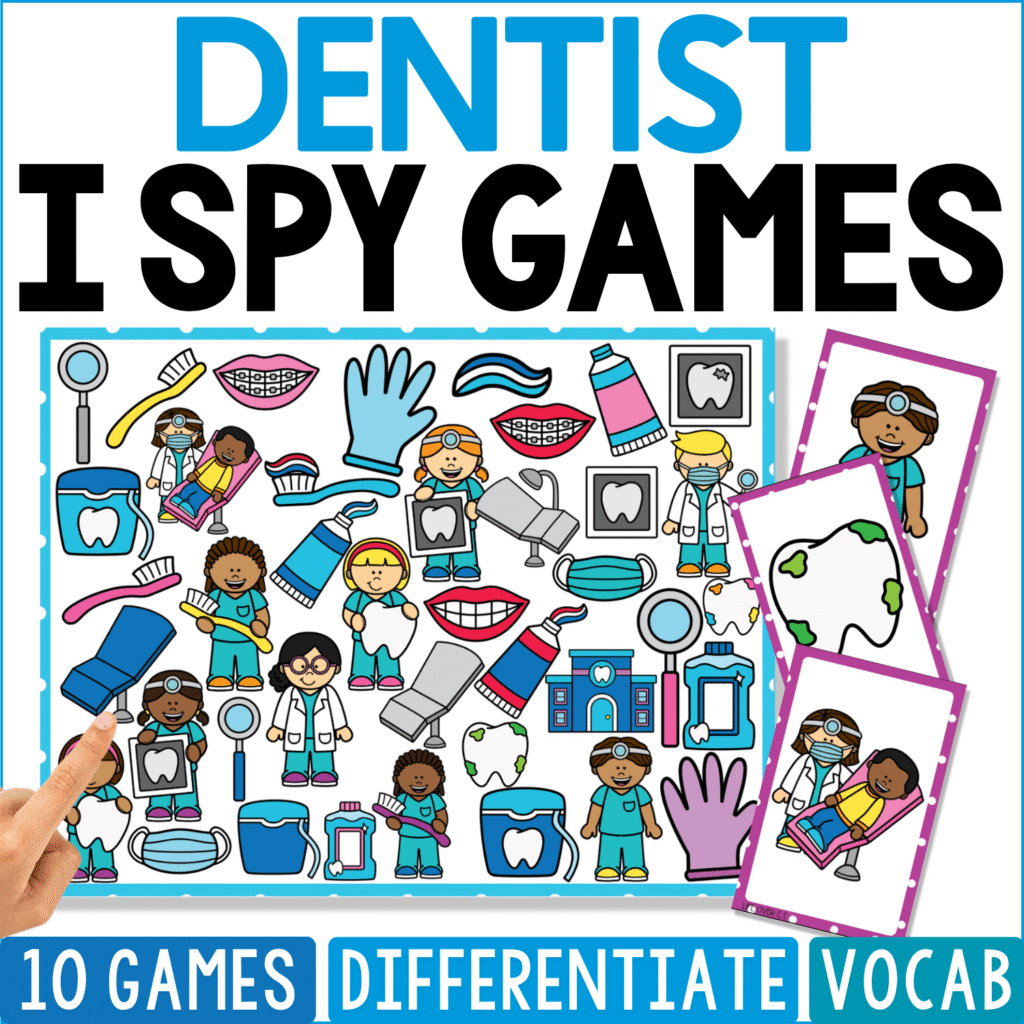


I Spy “Flip” Board game: Grocer Community Helpers
Recommended Grade Level:
Type of Resource: PDF
Number of Pages: 21

You must be an Annual or Forever Member to Access this Resource.
Join the Life Over C’s Club to Access

Already a member? Login below:
Coordinating Activities
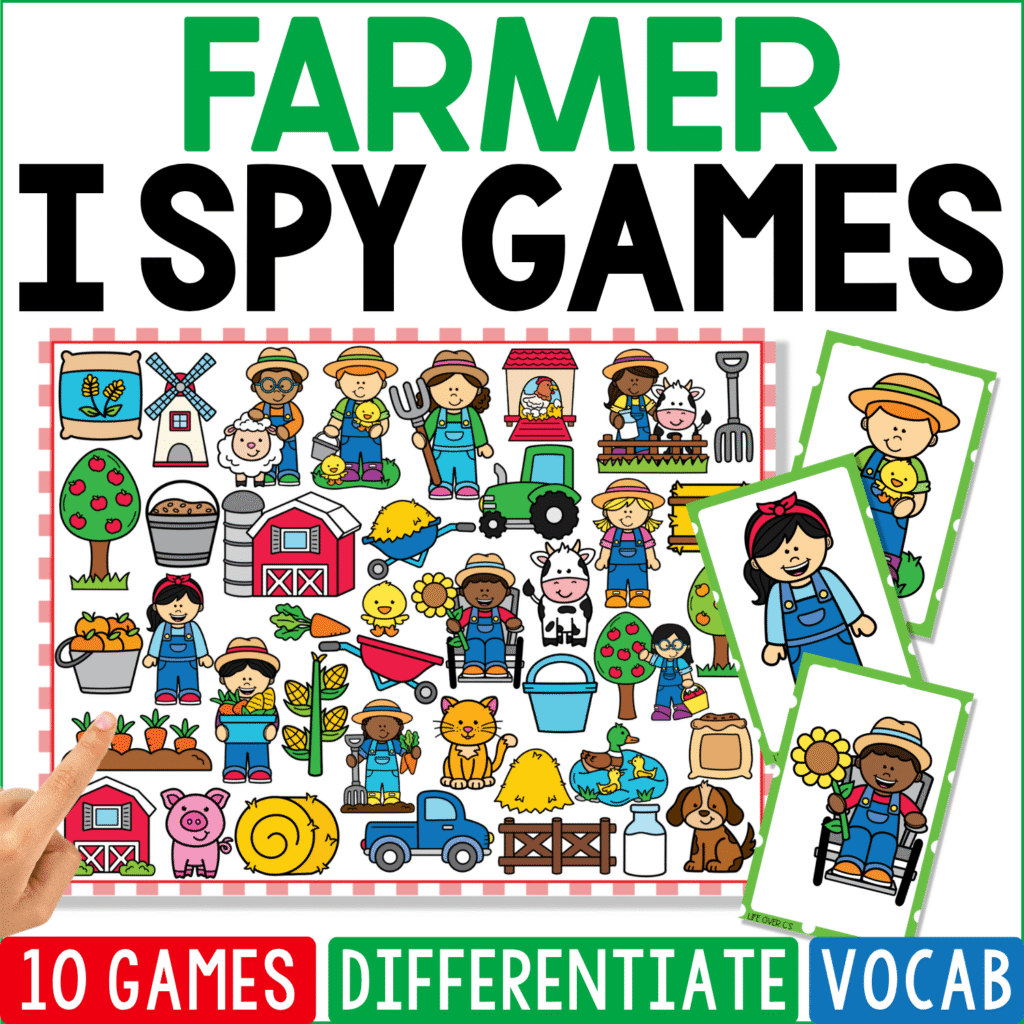
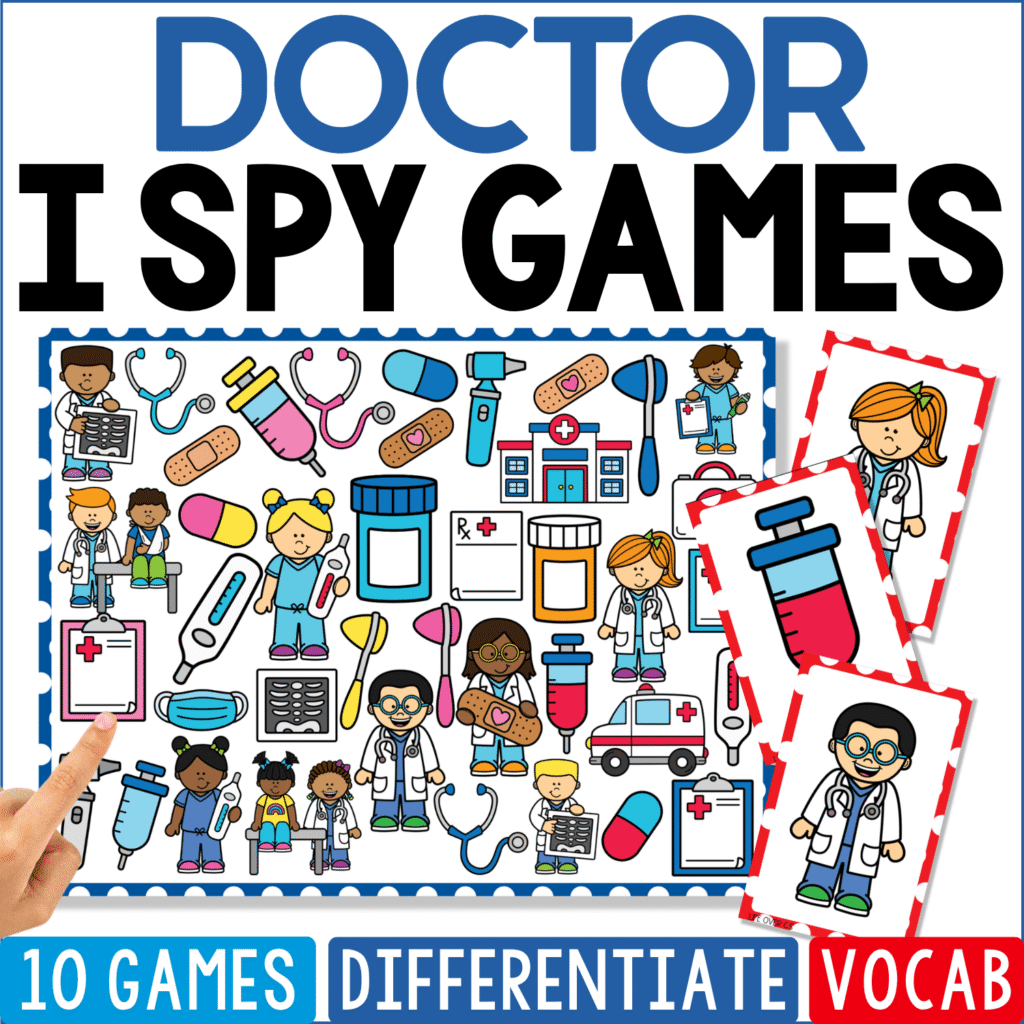
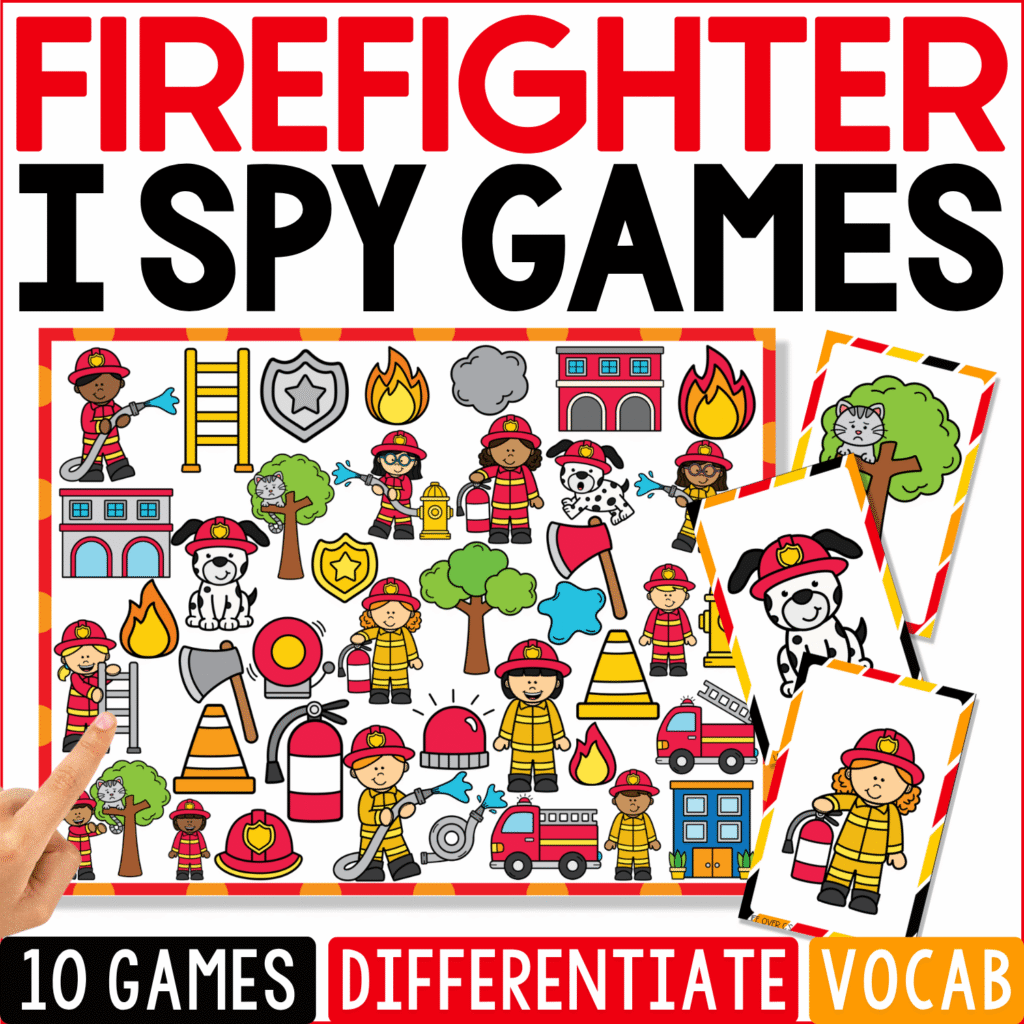
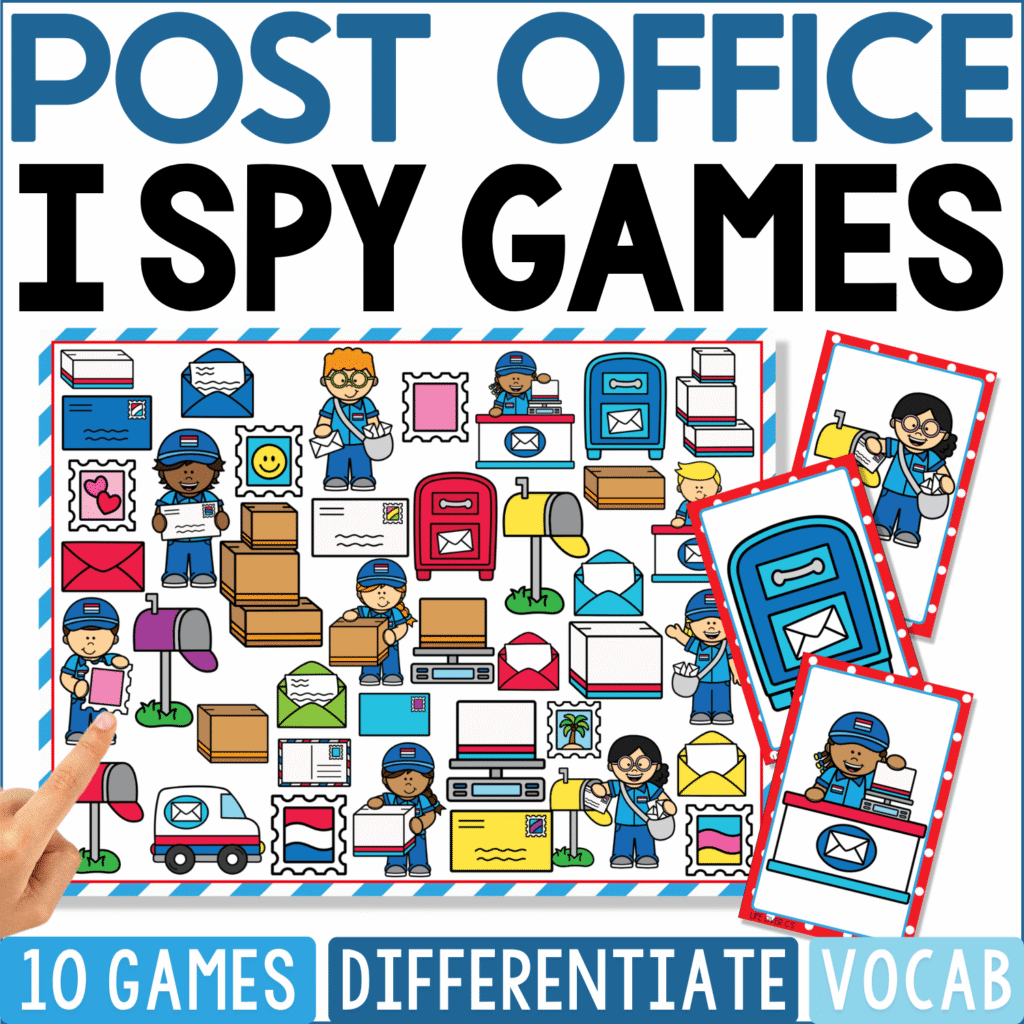
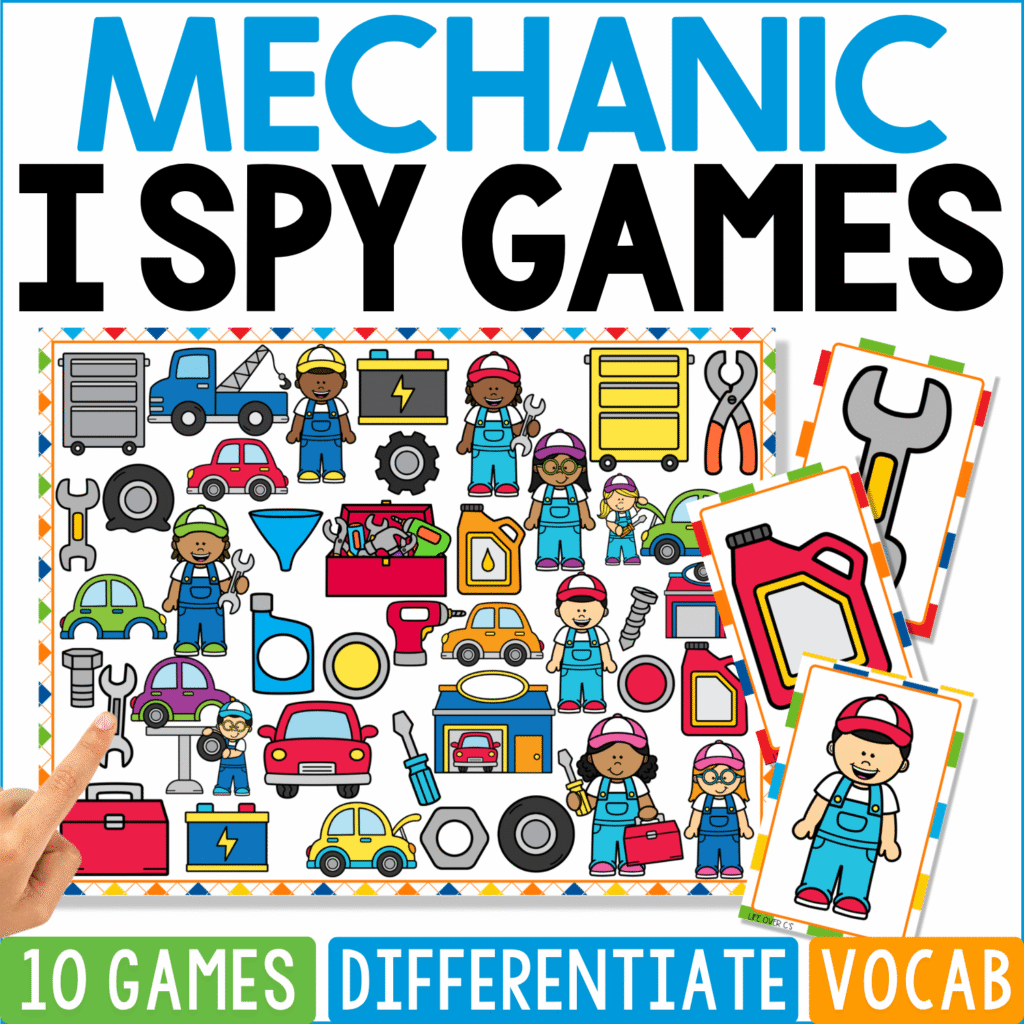
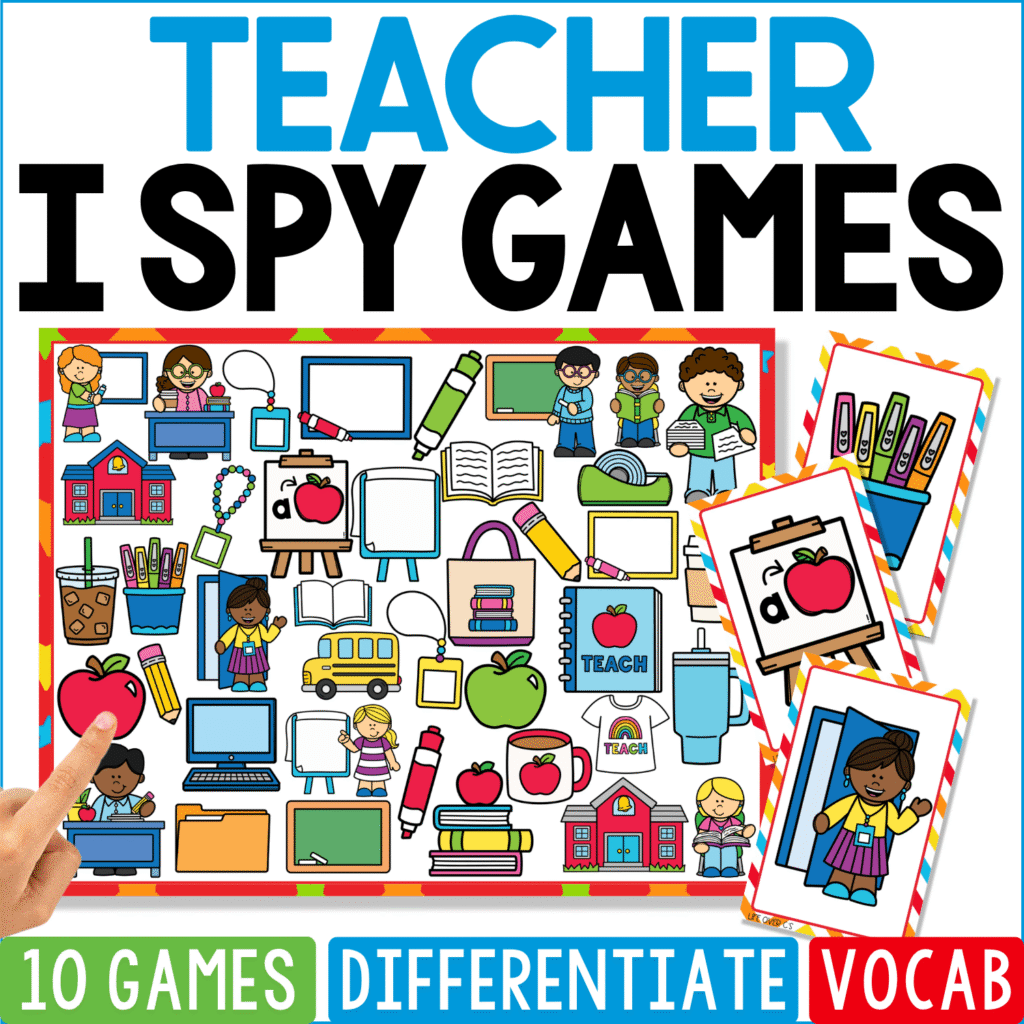
Grocer Community Helpers I Spy “Flip” Board Game
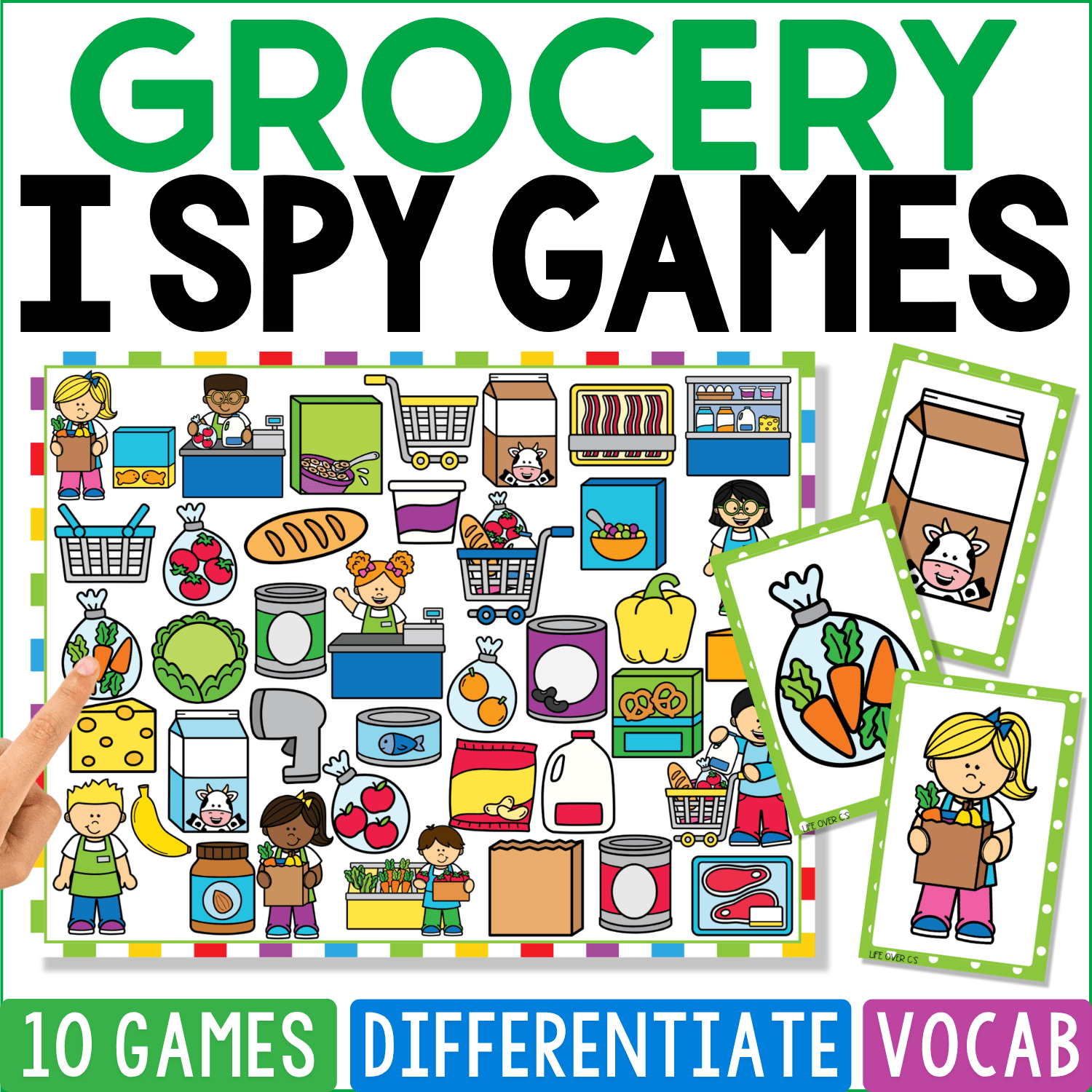
- 40 I Spy picture cards, 8 to a page (grocers, shopping carts, baskets, bananas, canned food and more)
- 10 full-color I Spy game boards
- 1 page of 20 grocery store tokens
- Table of contents and preparation directions
- I Spy “Flip” game instructions
The picture cards have no words, so kids match by looking closely. Some cards look a lot alike, like the cans, milk cartons and bags of fruit, so kids have to check the details to find the exact match.
Required Materials:
- White cardstock, printer and ink
- Laminator
- Paper cutter or scissors
- Optional: mini erasers or counters to use as tokens
Standards for Vocabulary and Speaking and Listening
This grocer I Spy game supports early learning standards connected to grocery store and food vocabulary, visual discrimination and taking turns in conversation.
Common Core State Standards: English Language Arts
- CCSS.ELA-LITERACY.L.K.5.A: Sort common objects into categories to gain a sense of the concepts the categories represent. Kids sort the pictures into food, people and shopping items.
- CCSS.ELA-LITERACY.L.K.5.C: Identify real-life connections between words and their use. Kids talk about grocery store and food words they know from real life.
- CCSS.ELA-LITERACY.SL.K.1: Participate in collaborative conversations with peers and adults in small and larger groups. Players take turns, name the pictures and talk about each match.
Texas Prekindergarten Guidelines and TEKS for English Language Arts and Reading
- PK4.II.D.1: Child understands and uses a wide variety of words to label and describe people, places, things and actions. Kids name and describe each grocery store and food picture they find.
- PK4.II.D.3: Child consistently understands and uses new vocabulary learned through books, conversations and play. Every round brings more chances to hear and use the theme words.
- TEKS K.1(D): Work collaboratively with others by following agreed-upon rules for discussion, including taking turns. Players take turns flipping cards and searching the board.
Virginia English Standards of Learning
- K.RV.1.C: Use vocabulary from across content areas. Kids build grocery store and food vocabulary as they play.
- K.RV.1.F: Use newly learned words and phrases in discussions and speaking activities. Kids name each picture when they find it.
- K.C.1.A.i: Listen actively and follow agreed-upon rules for participating in discussions. Kids take turns and wait for each player to flip.
The Grocer Community Helpers I Spy “Flip” Board Game gives preschool and kindergarten kids hands-on practice with visual discrimination and grocery store and food vocabulary using 40 picture cards and 10 colorful game boards.
Flip a card and find the shopping cart! Kids race to spot grocers, carts and food on a busy I Spy board while they talk about a trip to the grocery store.
The picture cards show grocers, shopping carts, baskets, bananas, canned food, cereal boxes, milk and bags of fruit. Some cards look a lot alike, like the cans, milk cartons and bags of fruit, so kids have to check the details to find the exact match.
The cards have pictures only, so kids who aren’t reading yet can play right along. Name each picture as you go to build grocery store and food vocabulary while kids search.
With 10 different game boards, the same pictures land in new spots each round. That keeps the search fresh while kids build visual scanning, focus and attention to detail.
How to Play the Grocer I Spy Game
- Choose one I Spy game board and place it where every player can see it. Deal the picture cards face down so each player has a small stack.
- All players flip their top card at the same time and race to find the matching picture on the board.
- The first player to point to the right picture names it, then wins a grocery store token or keeps the card as a point. Play until every card is flipped. The player with the most points wins!
Cooperative Play: Put the picture cards in one shared pile. Kids take turns flipping a card and work together to find it on the board. Cover each match with a token to see how many pictures the group can find.
Independent Play: Set one board and a stack of cards in a learning center. Kids flip one card at a time, find the picture and name it. Covering each picture with a token or mini eraser adds a little fine motor practice.
Easy Ways to Differentiate This Grocer I Spy Game
Every group has a mix of vocabulary, attention and visual scanning skills. These simple changes keep the I Spy routine familiar while meeting each child where they are.
For Children Who Need More Support:
- Start with 8 to 10 cards and one board.
- Name each picture together before you start the game.
- Model the first flip, search and match.
- Accept pointing or touching as an answer.
For On-Level Practice:
- Play with all 40 cards and one board.
- Have kids name each picture after every match.
- Switch boards so the same pictures land in new spots.
- Sort the cards into food, people and things that help us shop.
For an Extra Challenge:
- Have kids name the picture before they start searching.
- Describe a picture without naming it and let kids find it.
- Ask kids to make a pretend shopping list from the cards they find.
- Have kids tell how two look-alike pictures are different.
For Speech, OT, ELL or Special Education Support:
- Say the name of each picture and give plenty of wait time to find it.
- Accept pointing, gestures, AAC or any communication method the child already uses.
- Use the cards to build both receptive and expressive vocabulary.
- Play cooperatively when the goal is vocabulary, not speed.
- Have kids place a token on each match for added fine motor practice.
Grocer I Spy Game Is Perfect For:
- Preschool and pre-K
- Kindergarten
- Community helper themes
- Social studies centers
- Dramatic play grocery stores
- Small-group instruction
- Speech and language therapy
- Occupational therapy
- Special education
- ELL and multilingual learners
- Homeschool
- Early finishers