2D Shape Hide and Seek: Buttons Theme
Recommended Grade Level:
Type of Resource: PDF
Number of Pages: 9

Coordinating Activities


2D Shape Hide and Seek: Buttons
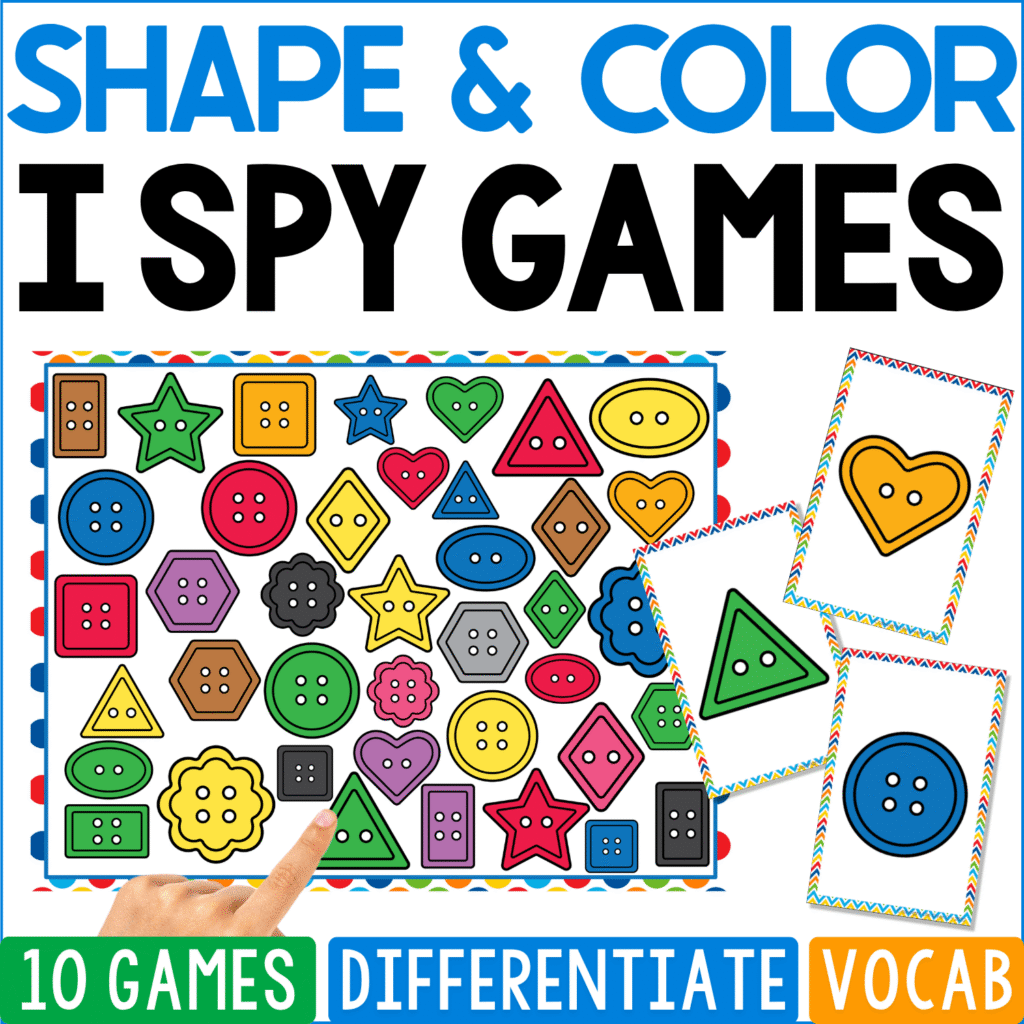
- 12 shape cards, each one a button in a different shape: triangle, circle, square, oval, rhombus, rectangle, trapezoid, pentagon, octagon, hexagon, parallelogram and star
- 8 sweater hiding cards
- Black and white versions of the shape cards and hiding cards
- “Which shape is it?” recording sheet
- Table of contents and game instructions
Kids name each shape as they guess, so the buttons become a fun way to practice the names of 12 different 2D shapes.
Required Materials:
- Paper, printer and ink
- Pocket chart (or a table)
- Paper cutter or scissors
- Pencils or crayons for the recording sheet
- Optional: laminator
Standards for 2D Shapes and Geometry
This buttons shape hide and seek game supports early math standards connected to naming shapes, describing shapes and recognizing shapes in different sizes and positions.
Common Core State Standards: Mathematics
- CCSS.MATH.CONTENT.K.G.A.2: Correctly name shapes regardless of their orientations or overall size. Kids name all 12 shapes each time they guess where the sweater is hiding.
- CCSS.MATH.CONTENT.K.G.B.4: Analyze and compare two-dimensional shapes using informal language to describe their parts, like the number of sides and corners. Kids use side and corner clues to narrow down their guesses.
Texas Prekindergarten Guidelines and TEKS for Mathematics
- PK4.V.C.1: Child names and describes common 2D shapes and names at least 1 solid 3D shape. Kids name the shape they want to look behind.
- PK4.V.C.4: Child recognizes common shapes, regardless of orientation and size. The shapes are drawn as themed pictures in different sizes and positions.
- TEKS K.6(A): Identify two-dimensional shapes, including circles, triangles, rectangles and squares as special rectangles. Kids find these shapes and more in the pocket chart.
Virginia Mathematics Standards of Learning
- K.MG.2: Identify, describe, name, compare and construct plane figures (circles, triangles, squares and rectangles). Kids name and describe the shapes as they play.
Buttons 2D Shape Hide and Seek is a pocket chart guessing game that gives preschool and kindergarten kids hands-on practice naming 12 shapes as they search for the hiding sweater.
Which button is hiding the sweater? Kids name a shape, peek behind the button and keep guessing until they find it!
Place the 12 button shape cards in a pocket chart and secretly tuck a sweater card behind one of them. Kids take turns naming a shape, like “Is it behind the hexagon?”, then lift the card to check.
Every guess is a chance to say a shape name out loud, from the circle and square to the trapezoid, pentagon and octagon. The recording sheet lets kids draw or write the shapes they guessed.
How to Play Buttons 2D Shape Hide and Seek
- Place the shape cards in a pocket chart. If you don’t have one, lay them face up on a table.
- While the children close their eyes, hide a sweater card behind one shape card.
- Kids take turns naming a shape and checking behind it until someone finds the sweater. Then hide it again and play another round!
Circle Time: The whole group takes turns guessing. Count how many guesses it takes to find the sweater.
Partner Play: Partners take turns hiding and guessing at a pocket chart center and record their guesses on the recording sheet.
Easy Ways to Differentiate This Buttons 2D Shape Hide and Seek Game
Some kids are still learning basic shape names, some know them but mix up similar shapes and some are ready for clues. Each shape card is a button, and kids guess which button is hiding a coat.
For Children Who Need More Support:
- Start with the circle, square and triangle buttons and hide one coat. Three shapes make the first game simple.
- Let kids hold real buttons in matching shapes while you name the cards. Holding a real button helps kids feel the shape.
- Teach the question is the coat behind the oval button and say it together. A sentence frame helps kids play.
- Give two choices per turn. Two choices make guessing easier for new players.
For On-Level Practice:
- Use all 12 button shapes and hide all eight coats. A full chart gives lots of practice.
- Have kids draw each guessed button shape on the recording page. Drawing builds shape awareness.
- Have kids count the holes in each button they guess. Counting holes adds math.
- Let one child hide the coats while others close their eyes. Being the hider means reading every shape.
For an Extra Challenge:
- Give clues like the coat is behind a button with four sides and no square corners. Careful clues build attribute thinking.
- Have kids sort real buttons by shape after the game. Sorting real objects builds understanding.
- Have kids compare the square and rhombus buttons. Comparing builds geometry language.
- Have kids find buttons on their own clothes and name the shapes. Real-world shapes make geometry meaningful.
For Speech, OT, ELL or Special Education Support:
- For speech practice, use the b sound in button and the k sound in coat. Theme words give focused practice.
- For OT practice, have kids practice buttoning a real coat after finding each coat card. Buttoning builds fine motor skills.
- For ELL support, teach button, coat, holes and shape before playing. Theme words help kids join in.
- For special education support, give the child a button to hold during their turn. Holding the button shows whose turn it is.
Buttons 2D Shape Hide and Seek Is Perfect For:
- Preschool and pre-K
- Kindergarten
- Shape units
- Circle time
- Math centers
- Pocket chart centers
- Small-group instruction
- Special education
- ELL and multilingual learners
- Homeschool