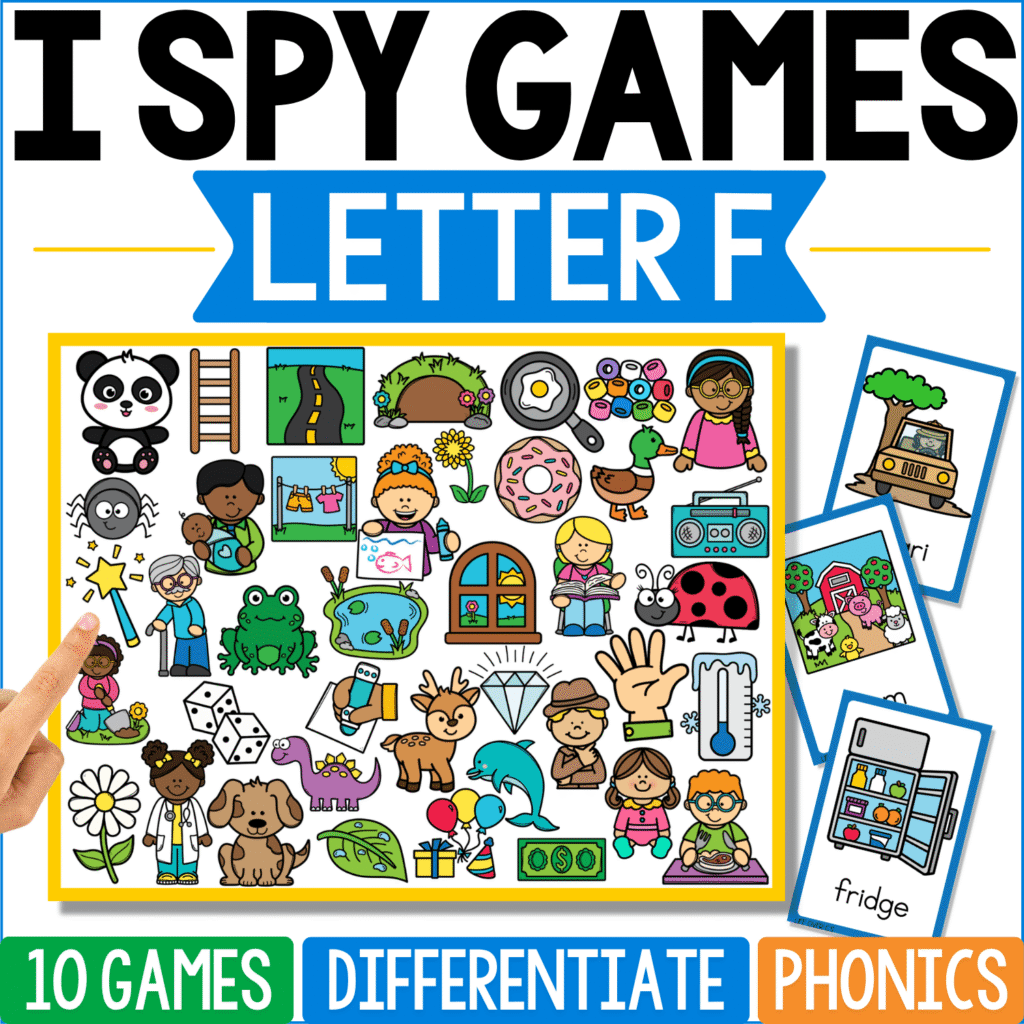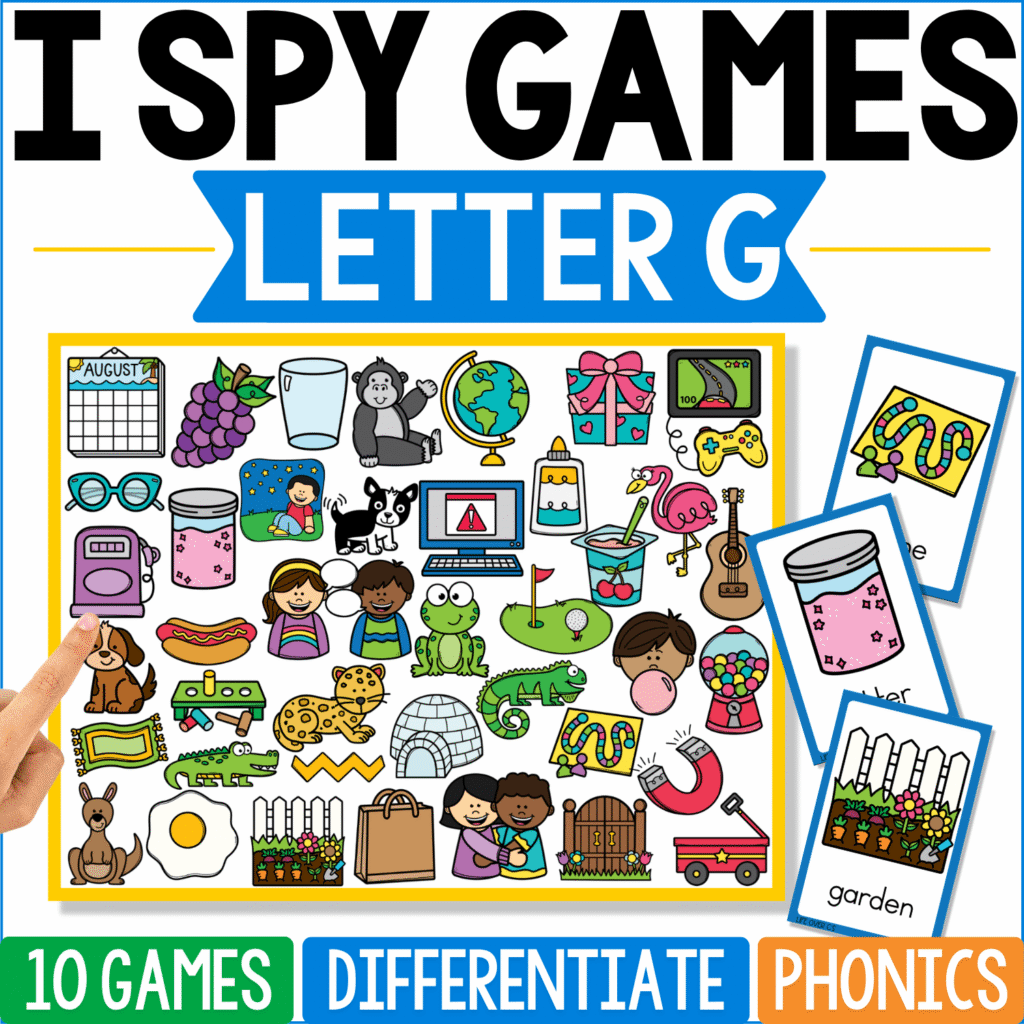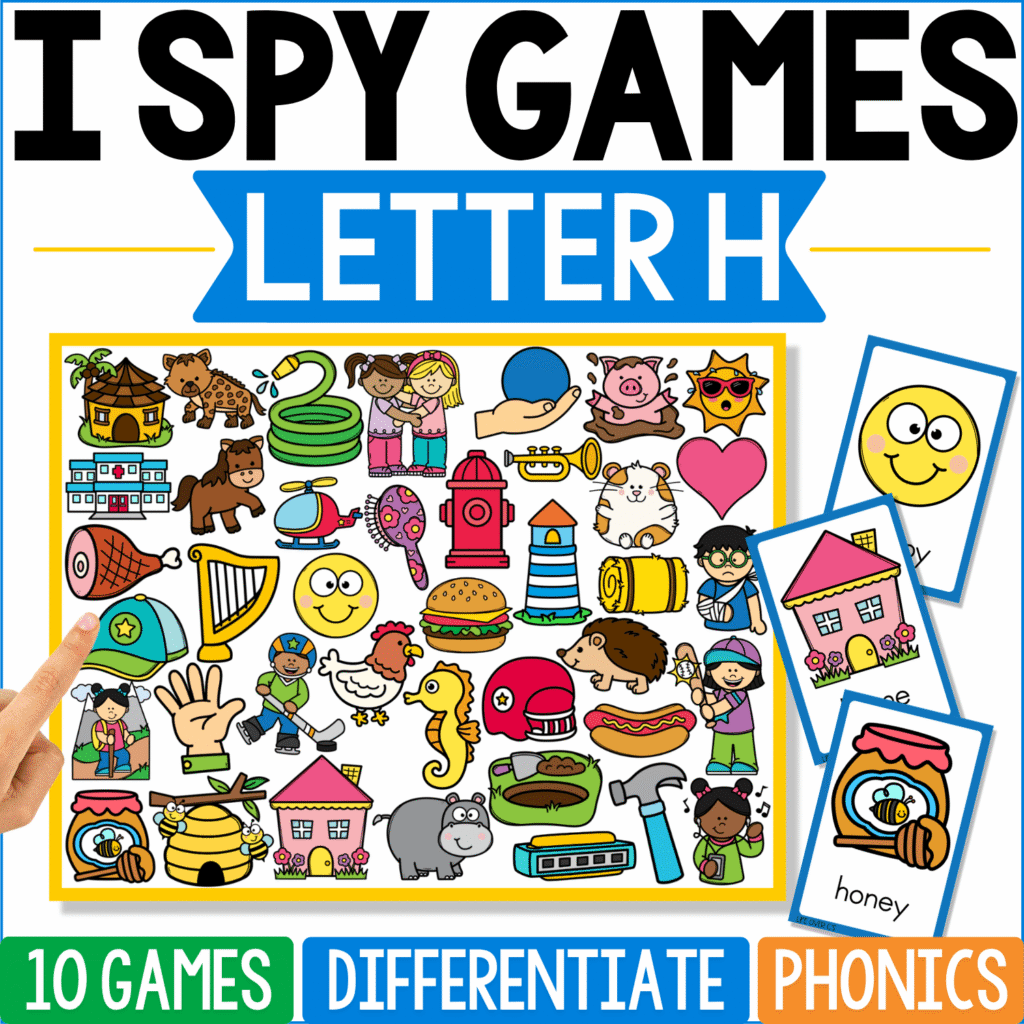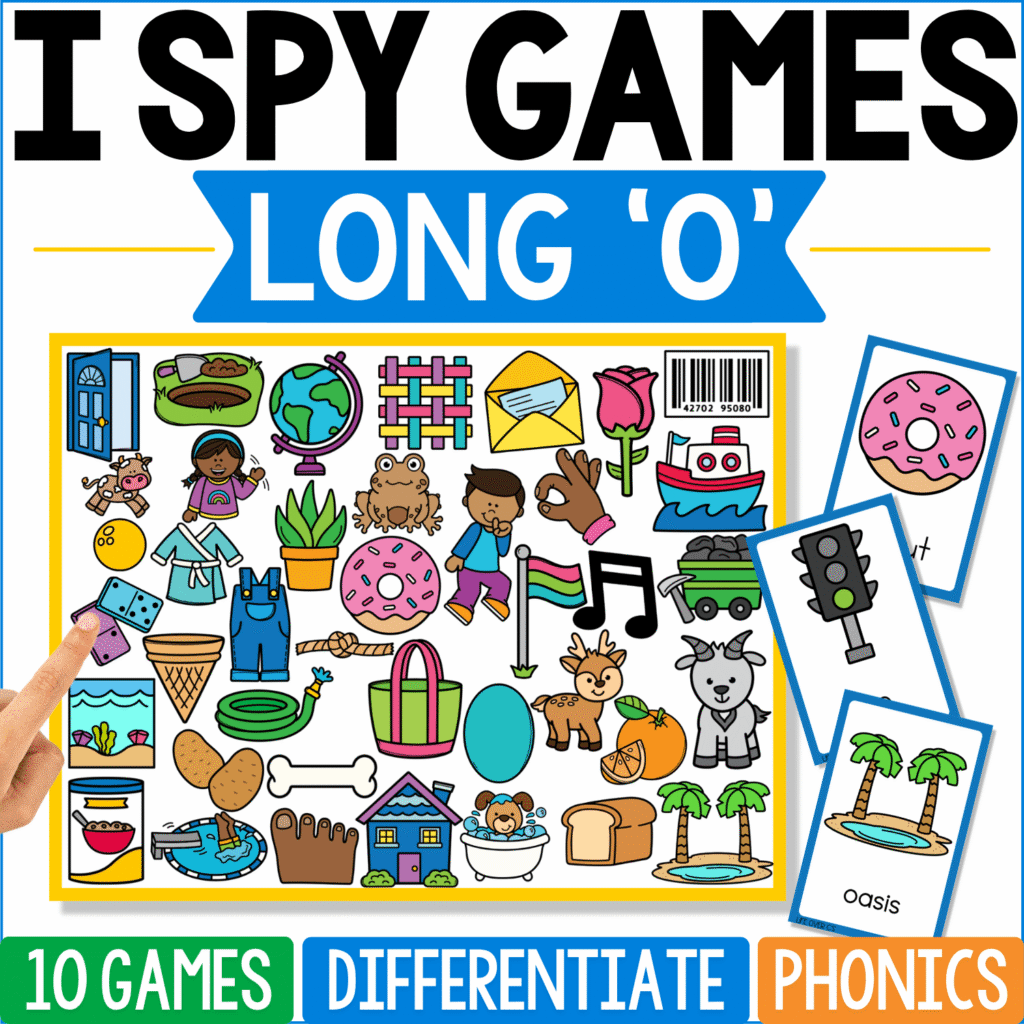


I Spy “Flip” Board Game: Letter Sounds R
Recommended Grade Level:
Type of Resource: PDF
Number of Pages: 21

You must be an Annual or Forever Member to Access this Resource.
Join the Life Over C’s Club to Access
Already a member? Login below:
Coordinating Activities


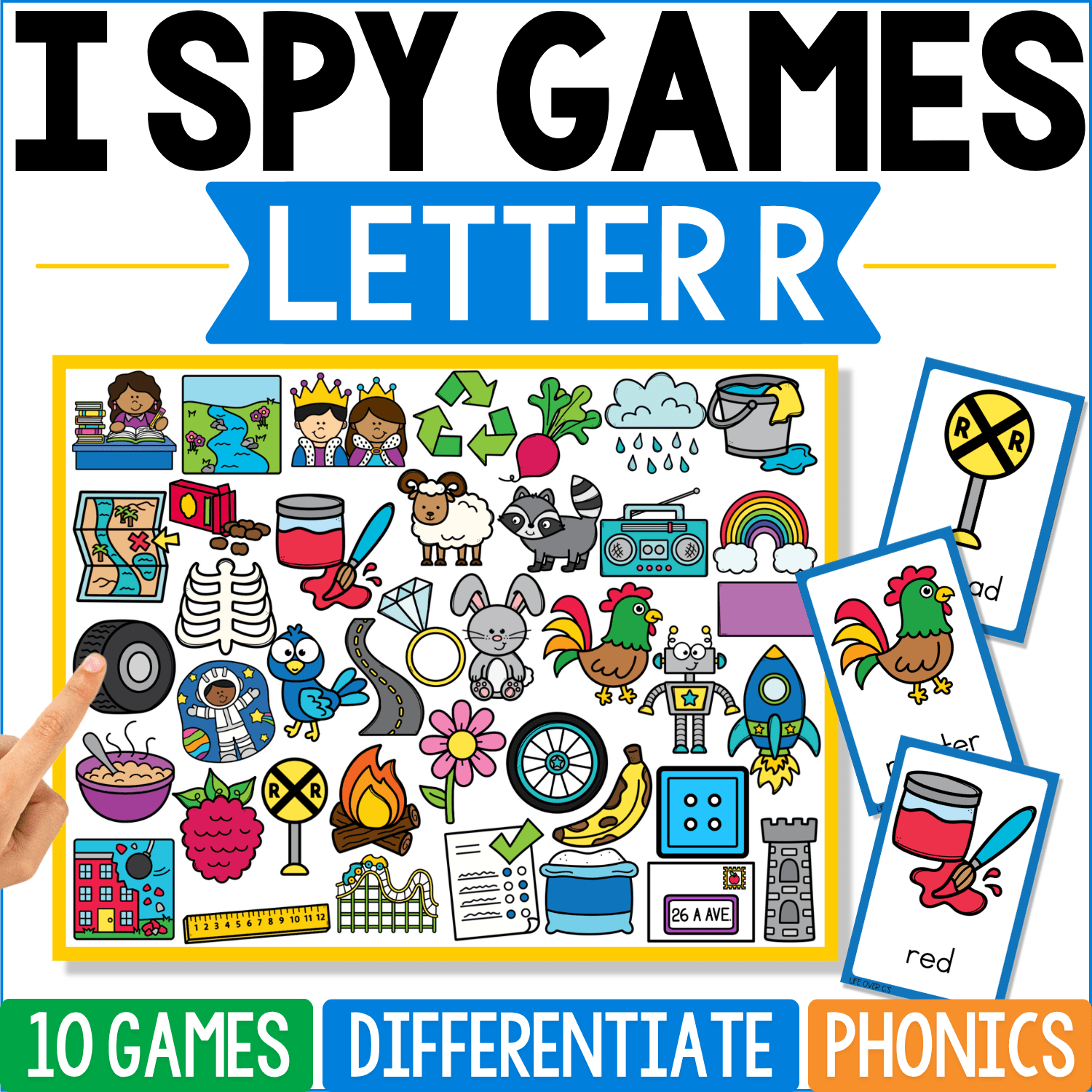
Letter Sounds ‘R’ I Spy “Flip” Board Game
- 40 I Spy picture cards with words, 8 to a page (rabbit, rainbow, robot, raspberry, flower and more)
- 10 full-color I Spy game boards
- 1 page of 20 star tokens
- Table of contents and preparation directions
- I Spy “Flip” game instructions
Kids hear /r/ at the beginning, middle and end of words, like rabbit, porridge and tire.
Required Materials:
- White cardstock, printer and ink
- Laminator
- Paper cutter or scissors
- Optional: mini erasers or counters to use as tokens
Standards for Letter Sounds, Phonological Awareness and Speaking and Listening
This letter R I Spy game supports early literacy standards connected to letter-sound correspondence, hearing sounds in words and taking turns in conversation.
Common Core State Standards: English Language Arts
- CCSS.ELA-LITERACY.RF.K.3.A: Demonstrate basic knowledge of one-to-one letter-sound correspondences by producing the primary sound for each consonant. Kids say the /r/ sound with every match.
- CCSS.ELA-LITERACY.RF.K.2.D: Isolate and pronounce the initial, medial vowel and final sounds in three-phoneme words. Kids listen for /r/ at the start of short words like red, rib, rag and ram.
- CCSS.ELA-LITERACY.SL.K.1: Participate in collaborative conversations with peers and adults in small and larger groups. Players take turns, name the pictures and talk about each match.
Texas Prekindergarten Guidelines and TEKS for English Language Arts and Reading
- PK4.III.C.2: Child recognizes at least 20 distinct letter-sound correspondences. Kids connect the letter R to its sound on every card.
- PK4.III.C.3: Child produces at least 20 distinct letter-sound correspondences. Kids say /r/ each time they find a picture.
- TEKS K.2(A)(ii): Recognize spoken alliteration or groups of words that begin with the same spoken onset or initial sound. Many of the cards start with /r/, like red, rib, rag and ram.
- TEKS K.2(B)(i): Identify and match the common sounds that letters represent. Kids match each /r/ picture and its word.
Virginia English Standards of Learning
- K.FFR.3.B: Identify common letter-sound correspondences. Kids hear and say /r/ with every card.
- K.FFR.2.C: Isolate the initial, medial and final sounds in three phoneme words. Kids listen for /r/ at the start of short words like red, rib, rag and ram.
The Letter Sounds ‘R’ I Spy “Flip” Board Game gives preschool and kindergarten kids hands-on practice hearing, finding and saying the /r/ sound with 40 picture cards and 10 colorful game boards.
Flip a card, find the rabbit and say /r/! Kids race to spot each picture on a busy I Spy board, and every match is one more chance to hear the letter R sound.
Every picture in this game has the /r/ sound, like rabbit, rainbow, robot, raspberry, flower and tire. Some words start with /r/, some have it in the middle, like porridge and correct, and some end with it, like tire and flower.
Each card shows a picture and its word, so adults can name it the same way every time. Kids who aren’t reading yet can still play by matching the pictures and saying the word together.
With 10 different game boards, the same pictures land in new spots each round. That keeps the search fresh while kids build visual scanning, focus and letter-sound skills.
How to Play the Letter R I Spy Game
- Choose one I Spy game board and place it where every player can see it. Deal the picture cards face down so each player has a small stack.
- All players flip their top card at the same time and race to find the matching picture on the board.
- The first player to point to the right picture says the word and the /r/ sound, then wins a star token or keeps the card as a point. Play until every card is flipped. The player with the most points wins!
Cooperative Play: Put the picture cards in one shared pile. Kids take turns flipping a card and work together to find it on the board. Cover each match with a token to see how many /r/ pictures the group can find.
Independent Play: Set one board and a stack of cards in a literacy center. Kids flip one card at a time, find the picture and say the word aloud. Covering each picture with a token or mini eraser adds a little fine motor practice.
Easy Ways to Differentiate This Letter R I Spy Game
The /r/ sound is one of the hardest for young kids to say, so this game is useful for both phonics and speech. Some children are connecting R to /r/, some hear it at the start of rabbit but not at the end of tire and some are ready to read and spell r words. Each card has a picture and word to support every level.
For Children Who Need More Support:
- Start with the cards that begin with /r/, like rabbit, rainbow and robot. The first sound is easiest to hear.
- Say /r/ with a slow growl, like a car engine. A fun sound helps kids notice it.
- Point to the R on each card after a match. Linking letter and sound builds phonics.
- Accept close sounds, like “wabbit,” and say the word back clearly. Kids learn without pressure while hearing a correct model.
For On-Level Practice:
- Ask where kids hear /r/: beginning, middle or end. Listening for position builds awareness.
- Sort cards into beginning, middle and end piles, like robot, porridge and tire. Sorting makes kids listen to whole words.
- Compare rainbow and flower and listen for /r/ in different spots. Comparing builds careful listening.
- Have kids read the word aloud and growl the /r/ before searching. Reading and then stretching the sound ties print to speech.
For an Extra Challenge:
- Cover the pictures so kids read the word to play. Reading without pictures shows real decoding.
- Find words with r blends, like train and frog if they appear on the board. Blends stretch phonemic awareness.
- Spell short r words, like rat and run, on a whiteboard. Spelling moves from hearing to writing.
- Sort the words by how r is used, like at the start or after a vowel. Thinking about r patterns prepares kids for r-controlled vowels.
For Speech, OT, ELL or Special Education Support:
- Articulation: /r/ is often worked on in speech therapy. Pull the position the child is targeting and use every flip as a practice trial.
- Fine motor: build an R from play dough before each round. Building letters builds formation and hand strength.
- ELL: the English /r/ is very different from rolled or tapped r sounds in many languages, so model it slowly and often.
- Speech support: let kids practice with a mirror to see lip and tongue position. Visual cues help with this tricky sound.
Letter R I Spy Game Is Perfect For:
- Preschool and pre-K
- Kindergarten
- Letter of the week
- Phonics and literacy centers
- Small-group instruction
- Speech and language therapy
- Special education
- ELL and multilingual learners
- Homeschool
- Early finishers
- Substitute plans