Counting 1-20 Activities: Earth Day
Recommended Grade Level:
Type of Resource: PDF
Number of Pages: 142

You must be an Annual or Forever Member to Access this Resource.
Join the Life Over C’s Club to Access

Already a member? Login below:


What’s Included in Counting 1-20 Activities: Earth Day
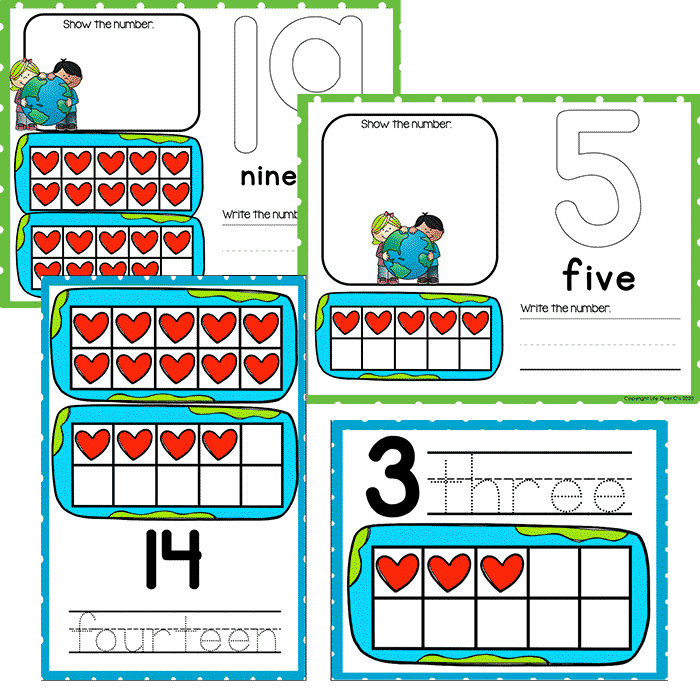
- Number mats 1 to 20 with guided ten-frames
- Number mats 1 to 20 with blank ten-frames
- Counting mats 1 to 20
- Ten-frame counting cards 1 to 20
- Ten-frame clip cards
- Roll, write and show mat
- Color and black and white versions of every activity
- Teacher instructions for each activity
Required Materials:
- Printer, paper and ink
- Scissors or a paper cutter
- Laminator
- Play dough and dry erase markers
- Small counters such as mini erasers, pom-poms or buttons
- Clothespins and a die (a 20-sided die is optional)
Standards Connections
Building, writing and counting numbers to 20 with the earth day counting activities connect with these early math standards.
Common Core State Standards
- CCSS.MATH.CONTENT.K.CC.A.3: Write numbers from 0 to 20. Represent a number of objects with a written numeral 0-20.
- CCSS.MATH.CONTENT.K.CC.B.4: Understand the relationship between numbers and quantities; connect counting to cardinality.
- CCSS.MATH.CONTENT.K.CC.B.5: Count to answer “how many?” questions about as many as 20 things.
- CCSS.MATH.CONTENT.K.NBT.A.1: Compose and decompose numbers from 11 to 19 into ten ones and some further ones.
Texas Prekindergarten Guidelines
- PK.V.A.3: Child counts 1-10 items, with one count per item.
- PK.V.A.5: Child counts up to 10 items and demonstrates that the last count indicates how many items were counted.
- PK.V.A.8: Child recognizes one-digit numerals, 0-9.
Texas Essential Knowledge and Skills (TEKS)
- K.2B: Read, write and represent whole numbers from 0 to at least 20 with and without objects or pictures.
- K.2C: Count a set of objects up to at least 20 and demonstrate that the last number said tells the number of objects.
- K.2D: Recognize instantly the quantity of a small group of objects in organized and random arrangements.
Virginia Standards of Learning
- K.NS.2: Count and identify the number of objects in a set.
- K.NS.3: Read, write and represent numbers from 0 to 20.
Skills Students Practice
- Number recognition: reading numerals and number words 1 to 20.
- Counting and cardinality: knowing the last number counted tells how many.
- Ten-frame sense: seeing numbers as part of 10 and teen numbers as 10 and some more.
- Numeral writing: tracing and writing numbers 1 to 20.
- One-to-one correspondence: placing one counter for each number counted.
- Fine motor control: building with play dough, clipping and placing counters.
Counting 1-20 Activities: Earth Day
Counting 1-20 Activities: Earth Day is a set of six hands-on number activities for 1 to 20, so preschool and kindergarten students can build, trace, write, count and show every number with ten-frames.
Earth Day is a great time to talk about caring for our planet, and these mats keep little hands busy counting while you do. Kids hugging the Earth and bright red hearts fill every mat.
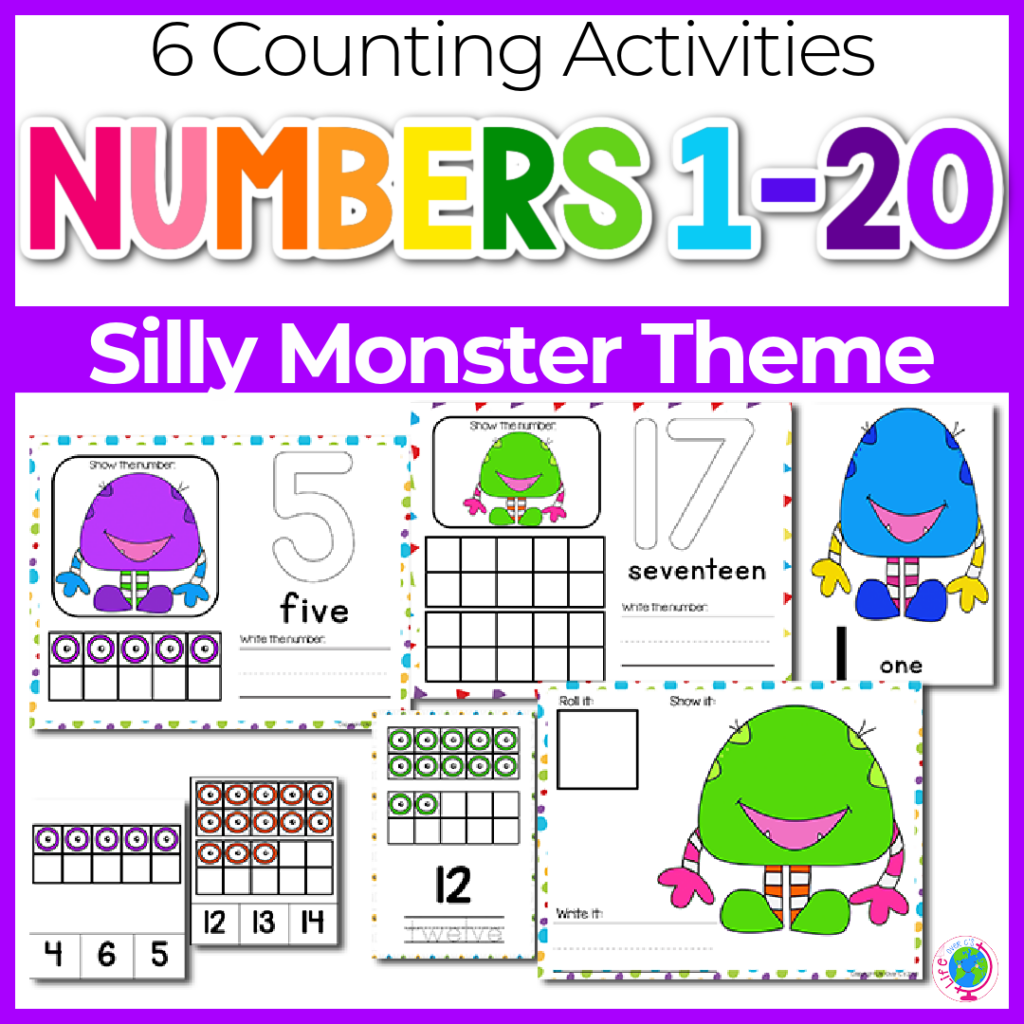
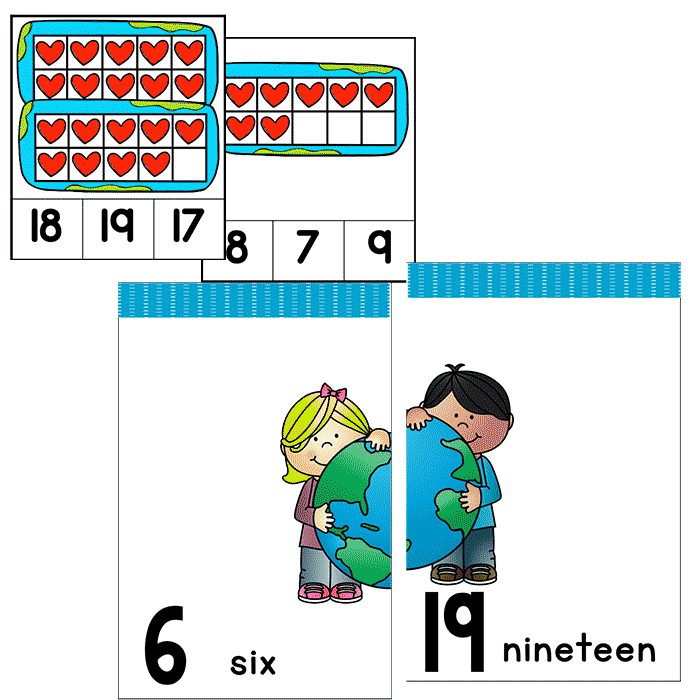
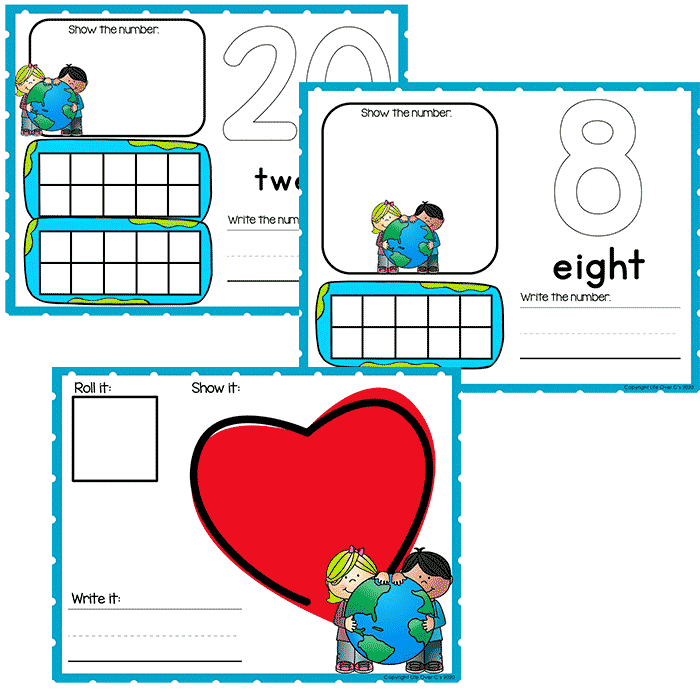
Every number from 1 to 20 shows up in several ways: a number mat to build with play dough, trace and write, ten-frame cards, clip cards, half-page counting mats and a roll, write and show mat. Kids see the same number as a numeral, a number word and a ten-frame, which is how real number sense grows.
Every activity comes in color and black and white, so you can laminate a center set and print extra pages for practice.
Activities in the Earth Day Counting Set
- Number mats with guided ten-frames: build the number with play dough, trace the numeral, write it and fill a ten-frame that shows little heart pictures as a guide.
- Number mats with blank ten-frames: the same mats with empty ten-frames, so kids show the amount on their own.
- Counting mats: half-page Earth Day mats with a numeral and number word. Kids put that many small objects on the mat.
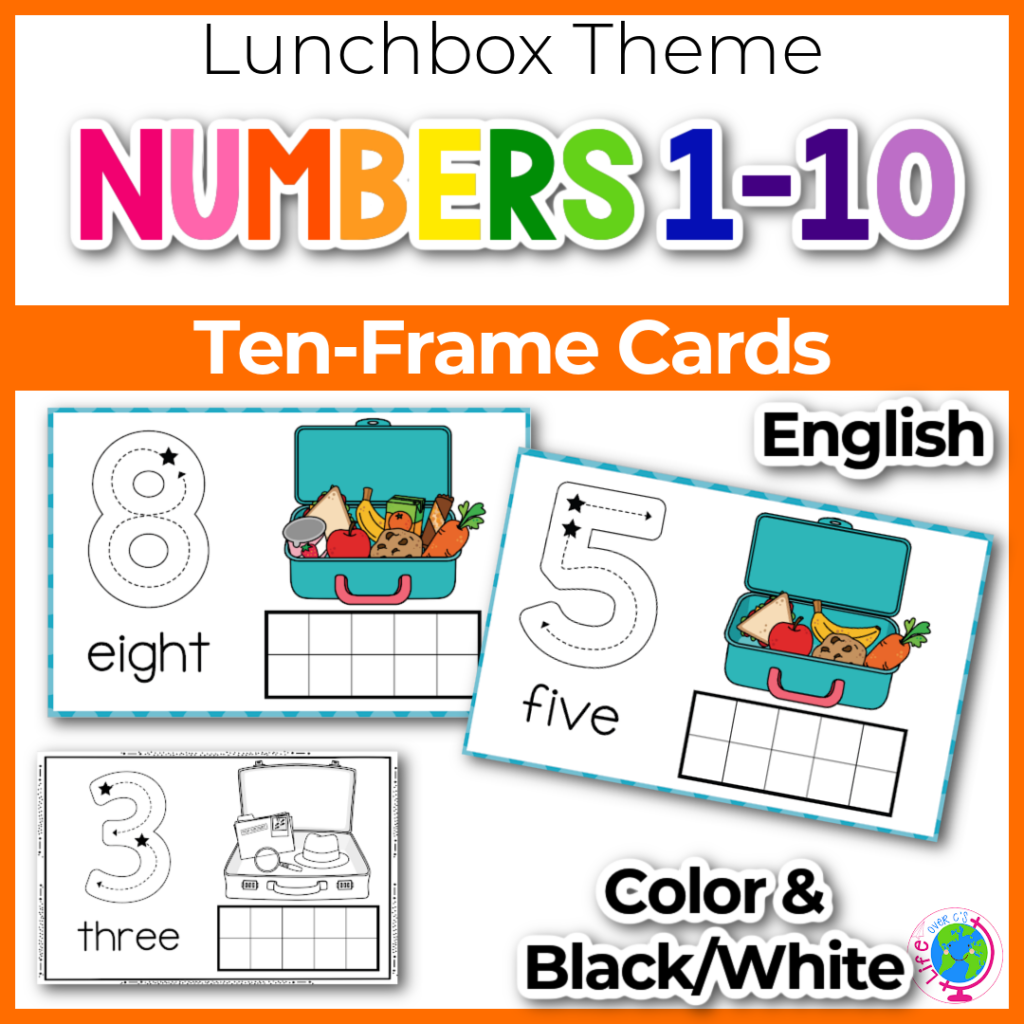
- Ten-frame cards: cards for 1 to 20 with the ten-frame, numeral and number word.
- Ten-frame clip cards: kids count the ten-frame and clip the matching number from three choices.
- Roll, write and show mat: roll a die, write the number or number word and show it with counters.
How to Use the Earth Day Counting Activities
- Print the activities you want in color or black and white. Laminate the mats and cards and cut the cards apart.
- Choose one activity and model it with a number kids know well.
- Add play dough, dry erase markers and small counters like mini erasers, pom-poms or buttons.
- Kids build, write and show the number, then count the objects out loud to check.
Small Group: Give each child a different number mat and have them share how they showed their number.
Math Centers: Rotate one activity into your center each week, from number mats to clip cards to the roll and show mat.
Tips for Success
- Use a 20-sided die on the roll, write and show mat for numbers to 20, or a regular die for kids still working to 6.
- Mark a dot on the back of each correct clip card answer so kids can check their own work.
- Store each number range in its own zipper bag, like 1 to 5 or 11 to 15, so you can hand out the right numbers quickly.
Easy Ways to Differentiate Earth Day Counting Activities
A counting center for Earth Day might include a three-year-old counting to 5, a preschooler working on numbers to 10 and a kindergartner ready for teen numbers. The six activities and the guided and blank ten-frames let you match each child to the right numbers and the right amount of support.
For Children Who Need More Support
- Start with numbers 1 to 5 on the guided ten-frame mats. The hearts show kids where each counter goes, so they can focus on counting.
- Use green and blue counters for “Earth” pieces. A fun counter keeps kids engaged while they count one object at a time.
- Count out loud together, touching each heart. Saying one number for each heart builds one-to-one correspondence.
- Use the counting mats with bigger objects like blocks. Larger objects are easier for small hands to move.
For On-Level Practice
- Move to the blank ten-frame mats once kids count 10 objects correctly. Without the hearts, kids fill the ten-frame on their own.
- Use the ten-frame cards to play a quick game: flip a card and say the number as fast as you can. Recognizing amounts on a ten-frame without counting is called subitizing.
- Have kids say how many empty spaces are left on each ten-frame. Thinking about empty spaces builds combinations to 10.
- For teen numbers, have kids use green counters for the full ten-frame and blue for the extra ones. Two colors show that 16 is 10 and 6 more.
For an Extra Challenge
- Collect clean recyclables like bottle caps and use them as counters. Counting real objects connects math to taking care of the Earth.
- Have kids pick two ten-frame cards and tell which shows more and how many more. Comparing two amounts is the next step after counting.
- Hide one ten-frame card from a set of 1 to 10 and have kids figure out which number is missing. Finding the gap shows they know the counting order.
- Have kids write an Earth Day number sentence on the roll, write and show mat, like “I picked up 12 pieces of trash.” Writing a sentence connects numbers to real life.
For Speech, OT, ELL or Special Education Support
- Fine motor: use clothespins on the ten-frame clip cards. Squeezing a clothespin open builds the hand strength kids need for writing.
- Speech: practice the “th” sound in three and thirteen as kids count. The teen mats give lots of natural practice.
- ELL: use the roll, write and show mat to practice the sentence “I rolled ___.” A short, repeated sentence frame helps English learners speak in full sentences.
- Special education: use ten-frame cards 1 to 5 for a quick daily routine. Practicing the same five cards each day builds confidence before you add more numbers.
Counting 1-20 Activities: Earth Day Is Perfect For:
- Preschool and pre-K
- Kindergarten
- Earth Day and spring themes
- Math centers and small groups
- Morning tubs and early finishers
- Homeschool math
- Speech therapy and OT sessions
- ELL and multilingual learners
- Special education