
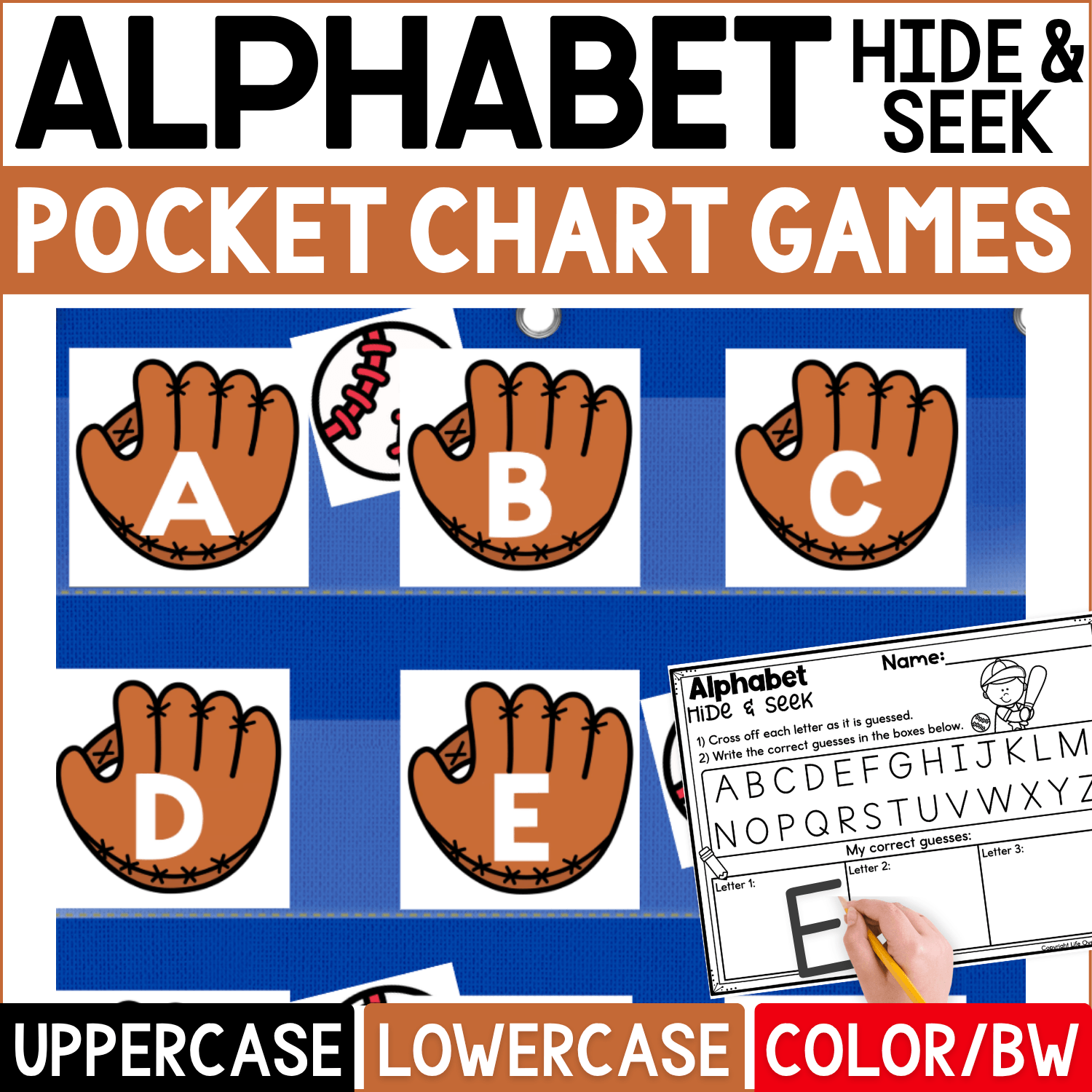
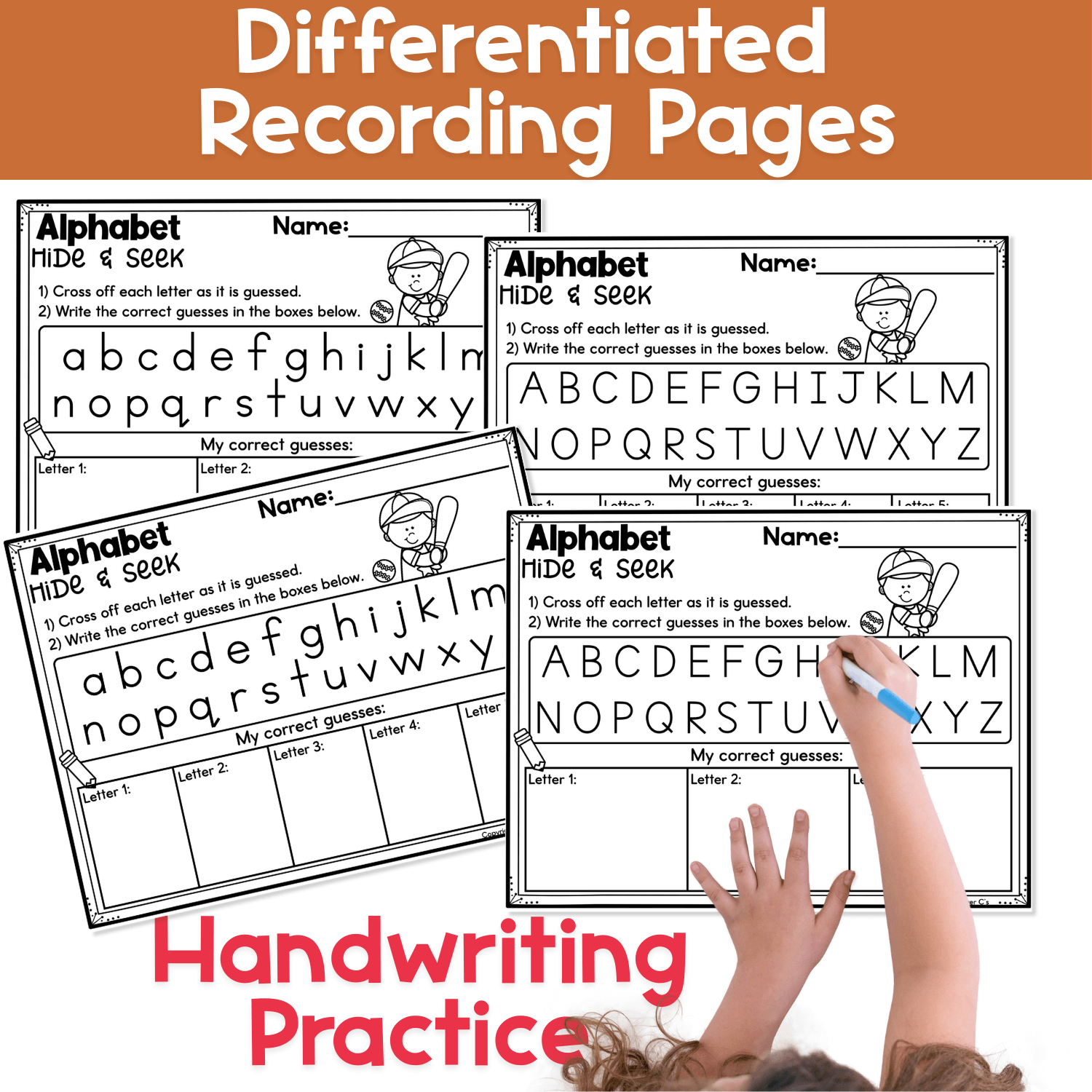
Alphabet Hide and Seek: Baseball
Recommended Grade Level:
Type of Resource: PDF
Number of Pages: 28

You must be an Annual or Forever Member to Access this Resource.
Join the Life Over C’s Club to Access

Already a member? Login below:
Coordinating Resources:
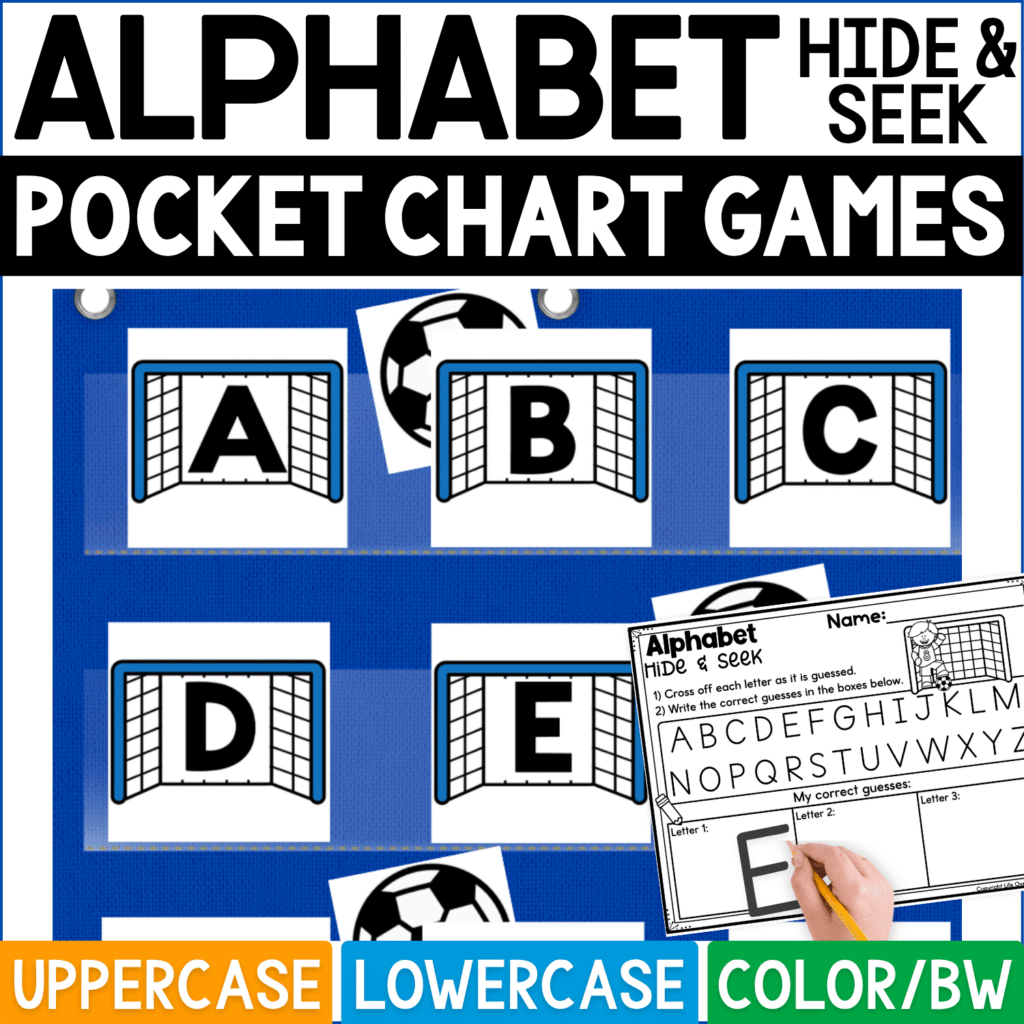
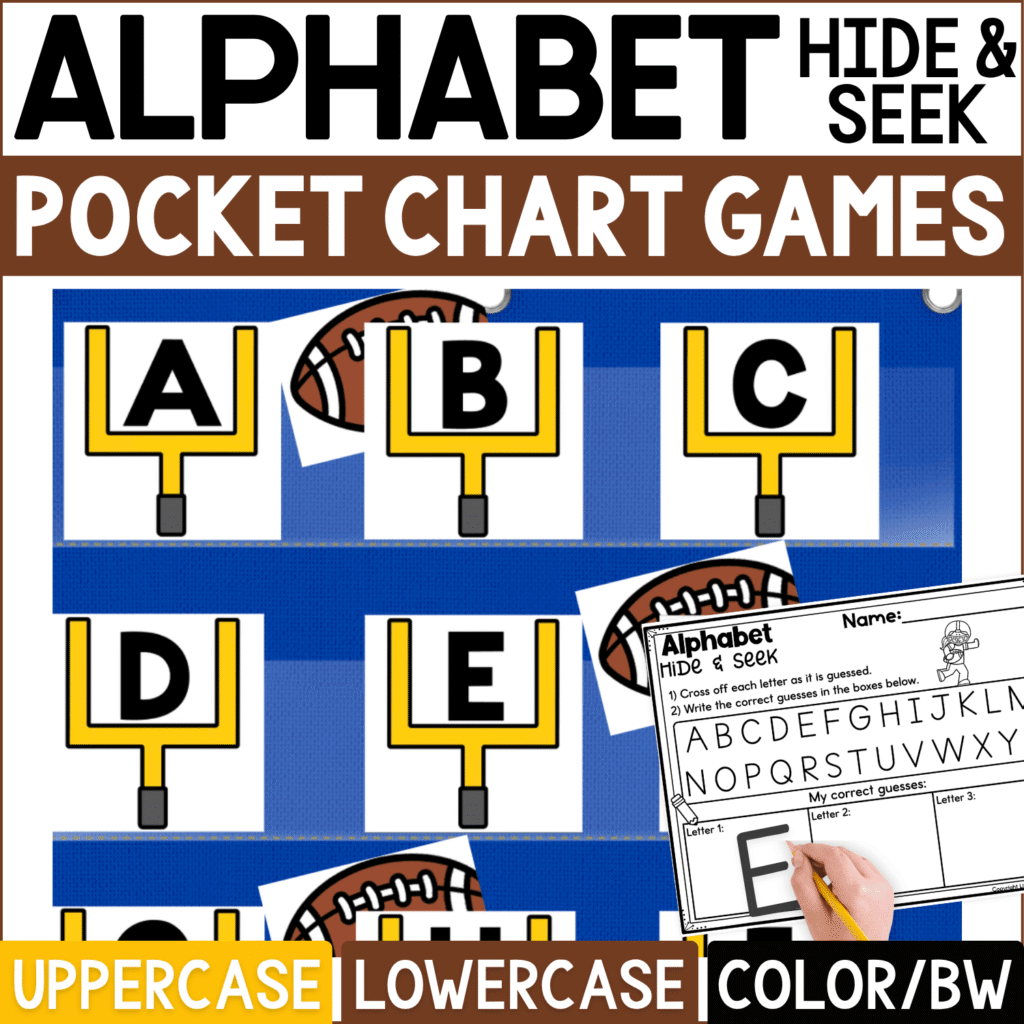
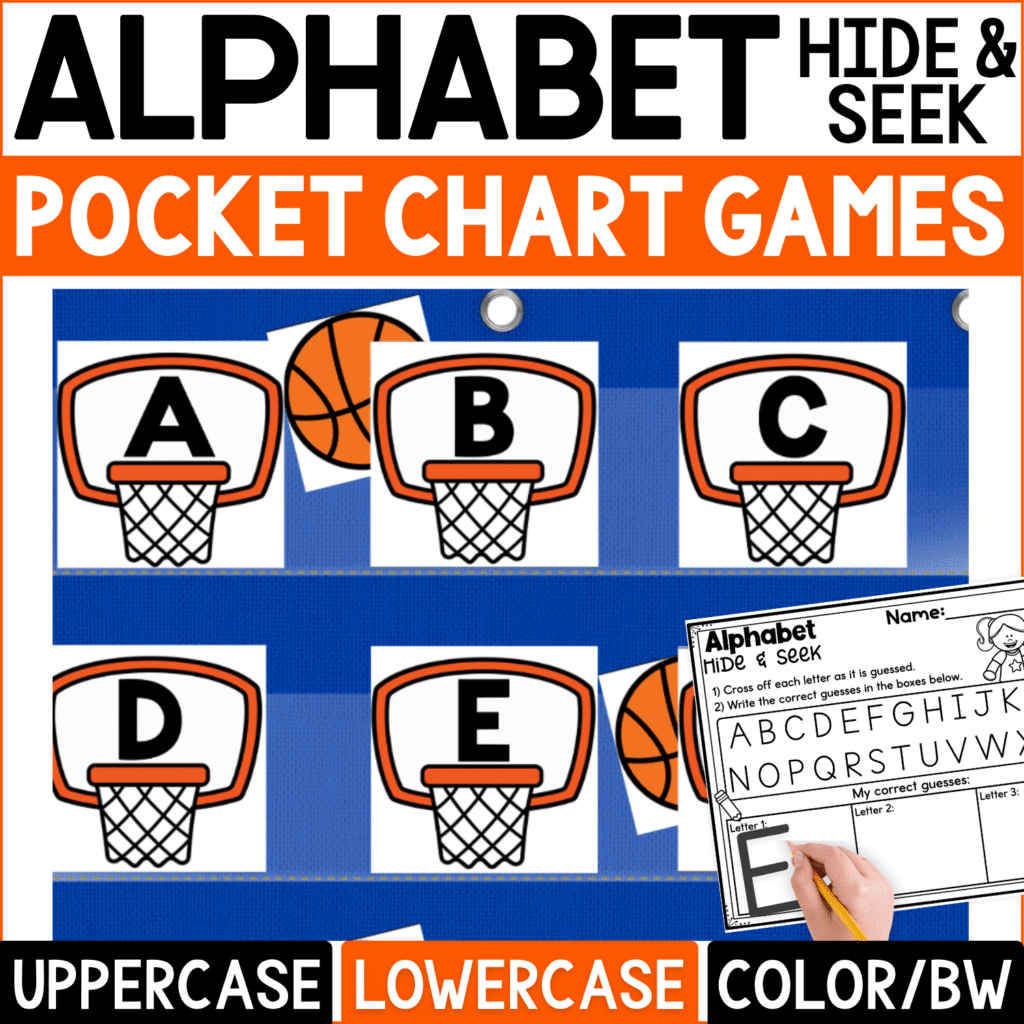
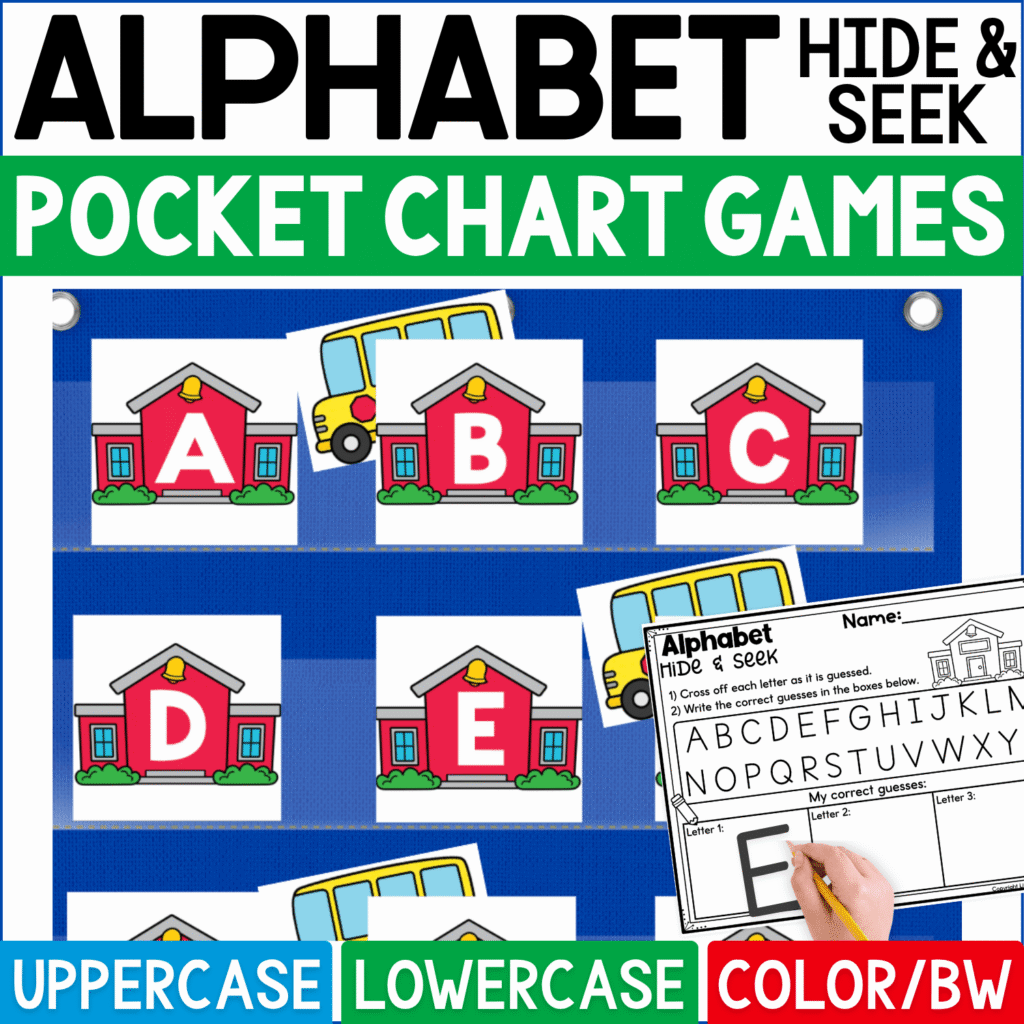
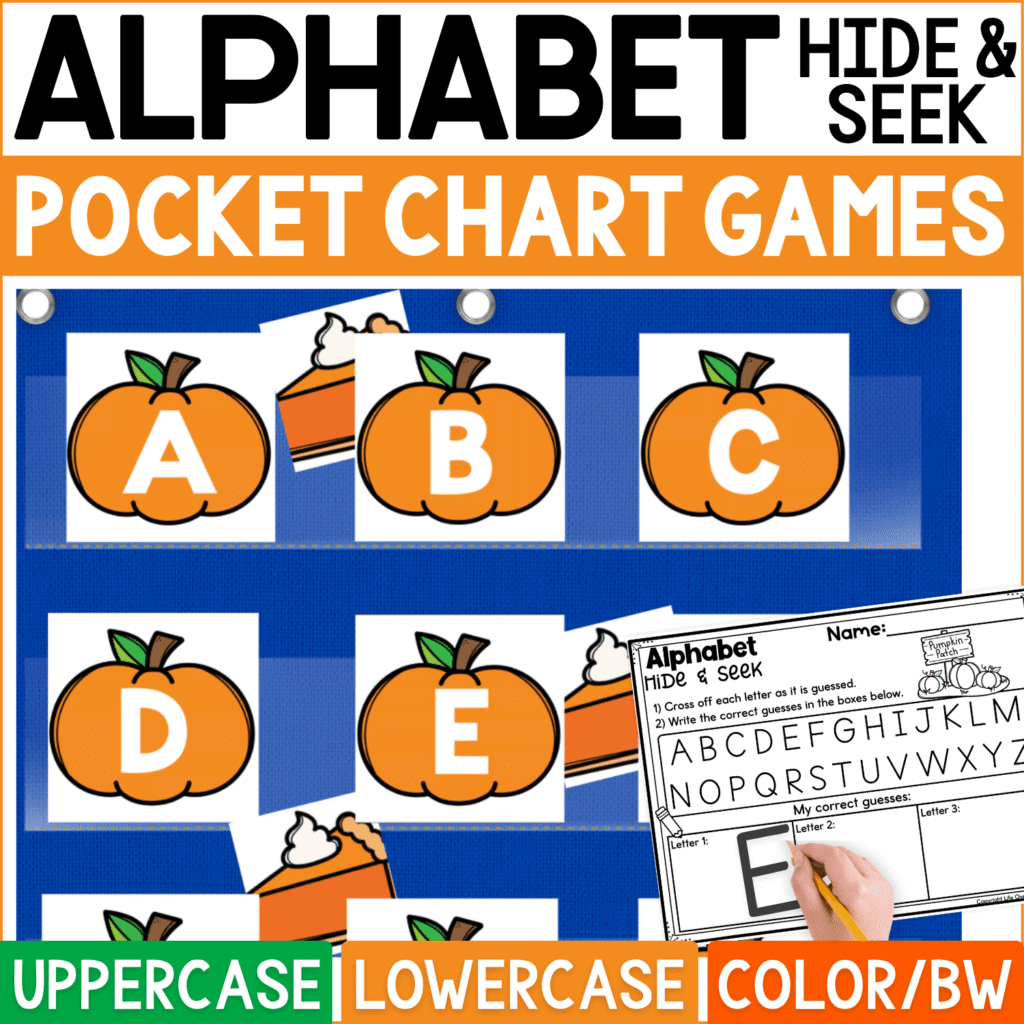
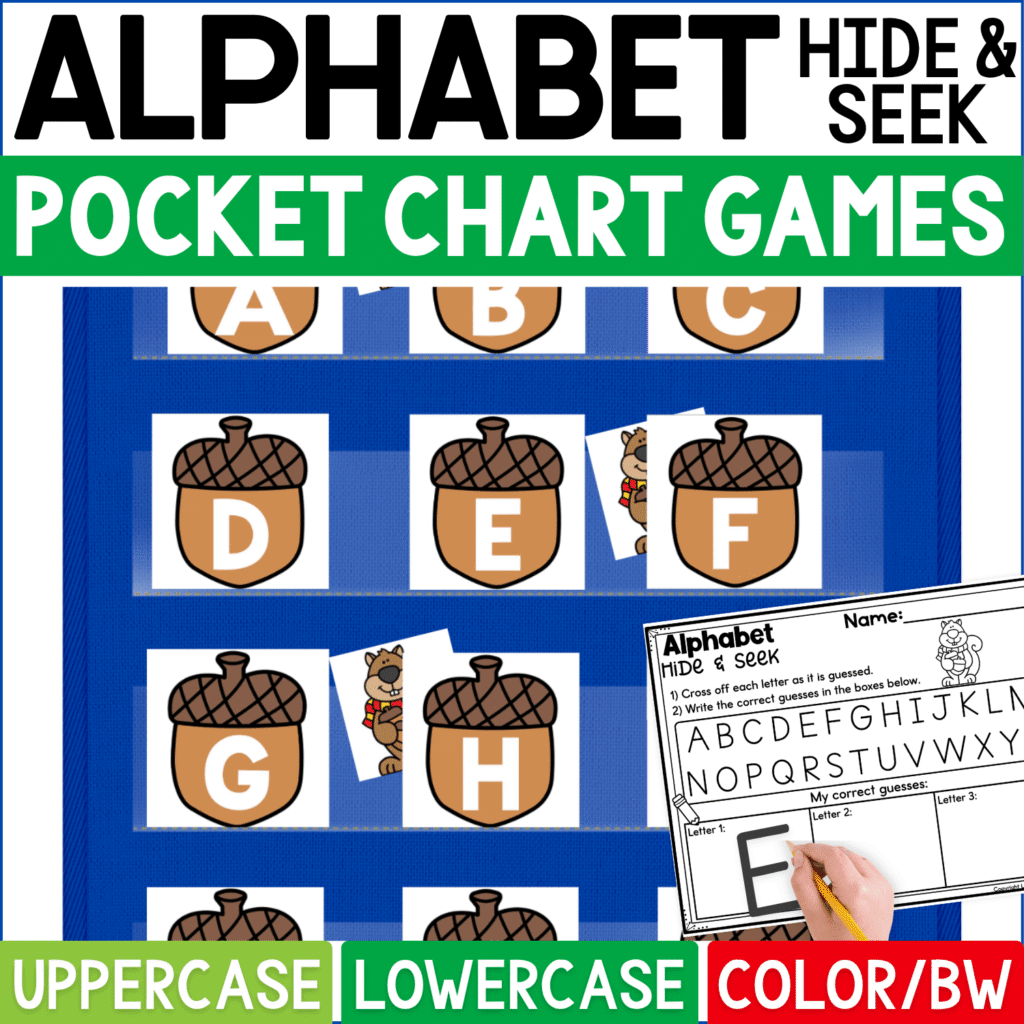
Baseball Alphabet Hide and Seek
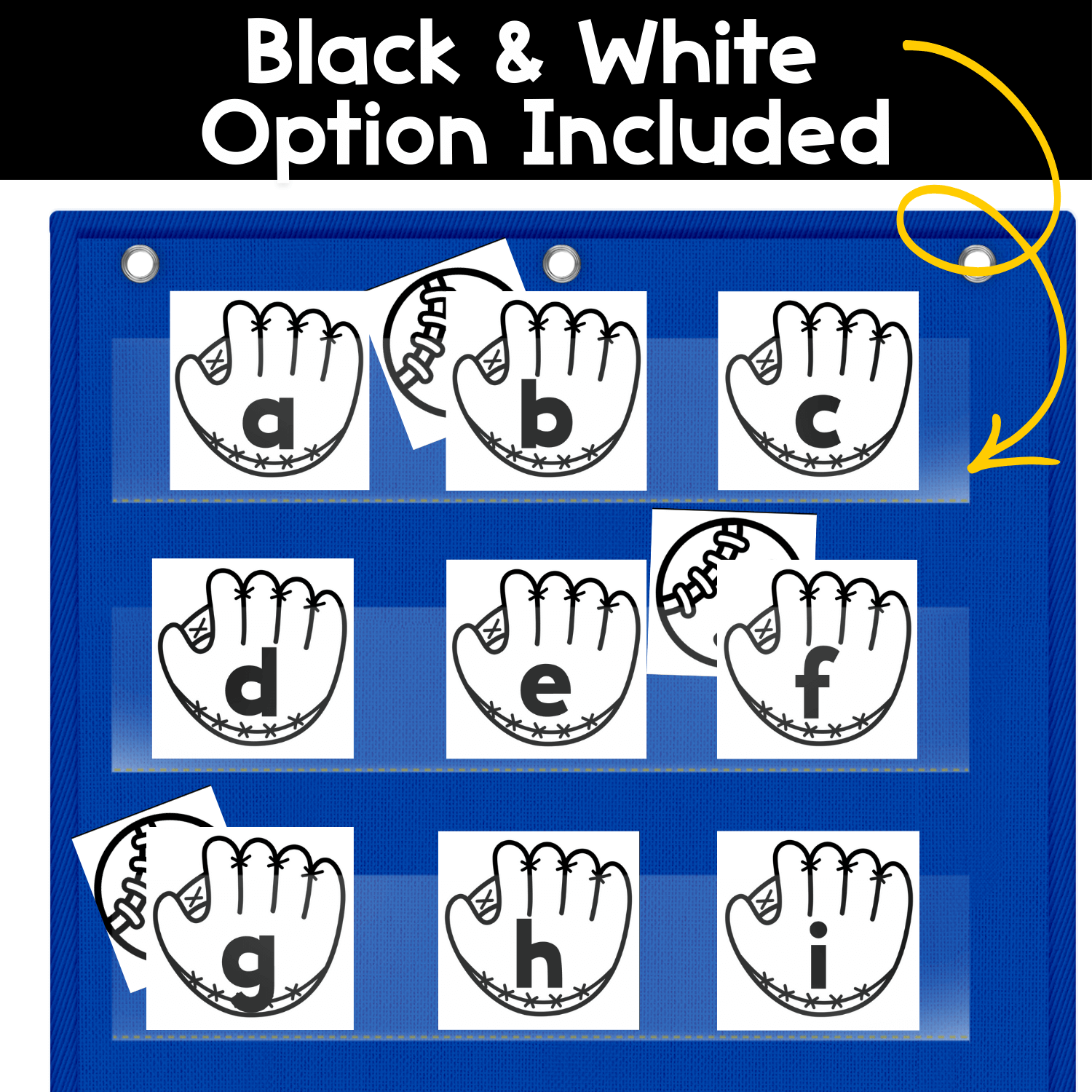
- 26 uppercase letter cards on baseball gloves in color and black and white
- 26 lowercase letter cards on baseball gloves in color and black and white
- 8 baseballs hiding cards in color and black and white
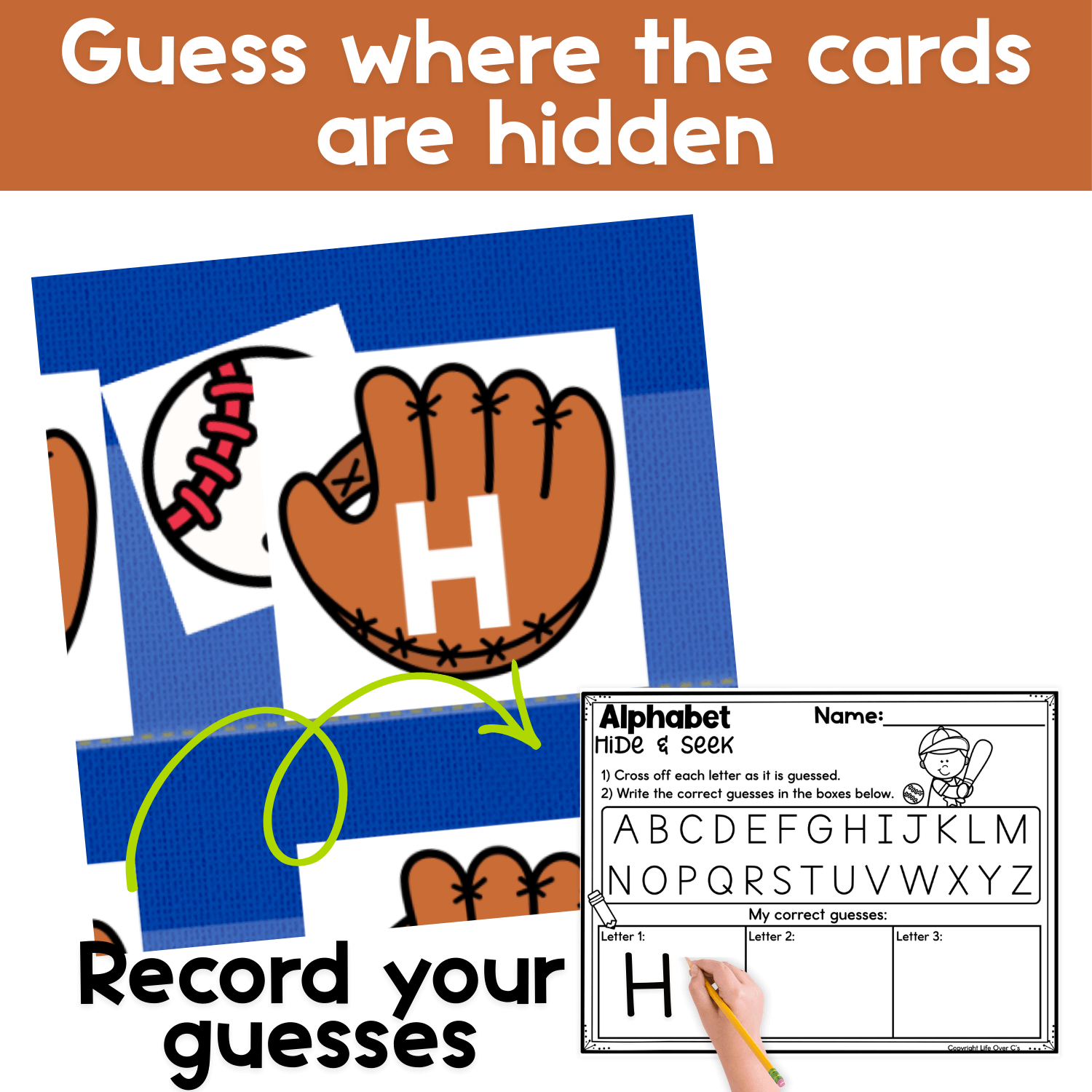
- 4 recording sheets (2 uppercase and 2 lowercase) to cross off guessed letters and write correct guesses
- Instruction pages
Kids name a letter each time they guess where the baseballs are hiding, so every turn is a chance to practice letter recognition.
Required Materials:
- Paper, printer and ink
- Pocket chart (or a table)
- Laminator
- Paper cutter or scissors
- Pencils for the recording sheets
Standards for Letter Recognition
This baseball alphabet game supports early literacy standards connected to naming uppercase and lowercase letters, writing letters and taking turns in a group.
Common Core State Standards: English Language Arts
- CCSS.ELA-LITERACY.RF.K.1.D: Recognize and name all upper- and lowercase letters of the alphabet. Kids name a letter with every guess.
- CCSS.ELA-LITERACY.L.K.1.A: Print many upper- and lowercase letters. Kids write their correct guesses on the recording sheet.
Texas Prekindergarten Guidelines and TEKS for English Language Arts and Reading
- PK4.III.C.1: Child recognizes and names at least 20 letters. Kids name each letter before they check behind the card.
- TEKS ELA K.2(D)(v): Demonstrate print awareness by identifying all uppercase and lowercase letters. Kids play with uppercase cards, lowercase cards or both.
- TEKS ELA K.1(D): Work collaboratively with others by following agreed-upon rules for discussion, including taking turns. Kids take turns guessing and checking.
Virginia English Standards of Learning
- K.FFR.3.A: Identify capital and lowercase letters of the alphabet. Kids name the letter on each card they pick.
- K.FFW.1.B: Print capital and lowercase letters of the alphabet. Kids write the letters they found on the recording sheet.
- K.C.1.A.i: Listen actively and follow agreed-upon rules for participating in discussions. Kids listen to each guess and wait for their turn.
Baseball Alphabet Hide and Seek is a pocket chart guessing game that gives preschool and kindergarten kids hands-on practice naming uppercase and lowercase letters as they search for the hiding baseballs.
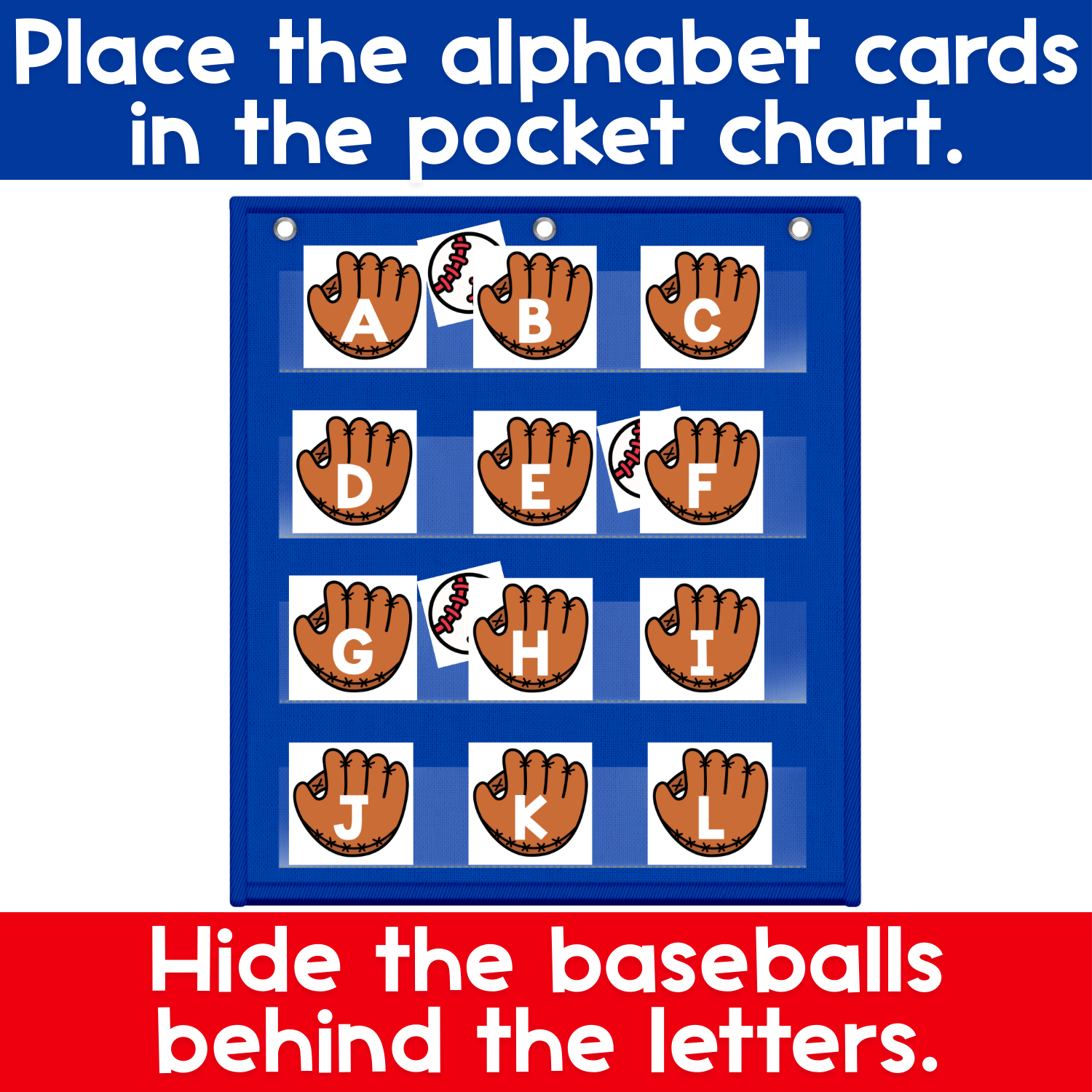
The letters sit on baseball gloves and the baseballs are hiding. Kids name a letter to see if a baseball is in that glove.
Place the letter cards in a pocket chart and secretly tuck the baseballs behind a few of the baseball gloves. Kids take turns naming a letter, like “Is it behind the B?”, then lift the card to check.
Use the uppercase cards, the lowercase cards or a mix. Start with a few letters kids already know and add more as they grow. The recording sheets let kids cross off each letter that has been guessed and write the letters where they found a hiding card.
How to Play Baseball Alphabet Hide and Seek
- Place the letter cards you want to practice in a pocket chart. If you don’t have one, lay them face up on a table.
- While the children close their eyes, hide the baseballs behind some of the cards.
- Kids take turns naming a letter and checking behind it until all the baseballs are found. Then hide them again and play another round!
Circle Time: The whole group takes turns guessing. Count how many guesses it takes to find all the baseballs.
Literacy Center: Partners take turns hiding and guessing and record their guesses on the recording sheet.
Easy Ways to Differentiate This Alphabet Hide and Seek Game
Some kids are still learning letter names, some know them but need practice with sounds and some are ready for clues. In this baseball game, kids guess which glove is hiding a baseball, and you can make the field as big or small as kids need.
For Children Who Need More Support:
- Start with three gloves and hide one baseball. A small field keeps the first game short and successful.
- Use only letters kids have learned so far. Known letters build confidence before new ones join the chart.
- Have kids repeat the letter name after you before checking the glove. Repeating builds letter names even on a missed guess.
- Give each child three strikes to find the ball, then help them find it. A clear limit keeps turns short and frustration low.
For On-Level Practice:
- Use all 26 gloves and hide all eight baseballs. A full chart keeps kids naming letters all game.
- Have kids say the letter name and its sound before checking a glove. Saying the sound connects the letter to reading.
- Use the recording page to cross off guesses and write the letters that hid a baseball. Recording keeps the game organized and adds writing.
- Have kids run the bases around the table each time they find a baseball. A quick lap adds movement between turns.
For an Extra Challenge:
- Mix uppercase and lowercase gloves in the chart. Kids have to know both forms to find the ball.
- Give sound clues, like the ball is behind the letter that starts bat. Listening for first sounds builds phonemic awareness.
- Have kids name a baseball word for each found letter, like h for hit and r for run. Theme words build vocabulary.
- Have kids tally how many strikes each player takes and compare at the end. Tallying adds math to the game.
For Speech, OT, ELL or Special Education Support:
- For speech practice, use the b sound in baseball, bat and base during the game. Repeating theme words gives focused practice on one sound.
- For OT practice, have kids squeeze a soft ball three times before each turn. Squeezing builds hand strength for writing.
- For ELL support, teach glove, ball, bat and base before playing. Knowing the theme words helps kids take part.
- For special education support, give the child a glove card to hold during their turn and pass it on after. Holding the card shows whose turn it is.
Baseball Alphabet Hide and Seek Is Perfect For:
- Preschool and pre-K
- Kindergarten
- Sports themes
- Circle time
- Literacy centers
- Pocket chart centers
- Letter of the week
- Small-group instruction
- Special education
- ELL and multilingual learners
- Homeschool
You must be an Annual or Forever Member to Access this Resource.
Join the Life Over C’s Club to Access
Already a member? Login below:


