I Spy “Flip” Board Game: Real Life Fruit
Recommended Grade Level:
Type of Resource: PDF
Number of Pages: 22

You must be a Monthly, Annual or Forever Member to Access this Resource.
Join the Life Over C’s Club to Access

Already a member? Login below:
Coordinating Activities


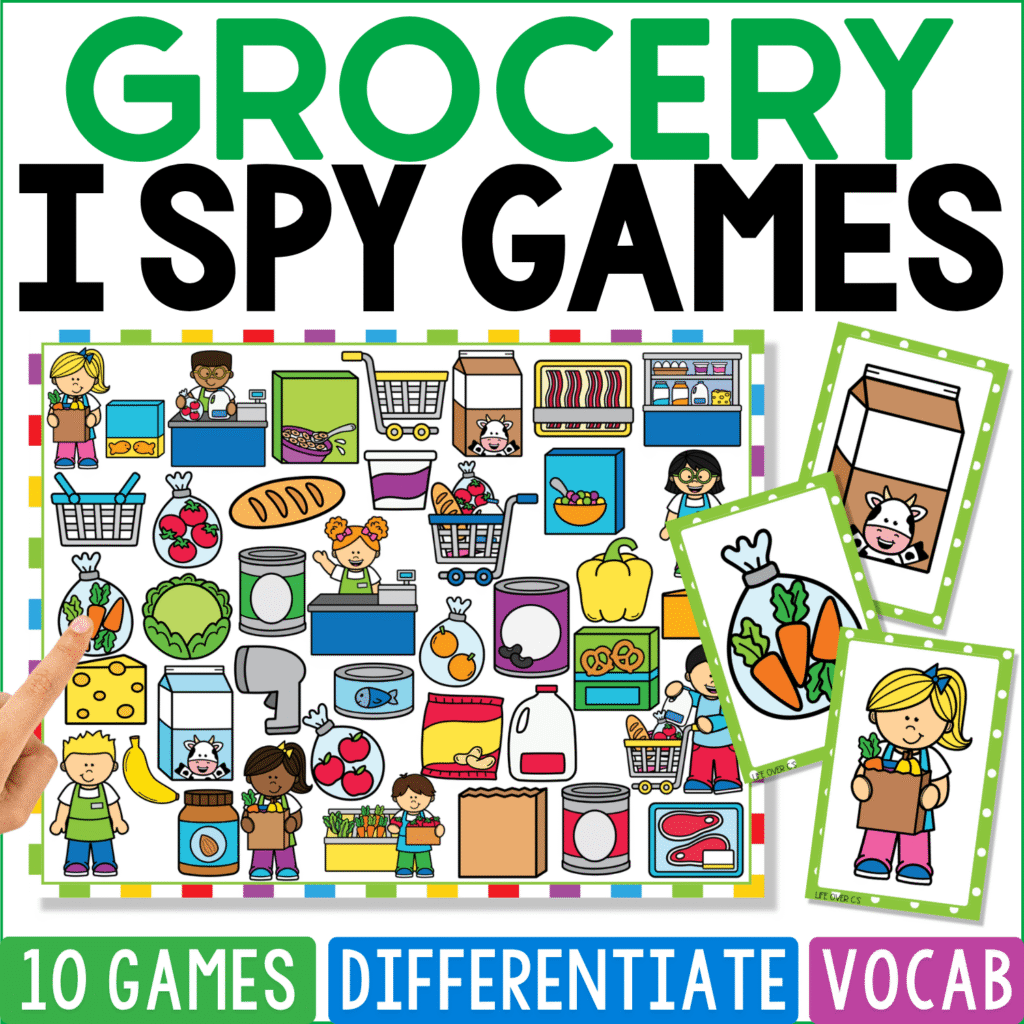
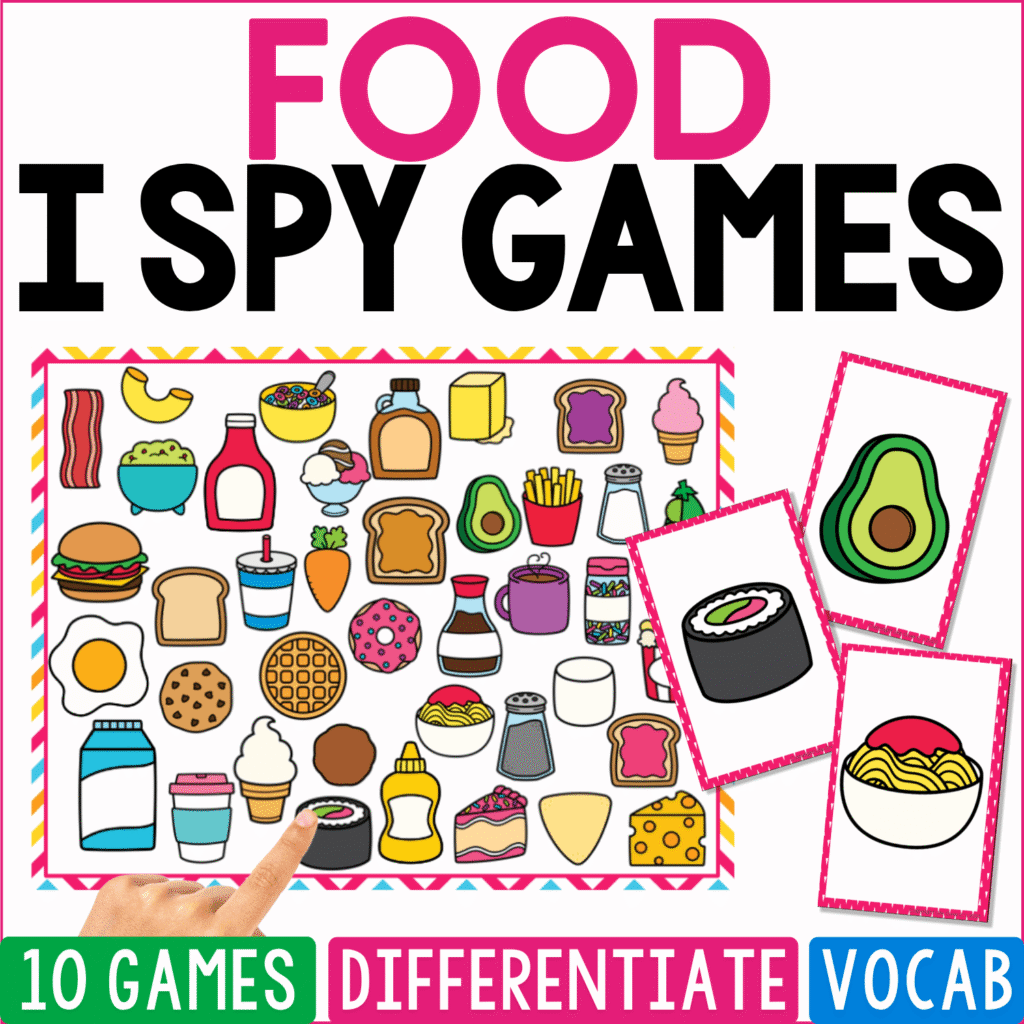


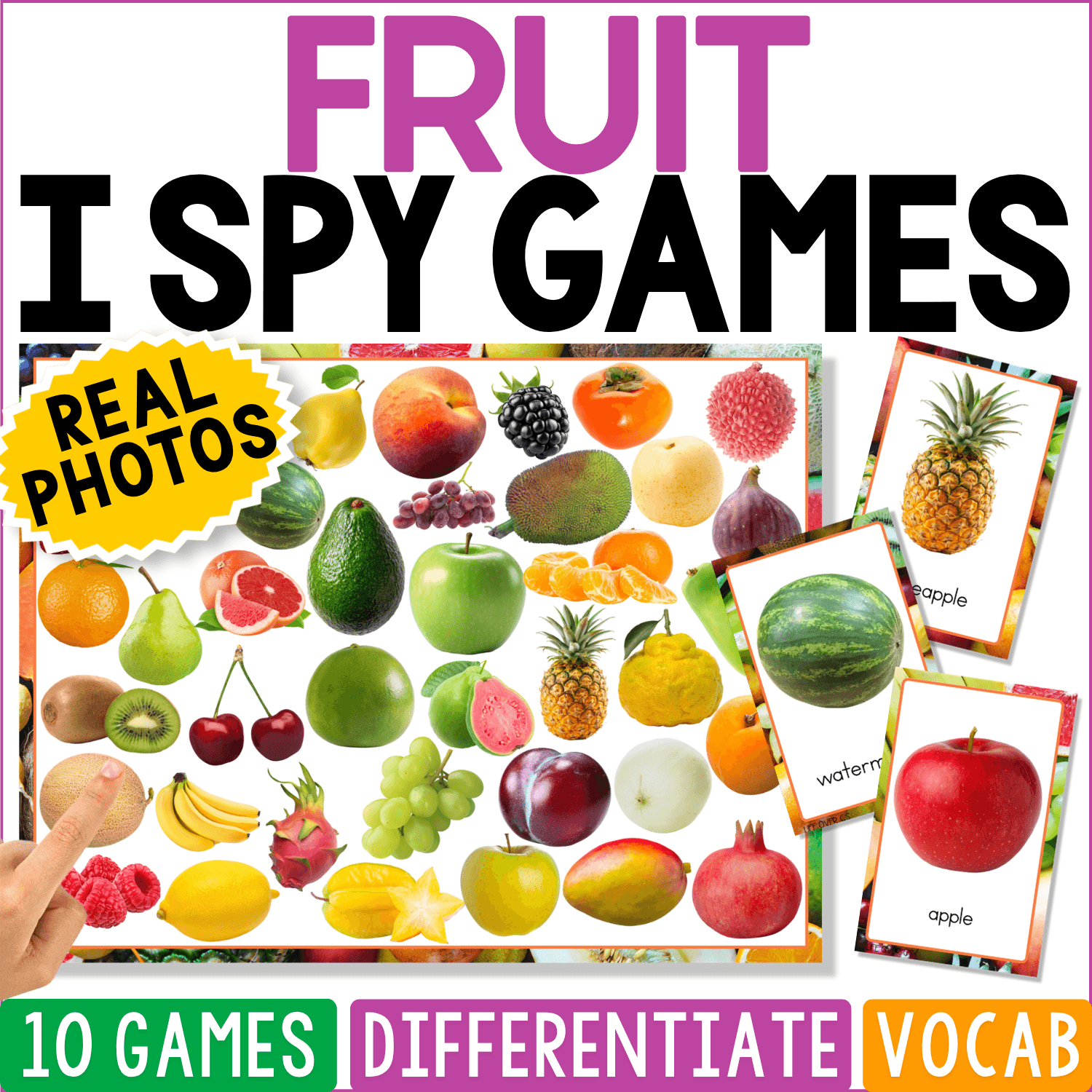
What’s Included in the Fruit I Spy Board Game
Everything is included to set up a low-prep fruit vocabulary game for centers, small groups, therapy sessions, or homeschool learning.
Included in this resource:
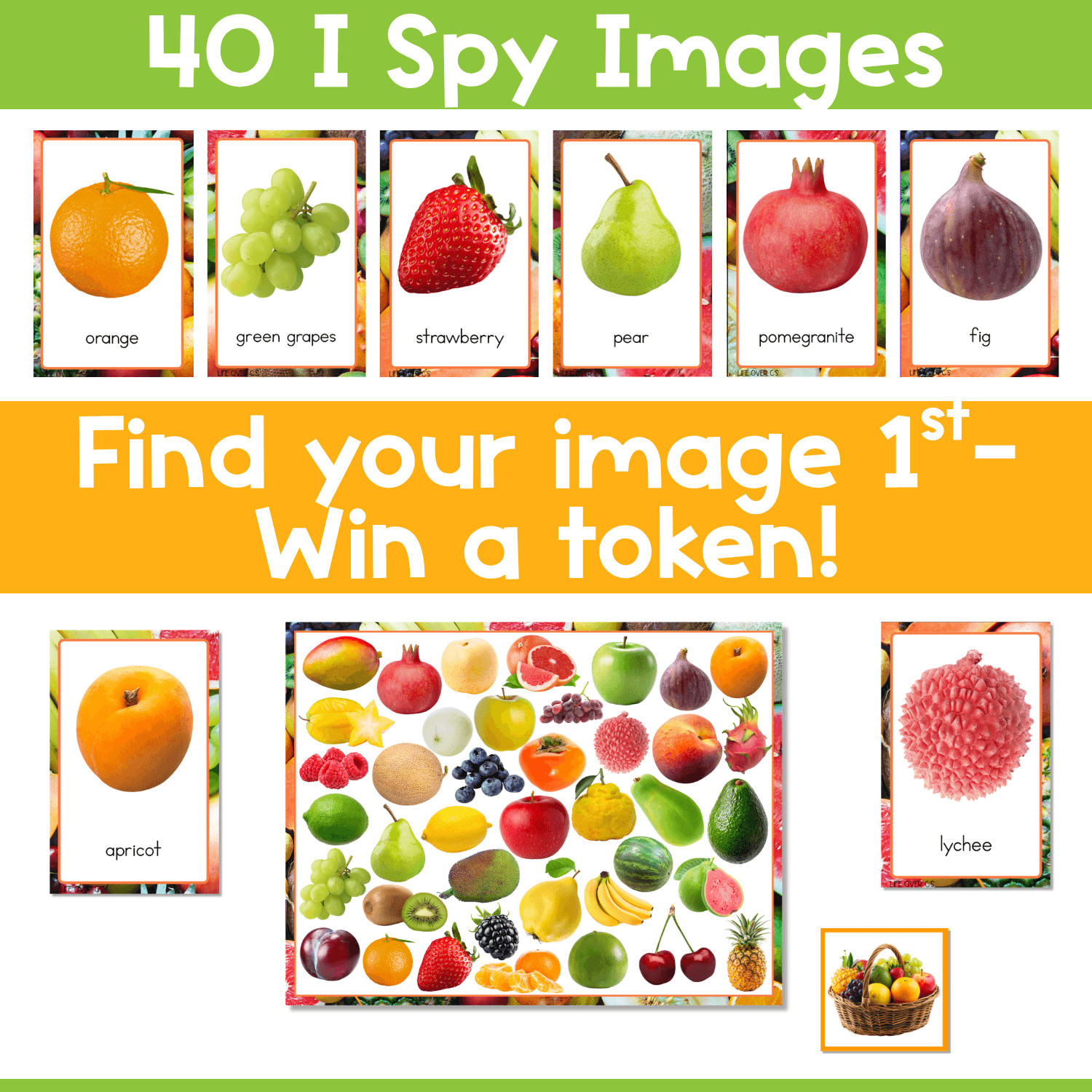
- 40 real-life fruit image cards
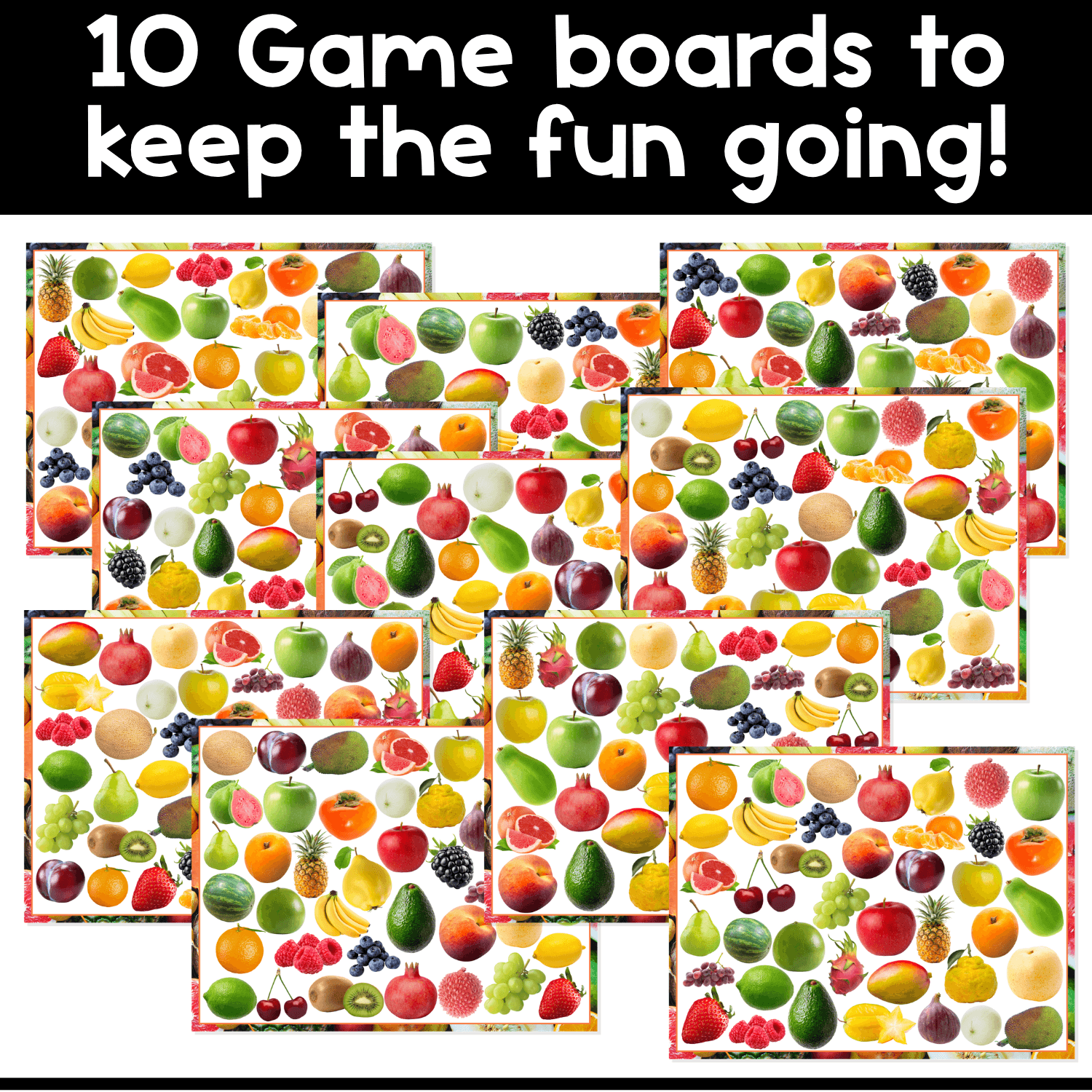
- 10 fruit I Spy game boards
- 20 fruit basket token cards
- Easy prep directions
- Simple game instructions
The 10 game boards give students new picture arrangements to search, so the activity stays fresh across multiple rounds. The 40 image cards include a wide variety of common and less familiar fruits, making the game useful for vocabulary building, category work, and food group discussions.
Required Materials:
- Laminator
- Paper Cutter
- Paper, Printer, Ink
Standards Alignment for Fruit Vocabulary and Visual Discrimination
This fruit I Spy board game supports early learning standards connected to vocabulary development, categorizing common objects, speaking and listening, collaborative conversations, and describing familiar items.
Common Core Kindergarten ELA Standards
- CCSS ELA-LITERACY.L.K.5.A: Sort common objects into categories to gain a sense of the concepts the categories represent.
- CCSS ELA-LITERACY.L.K.5.C: Identify real-life connections between words and their use.
- CCSS ELA-LITERACY.SL.K.1: Participate in collaborative conversations with diverse partners.
- CCSS ELA-LITERACY.SL.K.4: Describe familiar people, places, things, and events.
Texas Pre-k Guidelines
- II.D.1: Child uses a wide variety of words to label and describe people, places, things, and actions.
- II.E.3: Child uses language to express ideas and needs.
- V.B.1: Child uses classification skills to group objects.
Virginia Early Learning and Development Standards
- CLLD2.1: Children understand and use an increasingly complex and varied vocabulary.
- CLLD3.1: Children engage in conversations and communicate ideas.
- CD2.1: Children use observation and investigation to understand the world around them.
These standards connections make the fruit I Spy board game useful for vocabulary practice, food group discussions, visual discrimination, oral language, and collaborative learning.
Skills Students Practice with Fruit I Spy Board Games
This fruit I Spy board game gives students purposeful practice with early learning skills while keeping the activity simple, visual, and easy to use in centers or small groups.
Academic Skills
- Fruit vocabulary
- Food group vocabulary
- ELL and ESL vocabulary support
- Oral language development
- Picture matching
- Classification and categorizing
- Describing real-life objects
Visual Discrimination and OT-Friendly Skills
- Visual discrimination
- Visual scanning
- Visual perception
- Attention to detail
- Tracking across a game board
- Fine motor control with cards and tokens
Social and Game-Play Skills
- Turn-taking
- Following directions
- Focus and concentration
- Friendly competition
- Confidence during small group play
- Cooperative learning
The real-life fruit photos make this I Spy game especially helpful for learners who benefit from clear, concrete images during vocabulary, matching, and visual discrimination practice.
I Spy “Flip” Board Game: Real Life Fruit
This I Spy Board Game Fruit activity adds a bright, real-world vocabulary game to your preschool, pre-k, kindergarten, homeschool, OT, speech therapy, or ELL centers.
Students match real fruit photos to the I Spy game boards as they practice naming fruit, comparing picture details, scanning carefully, and building food group vocabulary through simple, engaging game play.
This fruit I Spy game gives students repeated exposure to familiar and less common fruits while keeping the activity easy to prep and easy to use.
The real photo format helps children connect classroom vocabulary to foods they recognize from snack time, grocery stores, lunchboxes, and healthy eating lessons.
How to Use the Fruit I Spy Board Game
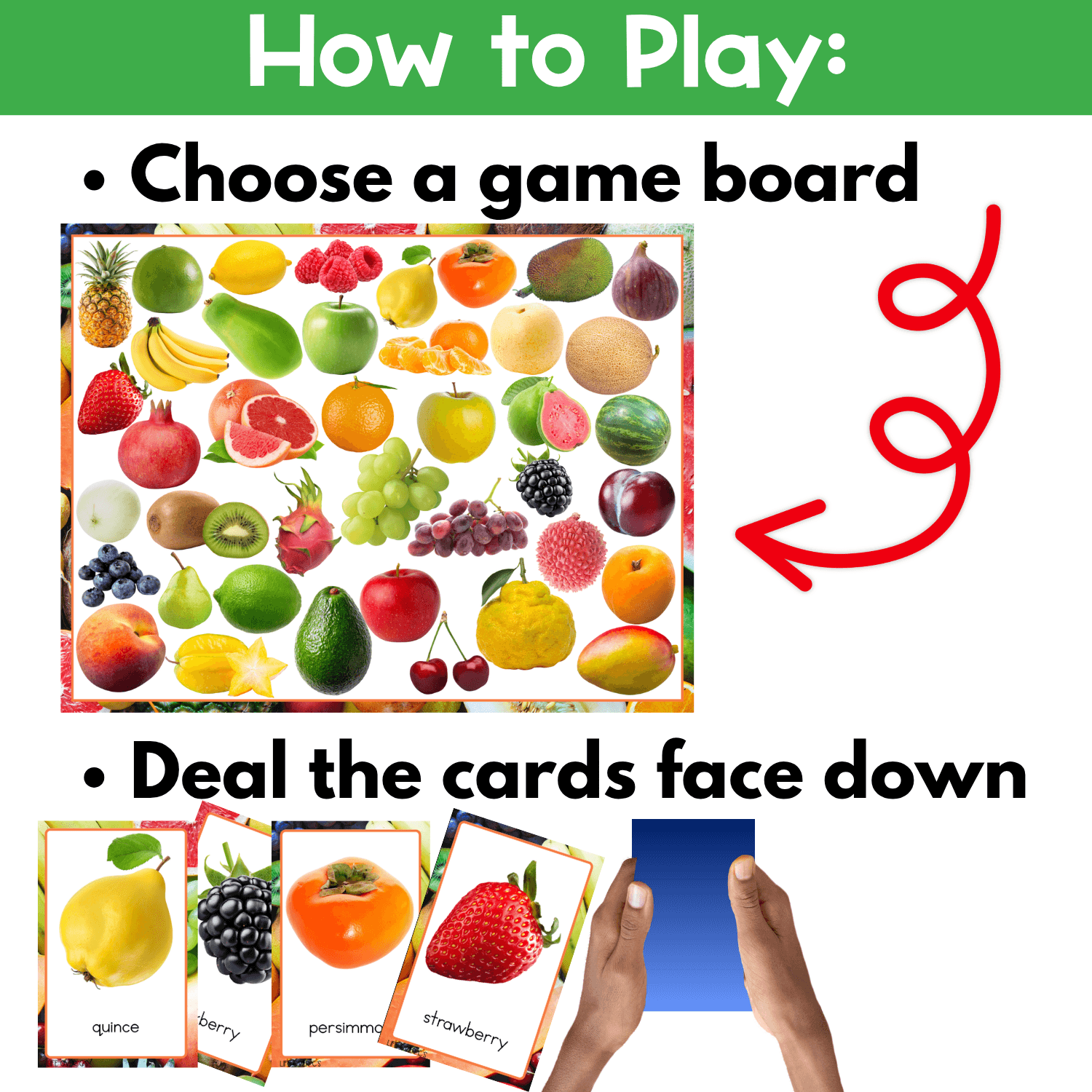
Step 1: Set up the game.
Choose one game board and place it where all players can see it. Give each student a small stack of fruit image cards placed face down.
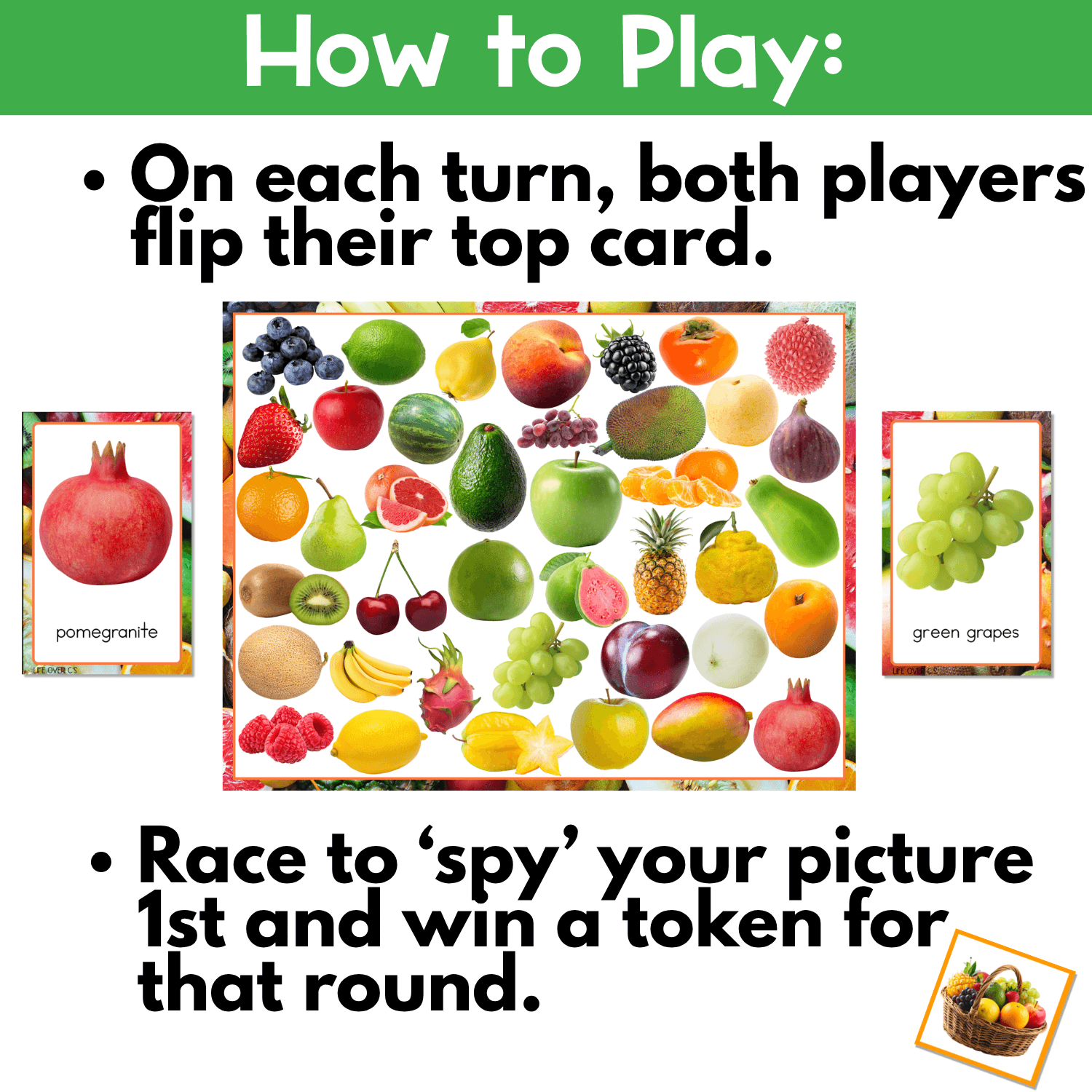
Step 2: Flip, scan, and match.
Players flip over the top card from their stack. Students search the board to find the matching fruit photo.
Step 3: Collect tokens and keep playing.
The first player to find the correct fruit earns a token card for that round. Continue flipping cards and matching pictures until the round is finished.
For a slower-paced version, skip the racing element and let students take turns finding, naming, and describing the fruit.
This option works well for younger preschoolers, ELL learners, speech therapy groups, and students who need extra processing time.
Perfect For Preschool, Kindergarten, ELL, OT, and Food Group Themes
This real photo fruit activity can be used across classroom, homeschool, and therapy settings. The combination of fruit vocabulary, visual discrimination, and simple game play makes it easy to fit into multiple parts of your day.
Use it for:
- Preschool centers
- Pre-k small groups
- Kindergarten literacy centers
- Food group lessons
- Nutrition and healthy eating themes
- ELL and ESL vocabulary support
- Speech therapy sessions
- Occupational therapy activities
- Homeschool learning
- Morning tubs
- Early finisher bins
- Partner games
- Visual discrimination practice
The fruit theme also gives students natural opportunities to talk about foods they know, fruits they have tried, fruits they see at the store, and fruits that are new to them.