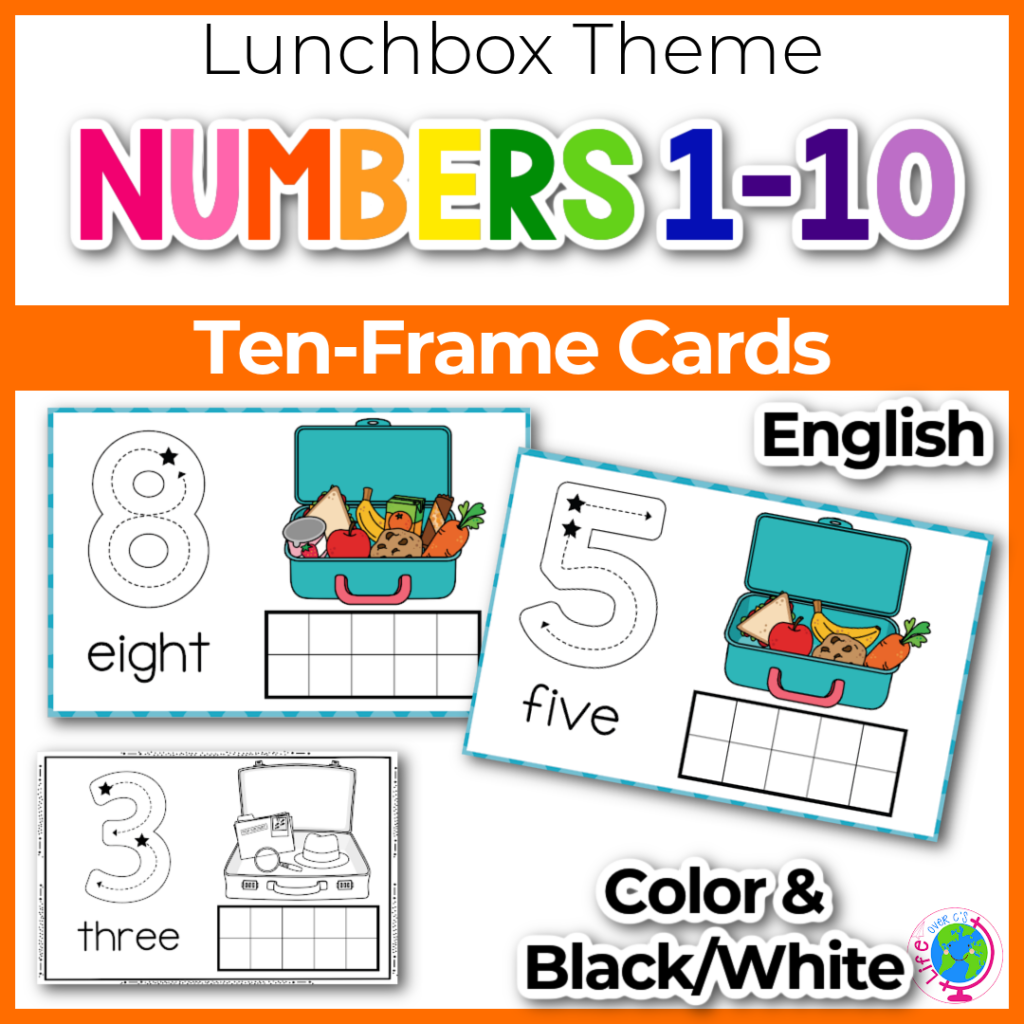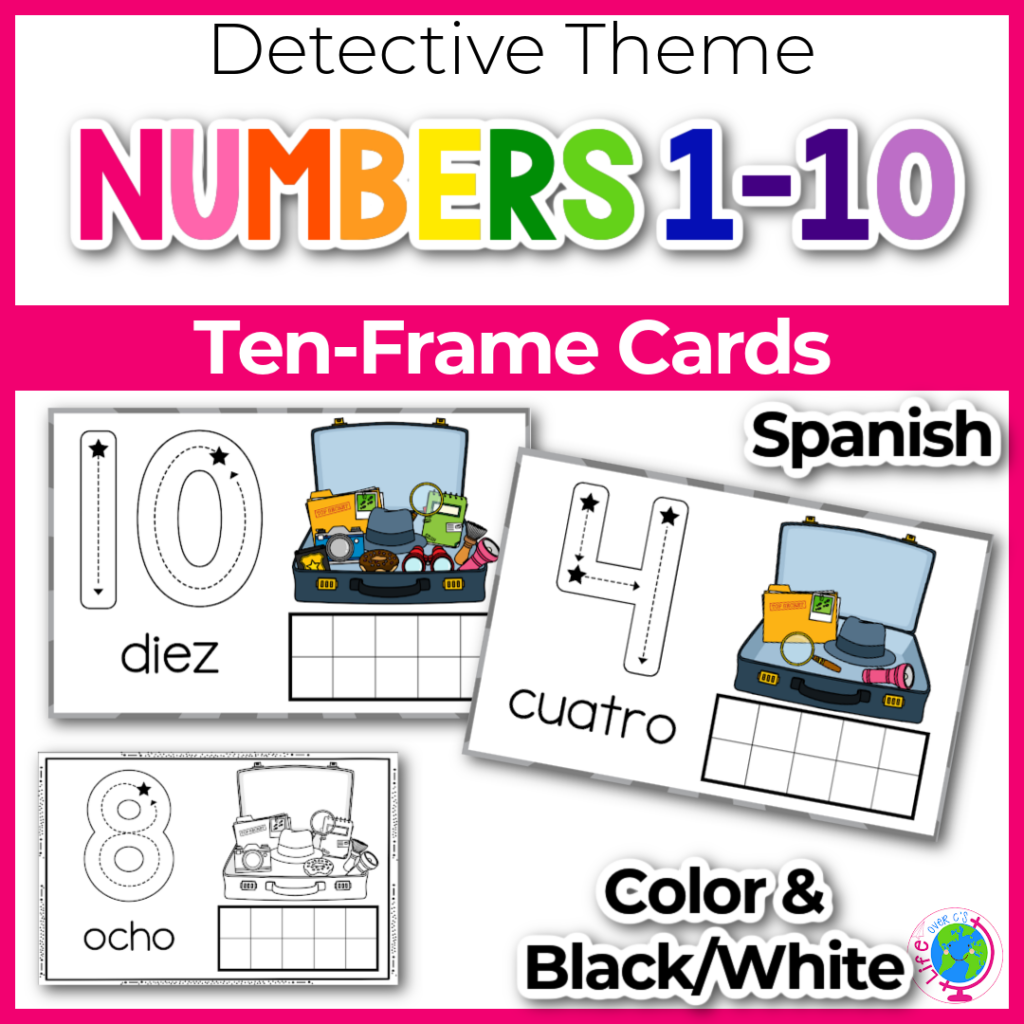

Ten-Frame Cards: Dog Theme
Recommended Grade Level:
Type of Resource: PDF
Number of Pages: 19

Coordinating Activities


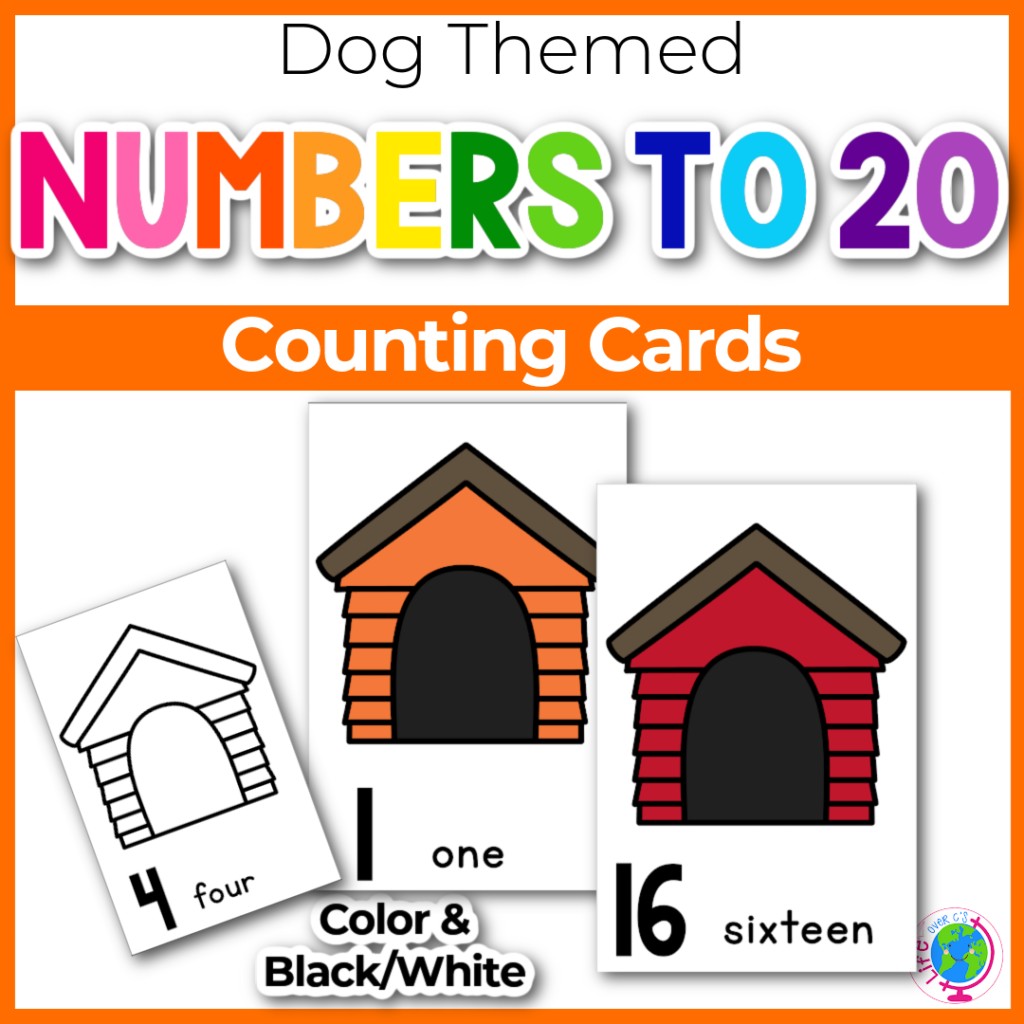
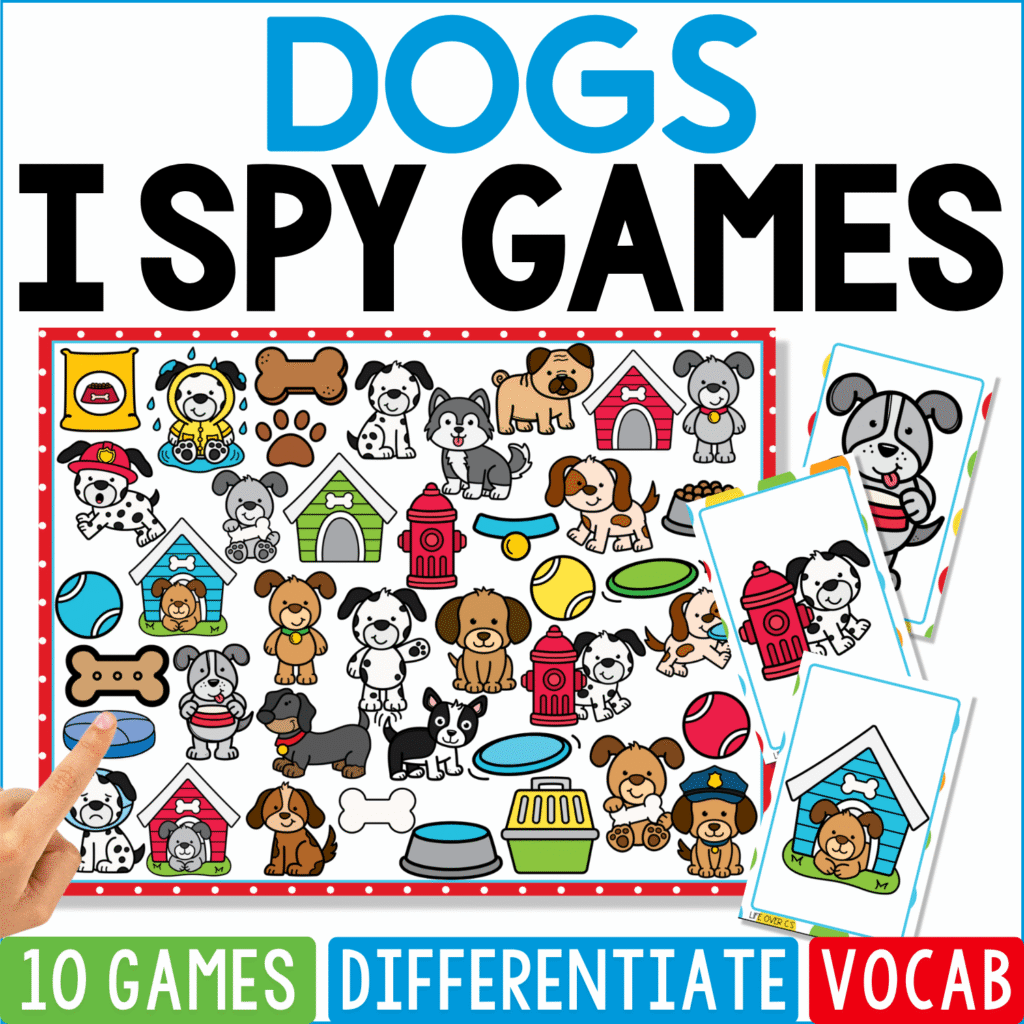
Dog Ten-Frame Cards 1-20
- 10 color ten-frame cards for numbers 1-10 (four per page)
- 10 color double ten-frame cards for numbers 11-20 (two per page)
- The same 20 cards in black and white
- Each card includes:
- A ten-frame filled with paw prints (a double ten-frame for 11-20)
- The number and a number word to trace (one through twenty)
- A directions page with prep and how-to-use tips
Numbers 1-10 print four per page and numbers 11-20 print two per page. Cut them apart and choose the color set for a bright math center or the black and white set to save ink.
Required Materials:
- Paper, Printer, Ink
- Paper Cutter
- Laminator (recommended so the cards last)
- Dry-erase markers (for tracing the number words on laminated cards)
- Counters, mini erasers or pom-poms (optional, for building each number)
Standards for Counting and Cardinality
These dog ten-frame cards support early math standards connected to counting objects, one-to-one correspondence, matching numbers to amounts and recognizing numerals to 20.
Common Core State Standards: Mathematics
- CCSS.MATH.CONTENT.K.CC.B.4: Understand the relationship between numbers and quantities. Every card connects a numeral and number word with a set of pictures.
- CCSS.MATH.CONTENT.K.CC.B.5: Count to answer “how many?” questions about as many as 20 things. Kids count the pictures on each ten-frame card.
- CCSS.MATH.CONTENT.K.NBT.A.1: Compose and decompose numbers from 11 to 19 into ten ones and some further ones. The teen cards show each number as one full ten-frame plus some more.
Texas Essential Knowledge and Skills (TEKS) for Mathematics
- TEKS K.2A: Count forward and backward to at least 20 with and without objects. Kids count up as they work through the cards in order.
- TEKS K.2B: Read, write and represent whole numbers from 0 to at least 20 with and without objects or pictures. Every card shows the numeral, a number word to trace and the matching amount on a ten-frame.
- TEKS K.2C: Count a set of objects up to at least 20 and show that the last number said tells how many are in the set. Kids count every picture on the card to find how many.
Virginia Mathematics Standards of Learning
- K.NS.1.a: Use one-to-one correspondence to find how many are in a set. Kids touch each picture once as they count.
- K.NS.1.c: Show counting by ones with tools like ten-frames. Kids count each picture in the ten-frame, one box at a time.
- K.NS.2.b: Build a set of objects to match a given numeral. Kids build the same amount on a blank ten-frame.
Dog Ten-Frame Cards 1-20 help preschool and kindergarten kids recognize amounts on a ten-frame, count to 20 and match numbers to quantities with a hands-on printable math activity.
Follow the paw prints! Each card has a ten-frame filled with puppy paw prints. Kids count the prints, name the number and see how the amounts grow from one to twenty.
Every card shows a ten-frame already filled with paw prints, along with the number and a number word to trace. Cards for 1-10 use a single ten-frame. Cards for 11-20 use a double ten-frame. That way kids can see each teen number as one full ten and some more.
A ten-frame is a simple 2 x 5 grid that helps kids see numbers in groups of five and ten. Seeing the same layout again and again helps kids recognize amounts at a glance instead of counting one by one.
Each card has a number word to trace so kids practice reading and writing number words while they count. Laminate the cards and kids can trace with a dry-erase marker, wipe them clean and trace again.
Pair these with the dog counting cards 1-20 for a matching game. Kids can also build each amount on the doghouse cards.
Print the color set for centers or the black and white set to save ink. Laminate the cards and they hold up to daily tracing, flash card practice, games and number of the day.
How to Use Dog Ten-Frame Cards 1-20
- Show a card and have kids count the pictures in the ten-frame.
- Read the number together, then trace the number word with a dry-erase marker.
- Build the same amount on a blank ten-frame with counters or match the card to its partner counting card.
Small Group: Flash a card and have everyone call out the number. Then hand each child a card and have the group line up from smallest to biggest.
Independent Practice: Set the cards in a math center with counters and a blank ten-frame. Kids pick a card, build the same amount and check their work against the card.
Easy Ways to Differentiate These Counting Cards
Every group of kids has a mix of counting, number recognition and fine motor skills. These simple changes keep the activity familiar while meeting each child where they are.
For Children Who Need More Support:
- Start with numbers 1-5 and add more cards as counting becomes steady.
- Touch and count each picture in the ten-frame together.
- Point out that a full row is five before counting on.
- Keep the 1-10 cards separate from the teen cards at first.
For On-Level Practice:
- Use the 1-10 cards in order, then mix them up.
- Have kids trace and read the number word after counting.
- Build each number on a blank ten-frame to match.
- Have a partner check the count.
For an Extra Challenge:
- Flash a card for a few seconds and have kids name the number without counting.
- Mix up all 20 cards and put them in order.
- Ask how many more it would take to fill the ten-frame and make 10 or 20.
- Play memory with two sets of cards or with the matching counting cards.
For Speech, OT, ELL or Special Education Support:
- Model the number word and give plenty of wait time.
- Accept pointing, gestures, AAC or any communication method the child already uses.
- Use tongs or tweezers to place counters when building each number for added fine motor practice.
- Repeat the same small set of numbers across several sessions.
- Talk about paws, puppies and pets for extra vocabulary practice.
Dog Ten-Frame Cards 1-20 Are Perfect For:
- Preschool and pre-K
- Kindergarten
- ELL and multilingual learners
- Pet and dog themes
- Math centers
- Number of the day
- Morning tubs
- Small-group instruction
- Intervention
- Special education
- Speech, OT and early intervention sessions
- Homeschool preschool and kindergarten
- Substitute plans